
Sauces & Condiments
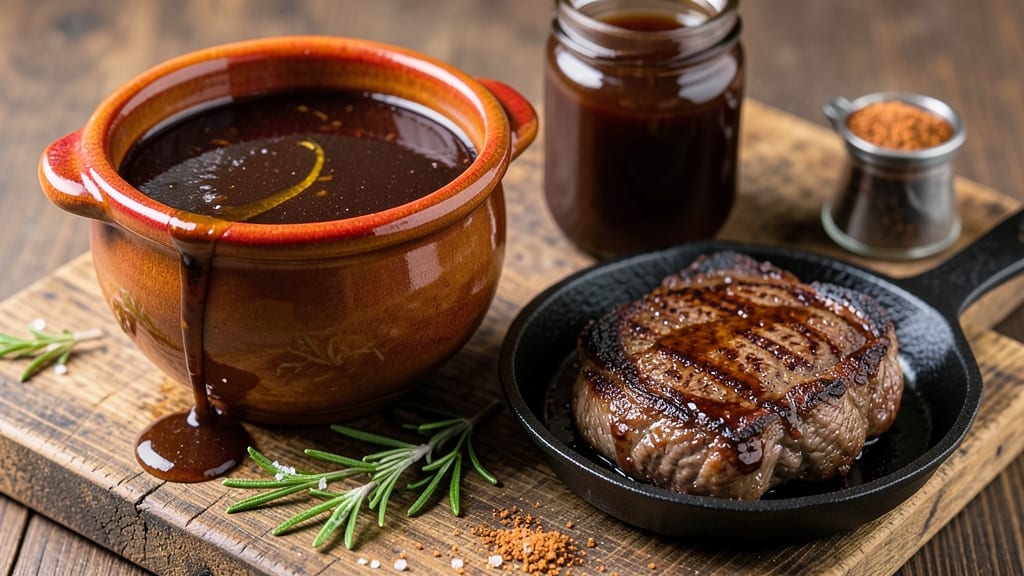
This balsamic barbecue sauce transforms ordinary grilled meats into showstopping centerpieces with its deep, slow-simmered sweetness and tangy complexity. 🔥 As someone who grew up surrounded by smoky ribs and French technique, I developed this sauce to bridge the gap between classic BBQ and the sophisticated acidity of balsamic—it’s the secret weapon I use for everything from competition ribs to quick weeknight grilling.
The magic happens in the slow simmer, where balsamic vinegar and tomato paste meld into a glossy, velvety sauce with just the right balance of sweet, tangy, and smoky notes.
Unlike store-bought versions, this recipe builds layers of flavor through whole spices and a touch of molasses, ensuring depth that lasts through every drizzle. The result? A sauce that caramelizes beautifully on grills, clings perfectly to meats, and adds a luxurious finish to roasted vegetables or even pizza.
What makes this sauce truly special is its versatility—it’s just as impressive as a glaze for competition ribs as it is as a dipping sauce for fries or a finishing drizzle over grilled chicken. The slow reduction process concentrates the flavors, so you’ll get restaurant-quality results with minimal effort.
Plus, it keeps well in the fridge for up to two weeks, making it a pantry staple for any grill master.
Whether you’re prepping for a backyard cookout or craving a quick weeknight marinade, this sauce delivers restaurant-quality depth without the fuss. The key is patience—let those flavors develop over time, and you’ll end up with a sauce that turns simple grilled meats into unforgettable centerpieces.
Ready to elevate your next cookout?
Ingredients for balsamic barbecue sauce
Nine essential ingredients for a sauce that bridges classic BBQ and refined balsamic elegance.
| Ingredient | Amount | Notes |
|---|---|---|
| Balsamic Vinegar 🍷 | ½ cup | High-quality aged balsamic, not sweetened |
| Tomato Paste 🍅 | ½ cup | Smooth, unsweetened preferred |
| Molasses 🍯 | ¼ cup | Unsulphured for deeper flavor |
| Apple Cider Vinegar 🍏 | ¼ cup | For added tangy brightness |
| Brown Sugar 🍚 | ½ cup | Light or dark, packed |
| Smoked Paprika 🌶️ | 2 tbsp | For authentic smoky depth |
| Ground Cumin 🌿 | 1 tbsp | Toasted for richer aroma |
| Garlic Cloves 🧄 | 4 cloves | Freshly minced, not pre-minced |
| Onion Powder 🧅 | 1 tsp | For subtle sweetness |
| Black Peppercorns 🌶️ | ½ tsp | Freshly cracked, not pre-ground |
| Extra-Virgin Olive Oil 🫒 | ¼ cup | For glossy finish, fruity variety |
| Water 💧 | ½ cup | Filtered preferred for clarity |
The balsamic vinegar is the heart of this sauce—Carpenter's Farm or Balsamic Vinegar of Modena from the Italian section of Whole Foods deliver that deep, complex flavor. If you're using a cheaper vinegar, simmer it longer to concentrate the taste. The tomato paste? Mueller's or Rao's are my go-tos—they're smooth and unsweetened, which prevents cloying flavors. Fresh garlic and cumin are non-negotiable here; Penzeys spices are worth the investment for this recipe. The molasses should be unsulphured, as sulphured versions can leave an unpleasant aftertaste. For the smoked paprika, Smoked paprika from La Boîte has the perfect balance of heat and smokiness.
No balsamic vinegar? Substitute with extra apple cider vinegar plus 1 tbsp of maple syrup—it won't be identical, but it'll work in a pinch. Running out of molasses? Dark corn syrup at half the amount mimics the sweetness, though it lacks depth. Fresh garlic unavailable? Garlic powder at half the amount, but toast it first in a dry pan for 30 seconds to wake up the flavor. The olive oil is for finishing—use a fruity, peppery variety like California Extra Virgin from Trader Joe's for that luxurious touch. If you're making this ahead, skip adding the olive oil until just before serving to maintain its freshness. The water is just to thin the sauce slightly—adjust to your desired consistency.
This sauce tastes even better the next day as the flavors meld. Store it in an airtight container in the fridge for up to 2 weeks, or freeze for 6 months in ice cube trays for portion control. For grilling, let it come to room temperature before drizzling—cold sauce can cool down your meat. The sauce thickens as it cools, so don't worry if it looks too thin when you first make it. If you're using it as a marinade, reserve 1/4 cup to use after cooking for extra flavor. The leftovers make an incredible drizzle over roasted Brussels sprouts or a finishing touch for grilled vegetables.
Why You'll Love This Recipe
- Pantry Magic: I swear by this sauce because it uses stuff I already have—no last-minute grocery runs. That balsamic vinegar and molasses combo? It’s the secret weapon that turns a simple simmer into something special without extra effort.
- Sweet-Tangy Fix: The brown sugar and apple cider vinegar give it that perfect balance—sweet enough to caramelize, but sharp enough to cut through. Honestly, it’s the kind of flavor that makes you want to slather it on everything, not just ribs.
- Weeknight Hero: This sauce is my go-to for everything from grilled chicken to roasted veggies, even breakfast toast. Between us, it’s the one thing that turns a boring meal into something worth celebrating—no fancy prep required.
- Lasts All Week: I make a big batch and keep it in the fridge for days. It doesn’t spoil, it just gets better as the flavors meld. Plus, it’s cheap to make—way cheaper than buying store-bought sauces with weird additives.
Step-by-step instructions for balsamic barbecue sauce
Here's how to craft a rich, balanced sauce with layers of sweetness, tang, and smoky depth.
🍳 Step 1: Bloom the Spices in Olive Oil
Heat the 0.25 cup extra-virgin olive oil in a medium saucepan over medium-low heat. Add the 2 tbsp smoked paprika, 1 tbsp ground cumin, 1 tsp onion powder, and 0.5 tsp freshly cracked black peppercorns. Stir constantly for 1-2 minutes until the spices release their aromatic oils and the mixture smells deeply toasty.
This step develops the sauce's complex flavor foundation. Watch closely—the spices should darken slightly but not burn. If they darken too quickly, reduce the heat immediately. The oil will take on a warm, nutty aroma that signals it's ready for the next ingredients.
🍳 Step 2: Add Molasses, Vinegars, and Sugar
Pour in the 0.25 cup unsulphured molasses, 0.25 cup apple cider vinegar, and 0.5 cup brown sugar, stirring vigorously to dissolve everything completely. The mixture will bubble gently as the sugar begins to caramelize at the edges. Let it cook for 3-4 minutes until the sugar fully integrates and the sauce starts to thicken slightly.
Here's where the sauce's signature sweet-tang balance emerges. You'll notice the molasses and vinegars creating a syrupy texture while the sugar adds depth. If the mixture looks too thick, add 1-2 tablespoons of water to help it flow smoothly. The goal is a glossy, pourable consistency at this stage.
🍳 Step 3: Incorporate Tomato Paste and Balsamic
Lower the heat to medium-low and stir in the 0.5 cup tomato paste and 0.5 cup balsamic vinegar. Bring to a gentle simmer, then reduce heat to low and let it cook uncovered for 15-20 minutes. Stir occasionally to prevent sticking, especially as the sauce thickens.
This is the sauce's transformation moment. The tomato paste deepens the color to a rich amber while the balsamic adds its signature tangy complexity. You'll see the sauce reduce noticeably—it should coat the back of a spoon when you stir. The aroma will shift from sweet to a more balanced, savory profile.
🔥 Step 4: Finish with Garlic and Simmer
Add the 4 minced garlic cloves and the remaining 0.25 cup water. Stir well and simmer uncovered for another 10-12 minutes until the sauce reaches your desired thickness. It should coat a spoon but still flow smoothly. Taste and adjust seasoning—add more brown sugar for sweetness or apple cider vinegar for tang if needed.
The garlic should infuse its delicate aroma without overpowering. If any bits stick to the bottom, use a wooden spoon to scrape them up—they're packed with flavor. When ready, the sauce should have a glossy sheen and a perfect balance of sweet, tangy, and smoky notes. Let it cool slightly before using to allow flavors to meld completely.
⏰ Step 5: Strain and Store
Transfer the sauce to a fine-mesh strainer set over a bowl to remove any garlic bits or impurities. Press gently with a spoon to extract all the flavorful liquid. Let it cool completely to room temperature, then transfer to a clean jar or airtight container.
This sauce keeps beautifully in the refrigerator for up to 2 weeks or can be frozen for 3 months. The flavors actually deepen over time, making it perfect for batch cooking. Use it as a glaze for grilled meats, a marinade, or a drizzle over roasted vegetables—its versatility makes it a kitchen essential.
Pro Tips For Making Balsamic Barbecue Sauce
- Simmer Slow and Steady: I learned this the hard way—after burning the tomato paste in a rush, I now keep the heat at a gentle simmer (medium-low). This lets the molasses and brown sugar caramelize properly without turning bitter, giving that deep, balanced sweetness the sauce needs.
- Reduce Vinegar First: Start by cooking the apple cider vinegar and balsamic vinegar alone for 2–3 minutes before adding anything else. This cuts the sharpness and concentrates their flavors, so they don’t overpower the molasses or tomato paste later. (Yes, even if you’re impatient like me.)
- Skip the Clumpy Tomato Paste: Stir the tomato paste into the pot with a splash of water or vinegar first—it blends smoother and avoids those stubborn lumps that ruin the texture. I used to ignore this, and the sauce always felt uneven in the end.
- Balance Sweetness Early: Taste the sauce after adding the brown sugar and molasses, then adjust with a pinch of salt or a splash of vinegar if it’s too cloying. The molasses can sneak up on you, so resist the urge to dump it all in at once—better to build flavor gradually.
Best sauces and condiments for this balsamic barbecue sauce
Glazing Grilled Meats
This sauce is my go-to for grilling competition-style ribs or brisket—its slow-simmered depth caramelizes beautifully on high heat. Brush it on during the last 10-15 minutes of grilling when your meat reaches 195°F internal temperature. The balsamic and molasses create a stunning amber crust while keeping the meat tender.
For extra drama, finish with a sprinkle of coarse kosher salt and a drizzle of extra-virgin olive oil right off the grill. 🔥
Dipping Sauce Magic
Serve this sauce warm as a dipping sauce for smoked pulled pork sandwiches or crispy fried chicken tenders. I like to thin it slightly with 1-2 tablespoons of warm water for a smoother consistency that clings perfectly.
For a restaurant-style touch, garnish with chopped fresh parsley or a pinch of crushed red pepper flakes right before serving. It's also fantastic with grilled shrimp skewers—just a light drizzle makes all the difference.
Roasted Vegetable Elevator
Transform simple roasted vegetables into gourmet side dishes with this sauce. Toss brussels sprouts, carrots, or eggplant with 1 tablespoon of olive oil, ½ teaspoon smoked paprika, and salt, then roast at 425°F for 20-25 minutes.
Finish with a generous drizzle of the warm sauce and a sprinkle of toasted pecans for crunch. The sweet-tangy balance cuts through the richness of roasted vegetables beautifully.
Pasta and Pizza Partner
Use this sauce as a bold alternative to marinara on pasta or pizza. For spaghetti, toss cooked noodles with 2 tablespoons of sauce per serving and top with grated pecorino romano and fresh basil.
On pizza, spread a thin layer as your base sauce and add mozzarella, prosciutto, and roasted red peppers for a Tuscan-inspired twist. The balsamic depth adds sophistication without overpowering the other flavors.
Breakfast Game-Changer
Don't let this sauce be limited to savory mains! Warm it slightly and drizzle over pancakes or waffles for a sweet-savory breakfast. I like to pair it with crispy bacon and maple syrup for a Southern-inspired brunch.
For extra richness, add a dollop of whipped ricotta and a sprinkle of flaky sea salt. It's a flavor profile that surprises and delights—trust me, your weekend mornings will never be the same. 💫
Sauce Storage Secrets
Store leftovers in an airtight glass jar in the fridge for up to 2 weeks—the flavors actually improve as they meld. For longer storage, freeze in ice cube trays and transfer to a freezer bag. Thaw overnight in the fridge and stir well before using.
Pro tip: Add 1 teaspoon of water when reheating to restore its glossy texture. If the sauce thickens too much, thin with warm water or apple cider vinegar as needed.
Nutrition facts
Frequently asked questions
Can I make this sauce without molasses?
Yes! Replace the 0.25 cup molasses with 0.25 cup maple syrup for a similar sweetness, though molasses adds deeper caramel notes. For a lighter option, use 0.25 cup honey—just reduce the brown sugar to 0.35 cup to balance flavors. The sauce will still turn out rich and tangy, just with slightly different depth.
How do I adjust the thickness for glazing vs. dipping?
For a thicker glaze (like ribs), simmer uncovered for 5-10 extra minutes until it coats a spoon. For dipping, thin with 1-2 tablespoons warm water per 1 cup sauce—the heat helps blend it smoothly. Pro tip: Keep a small amount of water on hand while cooking to adjust as you go.
What's the best way to reheat this sauce?
Gently warm in a saucepan over low heat with 1 teaspoon water per ½ cup sauce to restore its glossy texture. Avoid microwaving—it can make the sauce grainy. For frozen sauce, thaw overnight in the fridge first, then reheat slowly. The sauce thickens as it cools, so thin with a splash of vinegar if needed.
Can I use this sauce as a marinade?
Reserve ¼ cup sauce for after cooking, then marinate meats for 2-4 hours (or overnight for tough cuts). The balsamic and vinegars tenderize while adding flavor. For extra safety, grill or cook immediately after marinating—never reuse the marinade without simmering it first to kill bacteria.
Why did my sauce turn out too sweet?
This usually happens from over-reducing or using too much brown sugar. Balance it by adding 1-2 tablespoons apple cider vinegar and simmering for 5 more minutes to let flavors meld. For future batches, reduce sugar to 0.35 cup and taste frequently during cooking to adjust. The molasses is also sweeter than you might expect!