
Sauces & Condiments
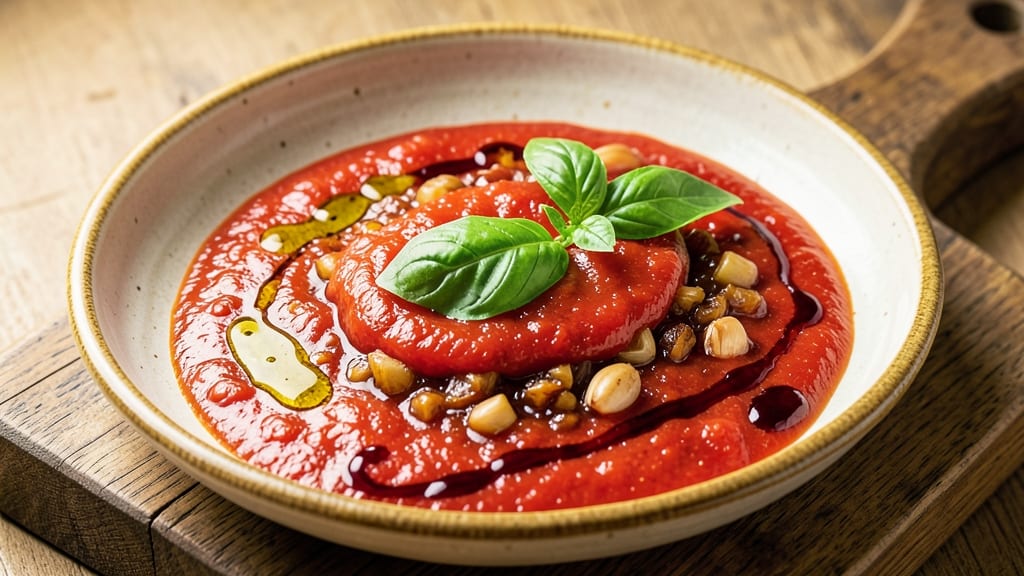
This authentic Italian tomato sauce recipe brings the soul of Italian nonnas to your kitchen—slow-simmered, umami-rich, and finished with fresh basil. I spent years perfecting this technique after falling in love with the deep, complex flavors of true Italian cuisine during my time studying in Florence.
The secret lies in patience: letting the tomatoes break down naturally without boiling, preserving their natural sweetness and developing layers of flavor.
What sets this sauce apart is the focus on quality ingredients—San Marzano tomatoes, extra virgin olive oil, and fresh basil—cooked low and slow to concentrate their flavors. We'll build depth with garlic, onion, and a touch of red wine, then finish with fresh basil that adds brightness without overpowering.
This isn't just marinara; it's the foundation for ragù, pizza, or pasta that tastes like it came from a trattoria in Naples.
The result is a velvety, aromatic sauce with just the right balance of sweetness, acidity, and umami—perfect for tossing with al dente pasta, spooning over grilled meats, or preserving in jars for months.
The slow cooking process transforms simple ingredients into something extraordinary, with a texture that's neither too thin nor too thick. This is the kind of sauce that makes you want to lick the pot clean.
Whether you're making it for a family dinner or planning ahead for the week, this recipe delivers restaurant-quality results with minimal effort. The best part? Every batch tastes better than the last as the flavors develop over time. Let's get started on creating your new go-to Italian sauce.
Ingredients for authentic tomato sauce recipe from italy
Nine ingredients. One pot. The secret to restaurant-quality Italian tomato sauce starts here.
| Ingredient | Amount | Notes |
|---|---|---|
| San Marzano Tomatoes 🍅 | 28 oz | Canned, whole, no salt added |
| Extra-Virgin Olive Oil 🫒 | ½ cup | High quality, fruity variety |
| Yellow Onion 🧅 | 1 whole | Medium size, finely chopped |
| Garlic Cloves 🧄 | 4 cloves | Fresh, peeled, minced |
| Dry Red Wine 🍷 | ½ cup | Bold, like Chianti or Sangiovese |
| Fresh Basil Leaves 🌿 | ½ cup | Packed, stems removed |
| Sea Salt 🧂 | 1 ½ tsp | Diamond Crystal preferred |
| Ground Black Pepper 🌶️ | ½ tsp | Freshly ground preferred |
| Sugar 🍬 | 1 tsp | Balances acidity, optional |
San Marzano tomatoes are non-negotiable—they're the gold standard for Italian sauces. Trader Joe's and Whole Foods carry them, but check the can label for 'no salt added'—salted versions throw off the balance. The olive oil? Don't skimp—look for 'extra virgin' that's fruity and peppery, like Colavita or Bertolli. Fresh basil is ideal, but if you're using dried, reduce to one-third the amount—it's way more potent. For the wine, any bold, dry red works here—Cabernet Sauvignon, Merlot, whatever's open. Just avoid sweet wines like Lambrusco.
No red wine? Substitute with beef broth—it adds depth without the alcohol. Fresh garlic can be swapped for garlic powder at half the amount, but trust me, fresh tastes worlds better. The sugar is optional but helps balance the acidity—skip it if your tomatoes are naturally sweet. For the onion, yellow or red work best—avoid sweet onions like Vidalia. And if you're worried about the basil wilting, wrap it in damp paper towels and store it in a bag in the fridge until ready to use.
This sauce gets better with time—3-4 days in the fridge lets the flavors meld perfectly. For long-term storage, freeze in ice cube trays or small jars—thaw and reheat gently. The texture will thicken as it cools, so add a splash of water or broth when reheating. I always make a double batch—one for dinner, one to freeze for lazy weeknights. The first batch is always the best, but the second? Still incredible.
Why You'll Love This Recipe
- Foolproof Simplicity: I swear by this—just one pot, one knife, and 10 minutes of actual work. The onions and garlic soften into sweetness while you sip your coffee, and the wine deglazes effortlessly. No peeling cans, no blenders, no stress.
- Sunshine in a Jar: That first sip of San Marzano tomatoes simmered with olive oil? Pure Italian magic. The wine brightens the acidity, and the slow cook lets the flavors meld into something rich but never heavy—like summer in a saucepan.
- Weeknight Swiss Army: Dinner tonight? Tomorrow’s lunch? Freezer-friendly for emergencies. Slap it on pasta, toss it with roasted veggies, or use it as a base for meatballs—it’s the one sauce that does it all without extra effort.
- Budget Cheat Code: A single jar of San Marzano tomatoes and a bottle of wine stretch into meals for days. Honestly, I’ve made this sauce for under $8 and fed four people—plus leftovers that taste even better reheated. No guilt, all flavor.
Step-by-step instructions for authentic Italian tomato sauce
Here's how to craft a sauce that tastes like Nonna's kitchen—rich, balanced, and bursting with Italian flavor.
Sauté Onion and Garlic in Olive Oil
Heat the 0.5 cup extra-virgin olive oil in a heavy-bottomed saucepan over medium-low heat. Add the finely chopped yellow onion and cook for 8-10 minutes, stirring occasionally, until it becomes translucent and just beginning to soften. This slow cooking draws out the onion's natural sweetness without letting it brown.
Reduce heat to low and add the 4 cloves minced garlic cloves. Cook for 1-2 minutes until fragrant—you'll smell that unmistakable garlic aroma. Be careful not to let the garlic burn; it should just perfume the oil. I always say, "Garlic is the soul of Italian cooking—treat it gently."
Deglaze with Red Wine
Pour in the 0.5 cup dry red wine and increase heat to medium. Let it simmer for 3-4 minutes, stirring constantly, until the wine has reduced by about half and the alcohol smell has evaporated. This step is crucial—it removes the raw alcohol taste while adding depth to the sauce. You'll see the sauce thicken slightly and develop a glossy sheen.
Here's the thing—don't rush this reduction. The wine needs time to meld with the onion and garlic. If you walk away, you'll miss the moment when it transforms from sharp to rich. I like to taste it at this stage—it should be slightly sweet and tangy, with no harsh alcohol bite.
Add Tomatoes and Simmer Slowly
Crush the 28 oz San Marzano tomatoes by hand (don't blend them—we want some texture) and add them to the pan along with the 1.5 tsp sea salt, 0.5 tsp ground black pepper, and 1 tsp sugar. Stir well to combine, then bring to a gentle simmer. The sauce should bubble softly—if it's too vigorous, reduce the heat.
Now comes the most important part: low and slow cooking. Simmer uncovered for 45-60 minutes, stirring occasionally, until the sauce thickens and coats the back of a spoon. You're looking for a sauce that's rich but still flows smoothly. If it gets too thick, add 1-2 tablespoons of water to loosen it. The sugar helps balance the acidity of the tomatoes, while the salt and pepper enhance all the flavors.
Finish with Fresh Basil
Remove the pan from heat and stir in the 0.5 cup fresh basil leaves, stems removed. Let the sauce sit for 5 minutes—this allows the basil's bright flavor to infuse without turning bitter. The basil should wilt slightly but still retain its vibrant green color. I like to taste the sauce at this point to adjust seasoning if needed.
For an authentic touch, I press the basil leaves against the side of the pan with a spoon, then remove them before serving. This way, diners get the aroma without the texture. The finished sauce should be velvety smooth with a deep tomato flavor, a touch of sweetness from the sugar, and a bright herbal note from the basil. Serve immediately over pasta, or refrigerate for up to 3 days—it only gets better with time.
Pro Tips For Making Authentic Tomato Sauce Recipe From Italy
- Sweat the Onion Low: Cut the onion into even ¼-inch slices and cook them over medium-low heat in olive oil until they’re translucent but not golden—just soft enough to disappear into the sauce. I learned this the hard way: charred onions add bitterness, and you’ll taste it in every bite.
- Crush Garlic Gently: Use the flat side of your knife to smash 2-3 garlic cloves into the oil instead of mincing them—this prevents burning and keeps the flavor mellow. My grandmother swore by this, and she was right: raw garlic taste in your sauce is a dealbreaker.
- Deglaze with Wine Immediately: As soon as the onions and garlic are cooked, pour in the red wine right away and let it reduce by half before adding tomatoes. This step locks in the flavor—skip it, and you’ll end up with a sauce that tastes like it’s missing something.
- Simmer Slow and Covered: After adding the San Marzano tomatoes, bring the sauce to a bare simmer, then cover with a lid and let it cook at the lowest possible heat for 45-60 minutes. Sounds weird, but it works: this builds depth without turning the sauce into mush. (Yes, even if you’re impatient like me.)
Make-ahead tips for leftovers
Freezer Prep
I always make a double batch of this sauce because freezing it is a game-changer. Portion the warm sauce into quart-sized freezer bags or silicone ice cube trays—the trays are perfect for single-serving portions.
Leave ½ inch headspace for expansion, then seal tightly. Label with the date since it keeps for up to 6 months without losing quality. 🥶
Thawing Methods
Never thaw sauce in the microwave—it destroys texture. Instead, transfer a frozen portion to the fridge 24 hours before using. For quick use, place the sealed bag in a bowl of warm water for 15-20 minutes, stirring occasionally.
If you're short on time, reheat directly in the bag using the defrost setting on your microwave, but expect slightly thicker consistency.
Storage Containers
Glass jars with airtight lids are my go-to for fridge storage—Mason jars work perfectly. Fill them to the top to minimize air exposure, then refrigerate for up to 5 days. For longer storage, freeze the jars with ½ inch headspace and thaw in the fridge.
The sauce will thicken as it cools, so add 1-2 tbsp water when reheating to restore ideal consistency.
Flavor Development
The magic happens when you let the sauce rest. After cooking, let it sit at room temperature for 30 minutes before storing—this allows flavors to meld. In the fridge, the sauce continues improving for 3-4 days, developing deeper umami notes.
I always taste it before serving to adjust seasoning—sometimes it needs a pinch more salt or a splash of red wine to brighten it up. ✨
Portion Control
For meal prep, divide sauce into ½ cup portions—perfect for one serving of pasta. Store in small glass containers with snap lids (like Rubbermaid FreshWorks). When reheating, add 1 tbsp water per portion to prevent sticking.
The sauce reheats beautifully on the stovetop over medium-low heat for 5-7 minutes, stirring occasionally to prevent scorching.
Long-Term Care
If you notice a skin forming on refrigerated sauce, simply skim it off before reheating—it doesn't affect flavor. For frozen sauce, avoid refreezing once thawed.
Instead, use it immediately or store in the fridge for 3 days max. The first time I froze this sauce, I was amazed at how vibrant the flavors remained—it tasted almost as good as fresh! 💫
Nutrition facts
Frequently asked questions
Can I use regular canned tomatoes instead of San Marzano?
While you can substitute, San Marzano tomatoes are the gold standard for Italian sauces because of their natural sweetness and low acidity. Regular canned tomatoes may require 1 extra teaspoon of sugar to balance acidity. For best results, choose high-quality brands like Muir Glen or store-bought San Marzano if authentic ones aren't available.
Why does my sauce taste too acidic?
Acidity often comes from overcooking or using tomatoes with high acid content. To fix it, stir in ½ teaspoon sugar or a pinch more salt, then simmer for 5 more minutes. For prevention, always use low heat and avoid boiling—this preserves natural sweetness. A splash of red wine can also help mellow harsh flavors.
How do I make this sauce thicker for pasta?
Simmer uncovered for 10-15 extra minutes to reduce naturally, or stir in 1 tablespoon tomato paste at the end. For instant thickening, mix 1 teaspoon cornstarch with 1 tablespoon water, then whisk into the hot sauce. Cook for 2 more minutes until thickened. Never add flour—it makes Italian sauces taste flat.
Can I make this sauce in a slow cooker?
Follow the same steps but transfer everything to the slow cooker after the wine reduction. Cook on low for 4-5 hours or high for 2-3 hours, stirring occasionally. The texture will be slightly thinner—simmer uncovered on the stovetop for 10 minutes afterward to thicken. The slow cooker method works great for hands-off prep!
What's the best way to use leftover basil stems?
Save those stems—they're packed with flavor! Finely chop them and add to the sauce during the final 5 minutes of cooking. You can also blend them into pesto with garlic, olive oil, and Parmesan. For extra flavor, freeze stems in a bag with a little oil—they'll keep for 3 months and make perfect basil-infused oil for future dishes.