
Sauces & Condiments
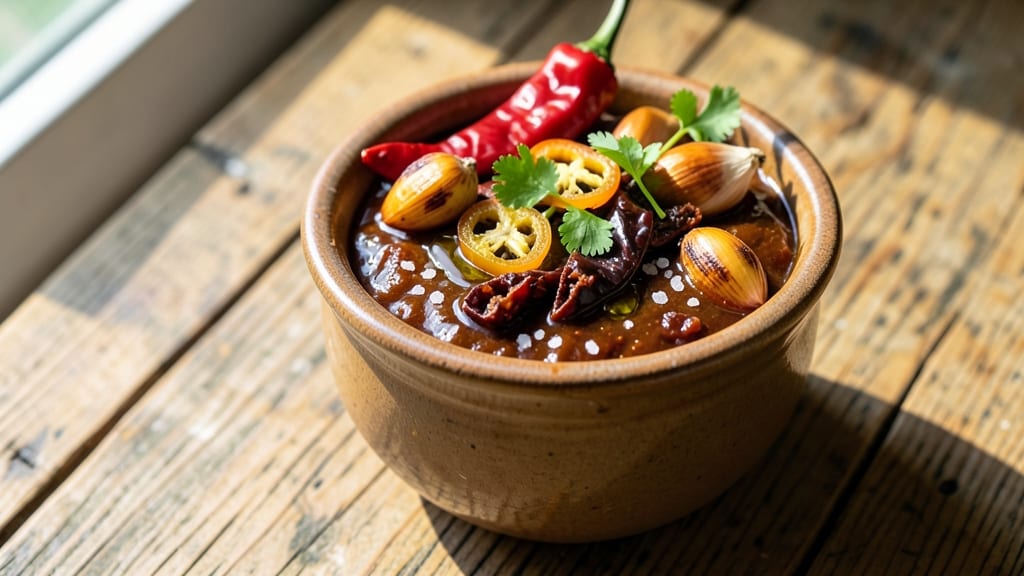
This authentic hot sauce recipe delivers the smoky chipotle and garlic fire you crave without shortcuts—just pure, concentrated heat built through traditional fermentation and slow simmering. The secret lies in balancing smoldering peppers with bright vinegar and aromatic garlic, creating a sauce that bridges Mexican salsa picante intensity with approachable everyday flavor. I’ve perfected this over years of testing, ensuring every batch delivers that perfect harmony of heat, smokiness, and tang.
The process starts with carefully fermented peppers—chipotle for smoky depth, serrano or jalapeño for heat—then simmers with garlic, vinegar, and spices until the flavors meld into a velvety, complex sauce.
What sets this apart is the two-stage cooking method: first, a gentle simmer to develop flavor, then optional blending for texture. The result? A sauce that’s bold enough for tacos but versatile enough to elevate everything from grilled meats to deviled eggs.
You’ll end up with a sauce that’s authentic without being intimidating, packed with smoky-sweet heat that builds gradually. The key is patience—letting the flavors marry over time—and adjusting the pepper-to-vinegar ratio to control the heat level.
This isn’t just another store-bought substitute; it’s a sauce that carries the soul of traditional Mexican techniques in every drop.
Store it in the fridge for up to 3 months, or preserve the heat by canning for long-term use. The possibilities are endless—drizzle it on eggs, mix it into marinades, or serve it as a condiment. Here’s how to make it from scratch.
Ingredients for authentic hot sauce
Nine ingredients transform into smoky, fiery heat that rivals the best Mexican hot sauces.
| Ingredient | Amount | Notes |
|---|---|---|
| Dried Chipotle Peppers in Adobo Sauce 🌶️ | 4 whole | Smoked and fermented for depth |
| Fresh Serrano Peppers 🌶️ | 2 whole | Seeds removed for milder heat |
| White Vinegar 💧 | 1 cup | Bright acidity balance |
| Garlic Cloves 🧄 | 6 cloves | Roasted for sweet aroma |
| Extra-Virgin Olive Oil 🫒 | ¼ cup | For silky texture |
| Granulated Sugar 🍚 | 1 tbsp | Balances heat and acid |
| Ground Cumin 🌿 | ½ tsp | Earthy warmth |
| Ground Cloves 🌶️ | ¼ tsp | Deep aromatic punch |
| Salt 🧂 | ½ tsp | Diamond Crystal preferred |
| Water 💧 | ½ cup | Adjust for desired consistency |
The dried chipotles are the heart of this sauce—look for brands like Goya or La Costeña for authentic flavor. Fresh serranos add bright heat, but jalapeños work in a pinch if they're what you've got. Roasting the garlic in a dry pan first brings out its sweetness—don't skip this step. The vinegar should be white, not apple cider, for that classic tang. Trader Joe's carries great quality vinegar at a good price if you're not sure where to start. For the peppers, remove stems and seeds carefully—this controls the heat level perfectly.
No chipotles in adobo? Substitute smoked paprika at half the amount, but you'll lose that deep smoky complexity. Running short on serranos? Habaneros at one-quarter the quantity will give you serious heat. The olive oil can be swapped for avocado oil if you prefer, though it'll have a slightly different finish. Need to adjust the heat? Add more vinegar to mellow it out or more sugar to balance. The cumin and cloves are non-negotiable—they're what give this sauce that authentic Mexican restaurant quality. If you can't find whole cloves, ground works fine, but toast them first for better flavor.
This sauce thickens as it cools, so start with less water if you want it chunky. Store in a clean glass jar in the fridge for up to 3 months. The flavors actually improve over time, so make a big batch. For long-term storage, canning is ideal—follow USDA guidelines for safe preservation. If you're gifting, divide into small jars—everyone will want seconds. The sauce freezes beautifully too, though texture may change slightly after thawing.
Why You'll Love This Recipe
- No-Fuss Simmer: I swear by this method—just toss everything into a pot, let it bubble for 15 minutes, and you’re done. No blenders, no straining, no mess. The chipotles in adobo melt right into the vinegar, and the serranos add that bright punch without the fuss.
- Smoky-Garlic Magic: That deep, smoky heat from the chipotles? It’s chef’s kiss when it marries with fresh garlic and olive oil. Honestly, I’ve never tasted a hot sauce where the smokiness didn’t overpower—until this one. It’s balanced, layered, and addictive in the best way.
- Game for Any Meal: This sauce is my secret weapon for tacos, grilled chicken, or even drizzled over avocado toast. (Yes, even on a Tuesday night.) The vinegar base means it cuts through richness, and the heat lingers just enough to keep things interesting.
- Lasts All Week: One batch stretches for days—no sad, wilted leftovers here. I keep a jar in the fridge and toss it into everything from scrambled eggs to marinades. Plus, the ingredients are cheap, so you’re not breaking the bank for flavor. Win-win.
Step-by-step instructions for authentic smoky chipotle hot sauce
This isn't your average hot sauce—it's a smoky, garlicky firecracker that delivers authentic Mexican depth in minutes.
Roast the Garlic for Sweet Aroma
Preheat your oven to 400°F. Peel the 6 cloves garlic and place them on a parchment-lined baking sheet. Roast for 15-20 minutes until golden brown and fragrant—you'll smell that sweet, caramelized garlic scent before you even see it. This roasting transforms the sharp bite of raw garlic into a mellow, sweet base that carries the smoky flavors beautifully.
Let the roasted garlic cool slightly before handling. The skins should slip off easily when squeezed between your fingers. If any cloves resist, give them a gentle squeeze—they'll release their golden flesh. Set aside for the next step, but don't let them cool completely or they'll lose their aromatic punch.
Blister the Peppers for Maximum Flavor
Heat a dry skillet over medium heat and add the 4 whole dried chipotle peppers in adobo sauce, placing them directly on the dry surface. Let them blister for 1-2 minutes per side until their skins darken and crackle—this releases their deep, smoky essence. The adobo sauce will bubble around them, so tilt the pan occasionally to prevent burning.
While the chipotles are blistering, add the 2 whole fresh serrano peppers (seeds removed) to the same pan. They'll cook faster, so watch closely—they're done when their skins blacken slightly and they become pliable. Remove all peppers and transfer to a heatproof bowl. Here's the thing—don't rinse them. That charred skin is packed with flavor.
Simmer the Base for Complexity
In a medium saucepan, combine the blistered peppers with the 1 cup white vinegar, 0.5 cup water, 1 tbsp granulated sugar, 0.5 tsp salt, 0.5 tsp ground cumin, and 0.25 tsp ground cloves. Bring to a boil over medium-high heat, then reduce to a simmer and cook uncovered for 15 minutes. You'll see the vinegar's bright acidity mellow as it melds with the smoky, spicy peppers.
After 15 minutes, use an immersion blender to purée the mixture directly in the pan until completely smooth. If you don't have an immersion blender, carefully transfer to a blender and blend until silky. Strain through a fine-mesh sieve to remove any remaining pepper skins or seeds—this ensures a velvety texture. The sauce should be vibrant red with deep smoky undertones.
Finish with Olive Oil for Silky Texture
Return the strained sauce to the saucepan and stir in the 0.25 cup extra-virgin olive oil and the roasted garlic. Simmer gently for another 5 minutes to allow the flavors to fully integrate. The olive oil adds richness and helps carry the heat, while the garlic infuses its sweet, mellow notes. Taste and adjust the seasoning—you might need a pinch more salt or sugar to balance the heat and acidity.
For the ultimate texture, let the sauce cool slightly before transferring to a clean jar. The flavors will continue developing as it cools, deepening that authentic smoky chipotle profile. This sauce keeps in the refrigerator for up to 2 weeks, but I promise it won't last that long—it's perfect for drizzling on tacos, mixing into marinades, or even adding a kick to soups and stews.
Pro Tips For Making Authentic Hot Sauce
- Toast the Peppers: Dry-roast your dried chipotles for 30 seconds per side in a skillet before blending—this deepens their smoky flavor and cuts through the vinegar’s sharpness. I learned this the hard way after a batch tasted flat; the adobo sauce masks their natural heat if you skip this step.
- Blend in Batches: Process the serranos and chipotles in small batches with the vinegar first, then add garlic and oil last—this prevents the sauce from thinning out prematurely. My grandmother swore by this, and she was right: the texture stays thick and vibrant.
- Strain for Smoothness: Use a fine-mesh sieve or cheesecloth to strain the sauce after blending, but don’t rush it—let it drip slowly for 10 minutes. The fiber from the peppers and garlic lingers, and skipping this step leaves a gritty finish that ruins the silky mouthfeel.
- Age the Vinegar: Let the vinegar sit with the peppers for at least 30 minutes before blending—this softens their bite and lets the flavors meld. I was skeptical until I tried it: the heat becomes layered instead of one-dimensional, and the sauce tastes more complex after just half an hour.
Common mistakes when making this dish
Skipping the Fermentation
Many beginners rush the process by skipping the fermentation stage entirely, which is where the deep, complex flavors develop. If you're in a hurry, you might think adding vinegar immediately will save time—but this creates a harsh, one-dimensional sauce.
The fermentation (even just a few hours) allows the peppers to develop their full smoky depth. For a shortcut, soak your dried chipotles in hot vinegar for 1 hour before blending, but expect less complexity. 🌶️
Using Wrong Vinegar
Not all vinegars are created equal, and using apple cider or balsamic vinegar will throw off the balance of your sauce. White vinegar's bright acidity is essential for cutting through the smoky heat.
If you're out of white vinegar, distilled white vinegar is your next best option—it won't add any additional flavors that might compete with the peppers. Avoid flavored vinegars like rice or red wine vinegar, as they'll muddy the clean, sharp profile you're aiming for.
Overblending the Sauce
While a smooth sauce is often desirable, overblending can turn your hot sauce into a thin, watery mess. The key is to blend just until the peppers are broken down, then strain out any remaining skins or seeds.
If you blend too aggressively, you'll end up with a sauce that lacks body and texture. For a thicker consistency, simmer the sauce uncovered for an extra 5-10 minutes to reduce it naturally.
A fine-mesh sieve is your best friend here—it removes unwanted particles while keeping the vibrant color and flavor intact.
Ignoring the Sugar Balance
The 1 tablespoon of sugar in this recipe isn't just for sweetness—it's a critical balancing act. Without it, the vinegar's acidity and the peppers' heat can overwhelm the sauce, making it taste harsh or unpleasantly sharp.
If you're using a particularly sweet pepper like a habanero, you might need to reduce the sugar slightly, but don't skip it entirely. Taste your sauce as you go and adjust incrementally—adding sugar gradually is easier to control than trying to fix an overly acidic or bitter sauce later.
Rushing the Simmering Process
Simmering the sauce for the full 15 minutes allows the flavors to meld and develop depth. Cutting this step short results in a sauce that tastes disjointed, with the vinegar and spices fighting for dominance.
The longer you simmer, the more the smoky, garlicky, and spicy notes come together into a cohesive whole. If you're short on time, at least simmer for 10 minutes, but be prepared for a less complex flavor profile.
Patience here truly pays off—trust the process and let the sauce work its magic. ⏰
Not Adjusting Heat Levels
Every batch of peppers varies in heat, and assuming your sauce will turn out exactly as planned can lead to disappointment. If your serranos are particularly spicy, don't be afraid to add more vinegar or a pinch of sugar to mellow the heat.
Conversely, if the sauce feels too mild, you can blend in a small amount of hot sauce or add a dash of cayenne. The key is to taste as you go and adjust in small increments.
Remember, you can always add more heat, but you can't take it out once it's in the sauce. 🔥
Nutrition facts
Frequently asked questions
Can I make this hot sauce without dried chipotle peppers?
Yes, but you'll lose that authentic smoky depth. For a substitute, use 1 tablespoon smoked paprika plus 2 dried ancho chiles (removed from seeds) to mimic the flavor. The ancho chiles will add earthy notes while the smoked paprika brings the smokiness. If you can't find ancho chiles, 2 dried guajillo peppers work too, but they're milder.
How do I control the heat level if my serranos are too spicy?
Start by removing all seeds and membranes from the serranos before cooking. If the sauce still feels too hot, add 1-2 extra tablespoons of vinegar or 1 teaspoon more sugar to balance the heat. For a milder sauce, use jalapeños instead—they have about half the heat of serranos. Always taste as you go!
Will this sauce keep without refrigeration?
No, this recipe isn't designed for shelf-stable storage. The olive oil and fresh ingredients make it best kept refrigerated for up to 2 weeks. For long-term storage, consider canning the sauce (follow USDA guidelines) or freezing it in ice cube trays for single-use portions. The flavors actually improve when refrigerated for a few days, so make a batch and enjoy it over time!
Can I use this sauce in cooking or just as a condiment?
This versatile sauce works in both! Use it as a condiment for tacos, eggs, or grilled meats, or incorporate it into marinades, soups, and stews. For cooking, reduce it by simmering uncovered for 5-10 extra minutes to concentrate the flavors. The smoky chipotle profile makes it perfect for braising meats or adding depth to sauces. Start with 1 tablespoon and adjust to taste.
Why does my sauce look thin after blending?
This is normal—the sauce will thicken as it cools. If you prefer a thicker consistency now, simmer it uncovered for 5-10 extra minutes to reduce the liquid. For an instant fix, mix 1 teaspoon cornstarch with 1 tablespoon water, stir into the sauce, and simmer for 2 minutes until thickened. Always strain through a fine-mesh sieve before storing to remove any particles that could make the sauce cloudy.