
Sauces & Condiments
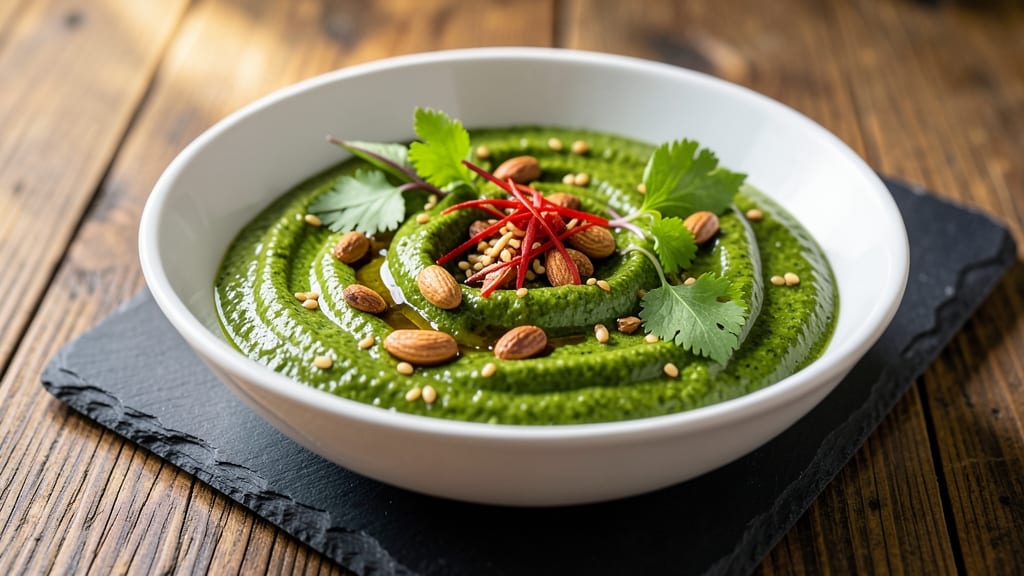
This Asian pesto sauce recipe transforms bold flavors into a versatile condiment that bridges East and West with effortless elegance. 🌟 The nutty crunch of toasted sesame seeds meets the zing of chili and garlic, creating a sauce that elevates everything from stir-fries to grilled meats in just minutes.
What sets this apart is the perfect balance of umami from soy sauce and freshness from herbs, all blended into a silky texture that clings beautifully to any dish.
The foundation of this sauce lies in its simplicity—just a handful of ingredients, but each plays a critical role. Toasted peanuts or sesame seeds provide that signature crunch, while fresh cilantro or Thai basil adds brightness.
A touch of honey or maple syrup rounds out the flavors, ensuring the sauce is adaptable for both sweet and savory applications. Unlike traditional pesto, this version thrives on heat, making it ideal for spicy noodle bowls or as a bold dipping sauce.
What you’ll end up with is a vibrant, aromatic sauce that’s rich in texture and flavor—creamy yet crunchy, tangy yet sweet. It’s the kind of condiment that turns an ordinary meal into something extraordinary, whether drizzled over steaming ramen, tossed with fresh spring rolls, or spooned over grilled shrimp.
The best part? It keeps well in the fridge for up to a week, so you can make a batch and enjoy it all week long.
Ready to elevate your cooking? This sauce is your secret weapon for adding depth and complexity to any dish. Let’s get started—your taste buds will thank you.
Ingredients for asian pesto sauce
Nine simple ingredients blend into a sauce that's bold, crunchy, and addictive.
| Ingredient | Amount | Notes |
|---|---|---|
| Toasted Sesame Seeds 🥜 | ½ cup | Store-bought or homemade |
| Toasted Peanuts 🥜 | ½ cup | Crushed for texture |
| Fresh Cilantro Leaves 🌿 | 1 cup | Stems removed, packed |
| Thai Basil Leaves 🌿 | ½ cup | Or regular basil if unavailable |
| Garlic Cloves 🧄 | 4 cloves | Peeled, roughly chopped |
| Red Chili Flakes 🌶️ | 1 tbsp | Adjust for heat preference |
| Light Soy Sauce 🍶 | 2 tbsp | Kikkoman preferred |
| Sesame Oil 🫒 | 2 tbsp | Toasted for aroma |
| Maple Syrup 🍯 | 1 tbsp | Or honey for floral notes |
| Lime Juice 🍋 | 1 tbsp | Freshly squeezed |
The sesame seeds and peanuts are non-negotiable for that signature crunch. Trader Joe's has the best toasted sesame seeds in bulk, and Costco sells giant bags of peanuts for way cheaper than the store brand. Fresh cilantro and Thai basil? Asian markets always have the brightest, most flavorful bunches—look for leaves that are vibrant green, not wilted. The garlic should smell pungent, not moldy. And for the chili flakes, Penzeys sells the hottest and most aromatic ones if you want to kick it up a notch.
No sesame seeds? Toasted sunflower seeds work in a pinch (same amount), though they won’t have that same nutty depth. Swap peanuts for cashews or almonds if you’ve got them—just toast them first. Short on Thai basil? Regular basil or mint will still bring brightness, but Thai basil’s anise notes are what make this sauce truly special. The soy sauce can be swapped for tamari or coconut aminos if you’re avoiding gluten, and maple syrup? Agave or brown sugar works just as well if that’s what’s in your pantry.
This sauce keeps beautifully—just store it in an airtight jar with a thin layer of oil on top to preserve that fresh crunch. Good for 1 week in the fridge, or 3 months frozen in ice cube trays (perfect for single-use portions). I like to make a big batch and freeze half right away—one for now, one for later. The flavors actually get better after a day or two, as everything mellows and melds together.
Why You'll Love This Recipe
- No Blender Needed: I swear by this—just pulse the peanuts, cilantro, and Thai basil in a food processor until it’s chunky but not paste. That toasted sesame crunch? It’s the star, and you don’t need a fine purée to get it right.
- Umami Bomb: The garlic hits first—sharp and fresh—then the peanuts add that nutty depth, while the Thai basil lingers like a secret. Honestly, it’s the kind of flavor that makes you pause mid-bite and think, “Wait, why haven’t I done this before?”
- Dresses Everything: Slather it on grilled chicken, toss it with cold noodles, or drizzle it over a simple stir-fry. Even my picky teenage son asked for seconds when I used it as a peanut sauce for his ramen. (Yes, even on a Tuesday night.)
- Pantry Magic: Between us, this sauce costs pennies to make—just sesame seeds, peanuts, and herbs. And the leftovers? They keep for a week in the fridge, ready to jazz up anything from takeout to a lazy weeknight dinner. Zero waste, maximum flavor.
Step-by-step instructions for Asian pesto sauce
This vibrant pesto comes together in minutes with bold flavors and perfect texture.
👨🍳 Step 1: Toast the Nuts and Seeds for Depth
Heat a dry skillet over medium heat and add the 0.5 cup toasted peanuts and 0.5 cup toasted sesame seeds. Toast for 2-3 minutes until fragrant and lightly golden, stirring constantly to prevent burning. The peanuts should smell nutty and the sesame seeds should release their aroma—this is your flavor foundation.
Transfer the toasted mixture to a food processor or high-powered blender immediately while still warm. Warmth helps release more oils from the nuts and seeds, giving your pesto that rich, velvety texture. If using store-bought toasted ingredients, skip this step but don't skip the warm transfer—it makes all the difference.
🍳 Step 2: Pulse the Herbs and Garlic
Add the 1 cup fresh cilantro leaves, 0.5 cup Thai basil leaves, and 4 cloves garlic cloves to the food processor. Pulse 3-4 times until the herbs are finely chopped but not completely pureed—you want visible texture. This gives your sauce that signature Asian pesto crunch while keeping it vibrant.
Here's the thing—don't over-blend or you'll lose that fresh herb brightness. You're aiming for a coarse chop, not a smooth paste. The Thai basil adds a distinct anise-like flavor that pairs perfectly with the cilantro's citrusy notes, so don't skip it if you can find it.
🥘 Step 3: Blend Wet Ingredients for Creamy Texture
With the processor running, slowly drizzle in the 2 tablespoons sesame oil and 2 tablespoons light soy sauce through the feed tube. This gradual addition prevents the motor from overheating and helps emulsify the sauce. Add the 1 tablespoon maple syrup and 1 tablespoon lime juice next, blending until completely smooth.
The sesame oil carries the toasted aroma while the soy sauce adds umami depth. The maple syrup balances the heat and acidity from the lime and chili, creating that perfect sweet-savory contrast. If the mixture looks too thick, add 1-2 tablespoons water to reach your desired consistency.
⏰ Step 4: Add Chili and Final Adjustments
Add the 1 tablespoon red chili flakes and pulse 2-3 times just to distribute the heat evenly. Taste and adjust seasoning—you might want to add a pinch more soy sauce for saltiness or lime juice for brightness. The sauce should be vibrant green with visible nut and seed pieces for texture.
This is where the magic happens: the chili flakes add heat without overpowering, while the lime juice keeps everything fresh. For extra crunch, pulse in 1 tablespoon additional toasted peanuts at the end. Transfer to a jar and store in the refrigerator for up to 5 days, or use immediately for maximum freshness.
Pro Tips For Making Asian Pesto Sauce
- Toast the Peanuts First: I learned this the hard way—tossing raw peanuts into the mix makes the sauce taste bland and chalky. Dry-toast them in a pan over medium heat for 3-4 minutes until they’re golden and fragrant, then cool completely before grinding. The extra effort makes all the difference in flavor.
- Pulse, Don’t Blend: Skip the food processor’s "blend" setting—it turns this sauce into a paste. Use the "pulse" function instead, stopping every 2-3 seconds to scrape down the sides. You want chunky texture, not a smooth, gluey mess that loses its freshness.
- Use Cold Garlic: I was skeptical until I tried it: cold garlic cloves (straight from the fridge) add a cleaner, brighter punch than room-temperature ones. Slice them thin or smash them lightly with the flat side of your knife—no need to mince. The cold shock preserves their sharpness.
- Balance the Oil: Start with 2 tablespoons of neutral oil (like peanut or avocado), then add more as you go. Too much oil dilutes the herbs; too little makes the sauce cling like glue. Taste as you pulse—if it’s too thick, drizzle in a splash of lime juice or fish sauce to loosen it up.
Best sauces and condiments for this dish
Sesame Oil Variations
Swap toasted sesame oil for avocado oil if you're sensitive to sesame flavors—it still delivers that nutty aroma without the strong taste. For an extra-rich version, blend in 1 teaspoon of toasted sesame paste (available at Asian markets) along with the seeds.
This adds a deeper, more complex flavor profile that works beautifully with spicy dishes like Thai curries or Sichuan stir-fries. 🫒
Sweet-Savory Balance
Adjust the maple syrup to honey for a floral sweetness that pairs exceptionally with grilled meats or seafood. For a tangier twist, replace half the maple syrup with rice vinegar—this works wonderfully in cold noodle salads or as a dipping sauce for spring rolls.
If you prefer a smoky depth, add ½ teaspoon of smoked paprika when blending the wet ingredients.
Heat Level Control
For mild heat, reduce the red chili flakes to ½ teaspoon and add ¼ teaspoon of ground white pepper for a subtle kick.
If you love fiery flavors, swap the chili flakes for 1 teaspoon of fresh Thai bird’s eye chili (minced)—this adds a bright, fruity heat that’s less drying than flakes. Always taste before serving and adjust to your preference.
Herb Substitutions
If Thai basil is unavailable, use ½ cup regular basil + 2 tablespoons fresh mint for a lighter, more refreshing profile. For a spicier herb blend, mix ½ cup cilantro with ¼ cup fresh Thai chili leaves (if available).
Both combinations work brilliantly in summer rolls or as a topping for grilled vegetables. The key is balancing the herb flavors with the nutty base.
Texture Adjustments
For a smoother sauce, blend the nuts and seeds for 10-15 seconds longer after adding the wet ingredients. If you prefer extra crunch, reserve 2 tablespoons of toasted peanuts before blending and fold them in at the end.
This technique is perfect for dipping sauces or as a topping for ramen bowls. The texture should complement the dish, not compete with it.
Storage Hacks
To preserve freshness, store the sauce in an airtight glass jar with a thin layer of neutral oil (like avocado oil) on top. This prevents oxidation and keeps the herbs vibrant for up to 7 days in the fridge.
For longer storage, freeze in ice cube trays—each cube makes a perfect single-use portion for stir-fries or marinades. Thaw overnight in the fridge before using.
Nutrition facts
Frequently asked questions
Can I make this Asian pesto sauce nut-free?
Swap the peanuts and sesame seeds for toasted sunflower seeds or pumpkin seeds (same amount) to keep that nutty crunch. For extra richness, add 1 tablespoon tahini when blending the wet ingredients. The texture will be slightly smoother but still packed with flavor.
How spicy should this sauce be?
The recipe uses 1 tablespoon chili flakes for a mild-medium heat that won't overpower dishes. For extra kick, add 1 teaspoon fresh Thai chili (minced)—this adds bright, fruity heat. Always taste before serving and adjust with more lime juice if needed to balance the spice.
What's the best way to use leftover Asian pesto sauce?
This versatile sauce works as a marinade for grilled chicken or shrimp, a drizzle for ramen or pho, or a dip for spring rolls. For extra flavor, mix 1 tablespoon into peanut butter for a spicy-sweet sandwich spread. The sauce keeps well for 5 days in the fridge, so make a batch and use it all week!
Why does my sauce look too thick?
Thickness happens when herbs release moisture. Thin with 1-2 tablespoons water or rice vinegar (for tang). For a creamier texture without thinning, blend in 1 tablespoon neutral oil (like avocado) at the end. Remember—this sauce should coat a spoon but still have visible texture for that signature crunch.
Can I make this sauce ahead of time?
Yes! The flavors actually improve after 24 hours as ingredients meld. Store in an airtight jar with a thin layer of oil on top to preserve freshness. For long-term storage, freeze in ice cube trays—each cube makes a perfect single-use portion for stir-fries or marinades. Thaw overnight in the fridge.