
Sauces & Condiments
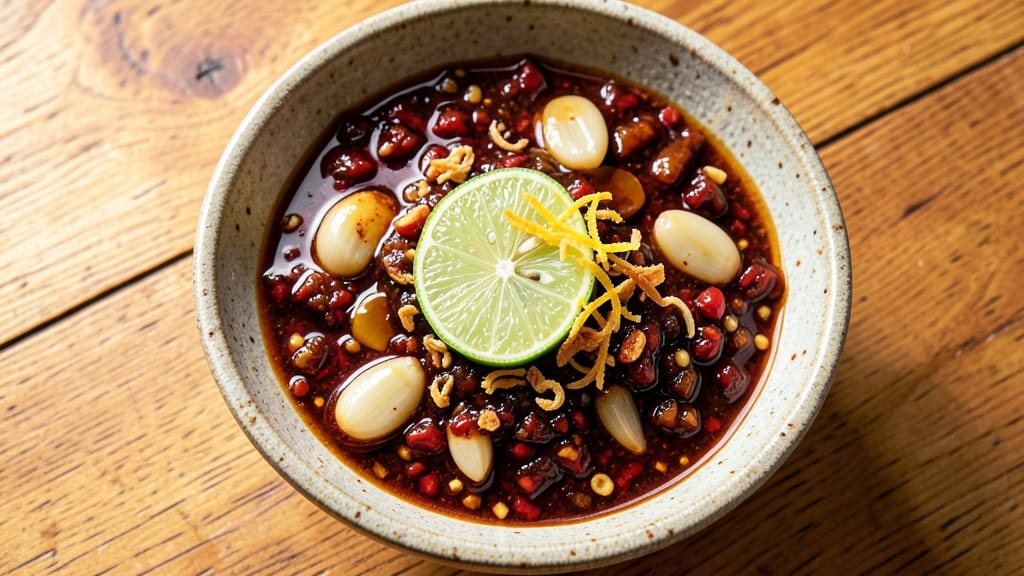
This authentic Thai chili sauce delivers the perfect balance of fiery heat, sweetness, and aromatic depth that transforms any dish. The secret lies in fresh Thai chilies, fragrant garlic, and a touch of palm sugar—simmered together to create a sauce that’s vibrant, tangy, and impossible to resist.
I’ve perfected this recipe over years of testing, ensuring every batch captures the bold flavors of street-side Thai cuisine without compromising authenticity.
The sauce starts with a quick sauté of garlic, shallots, and Thai chilies, which mellows their heat while releasing their natural oils. A splash of fish sauce (or vegetarian alternative) adds umami depth, while palm sugar balances the spice with just the right amount of sweetness.
The result is a smooth, glossy sauce that clings beautifully to noodles, stir-fries, or grilled meats, elevating every bite with a burst of authentic Thai flavor.
What makes this recipe stand out is its versatility—use it as a dipping sauce for spring rolls, a stir-fry glaze, or a finishing touch for soups and curries.
The sauce keeps well in the fridge for up to two weeks, so you can make a big batch and enjoy it throughout the week. Whether you love it fiery or prefer a milder kick, this recipe adapts to your taste while staying true to its roots.
Ready to bring the bold flavors of Thailand to your kitchen? The process is straightforward, and the results are undeniably restaurant-quality. Let’s get started—your taste buds will thank you.
Ingredients for authentic thai chili sauce
Nine vibrant ingredients for a sauce that packs authentic Thai heat and sweetness.
| Ingredient | Amount | Notes |
|---|---|---|
| Fresh Thai Bird's Eye Chilies 🌶️ | ½ cup | Stems removed, roughly chopped |
| Shallots 🧅 | ¼ cup | Minced finely (about 3-4 whole) |
| Garlic Cloves 🧄 | 6 cloves | Peeled and smashed |
| Palm Sugar 🍯 | ¼ cup | Or substitute brown sugar |
| Fish Sauce 🍶 | ¼ cup | Thai Red Boat brand preferred |
| Lime Juice 🍋 | ¼ cup | Freshly squeezed |
| Fresh Lemongrass 🌿 | ¼ cup | Bruised and finely chopped (about 2 stalks) |
| Fresh Thai Basil Leaves 🌿 | ¼ cup | Packed, stems removed |
| Extra-Virgin Olive Oil 🫒 | ¼ cup | For sautéing |
| Kosher Salt 🧂 | ½ tsp | Diamond Crystal preferred |
The Thai chilies are the heart of this sauce—fresh ones from an Asian market bring the best flavor, but frozen will work in a pinch. Look for bright red, firm chilies with no soft spots. Shallots and garlic should be fresh too; yellowing or sprouting means toss them. Palm sugar gives that authentic caramelized sweetness, but brown sugar works just as well if you're in a hurry. I grab my fish sauce from Asian grocery stores—Red Boat is the gold standard, but any reputable brand will do. Lemongrass is a must for that aromatic depth; if you can't find fresh, frozen works too, just thaw and bruise it first.
No Thai chilies? Serrano or jalapeño peppers will give you heat, though the flavor won't be identical. Skip the fish sauce? Vegetarian oyster sauce or soy sauce adds umami, but you'll lose some depth. Fresh basil is ideal, but dried Thai basil or regular basil in a pinch still works. The olive oil is just for cooking—don't skimp on the quality, though. For a milder sauce, reduce the chilies to 3 tablespoons chopped, or remove seeds. If you want extra richness, add 1 tablespoon of coconut cream at the end. The key is balancing heat, sweetness, and tang—taste as you go!
This sauce tastes even better the next day as the flavors meld. Store it in a clean glass jar in the fridge for up to 2 weeks, or freeze for 3 months in ice cube trays for single-use portions. I like to make a big batch and keep it on hand for noodles, stir-fries, or drizzling over grilled meats. The sauce thickens as it cools, so stir in a splash of water if it gets too stiff. Trust me, you'll want to make extra—it disappears fast!
Why You'll Love This Recipe
- No-Fuss Blend: I swear by this recipe because it’s five ingredients, one pot. No peeling endless garlic cloves—just smash those shallots and chilies with the flat of your knife, toss them in, and let the heat do the work. Honestly, I’ve made it while waiting for my rice to cook.
- Umami Bomb: That first taste? Chef’s kiss. The fish sauce cuts through the chilies’ fire while palm sugar softens the edges—sweet, salty, funky all at once. The garlic and shallots caramelize just enough to add this deep, toasty layer that makes it taste like a street cart in Bangkok.
- Sauce for Everything: Slather it on grilled pork skewers, drizzle it over noodles, or mix it into a quick stir-fry. I keep a jar in my fridge for when I’m lazy and need flavor—even on plain rice, it’s a game-changer. (Yes, even on a Tuesday night.)
- Pantry Goldmine: This sauce lasts weeks in the fridge, and the ingredients? Cheap. A single jar of fish sauce and a bunch of chilies stretch across multiple meals. I’ll be real: I’ve stretched one batch into three different dishes without breaking the bank.
Step-by-step instructions for authentic Thai chili sauce
Balancing heat, sweetness, and fresh herbs is the secret to this vibrant Thai sauce.
Prepare the Aromatic Base
Heat the 0.25 cup extra-virgin olive oil in a medium saucepan over medium heat. Add the 6 cloves smashed garlic and 0.25 cup minced shallots, cooking for 3-4 minutes until the shallots soften and become translucent. You'll smell that irresistible garlic aroma—this is your foundation.
Next, add the 0.25 cup finely chopped fresh lemongrass and cook for another 2 minutes, stirring constantly. The lemongrass should release its citrusy fragrance. If you notice the garlic begins to brown too quickly, reduce the heat slightly to medium-low—you want flavor, not burnt bits.
Add Chilies and Palm Sugar
Increase heat to medium-high and add the 0.5 cup roughly chopped fresh Thai bird's eye chilies (stems removed). Cook for 1-2 minutes, stirring frequently, until the chilies soften and release their fiery oils. Be careful—they'll make the air smell intense, but that's exactly what we want.
Reduce heat to medium and stir in the 0.25 cup palm sugar. Let the mixture cook for 3-4 minutes, stirring occasionally, until the sugar begins to dissolve and caramelize slightly. You'll see a glossy sheen develop—this is when the sauce starts coming together. If the sugar clumps, add 1 tablespoon water to help it integrate smoothly.
Build Depth with Fish Sauce and Lime
Pour in the 0.25 cup fish sauce and 0.25 cup freshly squeezed lime juice, stirring constantly. The sauce will bubble vigorously as the acidity reacts with the sugar. Taste at this point—you should feel a balance of sweet, salty, and tangy flavors, with the chilies adding heat in the background. If it tastes too salty, add a pinch more palm sugar; if it's too mild, add a splash more fish sauce.
Let the sauce simmer for 5-7 minutes until it thickens slightly. You're looking for a consistency that coats the back of a spoon but still flows easily. The aroma should be complex—smoky from the chilies, citrusy from the lemongrass, and umami-rich from the fish sauce. If the sauce reduces too quickly, cover the pan and let it cook on low heat to prevent burning.
Finish with Fresh Thai Basil
Remove the pan from heat and stir in the 0.25 cup packed fresh Thai basil leaves (stems removed). The basil will wilt immediately, releasing its anise-like aroma and brightening the sauce. Taste again and adjust seasoning if needed—this is your final chance to balance the flavors. The sauce should be vibrant, slightly spicy, and perfectly harmonious.
Let the sauce cool for 5 minutes before transferring to a clean jar. The flavors will continue to meld as it sits. Store in the refrigerator for up to 1 week, or freeze for longer storage. This sauce is best used fresh, so plan to use it within a few days for maximum brightness and flavor.
Pro Tips For Making Authentic Thai Chili Sauce
- Cook Chilies Low: After burning my first batch of chilies into a bitter mess, I learned to start on medium-low heat—these little devils release oil fast. Once they soften (about 5 minutes), then crank it up to blister them. Rushing this step turns your sauce into a smoky disaster.
- Mince Shallots Fine: I used to chop shallots roughly, thinking it didn’t matter. Wrong. For that silky texture in the sauce, pulse them in a food processor for 10 seconds—just until they’re a rough paste, not pureed. This dissolves flavor better than knife work ever will.
- Taste Fish Sauce Early: Fish sauce is sneaky—what tastes perfect raw often turns salty after cooking. Add half the amount first, let the sauce simmer 2 minutes, then adjust. I’ve ruined batches by waiting until the end; this step saves you from overdoing it.
- Sweat Garlic Separately: Tossing garlic in with the chilies burns it before it releases aroma. Sauté the minced garlic in a dry pan for 30 seconds until fragrant, then add it to the chili mixture. This keeps the garlic bright and stops the sauce from tasting bitter. (Yes, even if you’re impatient like me.)
Pro cooking tips for this dish
Chili Heat Control
Fresh Thai bird's eye chilies pack serious heat—about 50,000-100,000 Scoville units per chili. For a milder sauce, reduce to 3 tablespoons chopped or remove seeds entirely. If you love heat, keep the full 0.5 cup but add 1 tablespoon palm sugar to balance.
I always taste as I go—start with 1-2 teaspoons on your tongue to gauge intensity before adjusting. 🌶️
Fish Sauce Balance
The 0.25 cup fish sauce (Red Boat brand preferred) adds umami depth but can overpower if overused. For a vegetarian version, substitute 2 tablespoons soy sauce or vegetarian oyster sauce, though the flavor won’t be identical.
If your sauce tastes too salty, add 1 teaspoon more palm sugar to mellow the bite. Trust your taste—this is where authenticity meets personal preference.
Lemongrass Bruising
Bruising lemongrass releases its aromatic oils—lightly crush the stalks with the side of your knife before chopping. This step is non-negotiable for that citrusy depth in the sauce. If using frozen lemongrass, thaw and bruise thoroughly.
Skip this, and your sauce will lack the bright, herbal notes that define Thai cuisine. I bruise mine by rolling the stalk under my palm for 30 seconds before chopping.
Simmering Technique
Simmer the sauce uncovered on medium heat to let excess moisture evaporate naturally. Covering too early can steam the chilies, dulling their heat. If the sauce reduces too quickly, add 1 tablespoon water to maintain balance.
The goal is a glossy, spoonable consistency—not thick like paste, but not watery either. Patience here makes all the difference. ⏰
Fresh Basil Timing
Add the 0.25 cup Thai basil off the heat to preserve its vibrant flavor and color. Cooking it would turn the leaves bitter. Stir gently to wilt the leaves without crushing them—this releases their anise-like aroma.
If you can’t find Thai basil, regular basil or even cilantro works in a pinch, though the flavor will differ slightly. The basil should look like it’s just barely melted into the sauce.
Storage Secrets
Store the sauce in a clean glass jar in the fridge for up to 2 weeks. The flavors actually improve as they meld! For longer storage, freeze in ice cube trays—thaw one cube at a time for single-use portions.
If the sauce thickens upon reheating, stir in 1 teaspoon water to restore smoothness. I double the recipe and freeze half—it’s that good. 💫
Nutrition facts
Frequently asked questions
Can I substitute regular peppers for Thai chilies?
Yes, but the flavor won't be identical. Use serrano or jalapeño peppers for heat, but reduce quantity by half (e.g., 3 tablespoons chopped instead of 0.5 cup). For authenticity, seek out Thai bird's eye chilies—they deliver that signature smoky, fruity heat. If you can't find them, frozen Thai chilies work too, but thaw and pat dry first to avoid excess moisture in your sauce.
How do I make this sauce vegetarian?
Replace the fish sauce with 2 tablespoons soy sauce or vegetarian oyster sauce for umami depth. Add 1 teaspoon miso paste for extra richness. The sauce will still be delicious but lose some traditional complexity. For balance, increase palm sugar slightly to compensate for the saltier substitutes. Taste as you go—this is where you'll notice the biggest difference.
Why does my sauce taste too salty?
Fish sauce is potent—start with 2 tablespoons and taste before adding the full amount. If it's too salty, balance with 1 teaspoon more palm sugar or a splash of lime juice. The sugar helps mellow the saltiness while adding sweetness. For future batches, reduce fish sauce by 1 tablespoon and compensate with an extra ½ teaspoon salt at the end. Trust your taste buds!
Can I use this sauce on non-Thai dishes?
This versatile sauce elevates grilled meats, stir-fries, or even tacos. Drizzle over noodles, use as a marinade, or mix into salad dressings. The key is balance—start with 1 teaspoon and adjust to taste. For creamy dishes, reduce heat slightly by using fewer chilies. The sauce's sweet-spicy profile works surprisingly well with Mexican, Vietnamese, and even Western cuisine.
How do I adjust the spice level?
For milder heat, reduce chilies to 3 tablespoons chopped or remove seeds. For extra spice, keep the full 0.5 cup but add 1 tablespoon palm sugar to balance. Always taste as you go—start with 1 teaspoon on your tongue to gauge intensity. Remember, Thai chilies pack serious heat (50,000-100,000 Scoville units), so adjust gradually.