
Sauces & Condiments
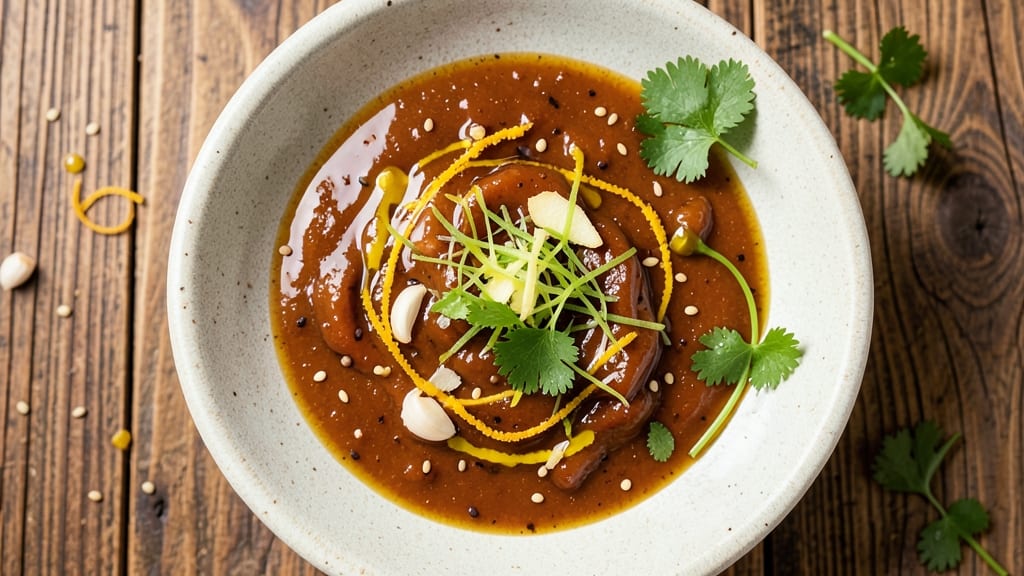
This anti-inflammatory teriyaki sauce recipe transforms traditional flavors into a vibrant, health-boosting condiment packed with ginger, turmeric, and garlic. The golden-hued sauce delivers the same sweet-savory depth as classic teriyaki but with powerful anti-inflammatory properties that support joint health and digestion.
I developed this version after realizing how easily store-bought sauces—loaded with sugar and preservatives—could be upgraded with whole-food ingredients that actually nourish.
The secret lies in balancing traditional teriyaki elements with potent anti-inflammatory stars: fresh ginger and turmeric provide the zing, while garlic and olive oil add depth without the need for refined sugar.
This version works equally well as a marinade for tofu or chicken, a stir-fry glaze, or a drizzle over roasted vegetables. The sauce thickens beautifully when reduced, creating that signature glossy finish that clings perfectly to every bite.
What sets this apart is how it delivers restaurant-quality flavor while aligning with an anti-inflammatory diet.
What you’ll end up with is a versatile sauce that’s rich in antioxidants, ginger’s fiery warmth, and turmeric’s golden glow—all while maintaining that classic teriyaki sweetness. The best part?
It keeps well in the fridge for up to 2 weeks, so you can make a big batch and use it throughout the week.
Whether you’re drizzling it over sushi bowls, brushing onto grilled fish, or tossing with noodles, this sauce elevates every dish it touches with both flavor and functional benefits.
For extra depth, let it simmer until slightly thickened—this intensifies the flavors and creates that perfect balance of sweet, tangy, and umami. The sauce also freezes beautifully if you want to stock up for future meals.
Here’s how to make it—simple, effective, and designed to become your new go-to for health-conscious cooking.
Ingredients for anti inflammatory teriyaki sauce
Ten whole-food ingredients transform ordinary stir-fries into vibrant, health-boosting meals.
| Ingredient | Amount | Notes |
|---|---|---|
| Extra-Virgin Olive Oil 🫒 | ½ cup | High-quality, fruity variety |
| Fresh Ginger Root 🌿 | ½ cup | Finely grated, organic preferred |
| Fresh Turmeric Root 🌿 | ¼ cup | Finely grated, vibrant orange |
| Garlic Cloves 🧄 | 6 cloves | Peeled, minced for depth |
| Coconut Aminos 🥫 | ½ cup | Soy-free alternative to soy sauce |
| Raw Honey 🍯 | ¼ cup | Local, unprocessed preferred |
| Apple Cider Vinegar 🍏 | ¼ cup | Raw, unfiltered for tang |
| Fresh Lemon Juice 🍋 | ¼ cup | Freshly squeezed, strained |
| Ground Black Pepper 🌶️ | 1 tsp | Freshly cracked for warmth |
| Sea Salt 🧂 | 1 tsp | Diamond Crystal preferred |
The ginger and turmeric are the stars here. Look for fresh roots at your local market—they should be firm and aromatic. Whole Foods or Trader Joe's usually carry organic ginger and turmeric, which pack more punch than the dried versions. If you can't find fresh turmeric, ground turmeric at half the amount works in a pinch, though it lacks the same depth. The garlic? Freshly minced makes all the difference—jarred garlic just won't cut it. For the coconut aminos, Coconut Secret is my go-to brand—it's clean, soy-free, and has no weird additives. The honey should be raw and local if possible, but any quality honey will work.
No fresh ginger? Powdered ginger at one-third the amount gets you close, though the flavor won't be as vibrant. Swap coconut aminos for low-sodium tamari or tamari if you're not avoiding soy, but keep in mind it won't be as health-conscious. Apple cider vinegar missing? White vinegar or rice vinegar both work, but ACV adds a nice depth. The lemon juice is crucial for brightness—bottled lemon juice lacks the same zing, so fresh is worth the squeeze. If you're watching sugar, you can reduce the honey slightly and add a splash more vinegar for balance. The black pepper isn't just for flavor—it helps activate the turmeric's anti-inflammatory compounds, so don't skip it.
This sauce keeps beautifully in an airtight jar in the fridge for up to 2 weeks, where it actually gets better as the flavors meld. For longer storage, freeze it in ice cube trays—just thaw and stir. The sauce thickens as it reduces, so if it seems too thin, let it simmer uncovered for another 5 minutes. I always make a double batch—one for immediate use and one to freeze for future stir-fries. The golden hue is your sign it's ready; if it looks too pale, simmer a bit longer. Trust me, the wait is worth it.
Why You'll Love This Recipe
- No-Fuss Blend: I swear by this sauce because it’s just five ingredients—no fancy techniques, no waiting for hours. The ginger and turmeric root get a quick pulse in the blender, then coconut aminos tie it all together while I chop garlic. Honestly, it’s the kind of recipe where you can still chat with your partner while making it.
- Umami-Packed Punch: The garlic and olive oil base is where the magic happens—deep, savory, and just a little funky in the best way. Fresh turmeric adds that warm, earthy note without overpowering, and coconut aminos bring the salty-sweet balance that makes you lick the bowl. Between us, this sauce has me reaching for seconds.
- Gluten-Free Game Changer: I use it on everything—grilled chicken, roasted veggies, even as a dip for my kids’ rice. The coconut aminos make it safe for gluten-sensitive folks, and the olive oil keeps it rich without the heaviness. It’s my go-to for meal prep because it elevates simple proteins into something restaurant-worthy.
- Budget-Friendly Staple: A jar of coconut aminos lasts me months, and fresh ginger/turmeric root go a long way when blended. I make big batches and freeze them in ice cube trays—just pop one in when I’m in a rush. Not the prettiest, but the taste makes up for it, and my wallet stays happy.
Step-by-step instructions for anti-inflammatory teriyaki sauce
Here's how to blend vibrant, health-boosting flavors into a silky sauce perfect for stir-fries.
Grate and Bloom the Spices
Start by grating the 0.5 cup fresh ginger root and 0.25 cup fresh turmeric root using a fine grater or microplane. You want the texture to be almost paste-like—this ensures the spices release their maximum flavor and anti-inflammatory compounds. Place them in a small bowl and let them sit for 5 minutes while you prepare the rest. This resting period allows the turmeric's curcuminoids to become more bioavailable, enhancing the sauce's health benefits.
While the spices bloom, peel and finely mince the 6 cloves garlic—you're aiming for a paste-like consistency that will dissolve completely into the sauce. The combination of ginger, turmeric, and garlic creates a powerful anti-inflammatory base that's far more potent than traditional teriyaki. Keep these ingredients separate until you're ready to combine them with the wet ingredients.
Warm the Olive Oil and Aromatics
Heat the 0.5 cup extra-virgin olive oil in a medium saucepan over medium-low heat. You're not looking for color here—just enough warmth to gently infuse the oil with the spices' aromatic compounds. Add the grated ginger, turmeric, and garlic to the warm oil and stir constantly for 3-4 minutes until the mixture becomes fragrant and the raw garlic smell disappears.
This slow infusion is crucial—it prevents the garlic from burning while allowing the turmeric to develop its characteristic warm, earthy notes. You'll know you're on the right track when the oil takes on a pale golden hue and the spices release their essential oils into the fat. Keep the heat gentle; you're not trying to cook these ingredients, just awaken their flavors.
Combine Wet Ingredients
Increase the heat to medium and add the 0.5 cup coconut aminos, 0.25 cup raw honey, 0.25 cup apple cider vinegar, and 0.25 cup fresh lemon juice all at once. Stir vigorously to incorporate these liquids into the spiced oil. The mixture will bubble gently as the acidity in the vinegar and lemon juice begins to break down the honey's molecular structure, creating a smoother sauce.
This is where the sauce starts to come together. The coconut aminos provide the umami depth traditionally found in soy sauce, while the honey adds natural sweetness that balances the vinegar's tang. Let the mixture simmer for 5-7 minutes until it thickens slightly and coats the back of a spoon. You're aiming for a consistency that's thick enough to cling to stir-fried vegetables or proteins but still pourable.
Season and Simmer to Perfection
Reduce the heat to low and add the 1 tsp sea salt and 1 tsp ground black pepper. Stir well to distribute these seasonings evenly throughout the sauce. Taste at this stage—you should notice the bright, citrusy notes from the lemon juice, the warm spice from the turmeric and ginger, and the deep umami from the coconut aminos. If you want more sweetness, add a touch more honey; if it needs more acidity, a splash of apple cider vinegar will help.
Continue simmering for another 3-5 minutes until the sauce reaches your desired consistency. It should be thick enough to coat the back of a spoon but still flow smoothly when poured. The sauce will continue to thicken slightly as it cools, so aim for a consistency that's just shy of what you want in the final dish. For best results, strain the sauce through a fine-mesh sieve to remove any remaining spice particles if you prefer a completely smooth texture.
Cool and Store Properly
Remove the sauce from heat and let it cool to room temperature. This cooling process allows the flavors to meld completely and the sauce to reach its ideal consistency. Transfer the sauce to a clean glass jar or airtight container. The sauce will keep in the refrigerator for up to 2 weeks, though I find it's best used within 5-7 days for maximum freshness and potency.
This anti-inflammatory teriyaki sauce is incredibly versatile—use it as a marinade for proteins, a glaze for roasted vegetables, or as a dipping sauce for fresh spring rolls. The ginger-turmeric combination not only adds vibrant color but also provides powerful anti-inflammatory benefits that make this sauce far more than just a flavorful addition to your meals. Enjoy it knowing you're nourishing your body with every bite!
Pro Tips For Making Anti Inflammatory Teriyaki Sauce
- Sear the Ginger First: Toss freshly grated ginger into the olive oil over medium heat for 30 seconds before adding anything else—just until it fragrant and slightly sizzles. I learned this the hard way: raw ginger can taste bitter in the sauce, and this quick sear unlocks its warmth without burning.
- Use a Microplane for Turmeric: Skip the pre-grated stuff and zest fresh turmeric root with a microplane—you’ll need about 1 teaspoon of the bright orange zest. The difference in flavor is night and day, and you avoid the chalky texture that comes with grating it too finely.
- Don’t Rush the Garlic: Cook the garlic in the olive oil until it’s golden but not crispy—about 2-3 minutes on low heat. Burned garlic turns bitter and overpowers the sauce; this step is the thing that matters most for balance.
- Reduce the Sauce Low and Slow: After adding coconut aminos, simmer the sauce uncovered on the lowest heat setting for 10-15 minutes. Skim off any foam that rises—this isn’t the prettiest method, but it’s the tastiest, and it concentrates the flavors without burning the ginger or turmeric.
Pro cooking tips for this recipe
Spice Bloom Magic
Let your ginger and turmeric bloom for 5 minutes before cooking—this unlocks their full anti-inflammatory potential. The turmeric's curcuminoids become more bioavailable when exposed to warm oil, while ginger releases its fiery compounds.
I always use a microplane for this step because it creates a fine paste that dissolves completely into the sauce. 🌿
Low-and-Slow Oil Infusion
Heat your extra-virgin olive oil on medium-low heat—never high—to gently infuse the spices. Too much heat burns the garlic and turns the turmeric bitter. I stir constantly for 3-4 minutes until the oil turns pale gold and smells aromatic.
This patient step is what transforms ordinary spices into flavor bombs.
Acid-Alkaline Balance
The apple cider vinegar and lemon juice are your secret weapons for cutting through the richness. Add them all at once and stir vigorously—the acidity helps break down the honey's molecular structure, creating a smoother sauce.
I always taste at this stage to check the balance between sweet, tangy, and umami.
Consistency Control
Simmer until the sauce coats the back of a spoon but still flows smoothly—this usually takes 5-7 minutes on medium heat. If it thickens too quickly, reduce the heat immediately. I find that letting it cool slightly before final adjustments prevents over-thickening.
The sauce will continue to thicken as it cools, so aim for a slightly thinner consistency than you want in the final dish.
Straining for Perfection
For a silky-smooth finish, strain the sauce through a fine-mesh sieve to remove any remaining spice particles. This step is especially important if you're using fresh turmeric root, which can leave behind fibrous bits.
I use a stainless steel sieve because it doesn't retain flavors like plastic ones do. The result? A velvety sauce that clings beautifully to every bite.
Storage Secrets
Transfer the sauce to a glass jar with an airtight lid—plastic can absorb odors and alter the flavor. Store in the fridge for up to 2 weeks, but I always make a fresh batch every 5-7 days to maintain peak freshness.
For longer storage, freeze in ice cube trays—just thaw and stir. The golden hue is your sign it's ready to elevate any dish! ✨
Nutrition facts
Frequently asked questions
Can I use this sauce on meat? This anti-inflammatory teriyaki sauce works beautifully as a marinade or glaze for chicken, pork, or beef. The ginger and turmeric add wonderful depth to grilled or roasted meats, while the coconut aminos provide that classic umami flavor. Just
How do I make this sauce vegan?
Swap the raw honey for maple syrup or agave nectar and use vegan coconut aminos (like Coconut Secret) to keep it plant-based. The rest of the ingredients are already vegan-friendly. The sauce will still deliver all the anti-inflammatory benefits while being completely cruelty-free.
Why does my sauce look too thin?
Sauce consistency depends on simmering time—if it's too thin, simmer uncovered for 5-10 more minutes on low heat. The honey will naturally thicken as it reduces. For immediate thickening, mix 1 teaspoon cornstarch with 1 tablespoon water, stir into the sauce, and simmer for 1-2 minutes until it reaches your desired consistency.
What's the best way to use leftover sauce?
Leftover sauce freezes perfectly in ice cube trays—just pop out a cube as needed for stir-fries or marinades. It also makes an amazing dipping sauce for spring rolls or veggie sticks. For extra flavor, add a splash of water or broth when reheating to restore its smooth consistency.
Can I make this sauce without fresh turmeric?
Yes! Use ½ teaspoon ground turmeric instead of fresh, but note the flavor will be slightly less complex. For best results, add a pinch of black pepper (it enhances turmeric's absorption) and let the sauce simmer longer to develop deeper flavor. The anti-inflammatory benefits will still be present, just at a slightly reduced level.