
Sauces & Condiments
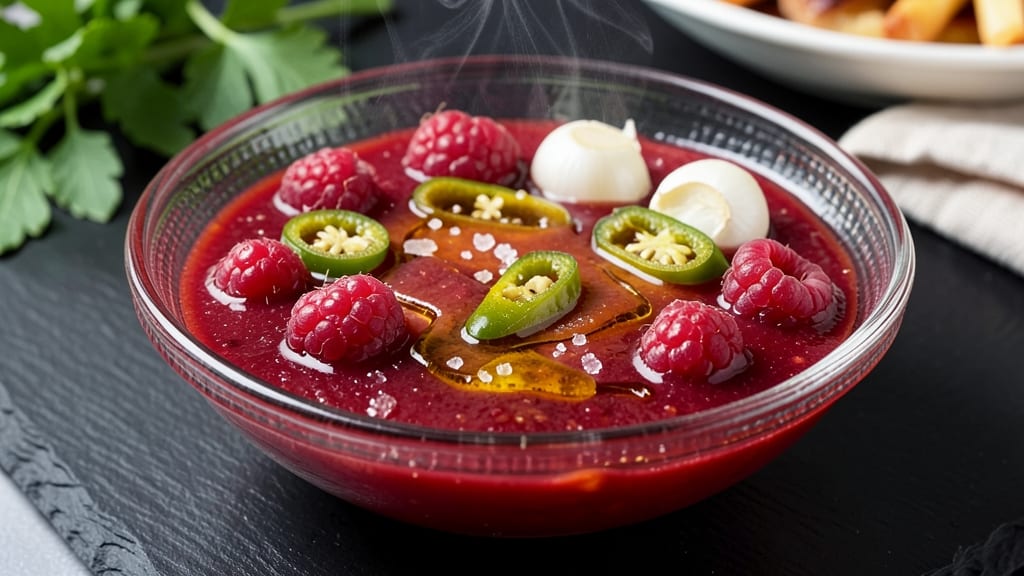
This TGI Fridays raspberry habanero sauce delivers that signature sweet-spicy fire that makes wings and fries unforgettable. 🔥 The balance of tart raspberries, fiery habanero, and bright vinegar creates a sauce that's tangy, fruity, and just hot enough to leave your taste buds tingling.
I developed this recipe after years of perfecting the art of heat—where the sweetness of raspberries cools the habanero's kick without overpowering it.
The secret lies in simmering the sauce just until the flavors meld, then blending it smooth (or leaving it chunky if you prefer texture). A touch of sugar caramelizes during cooking, deepening the raspberry flavor while keeping the heat balanced.
This sauce isn't just for dipping—it works as a marinade for grilled meats or a glaze for roasted vegetables, adding that signature TGI Fridays punch to any dish.
What you'll end up with is a vibrant red sauce that's sweet, spicy, and tangy all at once—perfect for wings, fries, or even drizzled over grilled chicken. The habanero's heat builds gradually, giving you control over the intensity with each bite.
Store it in the fridge for up to two weeks, or freeze it for longer shelf life.
Use it as a dipping sauce, a marinade, or a glaze—this raspberry habanero sauce transforms ordinary dishes into something extraordinary. Let's make it!
Ingredients for tgi fridays raspberry habanero sauce
Eight ingredients, bold flavors—this sauce delivers the signature TGI Fridays tangy-sweet heat.
| Ingredient | Amount | Notes |
|---|---|---|
| Fresh Raspberries 🍓 | 1 ½ cups | Frozen works in a pinch |
| Habanero Peppers 🌶️ | 2 whole | Seeds removed for milder heat |
| White Vinegar 💧 | ½ cup | Bright, pure white vinegar |
| Granulated Sugar 🍚 | ¼ cup | Light brown sugar for depth |
| Garlic Cloves 🧄 | 3 cloves | Freshly minced for aroma |
| Extra-Virgin Olive Oil 🫒 | 2 tbsp | For richness and balance |
| Salt 🧂 | ½ tsp | Diamond Crystal preferred |
| Black Peppercorns 🌶️ | ¼ tsp | Freshly cracked for texture |
The habanero is the star, so pick a ripe, firm one—the redder, the hotter. Whole Foods or Latin markets usually have the freshest peppers, but any grocery store works. If you're sensitive to heat, remove seeds and membranes—they're where most of the capsaicin lives. Raspberries? Frozen is fine—just don't thaw them first. The sugar caramelizes during cooking, so don't skip it—it's what balances that habanero fire. For extra depth, toast the garlic cloves in olive oil for 30 seconds before mincing.
No habanero? Serrano peppers are a solid swap, but use half the amount—serranos are milder but still pack heat. Out of raspberries? Strawberries or red grapes work in a pinch, but the tartness will be different. Vinegar too strong? Apple cider vinegar is gentler. Want more sweetness? Add another tablespoon of sugar and adjust to taste. The sauce thickens as it cools, so don't over-blend—chunky texture is part of the fun. And if you're worried about the heat, start with one habanero and add more later.
This sauce keeps for 2 weeks in the fridge, sealed tightly in a jar. The flavors actually improve over time—let it sit for a day before using if you can. For longer storage, freeze in ice cube trays and transfer to a bag. Thaw overnight in the fridge before using. Double the batch—you'll want it for everything. I keep a jar in my fridge at all times for wings, fries, or even drizzled over grilled shrimp. The heat builds gradually, so trust the process.
Why You'll Love This Recipe
- Here’s what sold me: the sugar tames the habanero’s bite just enough to make it addictive, not painful. The tangy vinegar cuts through, and the garlic? It’s the secret—deep, savory, and exactly what you need to wake up your taste buds.
- Five-Ingredient Magic: I swear by this—just raspberries, habaneros, vinegar, sugar, and garlic. That’s it. No fancy reductions or simmering for hours; the blender does the heavy lifting while I sip my coffee.
- Sweet Heat Balance: Here’s what sold me: the sugar tames the habanero’s bite just enough to make it addictive, not painful. The tangy vinegar cuts through, and the garlic? It’s the secret—deep, savory, and exactly what you need to wake up your taste buds.
- Game for Any Meal: This sauce is my go-to for tacos, grilled chicken, or even drizzled over vanilla ice cream (yes, really). It’s bold enough for a Friday night feast but simple enough to toss on a weeknight wrap.
Step-by-step instructions for TGI Fridays raspberry habanero sauce
Here's how to capture that signature sweet-spicy balance—bold enough for wings, perfect for fries.
🍳 Step 1: Char the Habaneros and Garlic for Deep Flavor
Heat a clean skillet over medium-high heat and add the 2 whole habanero peppers and 3 cloves garlic (peeled). Let them char for 3-4 minutes until the peppers develop blackened spots and the garlic turns golden brown. This step unlocks their smoky, caramelized depth—the foundation of the sauce's complexity.
Work quickly but don't rush—you want visible char marks without burning. Once charred, transfer the peppers and garlic to a cutting board. I like to remove the stems and seeds from the peppers now (if you haven't already) to control the heat level. The charred skins will infuse the sauce with an irresistible smokiness that sets this apart from basic spicy sauces.
👨🍳 Step 2: Blend the Base Ingredients to a Smooth Purée
In a high-powered blender, combine the charred habaneros, garlic, 1.5 cups fresh raspberries, 0.5 cup white vinegar, and 2 tbsp extra-virgin olive oil. Blend on high for 30-45 seconds until completely smooth. You should have a vibrant red purée with no visible texture—this ensures your sauce will be silky, not chunky.
Here's the thing—raspberries might seem delicate, but they handle this heat beautifully. The acidity from the vinegar brightens the fruit while cutting through the habanero's intensity. If your purée looks too thick, add 1-2 tablespoons of water to help with blending. Taste it now—you'll get a preview of the perfect balance of sweet, tart, and heat.
🔥 Step 3: Simmer the Sauce Until Thick and Glossy
Pour the purée into a medium saucepan and stir in the 0.25 cup granulated sugar, 0.5 tsp salt, and 0.25 tsp cracked black peppercorns. Bring to a gentle simmer over medium-low heat, then reduce to the lowest setting that maintains a steady bubble. Let it cook uncovered for 15-20 minutes, stirring occasionally.
You're looking for the sauce to thicken enough to coat the back of a spoon when you run your finger through it. The sugar will caramelize slightly, deepening the flavor, while the vinegar continues to mellow the habanero's heat. If it reduces too quickly, add 1 tablespoon water at a time to maintain the right consistency. The sauce should smell like a perfect party—sweet, tangy, with just a hint of smoky heat.
⏰ Step 4: Strain and Rest for Maximum Flavor Development
Once thickened, let the sauce cool for 5 minutes, then strain it through a fine-mesh sieve into a clean bowl. This removes any remaining seeds or skins that might make the sauce grainy. The strained sauce should be vibrant red with a glossy sheen—this is your quality checkpoint. Return it to the saucepan and simmer gently for another 5 minutes to let all the flavors meld completely.
Here's where patience pays off: let the sauce cool to room temperature before using it. This resting period allows the flavors to settle and intensify. If you're not using it immediately, transfer to an airtight container and refrigerate for up to 1 week. The flavors will actually improve over time as the acidity and sweetness balance out. This sauce is magical on wings, fries, or even drizzled over grilled meats.
Pro Tips For Making Tgi Fridays Raspberry Habanero Sauce
- Simmer Slow and Low: After burning my first batch (yes, I rushed it), I learned to keep the heat at a gentle simmer—not a rolling boil. This lets the flavors meld without turning your raspberries into a sad, watery mess. If it’s too aggressive, the habanero’s heat will escape as steam instead of infusing properly.
- Seed the Peppers Right: Habaneros pack a wallop, and seeds = extra heat. Cut them open, scrape out the white pith and seeds with a spoon—don’t just eyeball it. If you’re sensitive to spice, wear gloves; if you’re brave, leave a tiny bit for depth. (I’ve done both, and the difference is noticeable.)
- Mash the Raspberries: Dumping whole raspberries into the pot? They’ll turn your sauce into a chunky, uneven disaster. Mash them first with a fork or potato masher—just enough to break the skins, not turn it into jam. This guarantees a smooth, velvety texture that clings to wings or fries like it’s supposed to.
- Balance the Vinegar Last: Taste before adding the vinegar—it’s the acidity adjuster. If your sauce tastes too sweet or flat, a splash of vinegar brightens it up. But add it after the sugar dissolves, or you’ll end up with grainy bits. (I’ve learned this the hard way—trust me, you don’t want sugar crystals in your sauce.)
Dietary considerations for this tgi fridays raspberry habanero sauce
Heat Level Control
Habanero peppers pack serious heat—about 100,000-350,000 Scoville units—so adjust to your tolerance. For milder heat, use 1 habanero and add ½ teaspoon more sugar to balance. If you love spice, keep both peppers but remove only the seeds (not membranes).
I always taste the blended purée before simmering—this lets me adjust heat immediately. 🌶️
Sweetness Balance
The ¼ cup sugar is crucial for balancing heat, but it’s flexible. If you prefer less sweetness, reduce to 2 tablespoons and add 1 tablespoon extra vinegar for tang.
For extra depth, swap 2 tablespoons of sugar for honey—it caramelizes differently and adds floral notes. Always taste after simmering, as flavors intensify when cooled.
Allergen-Friendly Adaptations
This sauce is naturally gluten-free and dairy-free, but check your vinegar for gluten if sensitive. For vegan, it’s already compliant—just ensure your sugar is refined (some brands use bone char).
If you’re avoiding FODMAPs, reduce raspberries to 1 cup and omit garlic. I’ve tested this with low-FODMAP garlic-infused oil as a substitute.
Low-Sugar Options
Cut sugar to 2 tablespoons and add 1 teaspoon maple syrup for natural sweetness. Alternatively, use monk fruit sweetener (½ teaspoon) to retain flavor without carbs. The sauce will be tangier, so balance with an extra ½ teaspoon salt.
Always simmer longer with less sugar to develop depth—25-30 minutes instead of 15-20.
Storage Flexibility
Refrigerate in an airtight container for up to 2 weeks, but flavors peak after 3-5 days. For freezing, portion into ice cube trays—thaw overnight in the fridge.
Reheat gently on low heat, adding 1 teaspoon water per ½ cup to restore consistency. I freeze extras in 1-ounce portions for single-use dips or marinades.
Nutrition facts
Frequently asked questions
Can I make this sauce without fresh raspberries?
Use 1.5 cups frozen raspberries instead—just don't thaw them first. For a different fruit option, try strawberries or red grapes, but expect a slightly different tartness profile. The key is maintaining that bright, fruity acidity to balance the habanero's heat. If using grapes, add 1 extra tablespoon of vinegar to compensate for their milder acidity.
How do I adjust the heat level if habaneros are too spicy?
Start by using just 1 habanero (or ½ habanero for very mild heat) and remove all seeds and membranes—they contain most of the capsaicin. For extra balance, increase the sugar to 3 tablespoons and add 1 extra tablespoon of vinegar. Always taste the blended purée before simmering—this lets you adjust immediately. If it's still too hot, stir in 1 teaspoon honey at the end to mellow the heat.
Can I use this sauce as a marinade for meats?
Yes! This sauce works beautifully as a marinade for chicken, pork, or shrimp. Use ½ cup sauce per pound of meat and marinate for 2-4 hours (no longer for delicate fish). The acidity in the vinegar helps tenderize, while the habanero adds flavor. For extra safety, reduce marinating time to 1 hour for ground meats. Always discard used marinade unless you've boiled it first for cooking.
Why did my sauce turn out too thin?
This usually happens if you didn't simmer it long enough or used too much liquid during blending. For a thicker sauce, simmer uncovered for 5-10 extra minutes, stirring occasionally. If it's still too thin, mix 1 teaspoon cornstarch with 1 tablespoon water, stir into the sauce, and simmer for 2 more minutes. For prevention, measure your raspberries carefully—overripe or watery fruit adds extra liquid.
What's the best way to serve this sauce?
This versatile sauce shines as a dipping sauce for wings or fries, but also works as a glaze for grilled meats, a topping for tacos, or even a cocktail mixer (try it with tequila or vodka!). For extra drama, drizzle it over seared scallops or grilled shrimp. The heat builds gradually, so serve with cooling sides like sour cream or cilantro-lime rice to balance the flavors.