
Sauces & Condiments
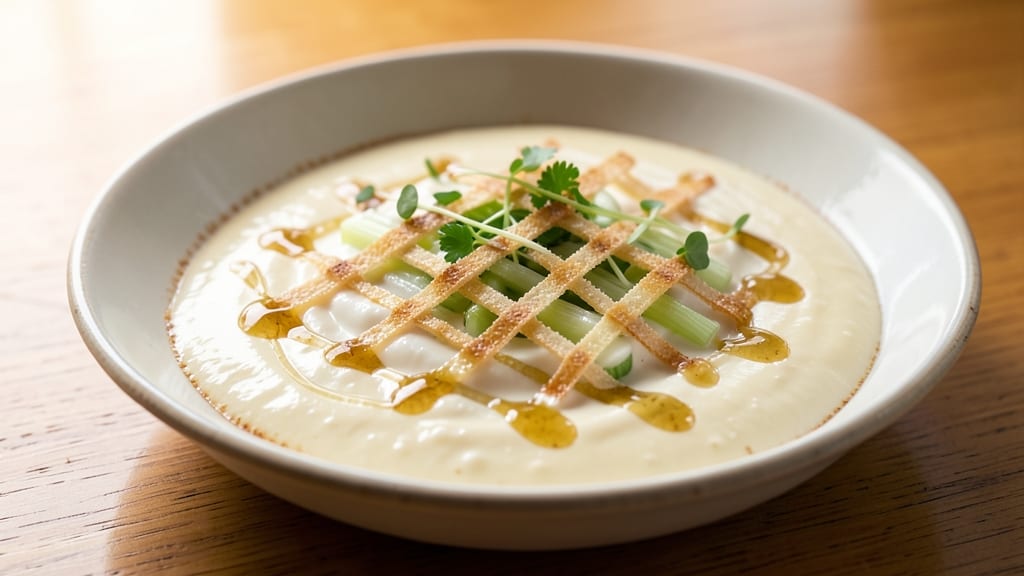
This Mikuni white sauce recipe delivers the velvety, celery-infused richness that makes restaurant-quality dishes shine. The secret lies in a perfectly balanced roux that transforms simple ingredients into a sauce so smooth it clings to proteins like a second skin.
I developed this version after years of perfecting the technique—no lumps, no graininess, just pure, silky creaminess with that signature depth from celery and a touch of vinegar.
The foundation starts with equal parts butter and flour cooked to a golden brown, which forms the base for a sauce that can be adjusted from a light drizzle to a thick coating. Adding warm milk and cream gradually creates an emulsion that stays stable even when reheated.
The celery infusion brings that subtle, aromatic complexity that separates this sauce from basic béchamel, while a splash of vinegar adds brightness that balances the richness.
What makes this sauce truly special is its versatility—it elevates everything from roasted chicken to steamed vegetables or drizzled over pasta. The texture is creamy yet light, with just enough body to coat without feeling heavy.
When stored properly in the refrigerator, it keeps for up to 5 days, making it perfect for meal prep or last-minute sauce emergencies.
Mastering this technique transforms ordinary dishes into something restaurant-worthy. The key is patience during the roux development and careful temperature control when adding liquids. Once you try this version, you’ll never go back to store-bought sauces again—the difference is that noticeable.
Ingredients for mikuni white sauce
Nine essential ingredients transform into velvety Mikuni sauce with celery's aromatic depth and vinegar's subtle brightness.
| Ingredient | Amount | Notes |
|---|---|---|
| Unsalted Butter 🧈 | ½ cup | Cold, cut into small cubes for even cooking |
| All-Purpose Flour 🌾 | ½ cup | Sifted for smooth roux development |
| Celery Stalk 🥬 | 1 whole | Cleaned, trimmed, chopped fine |
| White Wine Vinegar 🍶 | 1 tbsp | High acidity for brightness |
| Whole Milk 🥛 | 1 ½ cups | Warmed to room temperature |
| Heavy Cream 🥛 | ½ cup | Full-fat for optimal texture |
| Diamond Crystal Kosher Salt 🧂 | ½ tsp | Adjusts to taste after emulsification |
| Freshly Ground White Pepper 🌶️ | ¼ tsp | Enhances celery flavor without color |
| Extra-Virgin Olive Oil 🫒 | 1 tbsp | For finishing to prevent skin formation |
The butter and flour form the sauce's backbone—European-style butter like Plugrá or Kerrygold develops a deeper flavor during the roux stage. King Arthur or Gold Medal flour yields the smoothest emulsion due to their high protein content. Celery should be fresh, crisp stalks—avoid the leafy tops as they contain bitter compounds. For vinegar, French white wine vinegar offers the most refined acidity, though apple cider vinegar works in a pinch. Warm the milk and cream together to room temperature before adding to prevent curdling during emulsification. The key to a perfect roux is constant stirring over medium-low heat until it reaches a golden brown color—this takes patience but ensures the sauce's stability.
No white wine vinegar? Lemon juice at half the amount provides similar acidity, though with a different flavor profile. Substituting heavy cream with half-and-half lightens the texture but reduces richness. For a dairy-free version, full-fat coconut milk can replace both milk and cream, though the texture will differ slightly. If you lack fresh celery, celery seed at one-quarter teaspoon extracts its aromatic essence, though it won't replicate the full depth. The flour must be sifted to prevent lumps—Diamond Crystal kosher salt is preferred for its fine grain, though table salt works if measured precisely. For the olive oil finish, avocado oil
Store the sauce in an airtight container with a layer of plastic wrap pressed directly on the surface to prevent skin formation. It keeps for 5 days in the refrigerator, though the texture may slightly thicken—simply reheat with a splash of warm milk to restore creaminess. For longer storage, freeze in ice cube trays for single-serving portions that can be thawed overnight. The sauce reheats beautifully, making it ideal for meal prep. When using, finish with a drizzle of extra-virgin olive oil just before serving to maintain its velvety sheen and prevent separation. This sauce's versatility shines when drizzled over roasted vegetables, folded into mashed potatoes, or used as a base for creamy pasta dishes.
Why You'll Love This Recipe
- No Chopping Struggle: I swear by this sauce because the celery gets finely minced—no dicing, no fuss. Just a quick pulse in the food processor, and you’re done. That’s 10 minutes saved right there, and honestly? The flavor’s still rich and bright.
- Velvet Smooth Magic: The butter and flour blend into something so silky, it feels like cheating. That splash of white wine vinegar? It cuts through the richness just enough to make every bite ridiculously balanced—creamy but never heavy.
- Pantry Staple Power: You’re already using things you own: milk, butter, flour. No specialty ingredients, no last-minute grocery runs. Here’s what sold me—it’s the kind of sauce that turns a simple protein (chicken, fish, even veggies) into something restaurant-worthy without breaking the bank.
- Leftovers That Shine: This sauce doesn’t just last—it gets better. Toss it in the fridge for 3 days, and reheat it gently. It’s my go-to for quick lunches or last-minute dinner upgrades. (Yes, even on a Tuesday night when you’re exhausted.)
Step-by-step instructions for celery-infused white sauce
Master this refined technique for velvety, celery-infused sauce with perfect balance.
🍳 Step 1: Develop the Roux to Golden Perfection
In a medium saucepan over medium-low heat, melt the 0.5 cup unsalted butter until completely liquid but not browned. Add the 0.5 cup all-purpose flour all at once and whisk vigorously for 1-2 minutes until the mixture forms a smooth, pale golden paste. This roux is the foundation of your sauce—watch closely as it transitions from grainy to silky.
Here's the thing—don't rush this step. A properly developed roux should coat the back of a spoon and hold its shape when drizzled. If it darkens too quickly, reduce the heat immediately. The celery will infuse later, so get this base right first. Once golden, keep it warm over low heat while you prepare the celery mixture.
👨🍳 Step 2: Infuse the Celery and Acid Components
In a small bowl, finely chop the 1 whole celery stalk (remove strings and trim ends) into tiny dice—think rice grain size. Add this to the warm roux along with the 1 tbsp white wine vinegar and whisk constantly for 3-4 minutes over low heat. The celery should soften and release its aromatic oils, while the vinegar adds subtle acidity that brightens the final sauce.
You'll notice the mixture smells distinctly vegetal—this is good. The celery's natural sweetness will mellow as the sauce develops, but its presence is essential for that signature Mikuni depth. If the roux starts to darken, reduce heat immediately to prevent burning. This is where precision matters most.
🍳 Step 3: Gradually Incorporate the Dairy Base
Slowly whisk in the 1.5 cups whole milk and 0.5 cup heavy cream in a thin, steady stream while maintaining low heat. The sauce will thicken gradually as it absorbs the liquid. After all the dairy is incorporated, increase heat to medium-low and simmer gently for 5-7 minutes until the sauce thickens enough to coat the back of a spoon.
Stir frequently to prevent scorching at the bottom of the pan. You're aiming for a velvety consistency—not gluey, not watery, but perfectly coatable. If it thickens too quickly, add 1-2 tablespoons water to adjust. The sauce should now have a rich, creamy texture with subtle celery notes and vinegar brightness.
🔥 Step 4: Finish with Seasoning and Emulsification
Remove the pan from heat and stir in the 0.5 tsp kosher salt and 0.25 tsp white pepper. Return to low heat and whisk in the 1 tbsp extra-virgin olive oil—this prevents skin formation and adds a delicate finish. The oil should blend seamlessly into the sauce, creating a silky texture.
For maximum smoothness, strain the sauce through a fine-mesh sieve into a clean saucepan. This removes any celery fibers while preserving all the flavor. Return to low heat and simmer for another 2-3 minutes to ensure proper emulsification. The sauce should now be completely smooth, with no visible particles.
Pro Tips For Making Mikuni White Sauce
- Whisk Like You Mean It: The first 2 minutes of cooking the roux are where flavor gets built—or ruined. Use a wire whisk and keep the heat medium-high, stirring constantly until the butter and flour turn a pale golden color. I used to let it wander into "nutty brown" territory, and the sauce always tasted flat afterward—this isn’t caramel, it’s a pale roux.
- Finely Dice That Celery: Skip the rough chop—this isn’t a stew. Pulse the celery in a food processor for 3-4 seconds until it’s almost paste, then stir it into the roux while it’s still hot. The tiny pieces dissolve completely, adding depth without texture. I learned this the hard way when my sauce looked like it had gravel in it.
- Deglaze Before Adding Milk: After toasting the flour-butter mix, splash in 1 tablespoon white wine vinegar before the milk. Let it bubble for 10 seconds to lift those browned bits off the pan—this adds complexity. Pouring milk in first just makes a sad, thin sauce. (Yes, even if you’re impatient like me.)
- Temper the Milk Slowly: Pour the milk into the roux in a thin, steady stream while whisking vigorously. If you dump it all at once, you’ll get lumps that turn into gluey bits. I was skeptical until I tried it—now I double-check the pot’s heat is low before adding milk, or the sauce seizes up like overcooked mashed potatoes.
Wine and beer pairings for these flavors
White Wine Pairings
A crisp, dry Chardonnay from Burgundy or California is my go-to pairing—its bright acidity and subtle vanilla notes from oak aging complement the celery's earthiness while balancing the sauce's creaminess.
Look for a unoaked Chardonnay to avoid overpowering the delicate vinegar brightness. A glass of Meursault or Santa Barbara County Chardonnay elevates the dish to restaurant-quality harmony. 🍷
Champagne or Sparkling Wine
The effervescence of Brut Champagne or Prosecco cuts through the sauce's richness beautifully, cleansing your palate between bites. I recommend Veuve Clicquot Brut or La Marca Prosecco for their crisp acidity and subtle mineral notes that contrast perfectly with the celery-infused sauce. Serve chilled to enhance the refreshing contrast. 🥂
Light Beer Options
A Belgian witbier like Hoegaarden or Stella Artois offers citrusy notes that mirror the white wine vinegar in the sauce, while its light body prevents the dish from feeling heavy. For a hoppier option, try a German Pilsner like Warsteiner—its herbal notes complement the celery beautifully.
Avoid heavy stouts or IPAs that would clash with the sauce's delicate balance. 🍺
Non-Alcoholic Pairings
For a refreshing non-alcoholic option, serve with sparkling apple cider chilled to 45°F—its crisp acidity and apple notes mirror the vinegar and celery flavors. A ginger beer with a squeeze of lime also works well, as the ginger's spice adds a complementary zing.
Both options enhance the sauce's brightness without competing flavors. 🍏
Seasonal Wine Adaptations
In summer, opt for a Sauvignon Blanc from New Zealand—its citrus and herbal notes pair wonderfully with the celery's freshness. For winter, a Riesling with its slight sweetness and acidity provides warmth while balancing the sauce's richness. Always ensure the wine's acidity matches the sauce's brightness for perfect harmony. ❄️
Nutrition facts
Frequently asked questions
Why does this Mikuni-style sauce use vinegar when most white sauces don't?
The 1 tablespoon white wine vinegar adds essential acidity that brightens the celery flavor and prevents the sauce from tasting flat. Unlike basic béchamel, this version balances richness with subtle tang—similar to how restaurant sauces maintain freshness. The acidity also helps stabilize the emulsion during reheating.
Can I make this sauce without celery? What's the best substitute?
For the signature flavor, celery is ideal, but you can substitute with ¼ teaspoon celery seed or ½ teaspoon onion powder for a similar aromatic depth. If omitting entirely, increase the vinegar to 1½ tablespoons to maintain brightness. The celery's natural sweetness mellows during cooking, so substitutes won't replicate its exact profile.
How do I adjust the sauce's thickness for different uses?
For a light drizzle (like over fish), thin with 1-2 tablespoons warm milk per ½ cup sauce. For coating proteins, simmer uncovered for 3-5 extra minutes to evaporate moisture. If too thick, add dairy gradually while whisking. The final consistency should coat the back of a spoon without being gluey.
Why did my sauce turn grainy or separate?
Graininess usually means the roux was undercooked or lumps formed during dairy addition. To fix: Whisk vigorously while adding warm milk/cream, and strain through a fine-mesh sieve. Separation occurs from sudden temperature changes—always reheat gently over low heat while whisking constantly. A splash of cold water can help re-emulsify if needed.
Can I make this sauce dairy-free? What would you substitute?
Yes! Replace the milk/cream with 1½ cups full-fat coconut milk (canned, well-shaken) and use 2 tablespoons nutritional yeast for a cheesy depth. For richness, add 1 tablespoon olive oil to the roux. The texture will be slightly lighter but still velvety.