
Sauces & Condiments
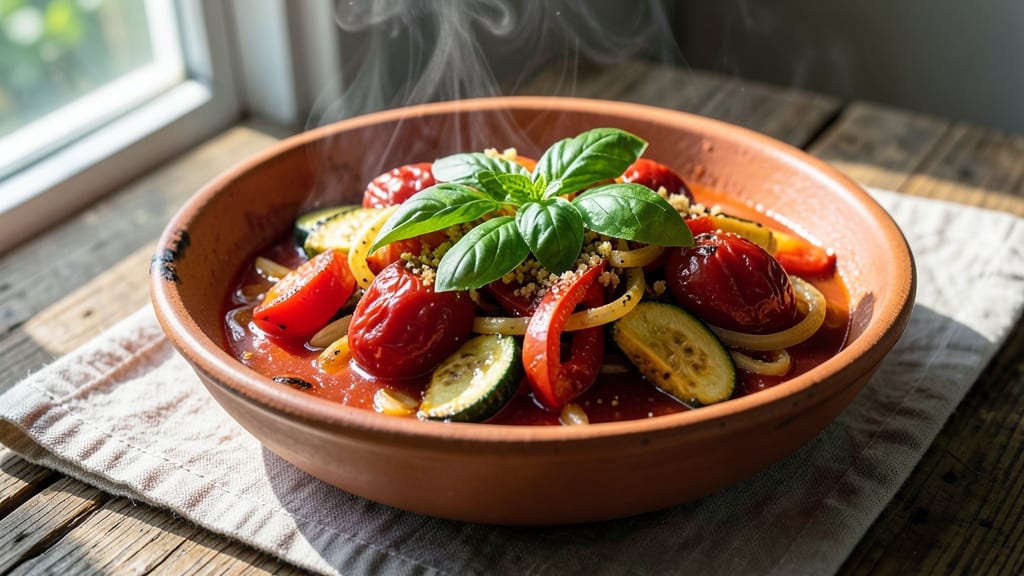
This garden vegetable spaghetti sauce transforms summer's bounty into rich, herb-packed flavor that rivals anything from a jar—but with none of the preservatives. The secret lies in blending roasted garden vegetables with fresh basil and oregano, creating a sauce that's vibrant, balanced, and full of summer's essence.
I developed this recipe after realizing how much better homemade sauce tastes when you control every ingredient, especially when those ingredients are fresh from your garden or local market.
The beauty of this sauce is its simplicity: just a few core ingredients—tomatoes, zucchini, bell peppers, garlic, and herbs—simmered together until deeply flavorful. No need for fancy equipment or complicated techniques; a heavy pot and a wooden spoon are all you'll need.
The sauce thickens naturally as it reduces, creating that perfect consistency that clings beautifully to spaghetti without being overly heavy.
What makes this sauce truly special is how it captures the freshness of garden vegetables while developing complex, layered flavors through slow simmering. The roasted vegetables add natural sweetness that balances the acidity of tomatoes, while the fresh herbs brighten everything up.
It's the kind of sauce that tastes even better the next day as the flavors continue to meld together.
Perfect for batch cooking and freezing, this sauce keeps well for up to three months, making it ideal for stocking your pantry with homemade goodness.
Whether you're serving it over pasta, using it as a pizza topping, or simply enjoying it with crusty bread, this garden vegetable spaghetti sauce delivers restaurant-quality flavor with minimal effort.
Ingredients for garden vegetable spaghetti sauce
Fresh garden vegetables and herbs transform simple pantry staples into restaurant-quality spaghetti sauce.
| Ingredient | Amount | Notes |
|---|---|---|
| Fresh Roma Tomatoes 🍅 | 2 lbs | Ripe, halved for even roasting |
| Medium Zucchini 🥒 | 2 whole | Sliced into half-moons |
| Red Bell Pepper 🧅 | 1 whole | Cut into strips, seeds removed |
| Yellow Onion 🧅 | 1 whole | Diced, medium-sized |
| Garlic Cloves 🧄 | 6 cloves | Peeled, lightly smashed |
| Fresh Basil Leaves 🌿 | 1 ½ cups | Packed, stems removed |
| Dried Oregano 🌿 | 1 tbsp | Mediterranean or Italian blend |
| Extra-Virgin Olive Oil 🫒 | ½ cup | Fruity, peppery variety |
| Dried Red Wine 🍷 | ½ cup | Bold Cabernet or Merlot |
| Tomato Paste 🍅 | 2 tbsp | San Marzano preferred |
| Kosher Salt 🧂 | 1 ½ tsp | Diamond Crystal preferred |
| Freshly Ground Black Pepper 🌶️ | ½ tsp | Cracked peppercorns preferred |
The tomatoes and zucchini are the heart of this sauce—look for vibrant, firm vegetables at your local farmers market or grocery store's produce section. Trader Joe's often has great organic Roma tomatoes, and their zucchini is consistently fresh. If you're using garden-fresh produce, pick vegetables that are fully ripe but still firm to the touch. The bell pepper adds natural sweetness, so choose one that's bright and crisp, not wilted. For the basil, farmers markets usually have the freshest, most aromatic leaves—avoid the sad plastic containers at the grocery store if possible. The garlic should be plump and firm, with no green shoots sprouting from the cloves.
No fresh basil? Dried oregano at double the amount works in a pinch, though it won't have that same bright flavor. Running low on red wine? Substitute with vegetable broth plus a splash of balsamic vinegar—it adds depth without the alcohol. If you can't find San Marzano tomato paste, any quality paste will do, but avoid the watery, low-quality brands. The olive oil matters here—use something fruity and peppery, not the bland supermarket variety. For the vegetables, if you're short on zucchini, yellow squash works perfectly. And if you're making this ahead, roast the vegetables the day before—their flavors develop even more overnight.
This sauce tastes even better the next day as the flavors meld together. Store it in an airtight container in the fridge for up to 5 days, or freeze in portion-sized containers for 3 months. I like to freeze it in 2-cup portions—perfect for a quick pasta meal. For reheating, simmer gently on the stove until warmed through, stirring occasionally. The sauce thickens as it cools, so don't worry if it seems a bit loose when fresh from the freezer. If you're prepping for a crowd, double the recipe—it keeps beautifully and makes an impressive pantry staple.
Why You'll Love This Recipe
- No Chopping Chaos: I swear by this recipe because it only needs three things chopped—onion, garlic, and maybe the bell pepper if you’re feeling fancy. The zucchini and tomatoes go in whole, and the sauce still melts into something silky. (Yes, even when I burn the garlic.)
- Summer in a Jar: That first bite of bright, sweet tomatoes with the faintest char from the garlic? It’s like eating a garden salad, but better—thick, rich, and packed with the kind of flavor that makes you pause mid-bite. The zucchini adds this unexpected creaminess that balances the pepper’s slight kick.
- Leftovers That Don’t Suck: This sauce begs to be made in bulk—it tastes even richer the next day, which is rare. Freeze half for lazy nights, toss it into grain bowls, or dump it over toast with a sprinkle of cheese. (I’ve done all three. It’s my secret weapon.)
- Budget-Friendly Flex: You’re using what’s already growing (or cheap at the market), and it stretches to feed four for under $10. Swap in whatever veggies you have—extra eggplant? Toss it in. Too many cherry tomatoes? Crush ‘em up. It’s the kind of recipe that makes grocery day feel like a win.
Step-by-step instructions for garden vegetable spaghetti sauce
Here's how to transform your garden harvest into a vibrant, herb-packed sauce that sings with summer flavors.
Roast the Vegetables for Deep Flavor
Preheat your oven to 425°F and line two baking sheets with parchment paper. Spread the halved fresh roma tomatoes, sliced medium zucchini, and red bell pepper strips in a single layer. Drizzle everything with ½ cup extra-virgin olive oil and sprinkle with 1 tsp kosher salt and ¼ tsp freshly ground black pepper. Toss gently to coat.
Roast for 25-30 minutes until the edges are deeply caramelized and the zucchini softens slightly. Here's the thing—this roasting step develops an incredible depth of flavor that you won't get from raw vegetables. The tomatoes should burst slightly, releasing their juices and intensifying their sweetness.
Sauté the Base Ingredients
While the vegetables roast, heat ¼ cup extra-virgin olive oil in a large Dutch oven over medium heat. Add the diced yellow onion and cook for 5 minutes until soft and translucent. Add the 6 cloves garlic cloves and cook for another 30 seconds until fragrant—don't let the garlic brown or it'll turn bitter.
Stir in the 2 tbsp tomato paste and cook for 2 minutes until it darkens slightly. Here's where the magic begins—this paste forms the rich foundation for your sauce. Pour in the ½ cup dried red wine and let it simmer for 3-4 minutes until reduced by half. This step concentrates the flavors and removes the alcohol.
Combine Roasted Vegetables and Simmer
Transfer the roasted vegetables to the Dutch oven with the wine reduction. Add the 1 tbsp dried oregano and remaining ½ tsp kosher salt and ¼ tsp black pepper. Stir well to combine, then bring everything to a gentle simmer over medium-low heat. Let it cook uncovered for 15 minutes to allow the flavors to meld.
Here's the moment that matters: use a potato masher or wooden spoon to break down the roasted tomatoes and zucchini slightly. You want some texture but also a smooth consistency. The sauce should thicken naturally as it simmers—if it gets too thick, add ¼ cup water to reach your desired consistency.
Finish with Fresh Basil and Season
Remove the sauce from heat and stir in the 1.5 cups fresh basil leaves. Let it steep for 5 minutes—this infuses the sauce with vibrant, fresh flavor. Taste and adjust seasoning if needed. I know it seems like a lot of salt, but remember these fresh vegetables contain moisture that will cook out during simmering.
For the perfect texture, I like to blend about ½ cup of the sauce until smooth, then stir it back in. This creates a velvety base while maintaining some rustic texture from the roasted vegetables. The sauce should be rich, slightly sweet, and packed with herbaceous notes from the basil and oregano.
Rest and Serve
Let the sauce rest for 10-15 minutes before serving. This resting period allows all the flavors to fully develop and the sauce to thicken slightly. The longer it sits, the better it tastes—don't skip this step if you can wait!
Serve immediately over freshly cooked spaghetti, reserving some pasta water to adjust the sauce consistency if needed. The vibrant colors and fresh flavors will make this sauce the star of your meal. Store any leftovers in the refrigerator for up to 5 days or freeze for 3 months—the flavors only improve with time.
Pro Tips For Making Garden Vegetable Spaghetti Sauce
- CHAR THE ONIONS FIRST: I learned this the hard way—sauté onions until they’re soft and translucent before adding anything else. If you rush, they’ll turn to mush and make the sauce taste flat. A medium onion should take about 5-7 minutes over medium heat, stirring occasionally. (Yes, even if you’re impatient like me.)
- SALT THE TOMATOES: Sprinkle a pinch of salt over the chopped Roma tomatoes and let them sit for 10 minutes before cooking. This draws out moisture, which means less watery sauce later. I skip this step sometimes, and the sauce always ends up thinner than I want.
- DICE THE ZUCCHINI SMALL: Cut the zucchini into ¼-inch cubes instead of slices—this prevents a watery, mushy texture. Smaller pieces also cook faster, so they don’t turn into a sad, soggy mess. (Your future self will thank you.)
- LOW AND SLOW AFTER 20 MINUTES: Once the sauce starts simmering, drop the heat to low and let it cook uncovered for at least 20 minutes. This lets the flavors meld and the liquid reduce naturally—no need to stir constantly. I used to walk away, and the sauce would stick. Now I just check it once in a while.
Essential equipment for this dish
Dutch Oven Essentials
Your large Dutch oven is the workhorse of this recipe—I use my Le Creuset 6-quart because it distributes heat evenly and handles the sauce's acidity beautifully. If you don't have one, a heavy-bottomed stainless steel pot (like All-Clad) works just as well.
The key is 5-7 quarts capacity to give your sauce room to develop without boiling over. Avoid nonstick—it can't handle the simmering time or high heat needed for caramelization. 🔥
Blender for Texture
For that perfect balance of smooth and rustic, I blend ½ cup of the sauce using my Ninja BN601 immersion blender—it's perfect for small batches and easy cleanup. If you prefer a countertop blender, pulse just until smooth, then return to the pot.
The immersion blender also lets you blend right in the pot without transferring, which saves time and prevents messes. For extra texture, skip blending entirely and just mash with a potato masher.
Roasting Pan Setup
Line your two baking sheets with parchment paper (not aluminum foil) to prevent sticking and make cleanup effortless. I use half-sheet pans (18x13 inches) because they give me maximum surface area for even roasting.
If you only have full-size sheets, arrange vegetables in a single layer with space between them—crowding leads to steaming instead of caramelization. A wire cooling rack on the pans helps vegetables crisp slightly at the edges.
Wooden Spoon Must-Have
Never use metal utensils when stirring the roasted vegetables—they'll tear the tender zucchini and tomatoes. My trusty Oxo Good Grips wooden spoon has been with me through hundreds of sauces, and its angled handle gives me better control.
For the simmering phase, switch to a heatproof silicone spatula (like OXO's) to scrape up any browned bits from the bottom of the pot—those flavorful bits are where the magic happens. 💫
Measuring Tools
Precision matters when balancing flavors in this sauce. Use a stainless steel measuring spoon set (like Weston or OXO) for your herbs and spices—plastic spoons can harbor flavors from previous ingredients. For liquids, a liquid measuring cup with clear markings ensures accurate wine and water additions.
I keep my digital kitchen scale nearby too—it's perfect for weighing fresh herbs when I'm experimenting with variations. A fine-mesh strainer also comes in handy if you want to remove any large vegetable pieces before serving.
Nutrition facts
Frequently asked questions
Can I make this sauce without fresh basil?
Yes, but the flavor will be different. Use 2 tablespoons dried basil or 1 tablespoon dried oregano instead, but add it later in the cooking process. For best results, try growing a few basil plants—it's easy and makes a huge difference! The fresh herb adds that bright, summery note that dried herbs can't fully replicate.
How do I adjust the sauce if I have too many garden vegetables?
If you end up with extra vegetables, simply reduce the cooking time to 10-12 minutes during the simmering phase. For a thicker sauce, blend more of the mixture or add 1 tablespoon tomato paste to help bind everything together. The key is balancing the natural sweetness from the roasted veggies with the acidity of the tomatoes.
Can I add meat to this sauce? Brown ½ pound ground beef, Italian sausage, or mushrooms in the Dutch oven before adding the vegetables. Drain excess fat and deglaze with the red wine. For a vegetarian option, try crumbled tempeh or lentils for protein. Just
Why does my sauce taste watery after simmering?
This happens when there's too much liquid from raw vegetables or if you didn't reduce the sauce enough. Let it simmer uncovered for 10-15 more minutes or blend ½ cup of the sauce and stir it back in. If it's still too thin, simmer with the lid slightly ajar to evaporate excess moisture. The sauce should coat the back of a spoon when cool.
How can I make this sauce kid-friendly?
Blend the entire sauce until completely smooth to remove any large vegetable pieces. Reduce the garlic to 3 cloves and omit the wine, replacing it with ½ cup vegetable broth. For extra mildness, add ½ teaspoon sugar to balance acidity. Serve with well-cooked pasta and a sprinkle of grated Parmesan.