
Sauces & Condiments
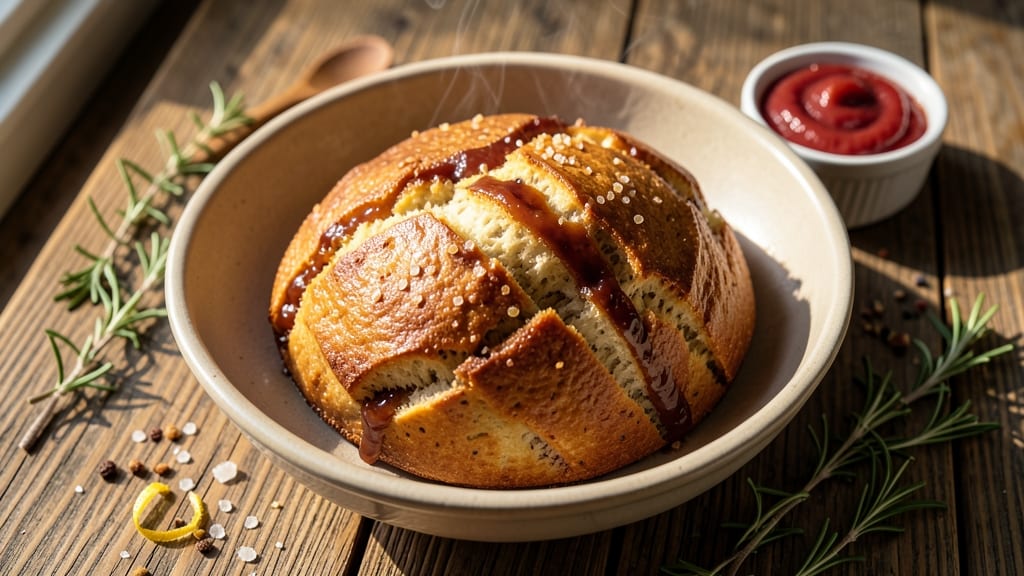
This applesauce yeast bread transforms ordinary loaves into something extraordinary—moist, fragrant, and perfectly balanced between sweet and savory. The secret lies in replacing some of the water with unsweetened applesauce, which keeps the bread tender without sacrificing structure.
I’ve baked this recipe countless times, and it never fails to impress, whether served warm with butter or toasted for breakfast.
The process follows classic yeast bread techniques, but with a twist: applesauce replaces liquid for a lighter crumb and subtle sweetness. You’ll knead the dough, let it rise twice, and bake until golden, resulting in a loaf with a crisp crust and a soft, pillowy interior.
The natural sugars in the applesauce caramelize slightly, adding depth to every slice.
What makes this recipe stand out is its versatility—use it for sweet loaves with cinnamon or savory versions with herbs. The hydration ratio ensures a soft yet sturdy crumb, while the yeast activation guarantees a perfect rise every time. This isn’t just bread; it’s a showstopper that elevates any meal.
Perfect for breakfast, sandwiches, or as a side to soups, this recipe delivers restaurant-quality results at home. Let’s get started—your kitchen will smell like autumn in minutes.
Ingredients for applesauce yeast bread
Unsweetened applesauce replaces water for a tender crumb, while classic yeast techniques create a perfect rise.
| Ingredient | Amount | Notes |
|---|---|---|
| Unsweetened Applesauce 🍎 | ½ cup | Unsweetened for balanced sweetness |
| Active Dry Yeast 🍞 | 2 ¼ tsp | Ensure yeast is fresh for activation |
| All-Purpose Flour 🌾 | 4 cups | Bread flour for better structure |
| Granulated Sugar 🍚 | ¼ cup | Balances applesauce sweetness |
| Warm Water 💧 | 1 ¼ cups | 110°F for optimal yeast activation |
| Salt 🧂 | 1 ½ tsp | Diamond Crystal preferred |
| Unsalted Butter 🧈 | ¼ cup | Cold, cubed for texture |
| Ground Cinnamon 🌿 | 1 tsp | Enhances warm spice notes |
| Vegetable Oil 🫒 | 1 tbsp | For greasing bowl |
| Cornmeal 🌽 | 2 tbsp | For dusting loaf pan |
| Large Egg 🥚 | 1 whole | Optional for egg wash |
The unsweetened applesauce is non-negotiable—sweetened versions add unwanted sugar. Mott's or Store brand unsweetened work best; avoid chunky varieties. Active dry yeast must be fresh (test by dissolving in warm water with sugar—it should foam within 5 minutes). For the flour, King Arthur Bread Flour yields superior structure, but Bob's Red Mill All-Purpose works in a pinch. The unsalted butter should be cold when cubbed to create pockets of richness in the crumb. Diamond Crystal salt dissolves more easily than table salt, enhancing flavor without overpowering the delicate sweetness.
No applesauce? Unsweetened applesauce substitute—blend peeled apples with water until smooth, then strain. Out of cinnamon? Nutmeg or cardamom add warmth, though neither replicates cinnamon’s depth. Egg wash optional—brush with water alone for a softer crust, or skip entirely for a rustic finish. Vegetable oil for greasing should be neutral (like canola)—flavored oils may impart unwanted notes. Cornmeal for dusting creates a crispier crust than flour alone, but flour works if unavailable. Yeast activation tip: Mix yeast with warm water and sugar first, then add to dry ingredients to ensure proper proofing.
Store-bought applesauce keeps for up to 1 year unopened; opened, refrigerate for 1 week. Fresh yeast lasts 3 months in the fridge, 6 months frozen. Dough can rise at room temperature for 1-2 hours or overnight in the fridge for slower fermentation. Baked loaves stay fresh 3 days at room temperature, wrapped in a bread bag. For longer storage, freeze sliced loaves for up to 3 months—thaw at room temperature before serving.
Why You'll Love This Recipe
- Sweet Swap Magic: I trade butter for applesauce here—no fuss, no extra shopping. That cup of unsweetened applesauce keeps the bread tender without the greasy mess, and honestly? My kitchen stays cleaner than when I bake with oil.
- Warm Spice Hug: The sugar and yeast team up to give this bread a subtle caramel sweetness that lingers. It’s not cloying, just cozy—like a hug from your favorite oven. Perfect with jam or just as toast.
- Meal Prep MVP: This dough stalls beautifully overnight, so I mix it the night before and let it rise while I sleep. By morning, it’s ready to shape and bake—no last-minute scrambling. My go-to for busy days.
- Budget Baking Win: Flour, sugar, and a little yeast stretch further than you’d think with applesauce’s moisture boost. I make two loaves for the price of one store-bought, and they last a week if I’m smart. (Spoiler: I’m not always smart.)
Step-by-step instructions for applesauce-infused yeast bread
Perfect balance of sweetness and texture—here's how to craft a tender, moist loaf every time.
Activate the Yeast with Applesauce Mixture
In a small bowl, combine the 0.5 cup unsweetened applesauce, 0.25 cup granulated sugar, and 1.25 cups warm water (110°F—test with your finger; it should feel warm but not hot). Sprinkle the 2.25 tsp active dry yeast over the mixture and gently stir. Let it sit for 5-10 minutes until foamy—this confirms the yeast is active and ready to work. You'll see small bubbles forming and the mixture expanding slightly.
If the mixture doesn't foam after 10 minutes, your yeast may be stale. Start over with fresh yeast—this is the foundation of your bread. The applesauce adds natural sweetness while keeping the dough moist, but the yeast needs to activate first to develop that light, airy structure.
Mix and Knead the Dough
In a large mixing bowl, combine the 4 cups all-purpose flour and 1.5 tsp salt. Make a well in the center and pour in the yeast mixture. Add the 1 tsp ground cinnamon and 0.25 cup cold, cubed unsalted butter. Using a wooden spoon, mix until a shaggy dough forms.
Turn the dough onto a lightly floured surface and knead for 8-10 minutes until smooth and elastic. You'll know it's ready when it springs back slowly when poked. If the dough feels too sticky, add flour 1 tablespoon at a time—but don't overdo it, or the bread will be dry. The cinnamon and butter will create a fragrant, tender crumb, while the applesauce keeps it moist without needing extra fat.
First Rise and Shaping
Lightly grease a large bowl with 1 tbsp vegetable oil and place the dough inside. Cover with a damp towel and let it rise in a warm place for 1-1.5 hours, or until doubled in size. The dough should feel spongy and puffy—press a finger gently into it; if it springs back slowly, it's ready.
Punch down the dough to release air, then shape it into a loaf by rolling it into a log. Place it seam-side down in a greased 9x5-inch loaf pan that's been dusted with 2 tbsp cornmeal (this prevents sticking and adds texture). The cornmeal also helps create that classic bread crust. Cover loosely with plastic wrap and let it rise for another 30-45 minutes until it domes slightly above the pan.
Bake to Golden Perfection
Preheat your oven to 375°F. Brush the top of the dough with the 1 whole large egg (optional for shine) and sprinkle with a pinch of granulated sugar for a glossy crust. Bake for 35-40 minutes until the bread is golden brown and sounds hollow when tapped on the bottom. If the top browns too quickly, tent loosely with foil after 20 minutes to prevent over-browning.
The internal temperature should reach 190-200°F—use an instant-read thermometer for accuracy. The applesauce and butter work together to keep the crumb moist, while the cinnamon adds warmth that lingers even after baking. Let the bread cool in the pan for 10 minutes, then transfer to a wire rack to finish cooling completely.
Pro Tips For Making Applesauce Yeast Bread
- Test Yeast Twice: Skip the guesswork—mix your yeast with ¼ cup warm water and 1 tsp sugar first, then wait 5–10 minutes. If it doesn’t foam, toss it and start fresh. I learned this the hard way after baking a dense brick of dough because my "warm water" was actually lukewarm.
- Chill the Dough: Let your dough rise at room temp, then refrigerate it overnight before shaping. The cold slows fermentation, deepens flavor, and makes kneading easier—no more sticky, stubborn dough. (Yes, even if you’re impatient like me.)
- Use Less Sugar: The recipe might call for ½ cup sugar, but cut it to ¼ cup unless you want a sweet bread that tastes like dessert. The applesauce already adds natural sweetness, and your bread will rise better without overfeeding the yeast.
- Shape Tightly: Press the dough into a round loaf pan with your fingers, then let it rise again. A tight shape prevents spreading and guarantees a compact, bakery-style crust. (No need to overcomplicate—just firm pressure works.)
Regional styles of this dish
German Apfelbrot
In Germany, applesauce bread takes the form of Apfelbrot, a sweet, spiced loaf often studded with dried fruit. The recipe replaces applesauce with grated apple and adds raisins or dried cranberries for texture.
I’ve adapted this by using ½ cup grated apple (peeled) mixed into the dough after kneading, along with ½ cup raisins. Bake at 350°F for 40-45 minutes—the lower temp prevents burning the fruit. Serve warm with butter and jam for a true German breakfast. 🍏
Swedish Kardemummabullar
Sweden’s cardamom buns often incorporate applesauce for moisture, especially in Kardemummabullar. Replace the cinnamon with 1 tbsp ground cardamom and add 1 tbsp molasses to the yeast mixture. Shape the dough into small buns and bake at 375°F for 15-18 minutes.
The cardamom’s floral notes pair beautifully with the applesauce’s subtle sweetness. Brush the tops with melted butter post-bake for extra richness. These are perfect with coffee or tea. ☕
American Apple Cider Bread
In the U.S., apple cider bread is a fall staple, where applesauce is swapped for reduced apple cider. Simmer 1 cup apple cider until reduced to ½ cup, then use it to activate the yeast. Add 1 tsp vanilla extract and ½ tsp nutmeg for depth.
Shape into a round loaf and bake at 350°F for 30-35 minutes. The cider’s tanginess cuts through the sweetness, making it ideal for Thanksgiving or holiday breakfasts. 🍂
Scandinavian Apple Rye Bread
For a heartier version, blend 1 cup rye flour with the all-purpose flour and add 1 tbsp honey to the yeast mixture. The rye adds a malt-forward depth that balances the applesauce’s sweetness. Let the dough ferment overnight in the fridge for a tangier flavor.
Bake at 375°F for 45-50 minutes until deep golden. This Swedish-inspired rye loaf pairs perfectly with smoked salmon or sharp cheddar. 🧀
Italian Apple-Cinnamon Panettone
Italy’s Panettone gets a seasonal twist with applesauce. Replace ½ cup water with applesauce and fold in ½ cup candied citrus peel and ½ cup chopped dried figs after kneading. Shape into a round loaf and bake at 325°F for 50-60 minutes.
The applesauce keeps the crumb moist while the candied fruit adds bursts of sweetness. Serve during Christmas for a festive, moist bread. 🎄
Nutrition facts
Frequently asked questions
Can I substitute applesauce with another fruit puree?
Yes, but choose wisely! For best results, use unsweetened pumpkin or mashed banana (about ½ cup)—both add moisture and subtle sweetness. Avoid citrus juices (like orange) as they can interfere with yeast activation. If using banana, reduce sugar by 1-2 tablespoons since it's naturally sweeter.
Why did my bread turn out dense instead of light?
Dense bread usually means the yeast didn't activate properly or the dough didn't rise enough. First, check your yeast—it should foam within 5-10 minutes in warm water. If not, replace it. Also, ensure your kitchen is warm enough (at least 75°F) for rising. For sticky dough, avoid over-flouring—it can weigh down the structure.
How can I make this bread nut-free but still flavorful?
Skip the nuts entirely and boost flavor with ½ tsp vanilla extract or ¼ tsp almond extract during yeast activation. For texture, fold in ½ cup dried cranberries or chopped dried apricots after kneading. The cinnamon and butter will still create rich, aromatic notes without nuts.
Can I bake this bread without a loaf pan?
Shape the dough into a free-form loaf or round boule. Place it on a parchment-lined baking sheet and bake at 375°F for 30-35 minutes. For extra crispiness, score the top with a sharp knife before baking. The cornmeal can be sprinkled on parchment instead of the pan.
How do I store leftovers to keep them fresh?
Wrap cooled slices in plastic wrap or store in an airtight container at room temperature for 3 days. For longer storage, freeze slices for up to 3 months. To revive, warm in a 350°F oven for 5-10 minutes or toast in a pan until crispy.