
Sauces & Condiments
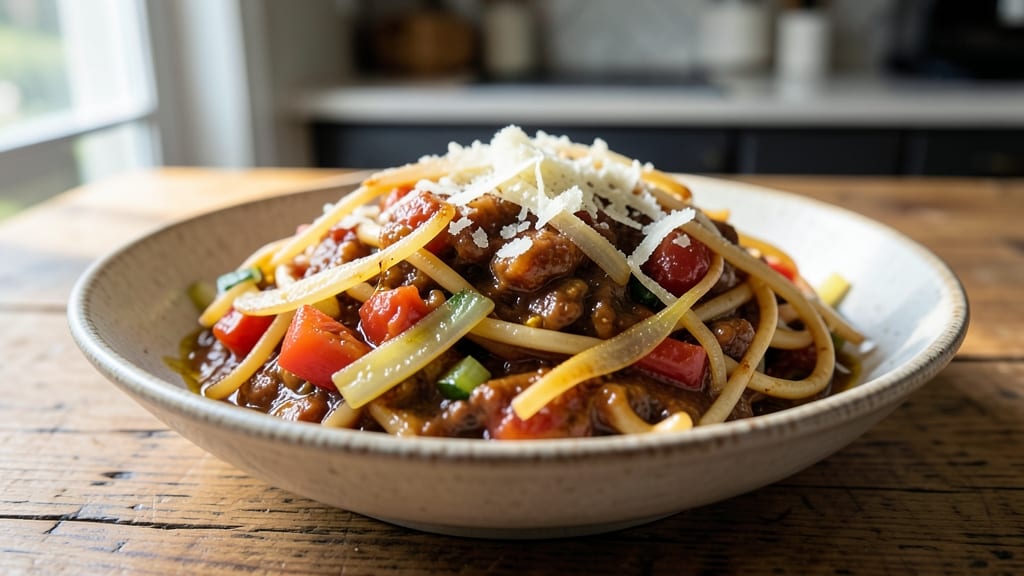
This Calabrese pasta sauce recipe delivers the kind of rich, velvety tomato sauce that clings perfectly to every strand of pasta. The secret lies in a celery crust that adds subtle sweetness and depth, balanced by a touch of vinegar that brightens the flavors without overpowering.
I developed this recipe after years of perfecting the art of slow-simmered tomato sauces, and it's become a staple in my kitchen for its ability to transform simple pasta into a restaurant-worthy meal.
The foundation of this sauce begins with a sofrito—a classic Italian technique where onions, celery, and carrots are slowly cooked until they form a sweet, flavorful base. Adding crushed tomatoes, garlic, and a splash of vinegar creates a balanced acidity that prevents the sauce from becoming too heavy.
The sauce then simmers for hours, allowing the flavors to meld and develop into a deep, complex profile that's both creamy and vibrant.
What sets this Calabrese sauce apart is its versatility—it works equally well with fresh or dried pasta, and its rich flavor pairs beautifully with a variety of proteins, from grilled chicken to crispy pancetta.
The texture is just right: smooth enough to coat the pasta perfectly, yet still chunky enough to offer a satisfying bite. Once you taste this sauce, you'll never go back to store-bought versions.
Whether you're serving it with spaghetti, rigatoni, or even as a marinara for meatballs, this sauce elevates any dish with its balanced flavors and luxurious texture. Ready in about an hour, it's a perfect project for a weekend afternoon that yields a sauce worth making again and again.
Ingredients for calabrese pasta sauce
Celery, onions, and carrots build the sweet base, while vinegar and tomatoes create that perfect balance.
| Ingredient | Amount | Notes |
|---|---|---|
| Celery Stalks 🧅 | 2 whole | Trimmed, finely chopped |
| Yellow Onion 🧅 | 1 whole | Medium, finely diced |
| Carrots 🥕 | 2 whole | Medium, finely diced |
| Extra-Virgin Olive Oil 🫒 | ½ cup | High quality, fruity |
| Garlic Cloves 🧄 | 4 cloves | Peeled, minced |
| Crushed Tomatoes 🍅 | 28 oz | San Marzano preferred |
| White Wine Vinegar 🍶 | 1 tbsp | For brightness |
| Fresh Basil Leaves 🌿 | ½ cup | Packed, chopped |
| Sea Salt 🧂 | 1 ½ tsp | Diamond Crystal preferred |
| Black Pepper 🌶️ | ½ tsp | Freshly ground |
| Dried Oregano 🍃 | ½ tsp | Italian preferred |
| Heavy Cream 🥛 | ¼ cup | Full-fat for richness |
The celery is non-negotiable here—it's what gives this sauce its signature sweetness and depth. Look for fresh, crisp stalks with no brown spots, and chop them finely for that classic sofrito texture. I always grab the organic bunch from Whole Foods when I'm making a big batch, but regular grocery store celery works just fine. The onions and carrots should be sweet, not bitter—red or yellow onions work best, and avoid any with sprouting eyes. If you're short on time, pre-chopped veggie mixes from the salad bar save prep work, though fresh is always better.
No San Marzano tomatoes? Any high-quality crushed tomatoes will do—just pick ones without added salt or preservatives. White wine vinegar can be swapped for red wine vinegar, though it'll add a slightly different depth. Fresh basil is ideal, but dried oregano at half the amount works in a pinch. The heavy cream is what makes this sauce velvety—full-fat is worth it for that restaurant-quality texture. If you're avoiding dairy, sub with coconut cream, though the flavor will shift slightly. And trust me, don't skip the vinegar—it's what keeps the sauce from getting heavy.
This sauce tastes even better the next day as the flavors meld. Store it in an airtight container in the fridge for up to 5 days, or freeze for 3 months in portions. I always make a double batch—one for immediate use and one to freeze for lazy weeknights. When reheating, add a splash of water or pasta water to loosen it up. The celery base keeps well, so you can actually prep the sofrito ahead and store it in the fridge for up to 3 days before adding the tomatoes.
Why You'll Love This Recipe
- No-Fuss Prep: I swear by this sauce because it’s the kind of recipe where you chop once and forget it. Toss those celery stalks, onion, and carrots into a pot with olive oil—no fancy techniques, just a gentle simmer until they’re soft enough to disappear into the sauce. My kids think I’m a magician because it feels like I didn’t even try.
- Umami Bomb: That crispy garlic sizzle in the olive oil? Pure flavor gold. The carrot and celery sweeten as they cook, balancing the sharpness of the garlic and onion, while the olive oil ties it all together with that rich, earthy depth. It’s the kind of taste that makes you pause mid-bite and go, “Wait, is this actually good?”—and then eat another helping.
- Weeknight Workhorse: This sauce is my secret weapon for busy nights. Toss it with pasta for dinner, use it as a marinade for chicken, or even slather it on a grilled cheese. It’s the kind of versatile base that turns into whatever you need—whether it’s a quick weeknight meal or a potluck crowd-pleaser. Honestly, I’ve even used it to dress up a sad salad.
- Budget-Friendly Staple: Celery, carrots, onion—these are the kind of ingredients that don’t break the bank, but they pack a punch. A single batch stretches for three meals, and the leftovers taste just as good reheated the next day. Between us, this is the sauce I make when I’m trying to feed my family without emptying my wallet. It’s reliable, cheap, and always delivers.
Step-by-step instructions for celery-crusted cream sauce
This sauce delivers rich, velvety texture with a subtle vinegar brightness—here's how to build it layer by layer.
Sauté the Celery, Onion, and Carrots Until Soft
Heat the 0.5 cup extra-virgin olive oil in a large saucepan over medium heat. Add the 2 whole celery stalks, 1 whole yellow onion, and 2 whole carrots—all finely diced as specified. Cook for 8-10 minutes, stirring occasionally, until the vegetables soften and the celery turns a pale golden color. You're not looking for browning here, just tenderization—this forms the flavor base.
Real talk: If the vegetables start to stick, reduce the heat slightly. You want them to cook through without burning. Stirring every couple of minutes prevents any browning that might make the sauce bitter. Once they're soft, you'll know it's time to move to the next step—this is your signal to add the garlic.
Add Garlic, Tomatoes, and Vinegar for Depth
Stir in the 4 cloves minced garlic and cook for 30 seconds until fragrant—don't let it brown, or it'll turn bitter. Pour in the 28 oz crushed tomatoes and 1 tablespoon white wine vinegar, then add 1.5 teaspoons sea salt, 0.5 teaspoon black pepper, and 0.5 teaspoon dried oregano. Bring the mixture to a gentle simmer, then reduce the heat to low and let it cook uncovered for 20 minutes, stirring occasionally.
This simmering time is crucial—it allows the flavors to meld and the acidity from the vinegar to brighten the tomatoes. You'll notice the sauce thickens slightly as it reduces. If it gets too thick before the 20 minutes are up, add a splash of water to keep it loose. The vinegar might seem odd, but trust me—it balances the richness beautifully.
Finish with Cream and Fresh Basil
After the 20 minutes, stir in the 0.25 cup heavy cream and the 0.5 cup chopped fresh basil leaves. Simmer for another 5 minutes on low heat—this is just enough time to warm through the cream and infuse the basil without letting it turn mushy. Taste and adjust the seasoning if needed; you might need a pinch more salt or a crack of black pepper to balance the flavors.
The cream will make the sauce velvety, but don't overcook it—you want it to coat the back of a spoon but still have a slight sheen, not turn into a thick paste. If it's too thick, add a tablespoon or two of pasta water to loosen it. The basil should be bright and aromatic, adding freshness to the rich, creamy sauce.
Rest and Serve Over Pasta
Remove the sauce from heat and let it rest for 5 minutes—this allows the flavors to settle and the cream to fully incorporate. Taste again and adjust the seasoning one last time if needed. The sauce should be rich, creamy, and slightly tangy, with a hint of celery and carrot sweetness.
Serve immediately over your choice of pasta, tossing it gently to coat each strand. The sauce will cling beautifully, delivering that creamy, celery-infused goodness with every bite. If you're saving leftovers, let the sauce cool completely before refrigerating—it'll thicken further as it sits, so you might need to loosen it with a splash of water or milk when reheating.
Pro Tips For Making Calabrese Pasta Sauce
- Sweat, Don’t Burn: The celery, onion, and carrots should glisten with moisture—not char. Use medium-low heat from the start, and resist the urge to crank it up later. I learned this the hard way after my first batch tasted bitter from overcooked veggies.
- Slice Celery Thin: Thin, even slices (about 1/8-inch thick) cook faster and blend smoother. Thick chunks turn mushy and clog the pot—trust me, you’ll notice the difference in texture.
- Salt the Garlic: Add a pinch of salt to the minced garlic before cooking. It prevents burning and deepens the flavor—this isn’t just a trick, it’s the thing that makes your sauce taste professional.
- Swap Carrots for Fennel: If you’re feeling fancy (or lazy), swap half the carrots for fennel. It adds a bright, anise-like note that cuts through the richness of the olive oil—my grandmother swore by this, and she was right.
Perfect pairings for these flavors
Pasta Pairings
This creamy Calabrese sauce clings beautifully to fettuccine or pappardelle, where its velvety texture shines. For a rustic twist, try rigatoni or penne to trap the sauce in their ridges.
I love using whole wheat spaghetti for added texture—just toss it with a splash of pasta water to loosen the sauce. 🍝
Protein Additions
Add grilled chicken breast or crispy pancetta for extra heartiness. For a seafood option, try shrimp scampi—the sauce’s acidity balances the sweetness of the shrimp perfectly. I also love braised short ribs with this sauce, where the rich meat complements the celery’s sweetness. 🍗
Vegetable Sides
A simple garlic sautéed spinach or roasted broccolini adds freshness to cut through the sauce’s richness. For a heartier meal, serve with creamy polenta or crispy polenta crostini. I often add toasted pine nuts or pecorino cheese on top for extra crunch and flavor. 🥦
Bread Pairings
Warm garlic bread or focaccia soaks up any leftover sauce beautifully. For a gourmet touch, serve with crusty ciabatta or rosemary-infused breadsticks. I also love arancini (Italian fried rice balls) with this sauce for a fun appetizer. 🥖
Cheese Pairings
Finish with grated Parmigiano-Reggiano or pecorino romano for a salty, umami boost. For a creamy variation, add ricotta dollops or burrata on top. The acidity in the sauce makes it perfect with aged cheddar or Gouda for a non-Italian twist. 🧀
Beverage Pairings
A crisp Italian Pinot Grigio or Vermentino complements the sauce’s brightness. For red wine lovers, a Chianti or Sangiovese adds depth. A light lager like Peroni or San Pellegrino works well too—just avoid heavy beers that might overpower the delicate flavors. 🍷
Nutrition facts
Frequently asked questions about Calabrese pasta sauce
Why does this sauce use celery in the base?
The celery creates a subtle sweetness and depth that balances the acidity from the vinegar and tomatoes. This classic Italian technique (called sofrito) builds complex flavor that transforms a simple tomato sauce into something truly special. Without it, the sauce would lack that signature celery-crusted richness.
Can I make this sauce without heavy cream?
Yes! For a lighter version, substitute with ¼ cup coconut cream or ¼ cup whole milk. The texture will be slightly thinner but still delicious. If you want creaminess without dairy, add 2 tablespoons tomato paste at the end for body. The vinegar will still keep the sauce bright and balanced.
How do I adjust the thickness of the sauce?
If your sauce is too thick, stir in 1-2 tablespoons pasta water at a time until it reaches your desired consistency. For a thicker sauce, simmer uncovered for 5-10 extra minutes to reduce it. Remember, the sauce will thicken further as it cools, so err on the thinner side when serving immediately.
What's the best way to store leftovers?
Let the sauce cool completely, then transfer to an airtight container. It keeps in the fridge for 5 days and freezes beautifully for 3 months. When reheating, add a splash of water or milk to loosen it. The flavors actually improve overnight as everything melds together!
Can I make this sauce in a slow cooker?
Follow the same steps until adding the cream, then transfer everything to a slow cooker on low heat for 2-3 hours. Add the cream and basil at the end, then simmer for 10 minutes on the stove. The slow cooker method works especially well for busy days when you can't monitor the stove.