
Sauces & Condiments
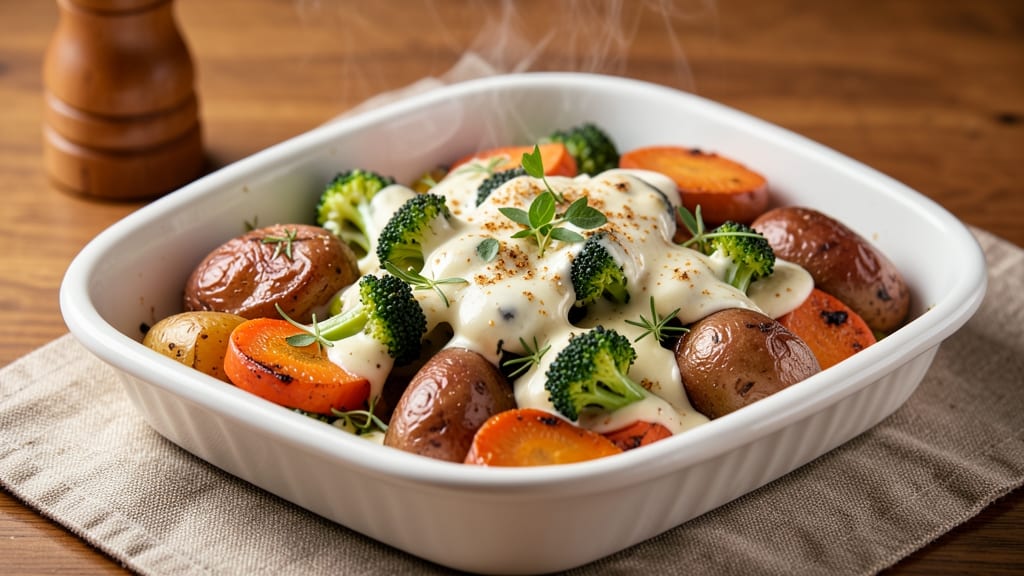
This baked veg in white sauce recipe transforms simple vegetables into a creamy, crispy-edged masterpiece that requires just one pan and minimal effort.
The secret lies in baking hearty vegetables—like potatoes, carrots, and broccoli—until their edges turn golden, then smothering them in a velvety white sauce that clings perfectly to every bite.
I developed this dish during a particularly busy week when I needed a comforting meal that felt indulgent without the fuss, and it’s become a staple in my rotation ever since.
The magic happens in the sauce—a rich, foolproof white sauce made with just a few pantry staples (butter, flour, milk, and a touch of cheese for depth). The vegetables roast until tender with crispy edges, while the sauce bubbles into a luxurious, creamy blanket that soaks into every forkful.
This recipe is vegetarian-friendly by design but easily accommodates protein additions like tofu or chicken if you’d like to elevate it further.
By the time you pull this dish from the oven, you’ll have a restaurant-worthy meal that’s warm, satisfying, and effortlessly elegant. The aroma alone—caramelized vegetables mingling with the buttery sauce—will have everyone at the table asking for seconds.
It’s the kind of dish that turns a simple weeknight into a cozy, comforting experience without requiring advanced skills or hours in the kitchen.
Perfect for feeding a family, meal prepping for the week, or impressing guests with minimal effort, this recipe delivers on comfort, crispiness, and creaminess every time. Let’s get started—your taste buds (and your one-pan) will thank you.
Ingredients for baked veg in white sauce
Heartier veggies plus a few pantry staples—this one-pan magic delivers crispy edges and velvety sauce.
| Ingredient | Amount | Notes |
|---|---|---|
| Russet Potatoes 🥔 | 1 ½ lb | Cut into 1-inch chunks |
| Carrots 🥕 | 1 ½ lb | Baby carrots or whole, peeled |
| Broccoli Florets 🥦 | 1 ½ lb | Medium-sized florets |
| Unsalted Butter 🧈 | ½ cup | Cold, cut into cubes |
| All-Purpose Flour 🌾 | ½ cup | Diamond Crystal preferred |
| Whole Milk 🥛 | 2 cups | Full-fat for creaminess |
| Shredded Cheddar Cheese 🧀 | ¾ cup | Sharp cheddar preferred |
| Garlic Cloves 🧄 | 4 cloves | Minced for sauce |
| Yellow Onion 🧅 | 1 whole | Diced, medium size |
| Vegetable Oil 🫒 | 1 tbsp | For greasing pan |
| Salt 🧂 | 1 ½ tsp | Kosher or sea salt |
| Black Pepper 🌶️ | ½ tsp | Freshly ground |
| Nutritional Yeast 🍄 | 2 tbsp | Optional, for cheesy depth |
The veggies are the backbone here, so pick firm, fresh potatoes and carrots—the kind that hold their shape when roasted. I always grab organic russets from Whole Foods for their consistent texture, but any good-quality russet works. For broccoli, fresh florets (not frozen) give the best texture—look for bright green stems. The cheese matters too: sharp cheddar from a block melts smoother than pre-shredded. If you're prepping ahead, store cut veggies in water in the fridge for up to 2 days—they'll stay crisp that way.
No sharp cheddar? Gruyère or Parmesan work beautifully—just adjust the amount to taste. Running low on milk? Heavy cream at half the quantity makes the sauce even richer, though whole milk is foolproof. The nutritional yeast is optional but adds that umami depth that makes this taste restaurant-quality. For the flour, Diamond Crystal measures differently than regular—spoon it into the cup and level it off. And if you're adding protein, firm tofu cubes roast alongside the veggies without needing extra time.
This reheats like a dream—just cover with foil and pop in the oven for 10 minutes at 375°F. The sauce actually gets better the next day as it absorbs into the veggies. For meal prep, portion into containers with sauce on top—it keeps 4-5 days in the fridge. Freezing? Sauce only—it separates when thawed, but you can stir it back together. The veggies? Best eaten fresh from the oven, but if you must, freeze them without the sauce for up to 3 months.
Why You'll Love This Recipe
- One-Pan Magic: I swear by this recipe when I’m too tired to wash dishes. Toss everything—potatoes, carrots, broccoli—on a sheet pan, bake until golden, then just pour that velvety white sauce right over the top. Minimal chopping, zero pans, and honestly? It’s my go-to when I’ve got better things to do than stand at the stove.
- Creamy Crisp Contrast: That buttery white sauce—made from butter, flour, and a splash of milk—clings to the veggies like a hug. The outsides get crispy where they meet the sauce, while the insides stay tender. It’s the kind of dish where every bite feels like a little victory, especially when my picky eater actually clears their plate.
- Lunchbox Hero: Between us, this is my secret weapon for meal prep. Bake a big batch on Sunday, portion it into containers, and you’ve got a week’s worth of lunches that don’t taste like sad leftovers. The sauce stays rich but doesn’t get soggy—just reheat, and it’s like it was made fresh. My kids call it “fancy veggies,” and I let them believe it.
- Budget-Friendly Luxury: Russets, carrots, and broccoli are cheap staples, and a little butter and flour stretch to feed four for under $10. Here’s what sold me: it feels indulgent without breaking the bank. Plus, the leftovers? Even better the next day—like the sauce mellows into something deeper, and the veggies soak up all the flavor. Not the prettiest, but the taste makes up for it.
Step-by-step instructions for baked vegetables in white sauce
Here's how to create a one-pan wonder with tender vegetables bathed in rich, velvety white sauce.
Prep and Parboil the Vegetables
Start by preheating your oven to 400°F. While it heats, cut the 1.5 lb russet potatoes into 1-inch chunks and peel the 1.5 lb carrots if using whole ones. Trim the 1.5 lb broccoli florets into medium-sized pieces.
Bring a large pot of salted water to a boil and add the potatoes and carrots. Cook for 5 minutes until they begin to soften slightly—you want them tender but still holding their shape. Drain immediately and transfer to a large mixing bowl. Add the broccoli florets and toss everything together with 1 tablespoon vegetable oil, 1.5 teaspoons salt, and 0.5 teaspoon black pepper.
Build the Creamy White Sauce
In a separate saucepan, melt the 0.5 cup unsalted butter over medium heat until it foams. Add the 1 whole yellow onion and 4 cloves minced garlic, cooking for 3-4 minutes until softened and fragrant. Sprinkle in the 0.5 cup all-purpose flour all at once and whisk vigorously for 1-2 minutes until the mixture forms a smooth, thick paste.
Gradually pour in the 2 cups whole milk, whisking constantly to prevent lumps from forming. Bring the mixture to a gentle simmer and cook for 5-7 minutes until it thickens enough to coat the back of a spoon. Stir in the 0.75 cup shredded cheddar cheese and 2 tablespoons nutritional yeast (if using) until fully melted and smooth. Remove from heat and set aside.
Assemble and Bake to Crispy Perfection
Lightly grease a large baking dish with a bit of vegetable oil. Spread the parboiled vegetables evenly in the dish, creating a single layer. Pour the white sauce mixture over the vegetables, using a spatula to gently toss everything together until the veggies are fully coated.
Transfer the baking dish to the preheated oven and bake for 25-30 minutes until the vegetables are tender and the sauce has thickened into a glossy, creamy blanket. The edges should be golden brown and slightly crispy—this is your signal that the sauce has caramelized just enough to add depth of flavor. If the sauce looks too thin before the vegetables are done, uncover the dish and bake for an additional 5-10 minutes to thicken.
Rest and Serve with Confidence
Remove the dish from the oven and let it rest for 5 minutes before serving. This resting period allows the vegetables to absorb any remaining sauce and ensures that each forkful delivers that perfect balance of creamy sauce and tender, crispy-edged veggies.
Serve immediately while warm, garnished with extra shredded cheddar if desired. The potatoes should be fork-tender with crispy edges, the carrots caramelized and sweet, and the broccoli bright green with a satisfying bite. This dish delivers all the comfort of a classic casserole with the ease of a single pan—no one will guess it took so little effort to create such a satisfying meal.
Pro Tips For Making Baked Veg In White Sauce
- PARBOIL POTATOES FIRST: Cut the Russets into even chunks, then boil them for 5 minutes before baking. This ensures they finish tender without turning to mush—especially important when they’re buried under sauce later. (Yes, even if you’re impatient like me, resist the urge to skip this.)
- USE FLOUR FOR SAUCE, NOT CORNSTARCH: All-purpose flour is your friend here—it thickens the sauce without that weird, clumpy texture cornstarch can leave. Whisk in 1 tablespoon at a time while the butter melts, and cook it for 2 full minutes before adding liquid. No lumps, no stress.
- DON’T OVERCROWD THE PAN: If your baking dish looks like a Tetris puzzle with veggies, move some to another tray. Overcrowding steams the potatoes instead of browning them, and you’ll end up with sad, soggy edges. Tight quarters = uneven cooking, and nobody wants that.
- SAUCE THE VEG AFTER BAKE: Toss the baked veggies with the white sauce right out of the oven—the residual heat melts the butter faster and coats everything evenly. If you wait, the sauce turns into a gloppy mess, and you’re left scraping it off plates. (Trust me, this is the thing that matters most.)
Troubleshooting perfect results
Sauce Too Thin?
If your white sauce turns out thinner than expected, don’t panic. The most common cause is undercooking the roux or overestimating the milk’s thickness. To fix it, whisk in 1 tablespoon cornstarch mixed with 1 tablespoon cold water and simmer for 2-3 minutes until it thickens.
Alternatively, bake uncovered for an extra 5-10 minutes to let excess moisture evaporate. I’ve found that using whole milk instead of skim naturally yields a richer, thicker sauce. 🌡️
Vegetables Overcooked?
Tender veggies are key, but mushy results happen when they bake too long. To prevent this, start with a 5-minute parboil to soften them slightly before baking. For broccoli, cut florets slightly larger than usual—they’ll shrink during baking.
If your veggies are still firm after 25 minutes, cover the dish with foil and bake for another 10 minutes to trap steam. This two-stage approach keeps them perfectly tender without turning to mush.
Sauce Separating?
Separation usually happens when the sauce cools too quickly or if you used cold milk. To fix it, whisk vigorously over low heat to recombine the mixture.
For prevention, always heat your milk to 180°F before adding it to the roux, or use warm milk straight from the fridge (not ice-cold). A splash of lemon juice (½ tsp) can also help stabilize the emulsion.
I’ve never had this issue with Diamond Crystal flour, but regular all-purpose flour can sometimes behave differently.
Lacking Flavor Depth?
If your dish tastes bland, it’s likely missing umami or acidity. Boost flavor by adding 1 teaspoon Dijon mustard to the sauce or a pinch of smoked paprika to the veggies. For extra richness, stir in 2 tablespoons cream cheese with the shredded cheddar.
A squeeze of fresh lemon juice (1 tbsp) at the end brightens the whole dish. I often add a sprinkle of nutritional yeast if I’m feeling fancy—it adds that savory depth without overpowering.
Sauce Too Heavy?
If the sauce feels too thick or greasy, you might have overcooked the roux or used too much butter. To lighten it, whisk in 2 tablespoons additional warm milk and adjust seasoning with a pinch of salt and black pepper.
For a lighter texture, substitute ½ cup of the milk with chicken or vegetable broth in the sauce. I’ve also had success adding 1 tablespoon crème fraîche at the end—it adds tanginess and cuts through the richness beautifully. 💫
Vegetables Not Crispy?
Crispy edges are all about timing and temperature. Ensure your oven is fully preheated to 400°F before baking. If the edges aren’t golden, bake uncovered for an extra 5 minutes to let moisture evaporate.
For extra crispiness, toss the veggies with 1 teaspoon cornstarch before baking. I’ve also found that using a dark-colored baking dish (like cast iron) helps create those coveted crispy edges faster than lighter-colored pans.
Nutrition facts
Frequently asked questions
Can I use frozen vegetables instead of fresh?
Fresh vegetables work best for texture, but you can use frozen if needed. Just thaw and drain them well first, then pat completely dry with a paper towel. Frozen veggies release more moisture, which can make the sauce watery—reduce baking time by 5 minutes and stir occasionally to prevent sogginess.
How do I make this dish vegetarian without cheese?
Replace the cheddar with 2 tablespoons nutritional yeast plus 1 tablespoon lemon juice for a cheesy flavor without dairy. For extra richness, blend ½ cup silken tofu with the sauce ingredients instead of milk. The sauce will still be creamy and satisfying!
Can I make this ahead of time?
Yes! Assemble the dish up to 24 hours ahead and refrigerate uncovered. When ready to bake, cover tightly with foil and bake at 375°F for 30 minutes (add 5 minutes if using frozen veggies). The flavors deepen overnight, and the sauce thickens beautifully.
What if I don't have Diamond Crystal flour?
Regular all-purpose flour works fine, but use 1 tablespoon less since it's more compact. For the best results, spoon it into the measuring cup and level off. If your sauce gets too thick, whisk in 1 tablespoon warm milk to adjust the consistency.
What sides pair well with this dish?
This creamy veggie dish works as a main or side. Serve with a crisp green salad and garlic bread for a complete meal. For protein, add grilled chicken or pan-seared tofu. It's also perfect with crusty bread to soak up the sauce!