
Main Courses
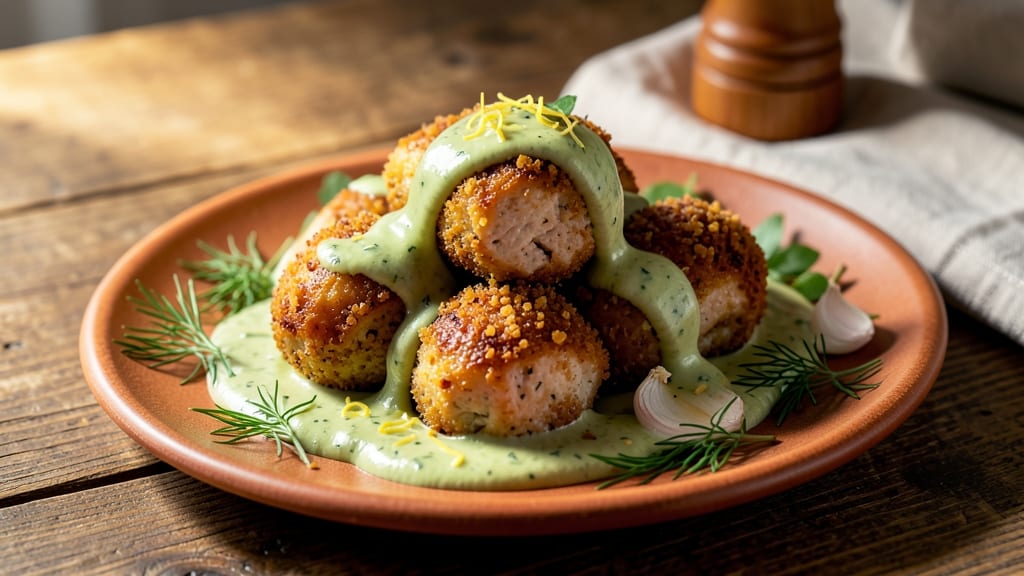
This baked salmon meatballs recipe with creamy avocado sauce delivers restaurant-quality bites that are rich, protein-packed, and perfect for pescatarians. The secret lies in combining flaky salmon with breadcrumbs and herbs, then baking until golden—no frying required.
What makes this dish truly special is the velvety avocado sauce, blending creamy texture with zesty lime and fresh cilantro for a refreshing contrast.
The salmon meatballs stay tender and flavorful thanks to a simple seasoning blend of lemon zest, dill, and garlic, while the avocado sauce adds a luxurious, cooling element that balances the richness.
This dish is designed for effortless preparation—just mix, bake, and drizzle—and serves beautifully as a main course or appetizer. The combination of textures and flavors makes every bite satisfying yet light.
Serve these protein-packed bites with a side of quinoa, a fresh salad, or warm crusty bread to soak up the creamy sauce. The dish is versatile enough for weeknight dinners or elegant gatherings, offering a healthier twist on traditional meatballs.
With minimal ingredients and straightforward steps, you’ll achieve restaurant-quality results at home.
The creamy avocado sauce is the star here—blended until silky smooth, then finished with a touch of lime juice for brightness. Drizzle it generously over the warm salmon meatballs, or serve it on the side for dipping.
This dish proves that pescatarian meals can be just as hearty and indulgent as any traditional protein dish.
Ingredients for baked salmon meatballs with creamy avocado sauce
Restaurant-quality salmon meatballs start with flaky fish, fresh herbs, and a velvety avocado sauce drizzle.
| Ingredient | Amount | Notes |
|---|---|---|
| Fresh Salmon Fillet 🐟 | 1 ½ lb | Skin removed, boneless, sushi-grade preferred |
| Panko Breadcrumbs 🍞 | ¾ cup | Lightly toasted for extra crunch |
| Large Eggs 🥚 | 2 whole | Cold, beaten until frothy |
| Fresh Dill 🌿 | ⅓ cup | Finely chopped, stems removed |
| Garlic Cloves 🧄 | 4 cloves | Minced, fresh preferred |
| Lemon Zest 🍋 | 1 tbsp | From 1 medium organic lemon |
| Diamond Crystal Kosher Salt 🧂 | 1 ½ tsp | Adjust to taste |
| Freshly Ground Black Pepper 🌶️ | ½ tsp | Cracked peppercorns preferred |
| Avocados 🥑 | 2 whole | Ripe, Hass variety recommended |
| Fresh Cilantro 🌿 | ¼ cup | Stems removed, loosely packed |
| Lime Juice 🍋 | 2 tbsp | Freshly squeezed, seedless |
| Extra-Virgin Olive Oil 🫒 | ¼ cup | Light, fruity variety |
| Plain Greek Yogurt 🥛 | ¼ cup | Non-fat, for creaminess |
| Avocado Oil 🫒 | 2 tbsp | For light baking spray |
The salmon quality makes or breaks these meatballs—sushi-grade is ideal, but any fresh, high-quality fillet works. Look for vibrant color and firm texture at Whole Foods or your local seafood market. The dill and lemon zest are non-negotiable for brightness; organic dill from the produce section has the most flavor. Toast your panko breadcrumbs in a dry pan for 2-3 minutes until golden—they'll add that perfect crunch without overpowering the delicate salmon flavor. For the avocado sauce, Hass avocados are the gold standard, but any ripe variety will work if you can't find them.
No panko? Toasted breadcrumbs from a baguette work just as well—just pulse them in a food processor for finer texture. Substituting Greek yogurt? Plain coconut yogurt gives a neutral flavor profile without dairy. The sauce can be made ahead and stored in the fridge for up to 2 days, but add the lime juice just before serving to maintain brightness. For extra richness in the meatballs, mix in 1 tbsp of finely chopped capers—they add a subtle briny note that complements the salmon beautifully. If you're short on time, pre-minced garlic from a jar works, though fresh is always preferred.
These meatballs bake best at 400°F for 12-15 minutes, so don't overcrowd the pan—they should be golden and just set in the center. The avocado sauce keeps for 3 days in an airtight container, but the texture will break down slightly after the first day. For meal prep, bake a double batch and freeze the meatballs on a tray before transferring to a bag—they reheat beautifully from frozen. Serve immediately with the sauce for maximum freshness, or store them separately and assemble when ready to eat.
Why You'll Love This Recipe
- No-Fuss Assembly: I swear by the "dump and bake" method here—just pulse the salmon, panko, egg, and dill in a food processor, roll into balls, and pop them on a tray. The garlic gets folded right into the mix, so no extra chopping or measuring. Honestly, it’s the kind of recipe that makes me feel like I’ve earned my evening without actually breaking a sweat.
- Creamy Crisp Contrast: That avocado sauce is where the magic happens—silky, tangy, and just thick enough to cling to the meatballs. The panko crust gives them a satisfying crunch, while the inside stays tender and flaky, almost like biting into a fresh salmon fillet. Between us, it’s the kind of bite that makes people ask, "What’s in this?"
- Weeknight to Dinner Party: I’ve served these as a quick weeknight meal with crusty bread, and I’ve also plopped them on a platter for guests with zero shame. The sauce keeps well, so you can make it ahead, and the meatballs reheat beautifully. My daughter’s friends devour them faster than my homemade pasta—no joke.
- Budget-Friendly Protein: Salmon fillets stretch further this way, and the avocado sauce makes a small batch feel generous. I’ll be real: the panko and fresh dill aren’t cheap, but they make the dish feel special without breaking the bank. Plus, leftovers taste just as good cold the next day—perfect for lunches or a lazy afternoon snack.
Step-by-step instructions for baked salmon meatballs with creamy avocado sauce
Follow this precise method for perfectly tender salmon meatballs with a velvety avocado sauce.
Process the Salmon Fillet for Uniform Meatballs
Remove the 1.5 lb fresh salmon fillet from the refrigerator and let it sit at room temperature for 10 minutes to prevent chilling the oven. Using a sharp knife, cut the fillet into 1-inch cubes—this size ensures even cooking and bite-sized portions. Place the cubed salmon in a food processor and pulse until you achieve a fine, chunky texture with visible flecks of salmon remaining. Avoid over-processing or the meatballs will become dense.
Transfer the processed salmon to a large mixing bowl. The texture should resemble finely ground meat with visible salmon pieces—this creates the perfect balance of texture in each meatball. If the mixture appears too wet, add 1 tablespoon of the panko breadcrumbs to help bind it together. Keep the remaining breadcrumbs for later.
Combine Wet Ingredients and Bind the Mixture
In a separate bowl, whisk together the 2 whole cold large eggs until they form a frothy consistency. This aeration helps create light, tender meatballs. Add the whisked eggs to the salmon mixture, along with the 0.33 cup finely chopped fresh dill, 4 cloves minced garlic cloves, 1 tablespoon lemon zest, 1.5 teaspoons diamond crystal kosher salt, and 0.5 teaspoon freshly ground black pepper. Using your hands or a silicone spatula, gently fold all ingredients together until fully combined.
Next, incorporate the 0.75 cup lightly toasted panko breadcrumbs into the mixture. The breadcrumbs should be evenly distributed throughout—they'll provide structure and a satisfying crunch. If the mixture feels too dry, add 1 teaspoon of extra-virgin olive oil to help bind it. The ideal consistency should hold together when pressed but not be sticky.
Form and Prep Meatballs for Baking
Using a small cookie scoop or tablespoon, portion the mixture into 1.5-inch diameter balls, gently rolling each one between your palms to ensure even shaping. Arrange the meatballs on a parchment-lined baking sheet, spacing them about 1 inch apart to allow for even browning. Lightly spray the meatballs with 2 tablespoons avocado oil—this creates a barrier that promotes crisp edges while keeping the centers tender.
Place the baking sheet in the refrigerator for 15 minutes to firm up the meatballs. This chilling step prevents them from falling apart when transferred to the oven. Preheat your oven to 400°F while the meatballs chill. The high temperature ensures a crisp exterior while maintaining a moist interior—critical for salmon's delicate texture.
Bake Until Golden and Flaky
Transfer the chilled meatballs to the preheated oven and bake for 12-14 minutes, rotating the baking sheet halfway through for even cooking. You'll know they're done when the edges turn golden brown and the internal temperature reaches 145°F—the salmon should flake easily when gently pressed with a fork. Avoid overbaking, which can dry out the meatballs.
While the meatballs bake, prepare the creamy avocado sauce by combining the 2 whole ripe avocados, 0.25 cup plain Greek yogurt, 0.25 cup extra-virgin olive oil, 2 tablespoons lime juice, and 0.25 cup chopped fresh cilantro in a food processor. Pulse until smooth, scraping down the sides as needed. Taste and adjust seasoning with additional salt or lime juice if needed. The sauce should be thick but pourable—if too thick, thin with 1 tablespoon of water.
Serve Warm with Avocado Sauce
Transfer the baked meatballs to a serving platter and immediately drizzle with the creamy avocado sauce. The warm meatballs will gently melt the sauce, creating a luxurious coating. Garnish with additional chopped fresh dill and a sprinkle of flaky sea salt for visual appeal and extra flavor. Serve immediately while the meatballs are still warm and the sauce maintains its velvety texture.
Each bite should deliver a perfect balance of crisp edges, tender salmon, and rich avocado sauce. The lemon zest and fresh herbs brighten the dish, while the panko breadcrumbs add satisfying texture. This method guarantees restaurant-quality results with minimal effort—ideal for meal prep or special occasions.
Pro Tips For Making Baked Salmon Meatballs With Creamy Avocado Sauce
- Chill the Salmon First: I learned this the hard way—salmon meatballs fall apart when warm. Give the fillet a 30-minute rest in the fridge before grinding or chopping. Cold salmon holds shape better and mixes more evenly with the panko and egg, so your meatballs stay intact instead of turning into sad, crumbly lumps.
- Mix Panko Last: After burning three batches of dry, crumbly meatballs, I finally figured out the order matters. Combine the salmon, egg, dill, and garlic first, then fold in the panko just before shaping. This keeps the breadcrumbs crispy and prevents them from absorbing all the moisture too early—your meatballs will have that perfect textural bite without turning into dense fish patties.
- Bake at 375°F, Not Higher: Sounds weird, but it works: salmon meatballs need gentle heat to cook through without overcooking the outside. Cranking the oven to 400°F gives you a crispy crust but leaves the center undercooked or rubbery. Stick to 375°F for 12–15 minutes—just enough to get a golden crust while keeping the inside tender.
- Press Meatballs Firmly: This isn’t the prettiest method, but it’s the tastiest. When shaping the meatballs, pack them tightly—no gaps, no loose edges. The extra compression helps them hold together during baking and gives a cleaner bite. (Yes, even if you’re impatient like me.) If they’re too loose, they’ll expand unevenly and risk falling apart when you plate them.
Essential equipment for this recipe
Mixing Essentials
For the salmon meatballs, a food processor is your best friend—it creates uniform texture without overworking the delicate fish. I use my Ninja FP101 for quick pulses, but a KitchenAid KFP1001 works beautifully too.
A sharp chef's knife and cutting board are also essential for chopping salmon into precise 1-inch cubes—this ensures even cooking. 🔪
Baking Tools
A parchment-lined baking sheet prevents sticking and makes cleanup effortless. I prefer half-sheet pans (13x18 inches) for even heat distribution. For portioning, a cookie scoop (1.5-inch diameter) guarantees uniform meatballs, but a tablespoon works in a pinch.
A light spray bottle with avocado oil ensures crisp edges without soaking the breadcrumbs. 🍳
Sauce Prep Gear
The avocado sauce requires a high-powered blender or food processor—I recommend the Vitamix 5200 for silky smoothness. A fine-mesh strainer helps remove any stubborn avocado fibers if needed.
For serving, a small sauce bowl or drizzling spoon keeps the sauce contained and elegant. A zester is perfect for fresh lemon zest, but a microplane works too. 🥑
Temperature Control
An oven thermometer is non-negotiable—my Thermoworks Oven Thermometer ensures accurate 400°F baking. For checking doneness, an instant-read thermometer (like Thermoworks Smoke) confirms 145°F internal temperature.
A wire rack on a baking sheet promotes airflow for crispier meatballs. Preheat your oven for 15 minutes before baking to maintain consistent temperature. 🌡️
Serving Essentials
For presentation, a wooden serving board or ceramic platter elevates the dish. A small offset spatula helps transfer meatballs without breaking them. Fresh dill sprigs and flaky sea salt (like Maldon) add final garnishes.
For meal prep, glass airtight containers keep meatballs fresh for 3 days in the fridge. A fine-mesh sieve helps strain excess moisture from the mixture if needed. ✨
Nutrition facts
Frequently asked questions
Can I use frozen salmon for these meatballs?
Fresh salmon is ideal for the best texture, but you can use frozen if thawed properly. Place frozen salmon in the fridge overnight or use the cold water thaw method (sealed in a bag for 1-2 hours). Never thaw at room temperature—this can make the meatballs mushy. Pat the salmon completely dry before processing to maintain structure.
How do I prevent the meatballs from falling apart?
Chilling the meatballs for 15 minutes before baking is key—the cold helps them firm up. Also ensure your salmon is properly processed (fine but not overworked) and use enough panko breadcrumbs (0.75 cup) for binding. If the mixture feels too wet, add 1 extra tablespoon of panko or 1 teaspoon of olive oil to help hold them together.
What's the best way to store leftovers?
Store baked meatballs in an airtight container in the fridge for 3 days or freeze for up to 2 months. Reheat in a 350°F oven for 8-10 minutes or microwave for 30 seconds with a damp paper towel. The avocado sauce keeps separately for 2 days in the fridge—add fresh lime juice before serving to maintain brightness.
Can I make this dish ahead of time?
Prep the meatball mixture and sauce up to 24 hours ahead, then bake fresh when ready. For the sauce, store it in an airtight container with plastic wrap pressed directly on the surface to prevent browning. Assemble and serve immediately after baking for the best texture contrast between warm meatballs and creamy sauce.
What are good sides to serve with these meatballs?
These protein-packed bites pair beautifully with quinoa pilaf, garlic sautéed greens, or crusty sourdough bread for dipping. For a complete meal, add a mixed greens salad with a light citrus vinaigrette. The creamy avocado sauce also works well as a dip for raw veggie sticks or toasted baguette slices.