
Sauces & Condiments
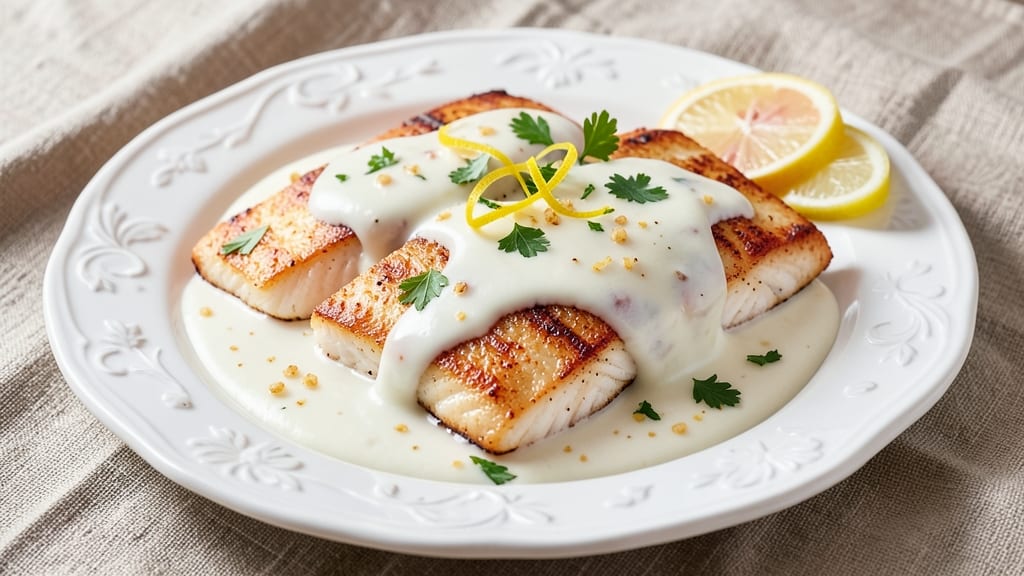
This baked fish in white sauce recipe delivers restaurant-quality results with a crispy crust and silky creamy center—no fancy techniques required. The secret lies in the sauce: a velvety blend of cream, lemon, and herbs that transforms simple white fish into an elegant, foolproof meal.
I developed this recipe after years of perfecting the balance between tender fish and rich, flavorful sauce, ensuring every bite is both satisfying and impressive.
The foundation of this dish is the white sauce, which starts with a simple roux of butter and flour before being enriched with cream and brightened with lemon juice.
This sauce not only coats the fish but also creates a golden, crispy crust when baked, thanks to a light breadcrumb topping. The result is a dish that’s easy to prepare but feels like a special occasion—ideal for weeknight dinners or entertaining guests.
What sets this recipe apart is its versatility. You can use firm white fish like cod, halibut, or tilapia, and the sauce’s creamy texture pairs beautifully with vegetables like asparagus or green beans. The dish bakes in just 20 minutes, making it perfect for a quick yet elegant meal.
The sauce’s richness balances the fish’s natural flavor, while the crispy topping adds a satisfying texture contrast.
Whether you're serving this for a casual family dinner or a dinner party, the combination of crispy crust and creamy sauce ensures every bite is memorable. The recipe is designed to be beginner-friendly, with clear steps and minimal prep work, so you can focus on enjoying the final result.
Let’s get started on creating this crowd-pleasing dish!
Ingredients for baked fish in white sauce
Restaurant-quality white sauce meets crispy crust perfection with these carefully chosen ingredients.
| Ingredient | Amount | Notes |
|---|---|---|
| White Fish Fillets 🐟 | 4 pieces | Cod, halibut, or tilapia preferred |
| Heavy Cream 🥛 | 1 cup | Full-fat for optimal richness |
| Unsalted Butter 🧈 | ½ cup | Cold, cubed for roux |
| All-Purpose Flour 🌾 | ¼ cup | For roux base |
| Fresh Lemon Juice 🍋 | ¼ cup | Freshly squeezed, strained |
| Shallot 🧅 | 1 small | Finely minced |
| Fresh Dill 🌿 | ¼ cup | Chopped, stems removed |
| Fresh Parsley 🌿 | ¼ cup | Chopped, for garnish |
| Panko Breadcrumbs 🍞 | ½ cup | For crispy topping |
| Diamond Crystal Kosher Salt 🧂 | 1 tsp | Plus extra for seasoning |
| Freshly Ground Black Pepper 🌶️ | ½ tsp | Freshly cracked |
| Garlic Cloves 🧄 | 2 cloves | Minced for sauce |
| Extra-Virgin Olive Oil 🫒 | 1 tbsp | For drizzling |
The fish selection is critical—opt for firm white fillets like cod or halibut that hold their shape during baking. Whole Foods Market and Trader Joe's carry excellent pre-portioned fillets, but if buying whole, ask for skinless cuts. The sauce's foundation begins with high-quality heavy cream—avoid ultra-pasteurized as it lacks richness. For the roux, European-style unsalted butter (like Plugrá) creates a smoother texture than American brands. Fresh herbs are non-negotiable here; Penzeys Spices sells excellent dried alternatives if fresh isn't available, but the flavor difference is noticeable.
No shallots? One small yellow onion works in a pinch, but reduce the amount to half. The panko breadcrumbs can be substituted with Japanese panko for extra crispiness or regular breadcrumbs if unavailable. For a dairy-free variation, replace the heavy cream with full-fat coconut milk (though texture will differ). The lemon juice should be freshly squeezed—bottled versions lack the bright acidity needed to cut through the richness. When mincing garlic, use a microplane for the finest texture, which distributes flavor more evenly. The olive oil should be light and fruity—avoid strong, peppery varieties that can overpower the delicate sauce.
Store any unused breadcrumbs in an airtight container for up to 3 months at room temperature. Fresh herbs should be wrapped in damp paper towels and refrigerated for 5-7 days. The white sauce can be prepped ahead and refrigerated for 3 days—reheat gently on the stove before using. For make-ahead convenience, assemble the dish completely (including sauce) and refrigerate for up to 12 hours before baking. The fish itself should be used within 2 days of purchase for optimal texture, though frozen fillets can be thawed overnight in the refrigerator.
Why You'll Love This Recipe
- Foolproof Pan: I swear by this method—just pat the fish dry, sprinkle flour, and bake. No fancy searing, no flipping, no stress. The sauce thickens right in the oven while the fish stays tender, and honestly? That’s all it takes.
- Creamy-Lemon Magic: The butter-beurre sauce is where it shines—rich, velvety, and brightened just enough by lemon to cut through the richness. It’s like a hug in a dish, but make it fancy. (Yes, even on a Tuesday night.)
- Lunchbox Hero: Between us, this is my go-to for meal prep. Bake a big batch, portion the fish with sauce over rice or noodles, and you’ve got a grab-and-go lunch that still feels like a restaurant meal. My daughter picks out the lemon zest, but still asks for seconds.
- Budget-Friendly Luxury: Fish fillets stretch further than you’d think when paired with this sauce—it feels indulgent without breaking the bank. Leftovers reheat beautifully, and the flour-butter base costs pennies. Not the prettiest, but the taste makes up for it every time.
Step-by-step instructions for baked fish in white sauce
Master this technique and you'll achieve a perfectly crisp crust with a velvety white sauce every time.
Prepare the Fish and Create the Crispy Topping
Pat the 4 pieces white fish fillets completely dry with paper towels—this is critical for achieving that golden crust. Place them on a parchment-lined baking sheet and season both sides generously with the 1 teaspoon Diamond Crystal kosher salt and 0.5 teaspoon freshly ground black pepper. In a shallow bowl, mix the 0.5 cup panko breadcrumbs with 1 tablespoon extra-virgin olive oil until evenly coated. Press this mixture firmly onto the top of each fillet, creating an even layer that will crisp beautifully in the oven.
I like to use panko here because its light, airy texture creates a delicate crust rather than a dense one. The olive oil helps bind the breadcrumbs and adds subtle richness. Arrange the fillets in a single layer on the baking sheet, leaving about 1 inch between each piece to allow for even browning.
Make the Velvety White Sauce
In a medium saucepan, melt the 0.5 cup unsalted butter over medium heat until it foams but doesn't brown. Immediately whisk in the 0.25 cup all-purpose flour to create a roux, stirring constantly for 1-2 minutes until it turns a pale golden color. This step is crucial—if you let it brown, the sauce will develop a bitter flavor. Gradually whisk in the 1 cup heavy cream, allowing each addition to be fully incorporated before adding more.
Continue cooking the sauce for 3-4 minutes until it thickens enough to coat the back of a spoon. Stir in the finely minced 1 small shallot, 2 minced garlic cloves, and the 0.25 cup fresh lemon juice. Remove from heat and stir in the 0.25 cup chopped fresh dill. The sauce should be smooth and glossy with a delicate balance of acidity from the lemon and aromatic depth from the shallots and garlic. Taste and adjust seasoning with additional salt if needed.
Bake the Fish to Perfect Doneness
Preheat your oven to 400°F. Once the oven reaches temperature, carefully transfer the seasoned fish fillets to the oven, placing them on the middle rack. Bake for 12-15 minutes, until the fish is just opaque in the center and the breadcrumb topping is golden brown and crisp. The fish should flake easily when tested with a fork but still hold together when lifted—this is the perfect doneness for white fish.
Here's the thing about baking fish—it's easy to overcook. The moment the edges start to lift slightly and the crust turns a beautiful golden color is your cue to check for doneness. If you're unsure, cut into one fillet—the flesh should be translucent in the center with no pink remaining. Remove from the oven and tent loosely with foil to keep warm while you prepare the final presentation.
Assemble and Serve with Sauce
Return the baked fish fillets to the oven for 1-2 minutes if needed to reheat the sauce slightly. Spoon the white sauce evenly over each fillet, allowing it to cascade down the sides. The heat from the fish will gently warm the sauce, creating a perfect marriage of textures and temperatures. Garnish each serving with the 0.25 cup chopped fresh parsley, adding a pop of color and freshness that contrasts beautifully with the rich sauce.
Serve immediately while the crust remains crisp and the sauce stays velvety. The contrast between the crispy breadcrumb topping, silky white sauce, and tender fish creates an experience that's both elegant and satisfying. This dish works beautifully with steamed asparagus or a simple green salad to balance the richness of the sauce.
Pro Tips For Making Baked Fish In White Sauce
- Dry the Fish First: Pat those fillets thoroughly—not just the top, but the sides and bottom—with paper towels. Wet fish steams instead of browning, and you’ll end up with soggy sauce clinging to limp, uncooked edges. I learned this the hard way when my first batch turned out like a sad, watery puddle.
- Melt Butter Slowly: Cook the butter-flour roux over medium-low heat—no rushing. If you crank it up, you’ll burn the flour before it’s had a chance to cook out that raw taste. Once it’s golden (not brown), whisk in the cream gradually or you’ll get lumps. Sounds obvious, but I still catch myself speeding through this step.
- Skip the Overcrowding: Give the fish space in the baking dish—at least ½ inch between fillets. If they’re packed too tight, they’ll steam instead of crisp, and the sauce will turn into a gloppy mess. Use a second pan if needed, or bake in batches. Trust me, your sauce will thank you.
- Acidify the Sauce Early: Add half the lemon juice to the cream before it hits the pan. This cuts through the richness and prevents curdling later. Save the rest for finishing—brighten the sauce with a squeeze right before serving. I used to add it all at the end, and the flavor never felt balanced.
Dietary considerations for baked fish in white sauce
Gluten-Free Adaptations
Replace the 0.5 cup panko breadcrumbs with 0.5 cup gluten-free panko (brands like King Arthur or Bob's Red Mill work well). For extra crispiness, mix with 1 tablespoon cornstarch before pressing onto the fish.
The sauce itself is naturally gluten-free, but always check your butter and cream labels for hidden gluten. 🌾
Dairy-Free Version
Swap the 1 cup heavy cream for 1 cup full-fat coconut milk (canned, for creaminess) and use 0.5 cup dairy-free butter (like Miyoko's). The sauce will be slightly lighter but still rich.
For the breadcrumb topping, use gluten-free panko mixed with 1 tablespoon olive oil to bind. Taste and adjust acidity with extra lemon juice if needed.
Low-Carb Options
Skip the breadcrumb topping entirely and instead brush the fish with 1 tablespoon olive oil mixed with 1 teaspoon minced garlic and 0.5 teaspoon smoked paprika.
For the sauce, reduce the flour to 0.125 cup (or use xanthan gum for thickening) and use 0.5 cup unsweetened almond milk instead of cream. Garnish with fresh herbs only—no breadcrumbs.
Allergen-Friendly Tips
For nut allergies, ensure your butter and cream are nut-free (check labels). If shellfish allergies are a concern, avoid fish sauces or miso-based variations (though this recipe is shellfish-free).
For egg allergies, the sauce is safe as written, but confirm your breadcrumbs are egg-free. Always double-check ingredient labels, especially for store-bought items like butter or cream.
Vegetarian Substitutes
Replace the fish with firm tofu (pressed and sliced into fillets) or hearts of palm (sliced thickly). For tofu, marinate in 2 tbsp soy sauce, 1 tbsp lemon juice, and 1 tsp grated ginger for 30 minutes before baking.
The white sauce pairs beautifully with either—just reduce baking time to 10-12 minutes for tofu and 8-10 minutes for hearts of palm.
Nutrition facts
Frequently asked questions
What's the best fish to use for this white sauce recipe?
Firm white fish like cod, halibut, or tilapia work best—they hold their shape beautifully when baked. Avoid delicate fish like sole or flounder, which can fall apart. For extra flavor, try using snapper or mahi-mahi, but cod remains my top recommendation for its mild taste and perfect texture.
Can I make the white sauce ahead of time?
Prepare the sauce up to 3 days ahead and store it in an airtight container in the refrigerator. When ready to use, gently reheat it on the stove over low heat, stirring constantly until warmed through. The texture will be slightly thicker after chilling, but it'll smooth out when reheated.
Why did my fish turn out dry?
Overbaking is the most common cause. Fish cooks in just 12-15 minutes at 400°F—check it early! Use an instant-read thermometer to verify the center reaches 145°F. Also, patting the fish completely dry before seasoning helps create a better crust and prevents steaming.
How do I keep the breadcrumb topping crispy?
The key is baking time and temperature. Place the fish on the middle rack of a 400°F oven for 12-15 minutes—don't overcrowd the pan. For extra crispiness, broil for 1-2 minutes at the end (watch closely to avoid burning). Serve immediately to maintain that perfect crunch.
Can I use frozen fish for this recipe?
Yes, but thaw it properly first. Place frozen fillets in a sealed bag and submerge in cold water for 30-45 minutes (change water halfway). For best results, thaw overnight in the refrigerator. Never use fish that's still partially frozen—it won't cook evenly and may stay raw inside.