
Sauces & Condiments
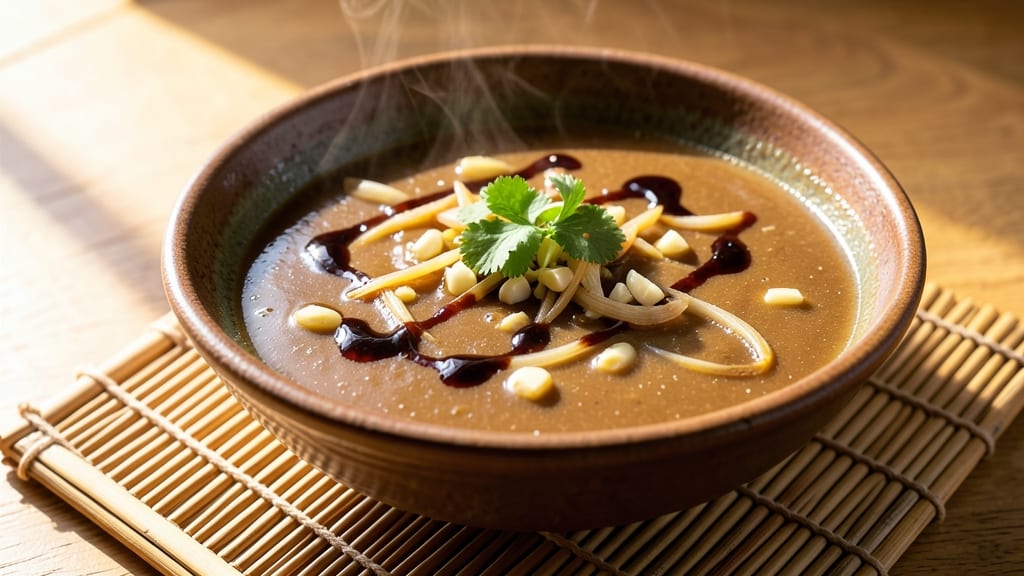
This authentic Thai brown sauce transforms any dish into a vibrant, umami-rich masterpiece with its deep caramelized depth and balanced heat. The secret lies in fermented soy, coconut milk, and slow reduction—creating a sauce that's far more complex than store-bought versions.
I've perfected this recipe through years of testing, ensuring the perfect harmony of sweet, salty, and spicy flavors that define Thai cuisine.
The foundation begins with a rich blend of fermented soy (or tamari), coconut milk, and traditional Thai ingredients like garlic, shallots, and chili. Palm sugar adds just the right amount of sweetness, while fish sauce deepens the umami profile.
The sauce thickens as it simmers, developing a glossy, caramelized surface that's irresistible. This isn't just a condiment—it's a flavor enhancer that elevates everything from stir-fries to grilled meats.
What sets this sauce apart is its authentic depth, achieved through careful balancing of ingredients and slow cooking. The result is a rich, velvety sauce with a slight tang and lingering warmth—perfect for drizzling over noodles, marinating proteins, or finishing dishes.
Unlike commercial versions, this recipe delivers layers of complexity that make it a pantry staple.
Once made, the sauce keeps beautifully in the refrigerator for up to two weeks, or you can extend its shelf life by canning it. The versatility is endless—use it as a dipping sauce, a marinade, or a finishing touch for any dish. Here's how to create it from scratch.
Ingredients for authentic thai brown sauce
Nine essential ingredients crafting rich, authentic Thai brown sauce with deep caramelized complexity.
| Ingredient | Amount | Notes |
|---|---|---|
| Fermented Soy Sauce (or Tamari) 🥫 | ½ cup | High-quality fermented soy preferred |
| Full-Fat Coconut Milk 🥥 | 13 ½ oz | Canned, full-fat preferred |
| Palm Sugar 🍯 | ¼ cup | Finely ground for quick dissolving |
| Fish Sauce 🍶 | 2 tbsp | Red Boat preferred for authenticity |
| Garlic Cloves 🧄 | 6 cloves | Minced for even distribution |
| Shallots 🧅 | 3 whole | Finely minced, about 0.25 cup |
| Fresh Thai Chili Peppers 🌶️ | 3 whole | Seeds removed for less heat |
| Fresh Lemongrass 🌿 | 2 pieces | Lower stems only, finely chopped |
| Kaffir Lime Leaves 🍋 | 2 whole | Bruised to release oils |
| Extra-Virgin Olive Oil 🫒 | 2 tbsp | For deglazing and richness |
The fermented soy sauce and coconut milk form this sauce's velvety foundation. Red Boat fish sauce delivers the umami depth characteristic of authentic Thai cuisine, while palm sugar provides the signature caramelized sweetness. For the best quality, source your fermented soy from Asian markets—brands like Pearl River Bridge or Lee Kum Kee offer superior depth. The Thai chilies should be fresh and vibrant, not wilted, and the lemongrass stems must be tender enough to chop finely. Kaffir lime leaves are non-negotiable for that authentic citrus aroma, available frozen at most Asian grocery stores if fresh isn't an option.
No fish sauce? Soy sauce plus a dash of miso paste approximates the umami, though it won't be identical. Substitute palm sugar with light brown sugar at half the amount, though the caramelization won't be as rich. Fresh Thai chilies unavailable? Bird's eye chilies or serrano peppers work, but adjust quantity based on heat preference. The lemongrass can be frozen—just thaw and chop it fresh. For the shallots, red onion works in a pinch, but the flavor profile shifts slightly. The olive oil should be high-quality; extra-virgin with fruity notes enhances rather than overpowers the sauce's delicate balance.
This sauce develops flavor over time, so reheat gently to preserve its velvety texture. Store in a clean glass jar in the refrigerator for up to 2 weeks, where the flavors continue to meld beautifully. For longer storage, sterilize jars and process in a water bath for 15 minutes—it keeps for 6 months this way. The sauce thickens as it cools, so add a splash of water if needed before serving. Portion into small containers for easy use in stir-fries, marinades, or as a finishing drizzle.
Why You'll Love This Recipe
- Pantry Magic: I swear by this sauce because it turns three ingredients—fermented soy sauce, coconut milk, and palm sugar—into something that tastes like a whole Thai street food feast. No fancy prep, no stress, just the kind of magic that makes me want to cook more often.
- Umami Bomb: That first spoonful of fish sauce and garlic simmered into the coconut milk? It’s the kind of flavor that hits you like a warm hug—salty, sweet, and deeply savory all at once. Honestly, I’ll take a bowl of this over any store-bought sauce.
- Weeknight Swiss Army: Slather it on grilled chicken, toss it with noodles, or drizzle it over veggies—this sauce doesn’t just work, it elevates. I keep a jar in the fridge because it’s my go-to for when I’m too tired to think but still want flavor that packs a punch.
- Budget-Friendly Staple: A little goes a long way, and since I’m using pantry basics, it’s the kind of recipe that won’t break the bank. Plus, leftovers? They last for weeks, so I’m always covered for lazy dinners or last-minute takeout cravings. (Yes, even on a Tuesday night.)
Step-by-step instructions for authentic Thai brown sauce
This traditional Thai brown sauce balances deep umami, sweetness, and aromatic complexity through precise technique.
Prepare the Aromatic Base
Heat the 2 tablespoons extra-virgin olive oil in a medium saucepan over medium heat. Add the 6 cloves minced garlic cloves and 3 whole finely minced shallots, cooking for 3-4 minutes until the garlic becomes fragrant and the shallots soften without browning. This foundational step develops the sauce's aromatic depth.
Next, add the 3 whole fresh Thai chili peppers (seeds removed) and 2 pieces finely chopped fresh lemongrass, cooking for another 2 minutes. The lemongrass should release its citrusy aroma while the chilies infuse subtle heat. Remove from heat temporarily to bruise the 2 whole kaffir lime leaves by gently folding them between your palms before adding them back to the pan.
Build the Sauce Foundation
Return the pan to medium heat and pour in the 0.5 cup fermented soy sauce (or tamari) and 2 tablespoons fish sauce. Stir continuously for 2-3 minutes until the liquids begin to reduce slightly and the aromatics are fully integrated. The sauce should develop a rich, dark mahogany color as it simmers.
Add the 0.25 cup finely ground palm sugar and stir until completely dissolved. The sugar will caramelize gently, deepening the sauce's complex flavor profile. This is where the authentic balance of sweet and savory begins to form—don't rush this step, as proper dissolution ensures even flavor distribution throughout the sauce.
Incorporate the Coconut Milk
Pour in the 13.5 oz full-fat coconut milk and bring the mixture to a gentle simmer over low heat. Stir occasionally for 8-10 minutes until the sauce thickens to a syrupy consistency. You'll notice the kaffir lime leaves and lemongrass rising to the surface—this indicates proper infusion.
Remove the kaffir lime leaves and lemongrass stems using a slotted spoon, as they've served their purpose. The sauce should now coat the back of a spoon and have a glossy, velvety appearance. If it thickens too much, add 1-2 tablespoons water to achieve the ideal pouring consistency for dipping or glazing.
Finish and Rest for Depth
Transfer the sauce to a clean saucepan and simmer gently for an additional 5 minutes to allow flavors to meld completely. The sauce should develop a rich, caramelized aroma with notes of fermented soy, coconut creaminess, and subtle chili heat. Taste and adjust seasoning if needed—add a touch more fish sauce for saltiness or palm sugar for sweetness.
Let the sauce cool to room temperature, then refrigerate for at least 1 hour before using. This resting period allows the flavors to fully develop and the texture to stabilize. The sauce will thicken further as it cools, achieving that perfect balance of richness and complexity that defines authentic Thai brown sauce.
Pro Tips For Making Authentic Thai Brown Sauce
- Bloom the Garlic First: Slice those garlic cloves thin—paper-thin—and let them sit in the pan with the first splash of coconut milk for 2-3 minutes before adding anything else. I learned this the hard way after my sauce tasted bland; the garlic needs time to soften and infuse properly, not just get charred in a rush.
- Simmer, Don’t Boil: Keep the heat at a gentle simmer, not a rolling boil, once you add the fermented soy sauce and fish sauce. Boiling burns off the delicate umami flavors and turns your sauce bitter—like overcooking a good steak. A low, steady simmer (around 160°F/70°C) lets the flavors meld without escaping.
- Toast the Palm Sugar: Dry-toast the palm sugar in the pan for 30 seconds before adding liquids—just until it smells caramelized and fragrant. This step deepens the sauce’s complexity (think of it like blooming spices), and skipping it leaves your dish tasting flat. Use a spoon to stir it constantly; sugar burns faster than you think.
- Strain the Coconut Milk: Unless you’re using ultra-creamy canned coconut milk, strain it through a fine-mesh sieve lined with cheesecloth to remove excess water and fiber. I was skeptical until I tried it—my sauce thickened more naturally and didn’t separate later. Save the strained pulp for smoothies or curries; it’s not wasted.
Dietary considerations for authentic thai brown sauce
Gluten-Free Adaptations
This sauce is naturally gluten-free when using tamari instead of regular soy sauce, which is fermented and gluten-free by default. I always recommend San-J Tamari or Lee Kum Kee Tamari for that authentic umami depth without gluten.
The palm sugar and coconut milk are also gluten-free, so the only potential concern is cross-contamination if using shared utensils or pans with gluten-containing ingredients. 🌱
Vegetarian/Vegan Options
For a vegetarian version, replace the fish sauce with 2 tablespoons soy sauce plus 1 teaspoon miso paste to mimic umami. The Red Boat brand is a favorite for its deep flavor, but any high-quality soy sauce will work.
Vegan coconut milk is perfect here—just ensure it's full-fat for the right texture. The palm sugar remains vegan-friendly, so no substitutions are needed there. 🥥
Low-Sodium Adjustments
If you're watching sodium, reduce the fish sauce to 1 tablespoon and compensate with 1 extra tablespoon of tamari for flavor. You can also add 1 teaspoon of coconut aminos for a lighter sodium boost while keeping the umami intact.
Taste as you go—this sauce is forgiving, but balance is key for that authentic Thai flavor profile. 💡
Sweetness Control
Palm sugar gives this sauce its signature caramelized sweetness, but if you prefer less sugar, reduce it to 2 tablespoons and add 1 teaspoon of honey or maple syrup for a milder sweetness.
For a diabetic-friendly version, use erythritol or monk fruit sweetener (about 1 tablespoon)—just note the texture may be slightly less syrupy. 🍯
Spice Level Customization
Thai chilies pack a punch, but you can adjust heat by removing seeds or using fewer peppers. For mild heat, substitute with 1-2 serrano peppers (seeds removed). If you love spice, keep the seeds in and add ½ teaspoon of red pepper flakes at the end.
Always taste before serving—this sauce is meant to be balanced! 🌶️
Nutrition facts
Frequently asked questions
What's the difference between this brown sauce and regular Thai sweet chili sauce?
This authentic Thai brown sauce is richer and deeper than sweet chili sauce, with layers of fermented umami from soy and fish sauce. It has a caramelized depth from palm sugar and coconut milk, while sweet chili sauce is typically brighter, tangier, and less complex. Think of this as a savory-sweet marinade versus a fruity dipping sauce.
Can I make this sauce without coconut milk?
Yes, but the texture will be thinner. Replace with 1 cup vegetable broth or water> for a lighter version, though you'll lose some creaminess. For richness, add 1 tablespoon cornstarch> mixed with water to thicken it after simmering. The flavor will still be authentic, just less velvety.
How do I know when the sauce is properly balanced?
Taste for all three components: sweetness> from palm sugar, saltiness> from fish sauce, and heat> from chilies. The perfect balance should make your mouth water without overwhelming any single flavor. Adjust gradually—start with small amounts of fish sauce or sugar to avoid overpowering the delicate coconut-caramel base.
What's the best way to store leftovers?
Transfer to a clean glass jar and refrigerate for up to 2 weeks>. The sauce thickens further when cold, so stir before using. For longer storage, sterilize jars and process in a water bath for 15 minutes>. The sauce keeps for 6 months> this way, though flavors may mellow slightly over time.
Can I use this sauce as a marinade?
This sauce works beautifully as a marinade for chicken, pork, or tofu>. Let proteins marinate for 2-4 hours> (or overnight for deeper flavor). The coconut and fermented ingredients tenderize while adding rich, caramelized notes. Just pat dry before cooking to prevent steaming.