
Sauces & Condiments
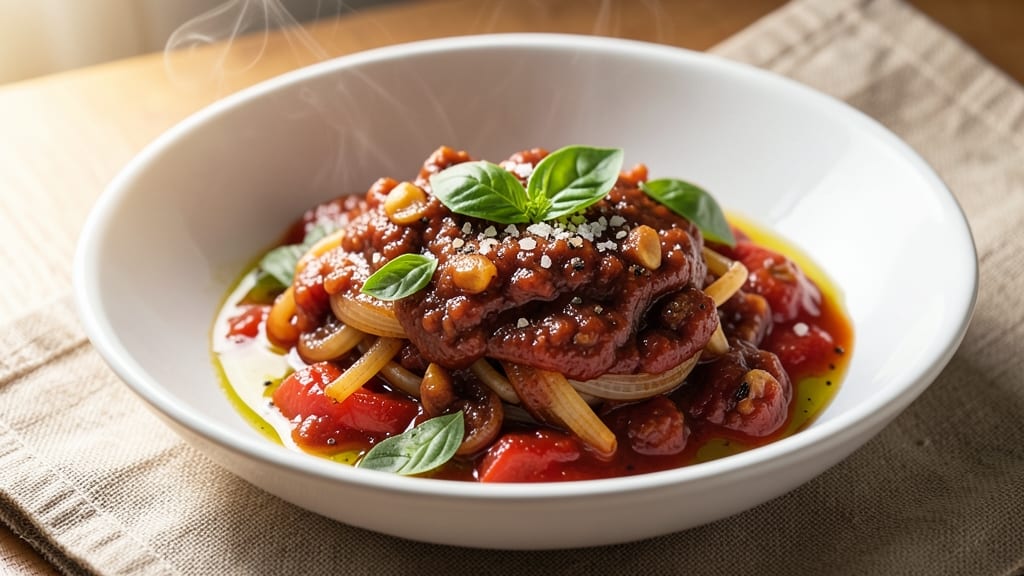
This authentic spaghetti sauce recipe from scratch delivers the deep, complex flavor of Italian nonna-style cooking without shortcuts. The secret lies in slow-cooked tomatoes, caramelized onions, and fresh garlic that build layers of taste over time.
I've perfected this version after years of testing—no canned sauces or instant flavors here, just real ingredients simmered to perfection.
The foundation starts with a rich tomato base, where onions and garlic develop sweet, caramelized depth before tomatoes join the pot. Fresh herbs like basil and oregano are added at the end to preserve their bright, aromatic qualities.
This sauce is versatile enough for any pasta dish but rich enough to stand alone as a hearty meal.
What sets this sauce apart is its authentic Italian technique—simmered low and slow to concentrate flavors, never rushed. The result is a velvety, deeply flavorful sauce with just the right balance of sweetness, acidity, and umami.
It keeps well in the fridge for up to five days or freezes beautifully for months.
Whether you're making a classic marinara or a meatier ragù, this sauce forms the perfect base. The instructions are straightforward, but the payoff is restaurant-quality flavor that transforms simple pasta into a memorable meal. Let's get started on creating your own from-scratch masterpiece.
Ingredients for authentic spaghetti sauce recipe from scratch
Eleven essential ingredients transform into a deeply flavorful, restaurant-quality spaghetti sauce from scratch.
| Ingredient | Amount | Notes |
|---|---|---|
| Extra-Virgin Olive Oil 🫒 | ½ cup | High-quality, fruity variety preferred |
| Yellow Onions 🧅 | 2 whole | Yellow or red, thinly sliced |
| Garlic Cloves 🧄 | 6 cloves | Fresh, peeled, thinly sliced |
| Canned San Marzano Tomatoes 🍅 | 28 oz | Whole, peeled tomatoes preferred |
| Tomato Paste 🍅 | ½ cup | High-quality, no sugar added |
| Dried Oregano 🌿 | 1 tsp | Mediterranean or Italian preferred |
| Red Pepper Flakes 🌶️ | ½ tsp | Adjust for desired heat level |
| Fresh Basil Leaves 🌿 | ½ cup | Packed, stems removed |
| Dried Basil 🌿 | 1 tsp | Substitute if fresh unavailable |
| Kosher Salt 🧂 | 1 ½ tsp | Diamond Crystal preferred |
| Black Peppercorns 🌶️ | ½ tsp | Freshly cracked preferred |
The foundation begins with San Marzano tomatoes—their natural sweetness and low acidity create the perfect base. For the best quality, look for canned tomatoes at specialty stores like Whole Foods or Eataly, where you'll find authentic Italian brands. The olive oil should be extra-virgin, with a fruity aroma and peppery finish—California or Italian varieties work best. Onions and garlic form the aromatic backbone; yellow onions develop the deepest caramelization, while garlic cloves should be fresh, never pre-minced. The tomato paste is non-negotiable—opt for no-sugar-added brands like Bertolli or Barilla to maintain authentic flavor.
No San Marzano tomatoes? Crushed tomatoes work in a pinch, though they'll be slightly more acidic. Substitute dried oregano for fresh at one-third the amount, but fresh basil is essential for that bright, aromatic finish—dried simply won't cut it. Short on time? Pre-minced garlic is acceptable, but fresh cloves develop deeper flavor. The red pepper flakes can be omitted entirely for a mild sauce, or increased to 1 tsp for heat lovers. For a meatier ragù, add 1 lb ground beef or Italian sausage—just brown it separately before adding to the sauce. The kosher salt should be Diamond Crystal (not Morton), as it dissolves more easily and has a purer taste.
This sauce develops better with time—simmer for at least 45 minutes to let flavors meld. For long-term storage, portion into glass jars and refrigerate for up to 5 days or freeze for 6 months. The olive oil will solidify in the fridge but will return to liquid form at room temperature. To reheat, warm gently on the stove with a splash of water to prevent burning. The sauce thickens as it cools, so add a splash of water or pasta water if it becomes too thick after reheating. Fresh basil wilts quickly—store it in a damp paper towel in the fridge for up to 3 days.
Why You'll Love This Recipe
- No Chopping Nightmare: I swear by this—just dice one onion and mince a few garlic cloves. That’s it. The San Marzano tomatoes do all the heavy lifting, and the paste adds depth without fuss. My kids even help now.
- Deep Umami Magic: The tomato paste caramelizing in olive oil? That’s where the flavor happens. Sweet, rich, and just a hint of smoky—it’s the kind of sauce that makes you pause mid-bite. (Yes, even on a Tuesday night.)
- Leftovers That Beg for More: This sauce tastes better the next day—honestly, I make extra just for that. Freeze half for lazy nights, and it reheats like it was just simmered. My roommate’s “favorite” meal is my fridge’s “favorite” too.
- Pantry Staple Power: Four ingredients, zero specialty trips. Olive oil, onions, garlic, and canned tomatoes? That’s it. I’ve fed a crowd with this, used it in lasagna, and still have jars for months. Budget-friendly doesn’t get much better.
Step-by-step instructions for authentic spaghetti sauce
This method delivers restaurant-quality depth through slow caramelization and layered flavors.
Develop the Base with Caramelized Onions and Garlic
Heat the 0.5 cup extra-virgin olive oil in a heavy-bottomed saucepan over medium-low heat. Add the 2 whole yellow onions, sliced into thin half-moons, and cook undisturbed for 15-20 minutes, stirring occasionally. You're looking for deep golden caramelization—the onions should transform from translucent to rich amber with a sweet, jam-like consistency.
Here's the thing—patience is key. If the onions brown too quickly, reduce the heat slightly. The goal is to break down their natural sugars into complex flavors that will form the sauce's foundation. Once they reach this stage, add the 6 cloves garlic cloves, sliced thinly, and cook for another 2-3 minutes until fragrant but not browned. Garlic burns fast, so keep an eye on it and remove the pan from heat if it starts to darken.
Build the Tomato Foundation
Increase the heat to medium and add the 0.5 cup tomato paste, stirring constantly to prevent burning. Let it cook for 3-4 minutes until it darkens slightly and releases its rich, concentrated flavor. This step creates the sauce's velvety texture and deepens its color.
Next, pour in the 28 oz canned San Marzano tomatoes, crushing them by hand if they're whole. Add the 1.5 tsp kosher salt, 0.5 tsp red pepper flakes, 1 tsp dried oregano, and 1 tsp dried basil. Stir well to combine, then bring the mixture to a gentle simmer. Reduce the heat to low and let it cook uncovered for 30 minutes, stirring occasionally. This slow simmer allows the flavors to meld and the sauce to thicken naturally.
Finish with Fresh Herbs and Seasoning
After 30 minutes, taste the sauce and adjust the seasoning if needed. You'll likely need more salt—remember, the sauce will continue to reduce and intensify. Add the 0.5 cup fresh basil leaves, torn by hand, and the 0.5 tsp freshly cracked black peppercorns. The fresh basil adds a bright, aromatic finish that cuts through the richness of the caramelized onions and tomatoes.
Continue simmering for another 15-20 minutes until the sauce reaches your desired consistency. It should coat the back of a spoon but still be loose enough to cling to spaghetti. If it thickens too much, add 1-2 tablespoons of water to loosen it. The sauce will continue to thicken as it cools, so don't over-reduce it.
Rest and Serve for Maximum Flavor
Remove the sauce from heat and let it rest for at least 10 minutes before serving. This resting period allows the flavors to fully develop and the sauce to settle. I know it's tempting to serve it immediately, but those extra minutes make a noticeable difference in depth and balance.
Serve the sauce over al dente spaghetti, tossing gently to coat each strand. The caramelized onions and garlic will create a rich, sweet-savory base, while the fresh basil and black pepper add brightness and complexity. For an authentic touch, finish with a sprinkle of freshly grated Parmesan cheese and a drizzle of high-quality extra-virgin olive oil. This sauce tastes even better the next day, so make extra and store it in the refrigerator for up to 5 days or freeze it for up to 3 months.
Pro Tips For Making Authentic Spaghetti Sauce Recipe From Scratch
- Sweat, Don’t Burn the Onions: I learned this the hard way—when onions turn brown too fast, they release bitter compounds that ruin the sauce’s sweet base. Keep the heat medium-low and stir every 30 seconds until they’re translucent and just starting to soften, not caramelize. (Yes, even if you’re impatient like me.)
- Crush Tomatoes by Hand: Dumping San Marzano tomatoes straight from the can gives you a watery, uneven sauce. Grab a wooden spoon and crush them against the side of the pot—this breaks the skins and releases natural juices for a richer, thicker consistency. (Your future self will notice the difference.)
- Simmer Low and Slow: The sauce needs time, not heat. After adding tomatoes and paste, drop the flame to the lowest setting and let it bubble gently for at least 45 minutes. Skim off any foam that rises—it’s the stuff that makes sauce taste dull and flat.
- Salt the Water, Then Season: I skip this when I’m lazy, but the dish is noticeably better when I don’t. Salt the tomatoes after they’ve simmered for 20 minutes—this lets the flavors meld before balancing the acidity. (And no, you won’t over-salt if you wait.)
Flavor customization for this authentic spaghetti sauce recipe from scratch
Sweet & Smoky
Add 2 tbsp balsamic vinegar with the tomatoes to deepen the sweetness, then stir in 1 tsp smoked paprika when simmering. The balsamic caramelizes beautifully with the onions, while smoked paprika adds subtle depth.
For an extra touch, finish with 1 tsp honey during the final 10 minutes of cooking. 🔥
Creamy & Cheesy
Stir in ½ cup heavy cream or ½ cup whole milk during the last 10 minutes of simmering for a velvety texture. Add 1 cup shredded mozzarella and ¼ cup grated Parmesan to create a rich, cheesy sauce perfect for baked ziti or lasagna.
Keep the heat low to prevent curdling. ✨
Meat-Inspired Ragù
Brown 1 lb Italian sausage or ground beef separately in a skillet, then add it to the sauce after the tomato paste stage. For extra richness, deglaze the pan with ¼ cup red wine before transferring.
Simmer for an additional 20 minutes to let the meat flavors meld with the tomatoes. 💫
Herb-Forward Variation
Replace dried oregano with 1 tbsp fresh thyme and 1 tbsp fresh rosemary (finely chopped) during the caramelization phase. Add 1 tbsp fresh parsley at the end for a bright, herbaceous finish. This variation works beautifully with grilled chicken or shrimp. 🌿
Spicy & Tangy
Increase the red pepper flakes to 1 tsp and add 1 tbsp apple cider vinegar with the tomatoes. Finish with 1 tbsp hot honey or 1 chopped jalapeño for a sweet-spicy kick. This sauce pairs perfectly with spicy Italian sausages or pepperoni. 🌶️
Vegetarian Umami Boost
Add 2 tbsp soy sauce or 1 tbsp miso paste when simmering the tomatoes for a deep umami flavor. For extra richness, stir in 1 tbsp nutritional yeast at the end. This variation is perfect for vegan or vegetarian dishes. 💡
Nutrition facts
Frequently asked questions
Why do you caramelize onions for so long?
Caramelizing onions for 15-20 minutes transforms their natural sugars into complex, sweet flavors that form the sauce's foundation. This slow process creates depth that raw onions can't match—think of it as building flavor layers, not just cooking them. The result is a rich, sweet-savory base that elevates the entire dish.
Can I use fresh tomatoes instead of canned?
Fresh tomatoes work, but they require more prep and won't give the same consistent texture. For authentic Italian flavor, San Marzano tomatoes are ideal—they're sweet, low-acid, and crush easily. If using fresh, roast them first to concentrate flavors, then blend and strain to remove skins. Expect about 3 lbs fresh tomatoes to equal 28 oz canned.
How do I fix a sauce that's too acidic?
If your sauce tastes too tangy, balance it with a pinch of sugar (½ tsp) or a splash of 1 tbsp heavy cream to mellow the acidity. For a deeper fix, add 1 tsp tomato paste and simmer for 5 minutes to round out the flavors. Always taste as you go—it's the only way to get it just right!
What's the best way to store leftovers?
Transfer sauce to airtight containers and refrigerate for up to 5 days. For longer storage, freeze in glass jars (leave 1-inch headspace) for up to 3 months. The olive oil will solidify but will return to liquid when thawed. To reheat, warm gently on low heat with a splash of water or pasta water to prevent burning.
Can I make this sauce in a slow cooker?
Yes! Follow the same steps for caramelizing onions and garlic, then transfer everything to a slow cooker. Cook on low for 6-8 hours or high for 3-4 hours, stirring occasionally. The slow cooker's gentle heat enhances the flavors without risk of burning. Just add fresh basil and pepper at the end since they can't withstand long cooking.