
Sauces & Condiments
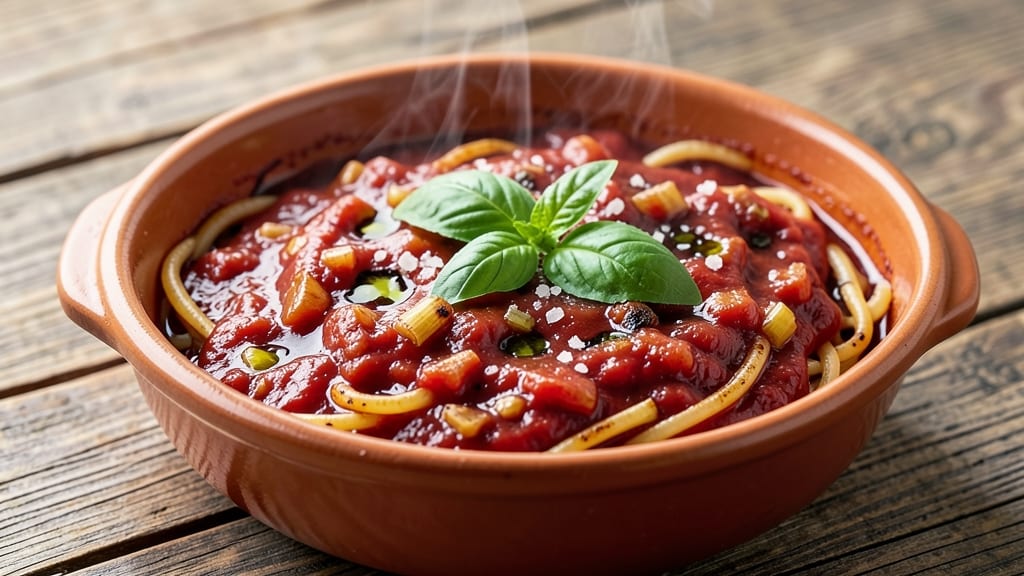
This authentic Sicilian spaghetti sauce transforms simple ingredients into a rich, slow-simmered masterpiece that captures the heart of Sicilian cooking. The secret lies in quality tomatoes, aromatic herbs, and the patience to let flavors meld over time—no shortcuts, just tradition.
What sets this sauce apart is the balance of acidity from red wine and the depth of San Marzano tomatoes, simmered until the texture becomes velvety yet still vibrant.
The foundation of this sauce begins with a sofrito—a fragrant blend of onions, garlic, and celery—that forms the flavor base. Fresh basil and oregano infuse the sauce with that unmistakable Sicilian herb profile, while a splash of red wine adds brightness and complexity.
Unlike quick sauces, this one develops character as it simmers, creating a sauce that's both hearty and elegant enough for any pasta dish.
What you’ll achieve is a sauce so rich and flavorful it elevates even the simplest spaghetti into a restaurant-worthy meal. The slow cooking process ensures deep, layered flavors without overpowering the natural sweetness of the tomatoes.
This isn’t just a sauce—it’s a taste of Sicily in every spoonful, designed to be stored and savored for days.
Perfect for meal prepping or gifting, this sauce keeps beautifully in the refrigerator for up to a week or freezes for months. Whether you’re serving it with fresh pasta or using it as a base for other dishes, the authenticity shines through in every bite. Here’s how to make it.
Ingredients for authentic sicilian spaghetti sauce
Simple pantry staples meet Sicilian tradition—just 12 ingredients for restaurant-quality sauce.
| Ingredient | Amount | Notes |
|---|---|---|
| San Marzano Tomato Paste 🍅 | ½ cup | High-quality, no sugar added |
| San Marzano Canned Tomatoes 🍅 | 28 oz | Whole, crushed or diced |
| Red Wine 🍷 | ½ cup | Bold, dry variety like Chianti |
| Extra-Virgin Olive Oil 🫒 | ¼ cup | Fruity, peppery variety |
| Yellow Onion 🧅 | 1 whole | Finely chopped |
| Celery Stalks 🥬 | 2 whole | Finely chopped |
| Garlic Cloves 🧄 | 4 cloves | Minced |
| Fresh Basil Leaves 🌿 | ½ cup | Chopped, stems removed |
| Dried Oregano 🍃 | 1 tsp | Crumbled |
| Salt 🧂 | 1 ½ tsp | Kosher or sea salt |
| Black Pepper 🌶️ | ½ tsp | Freshly ground |
| Sugar 🍯 | 1 tsp | Optional, balances acidity |
The tomatoes are non-negotiable. San Marzano is the gold standard—look for the plump, ripe ones at Whole Foods or Trader Joe's (their canned tomatoes are perfect). If you can't find them, Muir Glen is a solid backup. Fresh basil? Grab a bunch—half goes in the pot, half gets torn over the sauce at the end. The red wine should be something you'd drink—Chianti or Sangiovese work perfectly, but whatever bold red you've got open will do. For the sofrito base, chop the onion and celery finely—they should almost disappear into the sauce.
No San Marzano tomatoes? Crushed tomatoes in a jar work in a pinch, but taste the can before buying—some brands add sugar or salt. Fresh basil missing? Dried oregano at double the amount gives you that earthy flavor, though nothing beats fresh. Out of red wine? Substitute extra tomato paste or a splash of balsamic vinegar for acidity. The sugar is optional—skip it if your tomatoes are already sweet. For the olive oil, any good-quality extra-virgin will do, but avoid the cheap stuff that tastes like soap. And if you're prepping ahead, make a double batch—this sauce only gets better with time.
Sauce keeps for up to 5 days in the fridge, sealed tightly with plastic wrap pressed right on the surface to prevent a skin from forming. For longer storage, freeze in airtight containers or ice cube trays—portion it out for easy use later. Thaw overnight in the fridge or reheat directly from frozen on low heat. The flavors actually deepen after a few days, so make extra if you can. And trust me, it reheats beautifully—just add a splash of water or pasta water to loosen it up.
Why You'll Love This Recipe
- No Fuss, Big Payoff: That San Marzano paste and wine combo? It’s the secret to a sauce that tastes like it simmered all day—even though it’s ready in 45 minutes. Honestly, I’ve made sauces that required 10 ingredients and took hours, but this one just works with five core things.
- Deep Umami Magic: The red wine cuts through the sweetness of the San Marzano tomatoes, while the olive oil and slow-cooked onion build layers of flavor you won’t find in store-bought jars. It’s that crisp, bright acidity with a rich, almost meaty depth—like a hug in a bowl.
- Weeknight to Weekend: I use this for spaghetti on Tuesdays, lasagna on Sundays, and even stuffed into baked potatoes when I’m lazy. The sauce doubles easily, so I make a big batch and freeze half—because nothing beats coming home to a ready-to-heat meal.
- Budget That Pops: San Marzano tomatoes and good olive oil aren’t cheap, but they stretch further than you’d think. A single jar of paste and a bottle of wine make enough sauce for four meals, and the leftovers? Even better the next day—if there are any left.
Step-by-step instructions for authentic Sicilian spaghetti sauce
Here's how to build a rich, slow-simmered sauce that captures real Sicilian flavor.
Sauté the Aromatic Base
Heat the 0.25 cup extra-virgin olive oil in a large, heavy-bottomed pot over medium heat. Add the finely chopped yellow onion and finely chopped celery stalks, cooking for 8-10 minutes until the vegetables soften and begin to caramelize. You'll know it's ready when they smell sweet and the onion turns translucent.
Add the 4 minced garlic cloves and cook for another 30 seconds until fragrant. Be careful not to let the garlic burn—it should just perfume the pot. This aromatic base is the foundation of your sauce, so take your time here. The deeper the color and richer the aroma, the more authentic your sauce will taste.
Toast the Tomato Paste
Reduce the heat to medium-low and stir in the 0.5 cup San Marzano tomato paste. Cook for 5-7 minutes, stirring constantly, until the paste darkens to a deep mahogany color. This step is crucial—it develops the sauce's depth and removes the raw taste of the paste.
Here's the thing—don't rush this. You're looking for a rich, almost jam-like consistency. If it starts to stick, add a splash of water to loosen it, but keep stirring so it doesn't burn. This toasted paste will become the rich, concentrated flavor core of your sauce.
Deglaze with Wine and Add Tomatoes
Pour in the 0.5 cup red wine and scrape up any browned bits from the bottom of the pot. Let the wine simmer for 2-3 minutes until it reduces by half. This deglazing step captures all the flavor you've built so far.
Add the 28 oz San Marzano canned tomatoes, breaking them up with your hands if they're whole. Stir in the 1 tsp dried oregano, 1.5 tsp salt, 0.5 tsp black pepper, and 1 tsp sugar (if using). The sugar helps balance the acidity of the tomatoes. Bring the mixture to a gentle simmer, then reduce the heat to low.
Slow Simmer for Deep Flavor
Let the sauce simmer uncovered for 45-60 minutes, stirring occasionally. This long, slow cook is what makes Sicilian sauce authentic. You want the sauce to reduce and thicken naturally—it should coat the back of a spoon when you taste it.
I like to check it every 15 minutes, giving it a good stir. If it gets too thick, add a splash of water or a little pasta water later. The sauce should be rich and glossy, with a deep red color. The longer it simmers, the more complex the flavors become—think of it like a fine wine aging.
Finish with Fresh Basil
About 10 minutes before you're ready to serve, stir in the 0.5 cup chopped fresh basil leaves. The heat will release their bright, fresh flavor. Taste and adjust the seasoning—you might need a little more salt or pepper to balance everything.
This sauce is best served immediately, but it keeps well in the refrigerator for 5 days or can be frozen for 3 months. The flavors actually improve over time as they meld together. Serve it over al dente spaghetti with a sprinkle of fresh basil and a drizzle of olive oil for that true Sicilian experience.
Pro Tips For Making Authentic Sicilian Spaghetti Sauce
- Sweat the Onion First: I used to rush this step, but slow-cooking the onion in olive oil until it’s translucent (about 8-10 minutes) builds a sweeter, deeper base. Skip the chopping too fine—big chunks caramelize better, and you’ll taste it in every bite.
- Deglaze with Wine Immediately: As soon as you remove the onion, pour in the red wine right away—don’t wait. The alcohol evaporates fast, and letting it sit too long means you’re just boiling off flavor. Stir and let it reduce by half before adding tomatoes.
- Crush San Marzano Tomatoes: Drain the canned tomatoes but don’t skip crushing them by hand (or with a fork). Whole chunks take forever to break down, leaving your sauce uneven. A quick mash ensures a silky texture and even distribution of sweetness.
- Simmer Low and Long: After adding the tomato paste, reduce heat to a gentle simmer—no boiling. I’ve learned the hard way that aggressive heat turns San Marzano’s natural sweetness bitter. Cover and let it cook for at least 45 minutes, stirring occasionally. Patience here is non-negotiable.
Best sauces and condiments for these flavors
Classic Pasta alla Norma
For a true Sicilian experience, transform this sauce into Pasta alla Norma by adding ½ cup roasted eggplant (peeled and diced) to the simmering sauce during the final 15 minutes.
Finish with fresh basil leaves and a sprinkle of grated ricotta salata on top of your pasta. The eggplant adds a subtle sweetness that pairs perfectly with the tomato base. 🌿
Meat-Inspired Ragù
Crank up the richness by adding 1 lb ground pork or beef when you deglaze with wine. Brown the meat first in the olive oil before adding onions and celery.
For extra depth, use ½ cup red wine and simmer the meat in the sauce for 30 minutes before adding tomatoes. This version works beautifully with rigatoni or pappardelle.
White Wine Alternative
Swap the red wine for ½ cup dry white wine (like Vermentino) to create a lighter, brighter sauce perfect for summer. The white wine adds a citrusy note that pairs wonderfully with fresh basil.
Add a pinch of red pepper flakes at the end for a subtle kick. This variation is ideal for seafood pasta dishes like linguine with clams.
Herb Variations
Swap oregano for 1 tsp dried thyme or ½ tsp fennel seeds> for a different Sicilian twist. For a more modern approach, add 1 tbsp capers during the final 10 minutes> of simmering. These variations keep the sauce authentic while offering exciting new flavor profiles. 🌶️
Spicy Arrabbiata Twist
Turn your sauce into a fiery Sicilian Arrabbiata by adding 2 tbsp Calabrian chili paste> when you toast the tomato paste. Simmer for an extra 10 minutes> to let the heat develop.
Finish with fresh basil and a drizzle of olive oil> for balance. This version is perfect for spaghetti or as a marinara base for pizza.
Cheesy Ricotta Finish
For a creamy variation, stir in ½ cup ricotta cheese> during the final 5 minutes> of simmering. The ricotta adds a luxurious texture without overpowering the tomato flavors.
Top with extra basil and a sprinkle of Pecorino Romano> for a restaurant-worthy dish. This works especially well with bucatini pasta**>. 🧀
Nutrition facts
Frequently asked questions
Can I make this sauce without red wine?
The red wine adds depth and acidity that's key to authentic flavor, but you can substitute ½ cup tomato paste or ¼ cup balsamic vinegar if needed. For best results, use a bold red wine like Chianti—it's worth seeking out for that true Sicilian taste. If you're avoiding alcohol entirely, the balsamic works surprisingly well!
How do I know when the sauce is done?
The sauce is ready when it coats the back of a spoon and has reduced to a thick, glossy consistency—typically after 45-60 minutes of simmering. It should smell rich and aromatic, with the basil's freshness cutting through the tomato depth. Taste it too: the flavors should be balanced, with no raw tomato taste remaining.
What's the best pasta to serve with this sauce?
For an authentic experience, use spaghetti or linguine, but rigatoni or pappardelle also work beautifully. The sauce's richness pairs well with heartier pastas too. Cook your pasta al dente—it should have a slight bite when bitten. Toss with the sauce and finish with fresh basil and a drizzle of olive oil.
Can I make this sauce in a slow cooker?
Follow the same steps for the aromatic base and tomato paste, then transfer everything to your slow cooker. Cook on low for 6-8 hours or high for 3-4 hours, stirring occasionally. The slow cooker's gentle heat enhances the sauce's natural sweetness and depth. Just add the fresh basil at the very end to preserve its flavor.
Why does my sauce taste too acidic?
Too much acidity usually means the tomatoes were underripe or the wine wasn't fully reduced. Balance it by adding 1 tsp sugar or a pinch of salt, or stir in 1 tbsp tomato paste to mellow the flavors. If the sauce is still too sharp, simmer uncovered for 10-15 extra minutes—the alcohol will evaporate, reducing acidity. Taste as you go!