
Sauces & Condiments
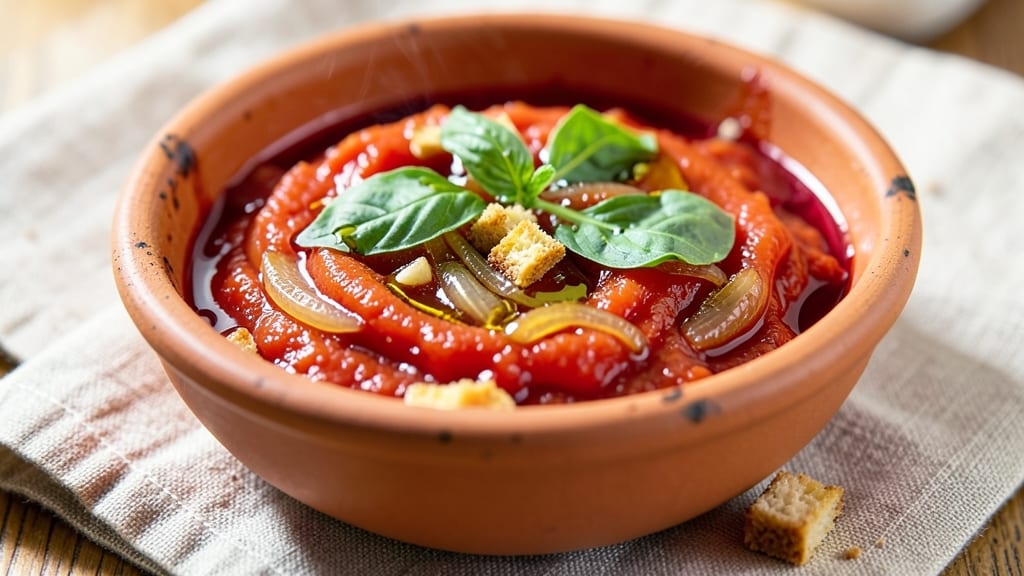
This authentic Napoli sauce recipe delivers the deep, slow-simmered umami that defines Neapolitan cuisine—where San Marzano tomatoes, garlic, and fresh basil create a sauce that's rich, balanced, and far superior to anything bottled.
The secret lies in patience: a 3-hour simmer transforms simple ingredients into a velvety, aromatic sauce with layers of complexity that cling perfectly to pasta or elevate any dish.
What sets this sauce apart is its attention to tradition—no shortcuts, no processed ingredients. We start with high-quality tomatoes, toasted garlic for depth, and a touch of red wine to brighten the acidity. The sauce reduces gradually, concentrating flavors while developing that signature umami richness that makes it unforgettable.
Unlike many recipes, this version includes a fresh basil finish that adds brightness without overpowering the tomato's natural sweetness.
The result is a sauce that's equally at home on spaghetti, lasagna, or even as a pizza topping—with a texture that's silky yet substantial, carrying the essence of Naples in every spoonful.
The slow cooking process isn't just about time; it's about building flavor through careful technique, ensuring each bite delivers that authentic Italian taste you crave.
Whether you're making it for a family dinner or meal prepping for the week, this sauce keeps beautifully in the fridge for up to 5 days, deepening in flavor as it rests.
The best part? It's versatile enough to use as-is or customize with meat, mushrooms, or other vegetables while maintaining its core authenticity.
Ingredients for authentic napoli sauce
Nine essential ingredients transform into Naples' legendary slow-simmered tomato sauce.
| Ingredient | Amount | Notes |
|---|---|---|
| San Marzano Tomato Crushed 🍅 | 28 oz | Whole peeled tomatoes preferred |
| Extra-Virgin Olive Oil 🫒 | ½ cup | High-quality, fruity variety |
| Garlic Cloves 🧄 | 6 cloves | Fresh, peeled, lightly toasted |
| Red Wine 🍷 | ¼ cup | Bold, dry variety like Chianti |
| Fresh Basil Leaves 🌿 | ½ cup | Packed, stems removed |
| Yellow Onion 🧅 | 1 whole | Medium size, finely chopped |
| Salt 🧂 | 1 ½ tsp | Diamond Crystal preferred |
| Black Peppercorns 🌶️ | ½ tsp | Freshly cracked |
| Sugar 🍚 | ½ tsp | White granulated |
San Marzano tomatoes are the foundation—look for the official DOP label at specialty stores like Eataly or Whole Foods. Their natural sweetness and low acidity create the perfect base. The garlic deserves special attention: toast the cloves in olive oil for 30 seconds until fragrant but not browned—this builds depth without bitterness. For the red wine, any bold, dry variety works, but Chianti or Sangiovese capture that authentic Italian profile. Fresh basil is non-negotiable—grow your own or buy from local farmers markets for maximum flavor.
No San Marzano tomatoes? San Marzano-style canned tomatoes from Mutti or Cirio are the next best option. Substituting regular crushed tomatoes will dilute the sauce's natural sweetness. Short on fresh basil? Dried basil at one-third the amount works in a pinch, though it lacks the bright finish. The onion can be swapped for shallots, but yellow onion delivers that classic sweetness when caramelized. For the wine, dry vermouth or even a splash of balsamic can mimic the acidity profile. The sugar is purely for balancing acidity—skip if your tomatoes are particularly sweet.
This sauce rewards patience—3 hours of simmering concentrates flavors into a velvety texture. Store in airtight containers for up to 5 days in the fridge, where flavors actually deepen. For longer storage, freeze in ice cube trays—perfect for single portions. The basil should be added at the very end to preserve its vibrant color and fresh aroma. If making ahead, add the basil just before serving to maintain its brightness.
Why You'll Love This Recipe
- Five-Ingredient Magic: The pantry staples here? They’re already in my kitchen—no last-minute grocery runs. Just crush those San Marzano tomatoes, toss in garlic and wine, and let the olive oil do its work. Honestly, the hardest part is waiting for the basil to wilt just right.
- Wine-Infused Depth: That splash of red wine isn’t just for show—it melts into the sauce, giving it a richness you’d pay $20 for at a restaurant. The garlic? It caramelizes into sweet, golden bites that make every spoonful taste like a hug.
- Weeknight to Dinner Party: Slap this on pasta for a Tuesday, or drizzle it over grilled fish for a fancier night. Between us, it’s the one sauce that never feels out of place, and the basil’s bright finish keeps it fresh for days in the fridge.
- Fridge Goldmine: Make a big batch—this sauce only gets better after a day or two as the flavors marry. I freeze it in ice cube trays for quick portions, and the cost? A fraction of jarred sauces. Plus, it’s the kind of leftovers people actually ask for seconds of.
Step-by-step instructions for authentic Napoli sauce
Master the slow-cooked depth of traditional Neapolitan cuisine with this precise technique.
Sauté the Aromatics Until Fragrant
Heat the 0.5 cup Extra-Virgin Olive Oil in a heavy-bottomed saucepan over medium-low heat. Add the 1 whole Yellow Onion, finely chopped, and cook for 5-6 minutes until translucent and just beginning to caramelize at the edges. This gentle cooking develops sweetness that forms the sauce's base.
Add the 6 cloves Garlic Cloves, lightly toasted and minced, along with 0.5 tsp Sugar. Cook for an additional 1-2 minutes until the garlic turns golden and releases its aroma. Be careful not to let it brown—burnt garlic will make the sauce bitter. Remove from heat immediately after the garlic is fragrant to preserve its delicate flavor.
Deglaze with Wine and Simmer the Tomatoes
Return the pan to medium heat and pour in the 0.25 cup Red Wine. Stir constantly for 2-3 minutes until the wine has completely evaporated, leaving behind a rich, concentrated flavor. This deglazing step captures all the fond (browned bits) from the pan, which dissolves into the sauce for depth.
Add the 28 oz San Marzano Tomato Crushed and 1.5 tsp Salt. Bring to a gentle simmer, then reduce heat to low. Let the sauce cook uncovered for 45-50 minutes, stirring occasionally. You're looking for a sauce that thickens naturally as moisture evaporates—it should coat the back of a spoon but still be loose enough to cling to pasta.
Season and Finish with Fresh Basil
After the initial simmer, taste the sauce and adjust seasoning with additional Salt or 0.5 tsp Black Peppercorns, freshly cracked. The sauce should be balanced—sweet from the tomatoes, bright from the wine, and savory from the aromatics. If it's too acidic, a pinch of sugar can help balance the flavors.
Remove from heat and stir in the 0.5 cup Fresh Basil Leaves, stems removed. Let the sauce sit for 5 minutes to allow the basil's oils to infuse. The basil should be added off the heat to preserve its vibrant green color and fresh aroma. The final sauce should have a glossy sheen and a rich, umami depth that's distinctly Neapolitan.
Rest and Serve
For the best texture, let the sauce rest for 10 minutes before serving. This allows the flavors to meld completely and the sauce to thicken slightly as it cools. Napoli sauce is designed to cling to al dente pasta, so it should be vibrant red with a velvety consistency—not watery, not thick like a paste.
Serve immediately over freshly cooked spaghetti or linguine, reserving ½ cup pasta water to thin the sauce if needed. The authentic Napoli sauce should coat each strand of pasta without overwhelming it, delivering layers of tomato sweetness, garlic brightness, and basil freshness in every bite.
Pro Tips For Making Authentic Napoli Sauce
- CRUSH GARLIC GENTLY: Use a flat side of your knife to press whole garlic cloves into the oil—don’t chop. I learned this after mincing mine into oblivion and ending up with bitter, overcooked bits. Two cloves, max, or the sauce will taste like a garlic factory.
- SIMMER NOT BOIL: Keep the sauce at a bare simmer—tiny bubbles, not rolling. I used to crank the heat, and the tomatoes would split, turning the sauce into a watery mess. Low and slow (30-40 minutes) builds depth without breaking down the San Marzano’s natural sweetness.
- DEGLAZE WITH WINE FIRST: Pour the red wine in immediately after the garlic, let it bubble for 30 seconds, then add tomatoes. This extracts the alcohol’s flavor without letting it evaporate completely—something I ignored until my sauce tasted flat. A splash of water later? No, just patience.
- SALT THE TOMATOES: Sprinkle crushed San Marzano tomatoes with 1 tsp salt before cooking. My grandmother swore this draws out excess moisture, concentrating the flavor. Sounds weird, but it works—your sauce will be richer and less watery by the end.
Troubleshooting this dish
Sauce Too Thin?
If your sauce is too watery after simmering, don't panic—this is common with fresh tomatoes. First, check if you've simmered long enough; 3 hours total is ideal for proper reduction. If it's still thin, increase heat slightly and cook uncovered for an additional 15-20 minutes, stirring occasionally.
For a quicker fix, mix 1 tbsp tomato paste with 1 tbsp water and stir into the sauce. The paste acts as a natural thickener while adding depth. 🔥
Sauce Too Acidic?
Fresh tomatoes can sometimes be overly acidic, especially if they're not perfectly ripe. Balance the flavors by adding a pinch of sugar (start with ½ tsp) and taste as you go. Alternatively, stir in 1 tsp honey or 1 tsp balsamic vinegar to mellow the acidity.
If using wine, opt for a slightly sweeter variety like Pinot Noir next time, as bold reds like Chianti can intensify acidity.
Garlic Tasting Bitter?
Burnt garlic is the #1 culprit for bitterness in Napoli sauce. To avoid this, toast your garlic cloves in olive oil for only 30 seconds over low heat, stirring constantly. Remove them immediately once they're fragrant but still pale gold.
If you've already burnt the garlic, strain the sauce through a fine-mesh sieve to remove the offending cloves. For future batches, use garlic powder as a last resort—it lacks depth but prevents bitterness.
Basil Turning Brown?
Fresh basil wilts and turns brown quickly when exposed to heat. To preserve its vibrant color, add the basil leaves off the heat and stir gently just until combined. For extra protection, cover the pan loosely with a lid for those final 5 minutes of infusion.
If your basil looks sad, finely chop a few fresh leaves and stir them in right before serving—this keeps the visual appeal intact while maintaining flavor.
Fond Not Dissolving?
The browned bits (fond) at the bottom of your pan are flavor gold, but they can sometimes resist dissolving. After deglazing with wine, scrape up any stuck bits with a wooden spoon and stir vigorously.
For stubborn fond, add 1 tbsp water to the pan, scrape again, then pour into your sauce. If you're still struggling, a splash of broth or even tomato paste can help break it down while adding richness. 💡
Sauce Too Sweet?
If your tomatoes are exceptionally sweet (like some heirloom varieties), the sauce may lack balance. Cut through the sweetness by adding 1 tsp red wine vinegar or ½ tsp lemon juice.
For a more authentic approach, increase the garlic slightly (7 cloves instead of 6)—its savory notes will complement the sweetness. If the sauce still tastes cloying, simmer uncovered for an extra 10 minutes to evaporate some of the natural sugars.
Nutrition facts
Frequently asked questions
Why does authentic Napoli sauce need such a long cooking time?
The 3-hour simmer is essential for developing the sauce's complex umami flavor. This slow reduction breaks down the tomatoes' natural sugars and acids, creating a rich, balanced taste that canned or quick-cooked sauces simply can't match. The patience pays off with a sauce that's deeply aromatic and perfectly clings to pasta.
Can I make this sauce without wine?
Yes, but you'll lose some depth. Replace the 0.25 cup red wine with 0.25 cup tomato juice or 0.25 cup broth to maintain moisture while adding savory notes. For more acidity, add 1 tsp balsamic vinegar or ½ tsp lemon juice—just taste as you go to avoid overpowering the tomato flavor.
What's the best pasta to serve with this sauce?
Use spaghetti or linguine for the classic experience—their long strands hold the sauce beautifully. For extra texture, try bucatini or pappardelle. Avoid thick noodles like penne, as they can overwhelm the delicate sauce. Always cook pasta al dente (1 minute less than package instructions) to prevent a mushy texture.
How can I tell when the sauce is ready?
The sauce should coat the back of a spoon smoothly but still be loose enough to cling to pasta. It should smell deeply aromatic with notes of tomato, garlic, and basil. Visually, it should be vibrant red with a glossy sheen—not watery, not thick like a paste. Taste it: the acidity should be balanced, with sweet tomato notes and savory undertones.
Can I make this sauce vegetarian?
This recipe is already vegetarian, but you can enhance it by adding mushrooms (like cremini or porcini) or caramelized onions for extra depth. For a meaty texture, try lentils or crumbled tempeh. The key is to maintain the sauce's balance—add umami-rich ingredients gradually to avoid overpowering the tomato base.