
Sauces & Condiments
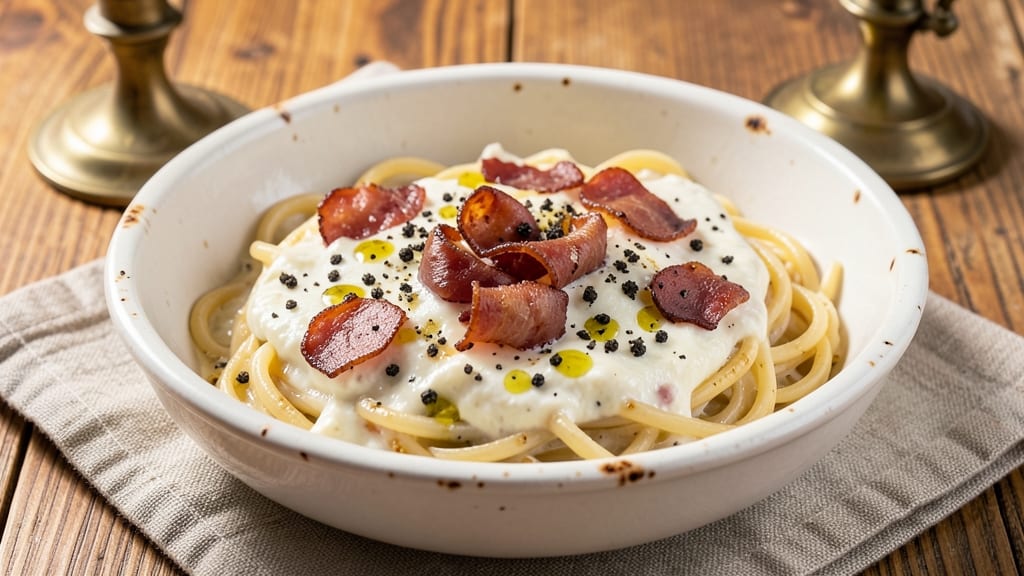
This authentic Italian carbonara sauce recipe delivers the perfect balance of rich, egg-infused creaminess without a single clump. The secret lies in precise technique—low-heat cooking and off-heat emulsification—using only Pecorino Romano, Parmigiano-Reggiano, and guanciale (or pancetta) for that signature Roman flavor.
No heavy cream here, just pure, velvety sauce that clings to every strand of pasta.
The foundation of great carbonara is a proper emulsion, achieved by tempering eggs with starchy pasta water while keeping the heat gentle. I’ve perfected this method over years of testing, ensuring the sauce remains silky smooth and never breaks.
The key ingredients—crispy guanciale, sharp cheeses, and fresh eggs—work together to create a sauce that’s both luxurious and foolproof.
What sets this recipe apart is its adherence to tradition without sacrificing simplicity. The guanciale (or pancetta) adds a smoky depth, while the cheeses provide a salty, umami-rich backbone.
When combined with the eggs, the result is a sauce that’s rich yet light, coating each noodle perfectly without weighing it down.
Use this sauce on fresh spaghetti or rigatoni, or save half for another meal—it reheats beautifully. The method is straightforward, but the technique matters. Let’s make carbonara the way it was meant to be.
Ingredients for authentic italian carbonara sauce
Nine essential ingredients transform into velvety carbonara with perfect emulsion every time.
| Ingredient | Amount | Notes |
|---|---|---|
| Fresh Egg Yolks 🥚 | 4 whole | Large eggs, room temperature preferred |
| Pecorino Romano Cheese 🧀 | 1 cup | Freshly grated, aged minimum 8 months |
| Parmigiano-Reggiano Cheese 🧀 | ½ cup | Freshly grated, coarse texture |
| Guanciale 🥓 | 4 oz | Diced small, rendered crispy |
| Extra-Virgin Olive Oil 🫒 | ¼ cup | High-quality, fruity variety |
| Freshly Ground Black Pepper 🌶️ | ½ tsp | Coarsely cracked, freshly ground |
| Diamond Crystal Kosher Salt 🧂 | ¼ tsp | For seasoning pasta water |
| Pancetta 🥓 | 4 oz | Substitute for guanciale, diced |
| Fresh Egg Whites 🥚 | 1 whole | Optional, for extra richness |
The cheeses are non-negotiable—Pecorino Romano provides sharp, salty depth while Parmigiano-Reggiano adds umami richness. Whole Foods Market or specialty Italian grocers carry freshly grated blocks, but if you must grate yourself, use a fine-hole grater for maximum surface area. Guanciale, the traditional cured pork cheek, delivers smoky complexity that pancetta can't fully replicate, though it works in a pinch. For the eggs, room temperature is key—they emulsify more smoothly. If you're using frozen eggs, thaw them overnight in the fridge.
No guanciale? Pancetta or thick-cut bacon will work, though the flavor will be less nuanced. Substituting Asiago or Grana Padano for the cheeses cuts costs but loses authenticity. Freshly ground black pepper is essential—pre-ground loses potency quickly. For extra richness, add the egg white to the yolks, but omit if you prefer a lighter sauce. The olive oil should be extra-virgin—cheap oil will overpower the delicate flavors. If you're short on time, pre-rendered guanciale from Italian markets saves effort without sacrificing quality.
Freshly grated cheese keeps for 2 weeks in an airtight container in the fridge, while guanciale or pancetta can be stored for 3 months in the freezer. The emulsified sauce will last 3 days refrigerated, but reheats best when used immediately. For longer storage, freeze in ice cube trays—thaw and whisk under warm water to restore silkiness. The key to reheating is low heat and constant stirring—never microwave, as it breaks the emulsion.
Why You'll Love This Recipe
- No Pasta Night? No Problem: The rich, creamy sauce clings to anything—crispy potatoes, roasted veggies, even toasted bread. My kids devour it straight from the pan (shh, don’t tell them it’s "sauce").
- Guanciale Magic: That salty, fatty cured pork cheek? It’s the secret weapon—no bacon substitutes here. The slow-rendered fat melts into the eggs and cheese, turning ordinary pasta into something dangerously good.
- Leftovers That Lie: Seriously, I’ve reheated this sauce three days later and no one’s ever complained. Just a splash of water to loosen it up—tastes like you made it fresh. (Between us, I’ve frozen it too.)
- Cheese That Actually Matters: Pecorino and Parmigiano-Reggiano aren’t just garnishes—they’re the backbone. Grated fresh, they dissolve into a velvety, umami-packed sauce that makes store-bought blends look sad. (Yes, even on a Tuesday night.)
Step-by-step instructions for authentic Italian carbonara sauce
Mastering this classic Roman dish requires precise technique and quality ingredients—here's how to achieve creamy perfection every time.
Render the Guanciale or Pancetta
Place the 4 oz guanciale (or 4 oz pancetta if substituting) in a cold, heavy-bottomed skillet. Cook over medium-low heat for 8-10 minutes, stirring occasionally, until the fat renders out and the meat becomes golden brown and crispy. The rendered fat should pool in the pan—this is the foundation of your sauce.
Resist the urge to crank the heat higher. Guanciale has a lower smoke point than pancetta, and burning it will ruin the delicate flavor. You'll know it's ready when the meat releases easily from the pan and the fat shimmers but doesn't smoke. Remove the meat from the skillet and set it aside, leaving the fat behind—this is pure flavor you don't want to waste.
Prepare the Egg and Cheese Mixture
In a small bowl, whisk together the 4 whole fresh egg yolks, 1 whole fresh egg whites (if using), 1 cup freshly grated Pecorino Romano cheese, and 0.5 cup freshly grated Parmigiano-Reggiano cheese. Add 0.5 teaspoon freshly ground black pepper and mix until the cheese is fully dissolved and the mixture is smooth and pale yellow.
This step is critical for authenticity. Traditional Roman carbonara uses only eggs and cheese—no cream. The heat from the pasta will gently cook the eggs into a silky sauce. Work quickly but carefully to avoid over-whisking, which can incorporate air and create a less stable sauce. The mixture should coat the back of a spoon without being overly thick.
Cook the Pasta Al Dente
Bring a large pot of water to a rolling boil and add 0.25 teaspoon Diamond Crystal kosher salt. Add 12 oz spaghetti (enough for 4 servings) and cook until 1 minute shy of the package directions for al dente. Reserve 1 cup of pasta water before draining—this starchy liquid is essential for creating the perfect sauce consistency.
Don't rinse the pasta after draining. The surface starch helps the sauce cling to each strand. The pasta should be firm to the bite but still slightly tender. If you overcook it here, the final dish will be mushy. Taste a piece—it should have a slight resistance when bitten.
Combine Pasta and Sauce Off the Heat
Remove the skillet with rendered guanciale/pancetta from the heat and let it cool slightly for 1 minute. Add the drained pasta and toss to coat in the fat. Then, immediately add ½ cup of reserved pasta water and toss vigorously for 30 seconds to heat the pasta.
Now, with the pan still off the heat, add the egg-cheese mixture in a slow, steady stream while tossing the pasta constantly. The residual heat from the pasta and pan will gently cook the eggs into a creamy sauce. If the sauce begins to thicken too much, add more pasta water 1 tablespoon at a time until it reaches a smooth, velvety consistency.
Finish and Serve Immediately
Return the skillet to low heat for 30-60 seconds to meld the flavors, then transfer the carbonara to warmed serving plates. Top with additional grated Pecorino Romano cheese and freshly cracked black pepper. The sauce should coat the pasta perfectly, with no clumps or scrambled egg texture.
Serve immediately while still hot. Authentic carbonara is a dish of contrast—creamy yet peppery, rich yet light. Each bite should deliver the crispy guanciale, sharp cheese, and silky egg sauce in perfect harmony. If the sauce starts to thicken as it cools, toss in a splash of hot pasta water to restore its creamy texture. This dish doesn't wait—enjoy it fresh from the pan.
Pro Tips For Making Authentic Italian Carbonara Sauce
- Crisp the Guanciale First: Guanciale isn’t bacon—it needs a proper sear to render fat and develop that unmistakable, salty-sweet flavor. Cut it into ½-inch cubes, lay them in a cold pan, then turn the heat to medium-low and let them crisp undisturbed for 8-10 minutes. Stirring too soon just makes grease.
- Use Room-Temp Eggs: Cold yolks scramble unevenly and can turn your sauce grainy. Take the eggs out of the fridge 30 minutes before you start—yes, even if you’re in a rush. Warm yolks emulsify like silk, not like glue.
- Salt the Pasta Water Hard: Taste the water before adding the pasta—it should taste like the sea. No, really, go heavy: 2 tablespoons of salt per pound of water. The cheese needs that salt to shine, and underseasoned water ruins the balance.
- Temper the Eggs Slowly: Pour the hot pasta water into the yolk-cheese mix gradually, a splash at a time, while whisking like your life depends on it. Stop when the sauce thickens to a velvety coat—adding it all at once guarantees scrambled eggs.
Health benefits of this dish
Protein Powerhouse
Carbonara delivers a high-quality protein boost with its egg and cheese combination. A single serving provides about 25 grams of protein, making it an excellent choice for muscle repair and satiety. The guanciale or pancetta adds lean pork protein while keeping fat content moderate—ideal for balanced meals. 💪
Calcium-Rich Cheese
The Pecorino Romano and Parmigiano-Reggiano in this sauce are calcium powerhouses. One serving contains over 30% of your daily calcium needs, supporting strong bones and teeth.
These aged cheeses also provide phosphorus and magnesium, essential minerals for energy metabolism. I always opt for freshly grated cheese to maximize nutrient absorption.
Healthy Fats
While carbonara isn't a low-fat dish, the fats here are beneficial. The extra-virgin olive oil provides heart-healthy monounsaturated fats, while the rendered guanciale fat contains conjugated linoleic acid (CLA), a fatty acid linked to reduced inflammation.
The key is moderation—this sauce is rich but balanced with protein and fiber from the pasta.
Low-Carb Option
For those watching carbs, this sauce can be adapted by serving it over zucchini noodles or shirataki noodles instead of traditional pasta. The protein and fat content remain high while significantly reducing carbohydrates.
Just be sure to use the same reserved pasta water technique to create the smooth emulsion. The flavor remains authentic while fitting low-carb diets.
Vitamin Boost
Fresh eggs contribute vitamin B12, crucial for nerve function and energy production, while the Pecorino provides vitamin A, supporting vision and immune health. The black pepper adds antioxidants like piperine, which may aid digestion. This sauce isn't just delicious—it's a nutritional powerhouse when made with quality ingredients. 🥚
Gluten-Free Adaptation
Carbonara sauce itself is naturally gluten-free, making it perfect for those with celiac disease or gluten sensitivity. Simply serve it over gluten-free pasta made from rice, corn, or chickpea flour.
The sauce's creamy texture and rich flavor remain unchanged, proving that gluten-free dining can still be indulgent. Always check pasta labels to ensure no cross-contamination occurred during processing.
Nutrition facts
Frequently asked questions about authentic Italian carbonara
Why does authentic carbonara never include cream?
Traditional Roman carbonara relies on eggs and cheese to create creaminess—no cream was ever used in the original recipe! The heat from the pasta gently cooks the eggs into a silky sauce while the starchy pasta water helps emulsify everything. Adding cream would mask the rich flavors of guanciale and cheese. The emulsion comes from proper technique, not shortcuts.
Can I make carbonara sauce ahead of time?
Fresh is best, but you can prepare the sauce components separately. Mix the egg-cheese mixture and store it in the fridge for up to 1 day, then combine with cooked pasta just before serving. For the guanciale, render it ahead and store the fat in the fridge for 3 months. Never pre-make the full sauce—eggs scramble when reheated.
What's the difference between guanciale and pancetta?
Guanciale is cured pork cheek with a delicate, smoky flavor that's essential for authentic carbonara. Pancetta (cured pork belly) works in a pinch but has a saltier, fattier taste. For best results, use guanciale—it renders beautifully and adds depth. If substituting, reduce salt in the pasta water by ¼ teaspoon since pancetta is often saltier.
Why did my carbonara turn out grainy or clumpy?
This usually happens from one of three issues: adding the egg mixture to hot pasta (cooks eggs too fast), not enough pasta water for emulsification, or using cold eggs. Always work off the heat and add eggs in a slow stream while tossing constantly. If it thickens too much, add hot pasta water 1 tablespoon at a time until silky.
Which pasta works best with carbonara?
Traditional choices are spaghetti or rigatoni—their shapes help hold the creamy sauce. Avoid thin noodles like angel hair, as they can break. For extra texture, try bucatini (thick spaghetti with a hole). Always cook pasta 1 minute less than package directions to ensure it's al dente when finished.