
Sauces & Condiments
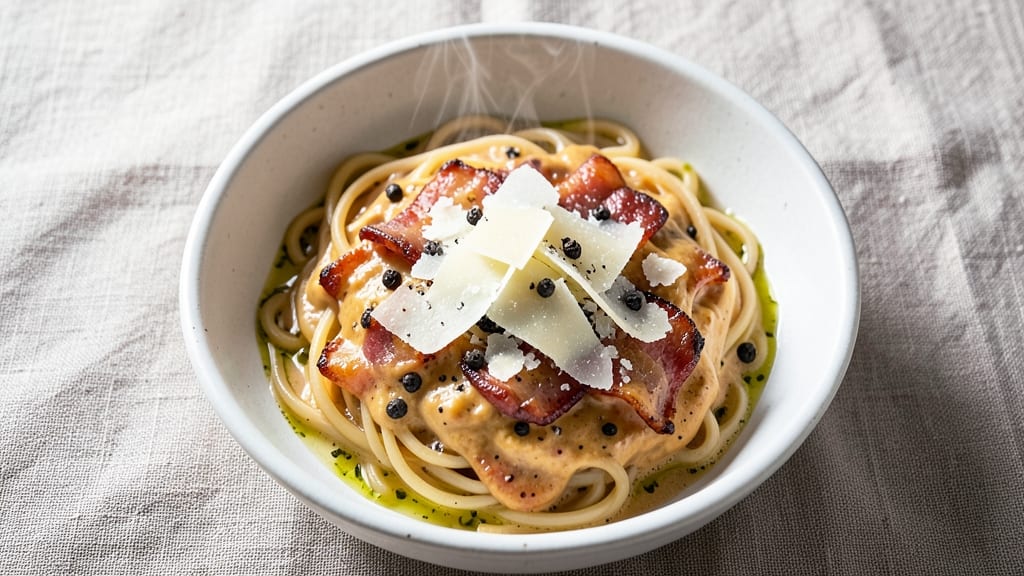
This authentic carbonara sauce recipe delivers the creamy, peppery richness of Rome's most famous pasta dish—without the dreaded clumps or greasy texture.
The secret lies in proper egg tempering and traditional Italian ingredients like guanciale (or pancetta), Pecorino Romano, and black pepper, all combined with a technique that transforms simple components into velvety, restaurant-quality sauce.
What sets this sauce apart is the careful balance of heat and timing: the guanciale renders slowly to infuse deep umami flavors, while the eggs are tempered with hot pasta water to create a silky emulsion that coats every strand.
No cream is needed—just properly emulsified eggs and grated cheese create that signature luxurious texture that's both rich and light.
The result is a sauce that's perfectly balanced—peppery, salty, and unctuous—with just enough bite to complement al dente spaghetti. Unlike many versions that rely on heavy cream or pre-shredded cheese, this recipe stays true to Roman tradition while being foolproof for home cooks who want authentic flavor without the guesswork.
Once mastered, this sauce keeps well in the refrigerator for up to 3 days, making it perfect for meal prep. The key is storing it in an airtight container with a thin layer of pasta water on top to maintain its creamy consistency. Ready to transform your pasta nights?
Ingredients for authentic carbonara sauce
Eight essential ingredients transform simple components into Rome's signature creamy sauce.
| Ingredient | Amount | Notes |
|---|---|---|
| Guanciale or Pancetta 🥓 | 6 oz | Thinly sliced, cured Italian pork cheek |
| Large Egg Yolks 🥚 | 4 whole | Fresh, room temperature preferred |
| Pecorino Romano Cheese 🧀 | 1 cup | Freshly grated from block, fine grade |
| Freshly Ground Black Pepper 🌶️ | 1 tsp | Coarsely cracked, not powdered |
| Spaghetti Water 💧 | 1 ½ cups | Reserved from cooking pasta |
| Extra-Virgin Olive Oil 🫒 | 2 tbsp | For finishing, high-quality preferred |
| Diamond Crystal Kosher Salt 🧂 | ½ tsp | For seasoning pasta water |
| Spaghetti 🍝 | 8 oz | Al dente, reserved for sauce |
The guanciale is non-negotiable for authentic flavor—its fatty marbling renders into rich, umami-infused oil. Look for thick-cut slices at Italian specialty markets or well-stocked butchers; Costco often carries high-quality pancetta as a substitute. Freshly grated Pecorino Romano (not pre-shredded) is critical—it melts smoothly and adds that signature sharpness. For the eggs, room temperature yolks emulsify better, so take them out 20 minutes before using. The black pepper should be freshly cracked; pre-ground loses its aromatic punch quickly.
No guanciale? Pancetta works perfectly—just ensure it's uncured and sliced thin. Short on Pecorino? Parmigiano-Reggiano in a 1:1 ratio maintains the cheesy depth. The spaghetti water must be well-salted (about 1 tbsp salt per gallon) and reserved before draining—this starchy liquid is the secret to the sauce's velvety texture. For a quicker version, add 1 tbsp reserved pasta water to the egg mixture before emulsifying. The olive oil should be fruity and peppery—California extra-virgin brands like Corto or Colavita elevate the dish.
Store the sauce in an airtight container with a thin layer of pasta water on top to prevent a skin from forming. It keeps for 3 days in the fridge—reheat gently, stirring constantly over low heat. For meal prep, portion into small jars and reheat only what you need. The sauce thickens as it cools, so add a splash of warm water when reheating. Freezing isn't recommended as the texture can break down, but you can freeze the uncooked guanciale and cheese separately for up to 3 months.
Why You'll Love This Recipe
- No Fuss, Big Payoff: I swear by this sauce because it’s all about the technique, not the effort. You’re basically tossing guanciale in a pan—no chopping, no stress—then stirring egg yolks into starchy pasta water while the cheese melts. That’s it. The magic happens in the bowl, not the prep.
- Umami Bomb: Between the salty-sweet guanciale and the sharp, nutty Pecorino, this sauce is ridiculously flavorful. Honestly, the first time I tasted it, I nearly burned my tongue from how good it was. Freshly cracked black pepper ties it all together—no blandness here.
- Weeknight to Weekend: This recipe works for lazy Tuesday dinners or impressing guests. Serve it over spaghetti for a classic, or toss it with crispy potatoes for a hearty breakfast. My roommates even asked for it at a picnic—yes, really. The sauce keeps well, so you can make a big batch and reuse it.
- Cheap Thrills: Guanciale’s pricey, but pancetta works just as well. A little goes a long way, and Pecorino stretches further than you’d think. Plus, leftovers reheat like a dream—just add a splash of water to loosen it up. My wallet and taste buds both win.
Step-by-step instructions for authentic egg-emulsified carbonara
Here's the professional method for achieving silky, clump-free carbonara with perfect texture and flavor.
Render the Guanciale Until Crisp
Place the 6 oz guanciale or pancetta in a large skillet over medium heat—no oil needed. Let it render slowly for 8-10 minutes until the fat becomes golden and the meat is crisp at the edges. This process extracts maximum flavor while preventing burning.
Real talk: Don't rush this step. The rendered fat is the foundation of your sauce, and crispy guanciale adds depth. If it starts smoking, reduce heat slightly. You'll know it's ready when the fat pools in the pan and the meat releases easily from the skillet.
Prepare the Egg-Cheese Emulsion
In a separate bowl, whisk together the 4 whole large egg yolks, 1 cup Pecorino Romano cheese, and 1 teaspoon freshly ground black pepper until completely smooth. The mixture should be pale yellow and homogeneous—no visible streaks of egg or cheese.
This is the moment that matters: The emulsion must be perfectly blended to prevent scrambled eggs in your sauce. I always use room-temperature eggs for better incorporation. If you're using fresh eggs, let them sit at room temperature for 15 minutes before whisking.
Cook the Spaghetti Al Dente
Bring a large pot of water to a rolling boil and add 0.5 teaspoon Diamond Crystal kosher salt. Add the 8 oz spaghetti and cook until 1 minute shy of package directions for al dente. Reserve 1.5 cups spaghetti water before draining—this starchy liquid is essential for the sauce.
Don't rinse the pasta—surface starch helps the sauce cling. The pasta should be firm to the bite with a slightly raw center. If you overcook it now, the sauce won't finish cooking properly. Drain directly into the skillet with the guanciale.
Combine Off Heat for Perfect Emulsion
Remove the skillet from heat and immediately add the drained spaghetti. Toss vigorously for 30 seconds to coat in the rendered fat. Then add ½ cup of the reserved spaghetti water and toss again. This preheats the pasta and prepares it to absorb the egg mixture.
Now add the egg-cheese mixture in a slow, steady stream while tossing constantly. The residual heat from the pasta will gently cook the eggs into a silky sauce. If the sauce looks too thick, add more spaghetti water 1 tablespoon at a time until it reaches a creamy consistency.
Finish with Olive Oil and Serve Immediately
Return the skillet to low heat and stir in the 2 tablespoons extra-virgin olive oil. This adds richness and prevents the sauce from tightening as it cools. Taste and adjust seasoning with additional Pecorino Romano cheese or black pepper if needed.
Serve immediately while still hot. The sauce should coat the spaghetti perfectly with a glossy sheen. Each bite should deliver creamy, eggy richness balanced by the salty, peppery guanciale. For authentic presentation, garnish with additional black pepper and serve with crusty bread on the side.
Pro Tips For Making Authentic Carbonara Sauce
- CRISP THE PECORINO: Grate it fresh and coarse—none of that pre-shredded stuff clumping in your sauce. I used to use the boxed kind, and it turned into a gluey mess. Freshly grated Pecorino adds the right sharp tang and texture, so take 30 seconds to do it right.
- COOK GUANCIALE LOW AND SLOW: Render it over medium-low heat until fat pools but the meat stays pink—about 10-12 minutes. High heat burns the fat too fast, and you’ll end up with bitter, greasy guanciale instead of rich, savory bits. Patience here makes all the difference.
- SALT THE PASTA WATER: Toss in a big pinch of salt (about 2 tablespoons for 4 quarts) before adding the pasta. The starchy, salty water is what emulsifies the egg sauce, not some sad leftover broth. I learned this after my first carbonara tasted bland—no amount of cheese could fix it.
- TEMPER THE EGGS: Warm the yolks slightly by whisking in a splash of pasta water (about 1/4 cup) before mixing with the cheese. This prevents scrambling when the hot sauce hits them. I was skeptical until I tried it—now it’s non-negotiable.
Common mistakes when making your authentic carbonara sauce
Overcooking the Eggs
This is the #1 mistake I see—adding the egg-cheese mixture to hot pasta instead of warm pasta. When you combine cold eggs with hot pasta, they scramble instantly, creating a grainy, curdled mess.
Always work off heat so the residual warmth from the pasta gently cooks the eggs into a silky sauce. 🌶️
Using Powdered Pepper
Pre-ground black pepper loses its aromatic punch and flavor intensity quickly. For authentic carbonara, always use freshly cracked coarsely ground black pepper—it adds a bright, peppery kick that powdered versions can't match. I keep a Penzeys brand pepper grinder on my counter for this exact purpose.
Skipping the Pasta Water
The starchy liquid reserved from cooking pasta is the secret to a velvety sauce. Without it, your sauce will be thick and clumpy. Always reserve at least 1.5 cups of well-salted pasta water—it's what transforms the egg-cheese mixture into a creamy emulsion. Think of it as the sauce's liquid gold.
Adding All the Cheese at Once
Pecorino Romano is sharp and salty, so adding all 1 cup at once can overpower the dish. Instead, start with ½ cup in the egg mixture, then finish with another ½ cup after combining with the pasta. This balances the flavors perfectly and prevents a bitter aftertaste.
Rushing the Guanciale Rendering
Guanciale needs 8-10 minutes of slow rendering to develop its rich, umami flavor. If you rush it, the fat will burn and taste bitter. Keep the heat at medium and let it render slowly—this step is non-negotiable for authentic flavor. The crispy edges are worth the wait!
Using Pre-Shredded Cheese
Pre-shredded cheese contains anti-caking agents that prevent smooth melting. Always grate Pecorino Romano fresh using a microplane or fine grater. The fine, powdery texture melts perfectly into the sauce, creating that signature creamy consistency. This one change makes all the difference. 🧀
Nutrition facts
Frequently asked questions
Why does authentic carbonara sauce never include cream?
Traditional Roman carbonara relies on eggs and cheese for creaminess, not dairy. The eggs are gently cooked by the hot pasta's residual heat, creating a rich, velvety emulsion. Adding cream would make it heavy and mask the authentic flavors of guanciale and Pecorino Romano. The sauce's signature texture comes from proper egg tempering and reserved pasta water.
Can I make carbonara sauce ahead of time?
Yes, but with care! Store the sauce in an airtight container with a thin layer of reserved pasta water on top to prevent skin formation. It keeps well in the fridge for 3 days. When reheating, warm gently over low heat while stirring constantly—never microwave it, as this can break the emulsion. Add a splash of warm water if it thickens too much.
What's the difference between guanciale and pancetta?
Guanciale is the authentic choice—it's cured pork cheek with a rich, fatty texture that renders beautifully. Pancetta is a good substitute (thinly sliced, uncured), but lacks guanciale's deep umami flavor. For best results, look for thick-cut guanciale at Italian specialty markets. If using pancetta, slice it extra thin to mimic guanciale's texture and rendering properties.
How do I fix scrambled eggs in my carbonara?
If your sauce curdles, immediately remove from heat and stir in 1-2 tablespoons of reserved pasta water. The starch helps rebind the emulsion. For extra insurance, whisk in 1 teaspoon of cold water or a tiny bit of melted butter while stirring vigorously. Serve immediately—don't let it sit, as this makes recovery harder. Prevention is key: always work off heat when combining eggs with pasta!
Can I use Parmigiano-Reggiano instead of Pecorino Romano?
For a balanced flavor, use a 50/50 mix of both cheeses. Pecorino Romano provides sharpness, while Parmigiano-Reggiano adds depth. If using only Parmigiano, increase to 1.25 cups for equivalent richness. Freshly grated cheese is essential—pre-shredded versions contain anti-caking agents that prevent smooth melting and create grainy texture.