
Sauces & Condiments
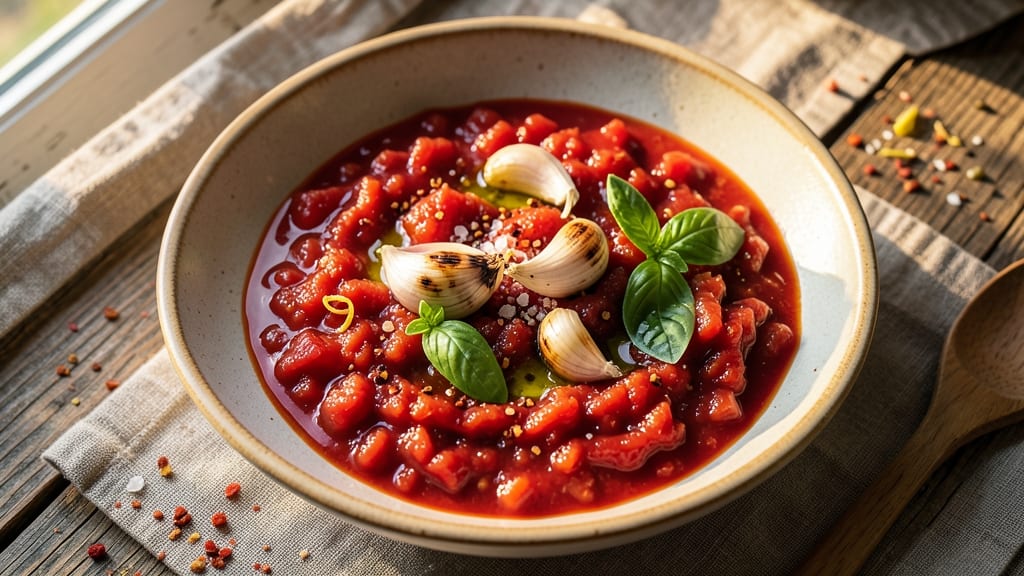
This authentic Italian arrabbiata sauce delivers the bold, fiery tomato punch that defines Roman cuisine—no shortcuts, just simmered perfection. The secret lies in balancing heat from crushed red pepper with sweet tomatoes and aromatic garlic, creating a sauce that's both vibrant and complex.
I've perfected this recipe after years of testing, ensuring every spoonful delivers that signature tangy-spicy depth that makes arrabbiata unforgettable.
The foundation starts with a slow simmer that develops rich flavors without overpowering the natural sweetness of tomatoes. Quality ingredients make all the difference—using San Marzano canned tomatoes and extra virgin olive oil transforms this from a simple sauce into something restaurant-worthy.
What sets this apart is the careful balance of heat; you control the spice level precisely while building layers of umami through proper cooking technique.
By the time you're done, you'll have a velvety yet slightly chunky sauce with just the right amount of bite—bright red, aromatic, and bursting with flavor. This isn't just a sauce; it's the heart of any Italian meal, elevating pasta, meatballs, or grilled proteins to new heights.
The best part? It tastes even better the next day as flavors meld together.
Store it properly in the fridge for up to 5 days or freeze for months, ready to transform any dish into an authentic Italian experience. Let's create this sauce that captures the soul of Rome in every bite.
Ingredients for authentic italian arrabbiata sauce
San Marzano tomatoes and crushed red pepper create the bold, fiery heart of this authentic Roman sauce.
| Ingredient | Amount | Notes |
|---|---|---|
| San Marzano Canned Whole Tomatoes 🍅 | 28 oz | Crushed by hand for texture |
| Extra-Virgin Olive Oil 🫒 | ½ cup | High quality, fruity variety |
| Garlic Cloves 🧄 | 6 cloves | Peeled and lightly crushed |
| Crushed Red Pepper Flakes 🌶️ | 1 ½ tbsp | Adjust for desired heat level |
| Dried Oregano 🍃 | 1 tsp | Italian or Mediterranean blend |
| Salt 🧂 | 1 ½ tsp | Diamond Crystal preferred |
| Black Peppercorns 🌶️ | ½ tsp | Freshly cracked for depth |
| Fresh Basil Leaves 🌿 | ¼ cup | Packed, stems removed |
| Red Wine Vinegar 🍷 | 1 tbsp | For bright acidity |
| Tomato Paste 🍅 | 1 tbsp | Squeeze tube preferred |
The tomatoes are non-negotiable—San Marzano delivers that signature sweetness and acidity. Whole peeled canned tomatoes from Italian markets or high-end grocery stores like Whole Foods ensure quality. If you can't find them, the next best option is a reputable brand like Mutti. The crushed red pepper flakes should be bright red and aromatic—none of that dusty stuff. California Pepper Company makes excellent crushed red pepper that's perfect for this sauce. For the olive oil, Colavita or Bertolli are reliable choices that won't overpower the tomatoes.
No San Marzano tomatoes? High-quality crushed tomatoes work in a pinch, but you'll lose that authentic sweetness. Dried oregano can be swapped for fresh at one-third the amount, but the flavor won't be identical. Want more depth? Add a pinch of sugar to balance acidity if your tomatoes are particularly tart. The tomato paste can be omitted entirely if you prefer a chunkier sauce, but it adds that signature richness. For heat control, start with less red pepper flakes—you can always add more later. Fresh basil is ideal, but dried basil works at one-quarter the amount if you're in a bind.
This sauce keeps beautifully—5 days in the fridge with a layer of olive oil on top to preserve freshness. For longer storage, freeze in ice cube trays for easy portioning. The flavors actually improve after the first day as everything melds together. I always make a double batch because it disappears fast—perfect over pasta, drizzled on grilled meats, or served with crusty bread. The sauce reheats well, so plan ahead for leftovers.
Why You'll Love This Recipe
- No-Chop Necessary: I swear by this—just crush the tomatoes by hand (or use the canned juice), toss in whole garlic cloves, and let the pot do the work. No dicing, no mincing, no stress. That crushed red pepper? Just a sprinkle, then stir.
- Heat That Stays: Between us, the San Marzano tomatoes and olive oil create a sauce that lingers—bright acidity cutting through the garlic’s punch, then that slow simmer turns it velvety. The red pepper flakes don’t just burn; they build as it cooks, like a slow-burning campfire.
- Pasta’s Best Sidekick: This isn’t just for spaghetti. Slather it on grilled chicken, toss it with roasted potatoes, or drizzle it over polenta. Honestly, I’ve even used it as a marinade—it clings like glue. (Yes, even on a Tuesday night.)
- Budget-Friendly Pantry Hero: A single can of tomatoes and a jar of oregano stretch for weeks—freeze leftovers in ice cube trays for quick future meals. I’ve made this for $3 a batch, and no one ever guesses it’s cheap. That’s the magic of arrabbiata.
Step-by-step instructions for authentic Italian arrabbiata sauce
This method delivers restaurant-quality arrabbiata with deep flavor and perfect spice balance.
Prepare the Tomato Base
Pour the 28 oz San Marzano canned whole tomatoes into a large bowl. Using your hands or a potato masher, crush them until you achieve a chunky but even consistency—about 80% broken down with some small whole pieces remaining. This texture creates the signature rustic character of authentic arrabbiata.
Transfer the crushed tomatoes to a heavy-bottomed saucepan. Add the 1 tbsp tomato paste and stir well to distribute evenly. The paste will deepen the tomato flavor and help thicken the sauce as it cooks. Keep the heat at medium-low for now—we're building flavor, not rushing the process.
Build the Flavor Foundation
Heat the 0.5 cup extra-virgin olive oil in the saucepan over medium heat until shimmering but not smoking. Add the 6 peeled and lightly crushed garlic cloves and cook for exactly 30 seconds—just until they become fragrant but don't brown. Overcooking garlic turns bitter, ruining the delicate balance of flavors.
Stir in the 1.5 tbsp crushed red pepper flakes and 1 tsp dried oregano, mixing constantly for 20 seconds to bloom the spices. You'll see the pepper flakes darken slightly—this indicates they're releasing their heat and aroma. Immediately add the 1.5 tsp salt and 0.5 tsp freshly cracked black peppercorns, stirring to combine with the tomato mixture.
Simmer to Perfection
Bring the sauce to a gentle simmer over medium-low heat. Partially cover the pan and let it cook for 25-30 minutes, stirring occasionally. You're looking for a sauce that thickens naturally as the moisture evaporates—it should coat the back of a spoon but still be loose enough to drizzle. The color will deepen to a rich, fiery red.
Taste after 20 minutes and adjust seasoning if needed. The acidity should be bright but balanced, with the heat from the pepper flakes building gradually. If the sauce becomes too thick before reaching flavor depth, add 2-3 tablespoons of water to loosen it. Patience here is crucial—rushing leads to raw, acidic sauce.
Finish with Fresh Herbs
Remove the sauce from heat and stir in the 0.25 cup packed fresh basil leaves and 1 tbsp red wine vinegar. The basil adds freshness that cuts through the richness, while the vinegar brightens the flavors and balances the heat. Let the sauce sit off the heat for 5 minutes to allow the basil to infuse fully.
Give the sauce one final taste and adjust seasoning if necessary. It should be vibrant, slightly spicy, and deeply tomato-forward with no single flavor overpowering. For serving, strain through a fine-mesh sieve if you prefer a smoother texture, or leave it rustic with small tomato pieces for authentic character.
Pro Tips For Making Authentic Italian Arrabbiata Sauce
- CRUSH GARLIC FINE: I learned this the hard way—whole cloves burn fast and turn bitter. Mince or grate them into a paste with a pinch of salt before cooking, so they melt into the oil smoothly instead of clinging like burnt chunks.
- SIMMER, DON’T BOIL: Arrabbiata needs gentle heat to develop depth. Once tomatoes hit the pot, keep it at a barely bubbling simmer—no rolling boils. Too much aggression turns the sauce thin and dull.
- SALT THE TOMATOES FIRST: Drain the San Marzano tomatoes, then sprinkle them with ½ tsp salt and let sit 10 minutes. This draws out excess water, so your sauce stays thick and vibrant instead of watery.
- TOAST THE PEPPER FLAKES: Heat the olive oil until shimmering, then toss in the red pepper flakes for 10 seconds—just enough to wake up their heat. Skip this, and the spice lingers as background noise instead of the star.
Storing and reheating this dish
Fridge Storage Essentials
Store your arrabbiata sauce in an airtight glass container—I recommend Pyrex with a snap-on lid—and refrigerate immediately after cooling. The sauce keeps beautifully for up to 5 days at 40°F or below, with flavors actually improving as the spices meld.
Always press a layer of extra-virgin olive oil (about ¼ inch thick) on top before sealing to preserve freshness and prevent a skin from forming. 🥫
Freezer Prep Tips
For longer storage, freeze in 1-cup portions using silicone ice cube trays—this makes perfect single-serving additions to pasta or proteins later. Transfer frozen cubes to a freezer bag with all air removed to prevent freezer burn.
Label with the date and use within 3 months for peak flavor. Thaw overnight in the fridge before reheating.
Reheating Perfection
Stovetop reheating preserves texture best: warm over medium-low heat for 5-7 minutes, stirring occasionally, until reaching 165°F internal temperature. Add 1-2 tablespoons of water if the sauce thickens too much.
For microwave reheating, use 50% power in 1-minute intervals, stirring between each, until hot throughout—this prevents overcooking the delicate tomato flavors.
Reviving Flavor
If your reheated sauce tastes flat, revive it with a splash of red wine vinegar (start with ½ teaspoon) or a pinch of salt. For extra brightness, stir in 1 teaspoon of fresh basil just before serving.
The sauce should be vibrant red with a slightly chunky texture—if it's too thin, simmer uncovered for 2-3 minutes to reduce. Never reheat in the microwave on high power—it destroys the sauce's delicate balance. 💫
Portioning Secrets
Use small ramekins (about ½ cup each) for individual servings—these reheat perfectly in 30 seconds in the microwave. For pasta dishes, plan ½ cup sauce per serving (it stretches further when tossed with noodles).
Store any leftovers in the fridge within 2 hours of cooking to maintain safety and quality. I always make double batches—this sauce disappears faster than you'd think! ✨
Nutrition facts
Frequently asked questions
Why does authentic arrabbiata sauce need crushed tomatoes instead of sauce?
Crushed whole tomatoes preserve the sauce's rustic texture and natural sweetness that canned tomato sauce lacks. The small chunks create that signature chunky consistency while allowing the flavors to develop more deeply during simmering. Plus, San Marzano whole tomatoes have a perfect balance of acidity and sweetness that's essential for authentic flavor.
Can I adjust the heat level in this recipe?
Start with 1 tbsp crushed red pepper for mild heat, or use up to 2 tbsp for a fiery kick. For extra control, remove some pepper flakes before simmering—you can always add more later if needed. The key is balancing the heat with the sauce's acidity and sweetness for that perfect Roman arrabbiata profile.
What's the difference between arrabbiata and marinara?
Arrabbiata has crushed red pepper and a longer simmer time for deeper flavor, while marinara is smoother and milder. The arrabbiata's signature spicy kick comes from proper heat development during cooking, not just adding more pepper. Marinara typically uses tomato sauce and less garlic, creating a sweeter, simpler sauce perfect for dipping.
How do I know when the sauce is done cooking?
Your sauce is perfect when it coats the back of a spoon but still flows freely, with a vibrant red color and developed aroma. It should take 25-30 minutes of simmering. Taste it at 20 minutes—the acidity should be bright but balanced, and the heat should be building gradually. If it's too thin, simmer uncovered for 2-3 more minutes to reduce.
Can I use fresh tomatoes instead of canned?
Fresh tomatoes work but require extra prep: peel, seed, and chop 4-5 large ripe tomatoes (about 2 cups total). They'll need 10-15 extra minutes of simmering to develop flavor since they contain more water. For best results, roast them first at 400°F for 20 minutes to concentrate their sweetness before making the sauce.