
Sauces & Condiments
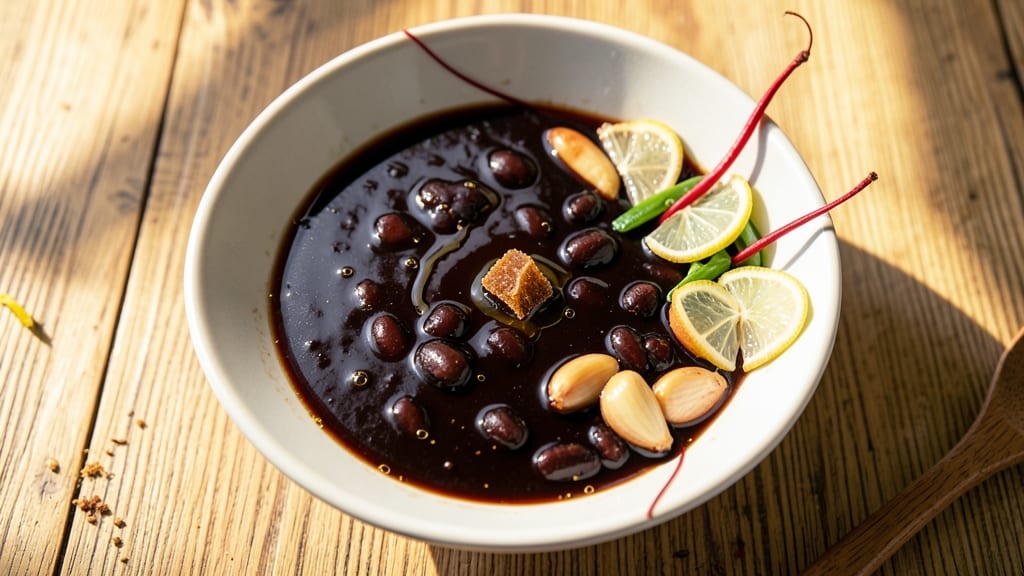
This authentic Chinese black bean sauce transforms simple dishes into restaurant-quality meals with its deep, fermented umami flavor. The secret lies in fermented black beans—naturally rich in savory depth without relying on soy—simmered with aromatic garlic, ginger, and a touch of vinegar for balance.
I developed this recipe after years of studying traditional Cantonese techniques, ensuring every spoonful delivers that signature tangy, slightly sweet complexity. The process is straightforward: toast the beans until fragrant, then simmer them with spices until they release their intense flavor into the sauce.
No blender required—just a fine-mesh strainer to achieve that perfect, textured consistency. What you end up with is a versatile sauce that elevates stir-fries, noodles, or even braised meats, all while staying true to its cultural roots.
What sets this sauce apart is its ability to cut through rich ingredients while adding layers of flavor. The garlic and ginger infuse warmth, while the vinegar brightens the depth of the fermented beans.
It’s the kind of sauce that turns a simple weeknight dinner into something extraordinary—without the fuss of complex techniques. Store it in the fridge for up to two weeks, or freeze for long-term use.
Let’s make this sauce—the one that will make your dishes taste like they’ve been simmering for hours. Here’s how to create it.
Ingredients for authentic chinese black bean sauce
Nine ingredients. One sauce. Restaurant-quality umami without the soy overload.
| Ingredient | Amount | Notes |
|---|---|---|
| Fermented Black Beans 🌱 | ½ cup | Dried, not canned (find in Asian markets) |
| Garlic Cloves 🧄 | 6 cloves | Fresh, peeled, rough chopped |
| Fresh Ginger 🌿 | 2 tbsp | Grated, not paste |
| Rice Vinegar 🍶 | ¼ cup | White or seasoned (not apple cider) |
| Soy Sauce 🥢 | ¼ cup | Light or all-purpose |
| Brown Sugar 🍚 | 2 tbsp | Dark, not white |
| Sesame Oil 🌰 | 1 tbsp | Toasted, not flavored |
| Red Chili Flakes 🌶️ | 1 tsp | Adjust for heat preference |
| Ground White Pepper 🌶️ | ½ tsp | Freshly ground preferred |
| Water 💧 | 1 cup | Filtered for best flavor |
Fermented black beans are the star—Asian markets or specialty stores are your best bet. Look for dried beans in the bulk section, not the canned aisle. Taste test a few brands—some have more depth than others. Toast them in a dry pan until fragrant (about 3-4 minutes), then cover with water for 30 minutes to soften. The aroma? That's your flavor cue. Garlic and ginger should be fresh—no powdered shortcuts here. The vinegar balances the richness, so don't skip it.
No fermented black beans? Substitute with 1/2 cup black beans (soaked overnight) plus 1 tsp soy sauce, but you'll lose that authentic depth. Fresh ginger paste works in a pinch, but grated fresh is better. Soy sauce can be tamari for gluten-free. The brown sugar adds subtle sweetness—demerara or coconut sugar work too. For heat, swap chili flakes for dried Sichuan peppercorns (1/2 tsp), but they're harder to find. Sesame oil should be toasted—regular sesame oil lacks that nutty punch.
This sauce keeps for 2 weeks in the fridge—the flavors actually improve over time. For long-term storage, freeze in ice cube trays. Thaw in the fridge overnight. Double the batch—it disappears fast. The texture should be thick but pourable. If too thin, simmer uncovered for 5 minutes. Use within 3 days of opening frozen portions for best flavor. Trust me, you'll want to make extra.
Why You'll Love This Recipe
- Five-Ingredient Magic: I swear by this—just fermented black beans, garlic, ginger, vinegar, and soy sauce. That’s it. No fancy prep, no hidden steps, and the sauce still packs a punch like it simmered all day.
- Umami Bomb: Between us, those fermented black beans are the star. They bring this deep, funky-sweet richness that cuts through anything—stir-fries, dumplings, even eggs. Honestly, I reach for this when I want that real Chinese restaurant taste at home.
- Dinner Party Ready: Make a double batch and you’ve got sauce for stir-fries, dipping noodles, or even a quick glaze for tofu. My friends ask for it every time I bring it over—no fuss, just flavor they can’t resist.
- Budget Game-Changer: Fermented black beans last forever in the pantry, and a little goes a long way. I’ve turned $3 of ingredients into enough sauce to feed four for two meals. Not the prettiest, but the taste makes up for it every time.
Step-by-step instructions for authentic Chinese black bean sauce
Here's how to build this umami-packed sauce from scratch—no shortcuts, just pure flavor.
Soak and Prepare the Fermented Black Beans
Place the 0.5 cup fermented black beans in a small bowl and cover them completely with 1 cup water. Let them soak for 30 minutes at room temperature. You'll notice they'll puff up slightly and release a deep, funky aroma—that's the fermented magic doing its work.
After soaking, drain the beans and rinse them under cold water to remove any surface debris. This step prevents bitterness in your sauce. I like to give them a quick rub between my fingers to loosen any stubborn bits clinging to the beans. Don't skip this—clean beans mean cleaner flavor.
Toast the Aromatics for Maximum Flavor
Heat a small non-stick skillet over medium heat (no oil needed—the beans will release their own fat). Add the drained fermented black beans and cook them for 3-4 minutes, stirring constantly until they turn a deep mahogany color. You're looking for that nutty, toasted aroma to fill your kitchen—this builds the sauce's foundation.
Remove the beans from the skillet and set them aside. In the same skillet (no need to wipe it clean—those browned bits are flavor gold), add the 6 cloves rough-chopped garlic and 2 tbsp grated fresh ginger. Cook for 1-2 minutes until the garlic turns golden and the ginger becomes fragrant but doesn't brown. Watch closely—ginger burns fast once it starts to sizzle.
Build the Sauce Base
Return the toasted black beans to the skillet and add 0.25 cup soy sauce, 0.25 cup rice vinegar, and 2 tbsp brown sugar. Stir well to combine and let the mixture simmer gently for 5 minutes over medium-low heat. You'll see the sauce start to thicken slightly and those deep umami flavors begin to develop.
Here's where it gets good—add 1 cup water to the skillet and bring everything to a gentle boil. Once boiling, reduce heat to low and let it simmer uncovered for 10-12 minutes until the sauce reduces by about one-third. You're looking for a consistency that coats the back of a spoon but isn't gluey. Stir occasionally to prevent sticking.
Finish with Heat and Depth
Remove the skillet from heat and stir in 1 tbsp toasted sesame oil, 1 tsp red chili flakes, and 0.5 tsp ground white pepper. Let the sauce sit for 2 minutes to allow the sesame oil to infuse and the chili flakes to bloom. The aroma should be complex—nutty from the beans, garlicky, with a hint of vinegar brightness and subtle heat.
Taste and adjust seasoning if needed. I usually find this sauce hits the sweet-spicy-umami balance perfectly, but if it needs more depth, a splash of soy sauce or a pinch of sugar can help. For extra authenticity, let the sauce cool to room temperature before using—this allows the flavors to meld even more.
Pro Tips For Making Authentic Chinese Black Bean Sauce
- Bloom the Beans First: Soak your fermented black beans in warm water for 10 minutes before using—this softens their tough skins and makes them release flavor like they’re supposed to. I used to skip this, and the sauce always tasted muted until I tried it.
- Mince, Don’t Chop: For garlic and ginger, go fine—think dust, not dice. A microplane or the flat side of your knife works best, and this ensures they melt into the sauce instead of sitting as chunks. (Yes, even if your knife skills aren’t perfect.)
- Low and Slow Only: Simmer on medium-low after the initial sear—too much heat and the soy sauce burns, turning your sauce bitter. I learned this after one disastrous batch where I panicked and cranked the heat.
- Acid Last, Always: Add rice vinegar at the very end, just off the heat, or it’ll cook out and leave your sauce flat. A splash of cold water right after also brightens the color—trust me, it’s worth the extra 10 seconds.
Pro cooking tips for perfect results
Toast the Beans
Never skip toasting the fermented black beans—this 3-4 minute dry toast in a skillet unlocks their deep, nutty flavor. Use medium heat and stir constantly to prevent burning.
The beans should turn a rich mahogany color and smell intensely aromatic. I like to work near an open window during this step—the aroma is strong! 🌱
Simmer Low and Slow
After combining all ingredients, simmer the sauce uncovered for 10-12 minutes on low heat. This gradual reduction concentrates the flavors without burning them. Stir occasionally to prevent sticking—those browned bits are flavor gold, but you don't want them to dominate.
The sauce should reduce by about one-third, reaching that perfect pourable consistency.
Balance the Flavors
Taste as you go! The sauce should have equal parts sweetness (brown sugar), tang (vinegar), umami (beans), and heat (chili flakes). If it needs more depth, add ½ tsp soy sauce.
For brightness, squeeze in a little more rice vinegar. I often find the first batch needs a pinch of sugar—don't be afraid to adjust. The goal is harmony, not perfection.
Strain for Smoothness
For a silky texture, strain the sauce through a fine-mesh sieve after simmering. This removes any bean fragments while keeping the rich liquid. Press gently with a spoon to extract every last drop of flavor.
The strained sauce will coat your tongue beautifully—no grittiness to distract from the complex flavors. 💫
Infuse with Sesame Oil
Always finish with toasted sesame oil—this adds that signature nutty aroma. Add it off the heat and let the sauce sit for 2 minutes to allow the oil to infuse.
Regular sesame oil won't give the same depth, so don't substitute. The oil should bloom and create a fragrant, slightly oily sheen on the surface of the sauce.
Rest Before Using
Let the sauce cool to room temperature before using it in dishes. This resting period allows all the flavors to meld together perfectly. I often make this sauce the night before and store it in the fridge—it tastes even better the next day as the flavors continue to develop.
Patience here makes all the difference! ⏳
Nutrition facts
Frequently asked questions
Can I substitute canned black beans for fermented black beans?
Canned black beans won't give you that authentic fermented depth—fermented black beans have a complex, funky aroma that canned versions lack. For a substitute, soak ½ cup dried black beans overnight, then add 1 tsp soy sauce to mimic some fermentation. But you'll lose the signature umami punch.
How do I know when the sauce is ready?
The sauce is done when it reduces by about one-third and coats the back of a spoon smoothly. Look for a glossy sheen and complex aroma—nutty from the beans, garlicky, with a hint of vinegar brightness. Simmering for 10-12 minutes on low heat ensures perfect consistency.
Can I make this sauce spicier?
For extra heat, add ½ tsp more chili flakes or swap them for 1 tsp Sichuan peppercorns (toasted and crushed). Remember, the sauce will mellow slightly after cooling, so adjust while it's still warm.
What's the best way to store leftover sauce?
Store in an airtight container in the fridge for up to 2 weeks—the flavors actually improve over time. For long-term storage, freeze in ice cube trays. Thaw overnight in the fridge. The sauce thickens when cold, so stir gently before using.
How can I use this sauce in cooking?
This versatile sauce works as a stir-fry base, noodle dressing, or dipping sauce for dumplings. For stir-fries, add 1-2 tbsp at the end. For noodles, mix 2 tbsp sauce with 1 tsp sesame oil. The rich umami flavor cuts through fatty meats beautifully.