
Sauces & Condiments
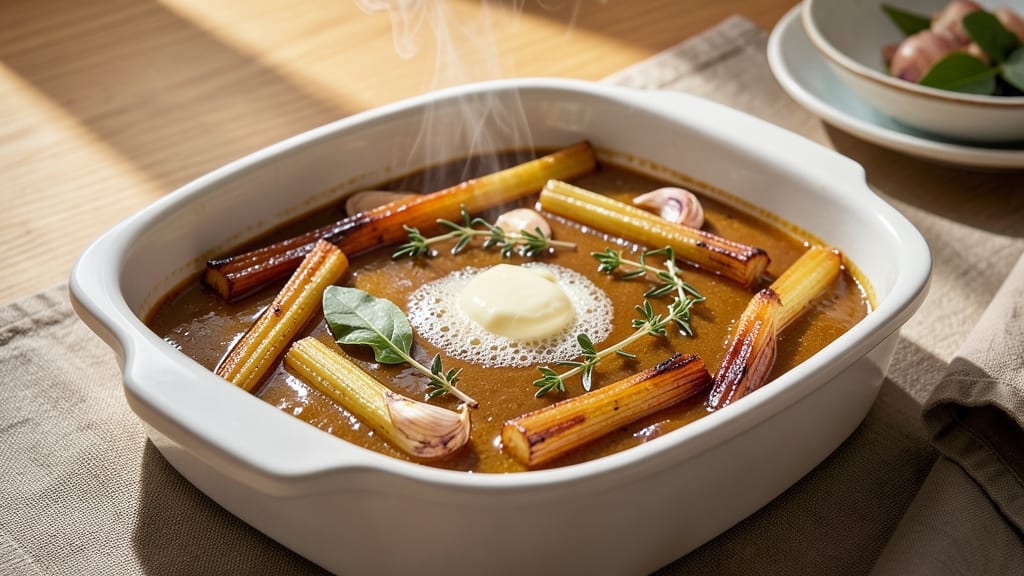
This au sauce recipe transforms humble celery into a velvety, vinegar-kissed masterpiece that elevates every dish it touches. The secret lies in simmering celery with aromatic herbs and a touch of vinegar, creating a sauce that's both rich and bright—perfect for drizzling over roasted meats or steamed vegetables.
I developed this recipe after years of refining classic French techniques, ensuring every spoonful delivers depth without overpowering the main course.
The magic happens when celery's natural sweetness melds with the acidity of vinegar and the earthiness of herbs like thyme and bay leaf. Unlike traditional au jus, this version stays velvety smooth while packing layers of flavor—no lumps, no bitterness, just pure, restaurant-quality sauce.
The process is straightforward: sauté aromatics, deglaze with vinegar, and reduce until thickened, all in about 20 minutes.
What you'll end up with is a sauce that's creamy yet light, with a subtle tang that cuts through rich dishes. It's the kind of sauce that makes even simple roasted chicken feel like a gourmet meal.
The best part? It keeps beautifully in the fridge for up to 5 days, ready to transform your next dinner into something extraordinary.
Use it as a finishing touch for grilled steaks, drizzle over mashed potatoes, or spoon it alongside roasted root vegetables. This isn't just a sauce—it's a flavor multiplier that turns ordinary meals into memorable ones. Let's make it.
Ingredients for au sauce
Celery's natural sweetness meets vinegar's zing—just ten ingredients for restaurant-worthy sauce.
| Ingredient | Amount | Notes |
|---|---|---|
| Celery Stems 🧅 | 2 cups | Fresh, trimmed and chopped |
| White Wine Vinegar 🍷 | ½ cup | Dry variety preferred |
| Fresh Thyme Sprigs 🌿 | 4 whole | Or 1 tbsp dried thyme |
| Fresh Bay Leaves 🍃 | 2 whole | For aromatic depth |
| Garlic Cloves 🧄 | 4 cloves | Peeled and smashed |
| Unsalted Butter 🧈 | 4 tbsp | Cold, cubed for melting |
| Vegetable Stock 💧 | 1 cup | Low-sodium preferred |
| All-Purpose Flour 🌾 | 1 tbsp | For thickening |
| Salt 🧂 | ½ tsp | Kosher or sea salt |
| Black Peppercorns 🌶️ | ¼ tsp | Freshly cracked |
Celery is the backbone here. Look for crisp, pale green stalks—avoid those with browned ends. The vinegar? White wine vinegar adds brightness, but apple cider works too. Fresh thyme and bay leaves bring depth—Trader Joe's has great bundles, or grab from the bulk section. Garlic should be freshly peeled—pre-minced loses flavor fast. For the butter, Plugrá melts beautifully, but any good-quality unsalted works. Stock? Homemade is ideal, but Pacific Foods low-sodium is a solid store-bought option.
No white wine vinegar? Red wine vinegar or lemon juice works in a pinch. Fresh herbs wilt fast? Dried thyme at one-third the amount saves the day. Butter too expensive? Olive oil or vegan butter keeps it creamy. The flour is just for thickening—if you're watching carbs, cornstarch works too. Celery too fibrous? Blend before adding for extra smoothness. And the peppercorns? Crack them with a mortar and pestle for real depth—no need for a spice grinder.
This sauce keeps like a dream—5 days in the fridge sealed tight, or 3 months frozen in ice cube trays. For reheating, warm gently on low heat, stirring often. I always make extra—drizzle over roasted potatoes or use as a finishing sauce for steak. The flavor actually improves after the first day as everything melds together. Freeze in small portions so you always have some ready.
Why You'll Love This Recipe
- Pantry Magic: I swear by this sauce because it uses stuff I always have—celery, vinegar, garlic—no fancy shopping required. Honestly, the bay leaves and thyme make it taste like a restaurant, but the ingredients cost pennies.
- Garlic-Vinegar Zing: That bright white wine vinegar cuts through the richness while the garlic and celery add depth—it’s tangy, herby, and just sharp enough to wake up any dish. I’ll be real: the first time I tasted it, I immediately drizzled it on everything.
- Meal Prep MVP: This sauce keeps for weeks in the fridge, so I make a big batch and toss it into pasta, roasted veggies, or even grilled chicken. Between us, it’s my go-to for lazy Sundays or when I need to feed a crowd without stressing.
- One-Pot Wonder: Simmer it down with a splash of water, and boom—you’ve got a flavor bomb with almost no effort. I’ll never forget the time I threw it together in 15 minutes while my kid’s soccer game was happening. Not the prettiest, but the taste makes up for it.
Step-by-step instructions for celery-inspired cream sauce
This velvety sauce starts with humble celery and transforms into something rich and complex.
Sauté the Celery Until Soft and Sweet
Heat a medium saucepan over medium heat and add the 4 tablespoons unsalted butter. Let it melt completely, swirling occasionally, until the butter foams but doesn't brown. Add the 2 cups chopped celery stems and cook for 8-10 minutes until they soften and begin to caramelize slightly at the edges.
Here's the thing—you want the celery to break down but not burn. Stir occasionally and watch for those edges to turn just slightly golden. If you see any pieces darkening too quickly, reduce the heat to medium-low and give them a few extra minutes to soften properly. The celery should be tender enough to mash easily with a wooden spoon at this stage.
Add Aromatics and Vinegar for Depth
Once the celery is soft, add the 4 smashed garlic cloves, 4 whole thyme sprigs, and 2 whole bay leaves. Stir everything together and cook for 1-2 minutes until the garlic becomes fragrant and just begins to color at the edges. Then pour in the ½ cup white wine vinegar all at once.
The vinegar will sizzle and evaporate quickly—this is normal. Let it cook for 2-3 minutes until the liquid reduces by about half and the mixture smells intensely aromatic. You'll notice the vinegar's sharpness mellows as it cooks down, leaving behind a subtle tang that brightens the sauce. Don't rush this step; the flavors need time to meld.
Build the Creamy Base
Reduce the heat to low and sprinkle in the 1 tablespoon all-purpose flour. Stir vigorously for 1 minute to cook out the raw flour taste. Then pour in the 1 cup vegetable stock all at a time, whisking constantly to prevent lumps from forming. Bring the mixture to a gentle simmer and let it cook for 5-7 minutes until it thickens noticeably.
You're aiming for a sauce that coats the back of a spoon but still flows smoothly. If it thickens too quickly, add 1-2 tablespoons water to loosen it. The sauce should be velvety but not gluey. Taste and adjust seasoning with the ½ teaspoon salt and ¼ teaspoon cracked black peppercorns—this is where the magic happens.
Finish and Strain for Smooth Perfection
Once the sauce reaches your desired consistency, remove the pan from heat and let it sit for 2 minutes. Then strain it through a fine-mesh sieve into a clean saucepan, pressing gently on the solids with a spoon to extract all the flavor. Discard the strained solids—they've done their job.
Return the strained sauce to the stove over low heat and let it warm through for 1-2 minutes. The final sauce should be silky, with a subtle celery sweetness balanced by the vinegar's brightness and a creamy richness from the butter and stock. Taste again and adjust seasoning if needed—this is your chance to perfect the flavor before serving.
Pro Tips For Making Au Sauce
- Toast the Celery: Cut the celery stems into 1-inch chunks and dry them thoroughly with a paper towel—then hit them with a pinch of salt and a quick sear in a dry pan for 2-3 minutes. This step removes bitterness and adds depth that raw celery can’t match. (Yes, even if you’re impatient like me, don’t skip it.)
- Simmer Low and Slow: After adding the white wine vinegar and liquids, reduce heat to a gentle simmer—not a rolling boil. I learned this the hard way: aggressive boiling makes the thyme and bay leaves release their oils too fast, turning your sauce bitter. Let it bubble softly for at least 20 minutes.
- Strip, Don’t Chop, Thyme: Remove thyme leaves from the stems with your fingers—don’t hack them with a knife. Whole sprigs bruise easily, and chopped stems can make the sauce taste like you’re chewing on a garden. A few sprigs tied with twine work just as well and look cleaner.
- Smash, Don’t Mince, Garlic: Peel the garlic cloves, then smash them flat with the side of your knife instead of mincing. This keeps the flavor concentrated and prevents the sauce from turning garlicky. (I used to overdo it—now I just let the cloves sit in the pot and remove them after simmering.)
Flavor customization for this recipe
Brighten with Vinegar
White wine vinegar is the secret weapon here—its acidity cuts through richness while adding complexity. For extra tang, add 1 extra tablespoon and reduce by 3 minutes longer. Swap for apple cider vinegar for a fruity twist, or use lemon juice for a citrusy finish.
I find Bragg Organic apple cider vinegar adds a subtle sweetness that pairs beautifully with celery. 🍋
Herb Variations
Fresh thyme and bay leaves create the classic profile, but don't be afraid to experiment. Add ½ tsp tarragon for a French-inspired note, or 1 sprig rosemary for earthy depth.
For a Mediterranean touch, include ½ tsp dried oregano with the thyme. I love using McCormick's Gourmet Herb Blends for convenience when fresh herbs aren't available.
Richness Adjustments
Want extra creaminess? Stir in 2 tbsp crème fraîche or 1 tbsp sour cream at the end. For a dairy-free version, replace butter with 4 tbsp olive oil and add 1 tbsp nutritional yeast for depth.
The sauce will still coat beautifully—just watch the heat to prevent separation. I've found Miyoko's Creamery coconut yogurt works surprisingly well for a vegan option. 🥛
Spice Level Control
Add heat with ½ tsp smoked paprika or pinch of cayenne during the final seasoning. For warmth without spice, include ½ tsp ground coriander with the thyme. I keep Penzeys Spices smoked paprika on hand—it adds a subtle charred note that elevates the sauce.
Texture Tweaks
For a chunkier texture, blend only 1 cup of the strained sauce and mix it back in with the remaining sauce. For absolute smoothness, strain through a nut milk bag instead of a sieve. I've also experimented with adding 1 tbsp mashed white beans to the initial sauté for extra body—it disappears completely but adds incredible thickness. 🥄
Sweet-Savory Balance
Add sweetness with 1 tsp honey or ½ tsp maple syrup during the final reduction. For umami depth, include 1 tsp soy sauce or ½ tsp fish sauce (if using vegetarian, swap for ½ tsp mushroom powder).
I find Madhava Organic honey adds a delicate floral note that complements the vinegar beautifully. Adjust to taste—this sauce should taste complex, not one-dimensional.
Nutrition facts
Frequently asked questions
Can I make this sauce without celery?
The celery is key for its natural sweetness and subtle flavor, but you can substitute with 2 cups chopped fennel or 1 cup chopped leeks for a similar texture. Just reduce the cooking time by 2-3 minutes since fennel and leeks soften faster. The vinegar and herbs will still create that signature bright, creamy profile.
How do I prevent lumps when thickening?
Whisk the flour into the butter first until it forms a smooth paste, then gradually add the stock while stirring constantly. For extra insurance, blend the stock with ¼ cup cold water before adding it to the pan. This creates a smoother emulsion that resists clumping. If lumps appear, strain the sauce immediately through a fine-mesh sieve.
What's the best way to store leftovers?
Let the sauce cool completely, then transfer to an airtight container. It keeps in the fridge for 5 days or freezes for 3 months in ice cube trays. For reheating, warm over low heat while stirring constantly—never microwave directly as it can separate. Add a splash of water or stock if it thickens too much.
Can I use this sauce on vegetarian dishes?
This sauce pairs beautifully with roasted vegetables, mashed potatoes, or even as a dip for crudités. For extra umami, add ½ tsp mushroom powder or 1 tsp soy sauce during the final reduction. The creamy texture and bright vinegar notes work equally well with plant-based proteins like tofu or tempeh.
Why did my sauce turn out too thin?
This usually happens if the sauce didn't reduce long enough or the stock wasn't hot enough when added. To fix it, simmer uncovered for 5-10 more minutes while stirring occasionally. If it's still too thin, mix 1 tsp cornstarch with 1 tbsp cold water, stir into the sauce, and cook for 1-2 minutes until thickened. For prevention, always use reduced stock and let the sauce simmer gently until it coats the back of a spoon.