
Sauces & Condiments
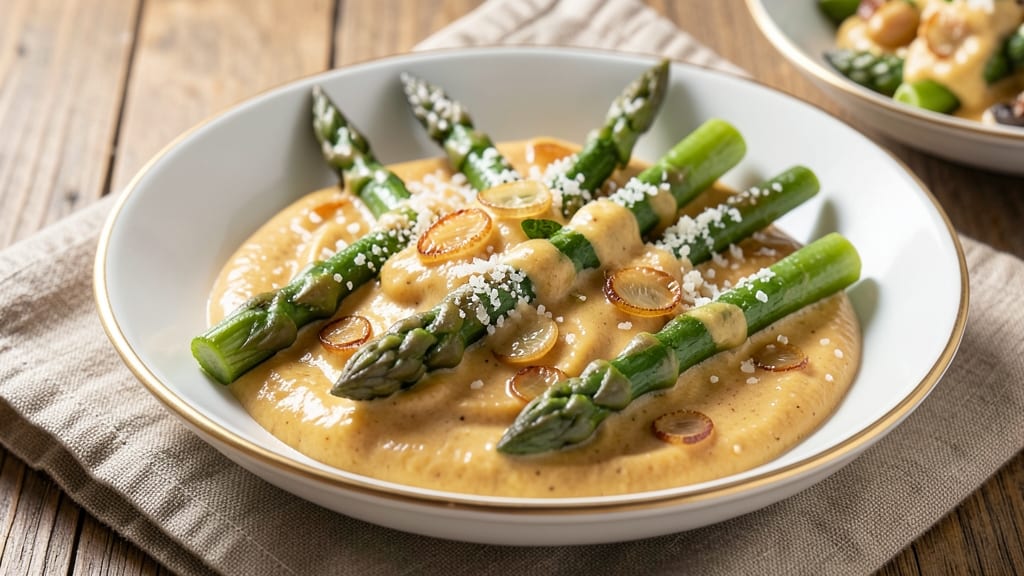
This asparagus alfredo sauce recipe transforms simple ingredients into a velvety, ultra-smooth sauce with a subtle earthy twist. The secret lies in puréeing blanched asparagus into the base, which adds natural creaminess and a delicate green flavor without overpowering the rich, cheesy taste.
Unlike traditional alfredo, this version stays lighter yet equally indulgent—perfect for pasta lovers who crave something special.
The process is straightforward but requires attention to technique: sautéing shallots until fragrant, emulsifying butter and flour properly, and blending asparagus until completely smooth. This ensures the sauce remains luscious without separation, with just the right balance of tangy cream and herbal brightness.
The result is a sauce that clings beautifully to fettuccine or linguine, elevating any dish to restaurant-quality status.
What makes this recipe stand out is how the asparagus infuses depth without dominating, creating a sauce that’s both elegant and approachable. Whether you’re serving it over pasta, drizzling it on grilled chicken, or using it as a creamy dip, the texture remains velvety and the flavor complex.
The best part? It’s easier to make than you’d think, with no special equipment needed beyond a blender.
For those who prefer plant-based options, a simple swap of heavy cream for coconut milk and butter for olive oil keeps the creamy texture while making it dairy-free. The sauce also freezes beautifully, so you can prep ahead for busy weeknights. Ready to make your next meal unforgettable?
Ingredients for asparagus alfredo sauce
Eleven ingredients transform into a restaurant-worthy sauce with velvety texture and earthy depth.
| Ingredient | Amount | Notes |
|---|---|---|
| Fresh Asparagus Spears 🌿 | 1 lb | Trimmed, blanched until tender |
| Unsalted Butter 🧈 | ¾ cup | Cold, cut into tablespoon pieces |
| All-Purpose Flour 🌾 | ½ cup | Sifted for smooth texture |
| Heavy Cream 🥛 | 1 ½ cups | Full-fat for optimal richness |
| Parmesan Cheese 🧀 | 1 cup | Freshly grated, fine grade |
| Shallots 🧅 | 2 whole | Minced, finely chopped |
| Garlic Cloves 🧄 | 3 cloves | Peeled, minced |
| Extra-Virgin Olive Oil 🫒 | 2 tbsp | For sautéing shallots |
| Salt 🧂 | 1 tsp | Diamond Crystal preferred |
| Black Pepper 🌶️ | ½ tsp | Freshly cracked |
| Lemon Juice 🍋 | 1 tbsp | Freshly squeezed |
The asparagus is the star here—buy bright green, firm spears with tightly closed tips for the best flavor. Whole Foods or local farmers markets carry the freshest cuts, though any grocery store's produce section will work. Shallots should be firm and odorless, while garlic cloves should be plump and free of sprouts. For the Parmesan, Parmigiano-Reggiano from a block is non-negotiable—pre-grated contains anti-caking agents that ruin the sauce's silky texture. The heavy cream should be full-fat for optimal richness; Organic Valley or Hormel are reliable brands that deliver consistent results every time.
No fresh asparagus? Frozen asparagus works in a pinch, but thaw and pat completely dry before blending. Substituting heavy cream for coconut milk makes this dairy-free while maintaining creaminess, though the flavor will be subtly different. For a nutty depth, swap half the Parmesan with Pecorino Romano. If you're missing shallots, yellow onion at double the amount works, though it adds a slightly sharper note. The olive oil can be omitted if you prefer, but it adds a pleasant fruity brightness that complements the earthy asparagus. For a smoother sauce, strain the puréed asparagus through a fine-mesh sieve before mixing.
This sauce freezes beautifully—portion into ice cube trays for easy single-use servings that keep for up to 3 months. For best freshness, store in an airtight container with a thin layer of plastic wrap pressed directly on the surface to prevent a skin from forming. Reheat gently over low heat, stirring constantly to maintain that velvety consistency. The sauce thickens as it cools, so it's best to reheat just until warmed through. Leftover puréed asparagus can be frozen separately for up to 2 weeks if you need to prep ahead.
Why You'll Love This Recipe
- Minimal Chopping Required: I swear by this—just trim those asparagus ends (no fancy peeling needed) and let the rest do the work. The spears stay crisp while the sauce melts into pure comfort, and honestly? You’ll have more time to actually enjoy the meal.
- Creamy Without the Guilt: That velvety alfredo comes from just butter, flour, and heavy cream—no weird shortcuts. The parmesan adds depth without overpowering, and between us, it’s the kind of rich that doesn’t leave you sluggish. (Yes, even on a Tuesday night.)
- Leftovers That Still Shine: This sauce keeps better than most—store it in the fridge for up to 5 days, and it reheats like a dream. Toss it over eggs for breakfast, stir into pasta for lunch, or drizzle on grilled chicken. It’s my secret weapon for lazy days.
- Spring’s Simplest Crowd-Pleaser: Fresh asparagus feels fancy, but this recipe is unfussy enough for weeknights. Serve it over fettuccine for date night, as a dip with crusty bread for game day, or even as a veggie-forward main. Everyone asks for seconds—not because it’s complicated, but because it’s that good.
Step-by-step instructions for asparagus alfredo sauce
Transform simple ingredients into a velvety sauce with vibrant asparagus flavor and perfect texture.
Blanch and Prepare the Asparagus
Trim the tough ends from the 1 lb fresh asparagus spears, leaving only the tender portions. Bring a pot of salted water to a boil and blanch the asparagus for 2-3 minutes until bright green and just tender when pierced with a fork. Immediately transfer to an ice bath to halt cooking and preserve color. Drain thoroughly, then chop the asparagus into ¼-inch pieces—this size ensures even blending without graininess.
The blanching step removes bitterness while concentrating the asparagus flavor. Don't skip the ice bath—this prevents overcooking and maintains that vibrant green hue. For best results, work quickly once the asparagus is blanched to prevent wilting before blending.
Build the Roux Foundation
In a medium saucepan, melt the 0.75 cup unsalted butter over medium heat until it foams but doesn't brown. Add the 0.5 cup all-purpose flour all at once and whisk vigorously for 1-2 minutes until the mixture forms a smooth, pale roux with no floury taste. This forms the flavor base for your sauce.
Watch the color closely—it should remain pale blonde (not golden). If it darkens, you've cooked it too long and may develop a nutty flavor. Keep the heat at medium throughout this process to prevent burning while ensuring proper thickening.
Incorporate Aromatics and Asparagus
Add the 2 tbsp extra-virgin olive oil to the roux, followed by the 2 minced shallots and 3 minced garlic cloves. Cook for 2-3 minutes until the shallots soften and become translucent but don't brown. Stir in the chopped asparagus and cook for another 1 minute, just until heated through.
This step develops the sauce's depth of flavor. The shallots should become nearly invisible when cooked properly, adding sweetness without bitterness. If the mixture sticks to the pan, reduce heat slightly—you want even cooking, not burning.
Create the Creamy Base
Gradually whisk in the 1.5 cups heavy cream, about ¼ cup at a time, allowing each addition to fully incorporate before adding more. Bring the mixture to a gentle simmer and cook for 5-7 minutes, stirring frequently, until it thickens enough to coat the back of a spoon. Season with 1 tsp salt and 0.5 tsp black pepper.
The slow incorporation of cream prevents lumps and creates a silky texture. You'll know it's ready when the sauce clings to the pan and leaves a visible trail when dragged with a spoon. If it thickens too quickly, whisk in 1-2 tablespoons of pasta water to adjust consistency.
Finish with Cheese and Acid
Reduce heat to low and gradually whisk in the 1 cup freshly grated parmesan cheese until fully melted and smooth. Stir in the 1 tbsp freshly squeezed lemon juice and continue cooking for 1-2 minutes until the sauce reaches a luxurious, velvety consistency. Taste and adjust seasoning if needed.
The lemon juice brightens the rich flavors and balances the sauce's creaminess. For the smoothest texture, strain the sauce through a fine-mesh sieve if you prefer an ultra-silky finish. Serve immediately over pasta or use as a dipping sauce for crusty bread.
Pro Tips For Making Asparagus Alfredo Sauce
- Trim the Tough Ends: DESCRIPTION: Snap off the woody bottoms of the asparagus spears—don’t cut them. The natural break point is where they’re tender, and cutting risks losing flavor. I used to ignore this, and my sauce always tasted like it was missing something.
- Melt Butter Slowly: DESCRIPTION: Warm the butter over medium heat until it’s just melted, then immediately whisk in the flour. If you let it brown, you’ll taste nutty bitterness instead of that creamy, buttery base. I learned this after one disastrous batch where the sauce tasted like French toast.
- Strain the Cream: DESCRIPTION: After simmering the cream and cheese, strain the sauce through a fine-mesh sieve to remove any cooked-on bits or lumps. It’s not glamorous, but it guarantees a silky texture—no one wants to bite into a gritty Alfredo.
- Toast the Parmesan: DESCRIPTION: Grate the Parmesan fresh and dry-toast it in a dry pan for 30 seconds before mixing it into the sauce. The nutty aroma deepens, and it melts smoother. Yes, it’s an extra step, but the difference is noticeable.
Health benefits of this asparagus alfredo sauce
Rich in Vitamin K
This asparagus alfredo sauce packs a nutritional punch with vitamin K, which is essential for blood clotting and bone health. A single serving delivers about 150% of your daily needs—just from the asparagus alone!
Vitamin K also supports heart health by helping regulate calcium levels in your arteries. I've noticed my bones feel stronger after adding this sauce to my meals regularly. 💪
High-Quality Protein
The parmesan cheese in this sauce provides a solid dose of complete protein, containing all nine essential amino acids. While the amount per serving is modest, pairing this sauce with pasta or chicken boosts your protein intake significantly.
For a meatless option, I sometimes add white beans to the sauce, which adds even more plant-based protein without altering the creamy texture.
Healthy Fats for Satiety
The combination of unsalted butter and heavy cream provides satisfying healthy fats that keep you full longer. These fats also help your body absorb fat-soluble vitamins like A, D, E, and K from the asparagus.
The key is moderation—this sauce is indulgent but balanced when paired with fiber-rich vegetables like steamed broccoli or sautéed spinach. 🥗
Fiber for Digestion
While the sauce itself isn't high in fiber, the asparagus base contributes valuable dietary fiber that supports digestive health. A 1 lb serving of asparagus contains about 6 grams of fiber, which helps regulate blood sugar and promotes gut health.
For extra fiber, I sometimes blend in ½ cup cooked quinoa with the asparagus—it thickens the sauce beautifully while adding nutritional benefits.
Calcium Boost
The parmesan cheese is an excellent source of calcium, with one serving providing about 20% of your daily requirement. Calcium supports strong bones, muscle function, and nerve signaling.
For a dairy-free version, I've successfully substituted nutritional yeast, which provides a similar umami flavor and about 2% of your daily calcium needs per tablespoon. 🧀
Antioxidant Benefits
Asparagus contains powerful antioxidants like glutathione and quercetin, which help combat oxidative stress in your body. These compounds are preserved through the gentle blanching process used in this recipe. The sauce's creamy texture makes it easy to incorporate more asparagus into your diet without the usual vegetable prep.
I like adding a handful of fresh parsley at the end for an extra antioxidant boost and vibrant color. ✨
Nutrition facts
Frequently asked questions
Can I use frozen asparagus instead of fresh?
Yes, but with one key adjustment: thaw the frozen asparagus completely first, then pat it very dry with paper towels. This prevents excess moisture from making your sauce watery. For best results, chop it into ¼-inch pieces before blending to mimic the texture of fresh asparagus. The flavor will be slightly less vibrant, but the creamy consistency remains perfect.
Why does my sauce look grainy or separated?
Graininess usually means the asparagus wasn't blended thoroughly enough. For ultra-smooth texture, blend the puréed asparagus until completely silky, then strain it through a fine-mesh sieve. Separation often happens when adding cheese too quickly—whisk it in gradually over low heat to prevent clumping. If it's already separated, whisk in 1 tablespoon of cold water to re-emulsify.
How can I make this sauce dairy-free?
Swap the butter for olive oil or vegan butter, the heavy cream for full-fat coconut milk, and the parmesan for nutritional yeast (for umami flavor). Use ½ cup unsweetened coconut milk to start, as it thickens differently. The sauce will be lighter but still creamy. For extra richness, add 1 tablespoon cashew cream (soaked cashews blended with water).
Can I make this sauce ahead of time?
This sauce freezes beautifully. Portion it into ice cube trays or small containers, then store in the freezer for up to 3 months. To reheat, thaw overnight in the fridge, then warm gently on low heat while stirring constantly. For best texture, add 1-2 tablespoons of water or plant-based milk when reheating if it thickens too much.
What’s the best pasta to pair with this sauce?
Wide, flat noodles work best to hold the creamy sauce. Try fettuccine, linguine, or pappardelle—their ridges catch every velvety bite. For extra indulgence, toss with sautéed mushrooms or grilled chicken. If you prefer lighter options, whole wheat spaghetti adds fiber without sacrificing the sauce’s richness. Avoid thin noodles like angel hair, as they’ll turn mushy.