
Sauces & Condiments
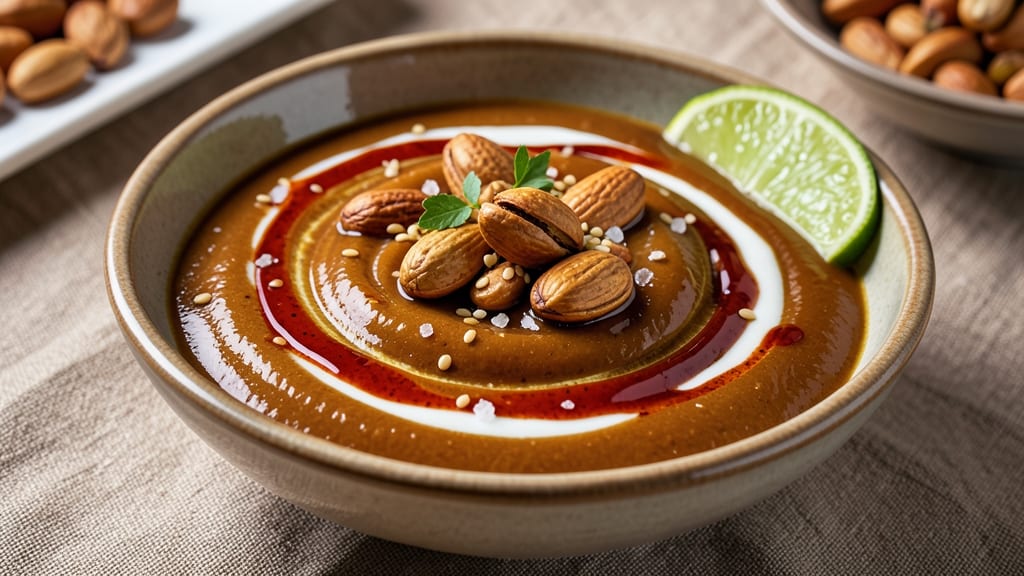
The aristocrat peanut sauce recipe transforms humble peanut butter into a velvety, restaurant-quality condiment with layers of tamarind brightness and aromatic depth. This isn't your basic peanut sauce—it's a refined velouté that elevates everything from satay skewers to noodle bowls, with a silky texture that coats ingredients perfectly.
The secret lies in roasting the peanuts for nutty complexity and balancing tamarind's tang with just the right amount of sweetness and umami.
What sets this sauce apart is its versatility—use it as a dipping sauce for spring rolls, a marinade for grilled meats, or a velvety dressing for salads. The recipe builds flavor through slow simmering, allowing the aromatics to meld while maintaining that luxurious creaminess.
No special equipment needed, just patience and a few simple ingredients that come together in under 20 minutes of active time.
The result is a sauce that's rich yet balanced, with a smooth mouthfeel and vibrant flavor profile that makes it stand out from store-bought versions. The tamarind adds a sophisticated tang that cuts through richness, while the roasted peanuts provide depth without overpowering.
This is the kind of sauce that transforms ordinary dishes into something special with just a drizzle.
Perfect for meal prep or last-minute cooking, this peanut sauce keeps well in the fridge for up to a week, making it ideal for busy weeknights. Whether you're serving it over rice, drizzling it on grilled vegetables, or using it as a glaze for proteins, the possibilities are endless.
Let's make this elevated peanut sauce that will become your new kitchen staple.
Ingredients for aristocrat peanut sauce
Ten ingredients transform basic peanut butter into a refined velouté with tamarind brightness and roasted depth.
| Ingredient | Amount | Notes |
|---|---|---|
| Natural Unsweetened Peanut Butter 🥜 | ¾ cup | Creamy variety preferred |
| Raw Peanuts 🥜 | ½ cup | Roasted until aromatic |
| Tamarind Paste 🍯 | ¼ cup | High-quality, unsweetened |
| Coconut Milk 🥥 | ½ cup | Full-fat for creaminess |
| Lime Juice 🍋 | ¼ cup | Freshly squeezed |
| Soy Sauce 🍶 | 2 tbsp | Light or dark variety |
| Garlic Cloves 🧄 | 3 cloves | Minced for aromatic depth |
| Ginger Root 🌿 | 1 tbsp | Freshly grated |
| Honey 🍯 | 1 tbsp | For subtle sweetness |
| Sesame Oil 🫒 | 1 tbsp | Toasted for aroma |
The peanuts are the foundation—roasting them first unlocks their nutty complexity. Raw peanuts from the bulk section at Whole Foods or Trader Joe's work best; avoid pre-roasted varieties. For tamarind, Thai Kitchen brand is reliable, but if you can find fresh tamarind pods at an Asian market, the flavor is unmatched. The peanut butter should be natural and unsweetened—Smucker's Natural or 365 by Whole Foods are solid choices. Toast the peanuts in a dry pan until fragrant, then blend them into the peanut butter for a smoother texture. This step is non-negotiable for that restaurant-quality depth.
No tamarind paste? Lime juice plus a pinch of citric acid mimics the tang, though it won't be identical. Substituting coconut milk with cashew cream (soaked cashews blended with water) maintains creaminess. For extra umami, mushroom powder at half the soy sauce amount works wonders. The honey can be swapped for maple syrup if preferred, though it adds a distinct caramel note. If you're avoiding sesame oil, toasted peanut oil is a neutral alternative. The garlic and ginger should be freshly grated—pre-minced versions lack the aromatic punch that elevates this sauce.
This sauce thickens as it cools, so thin with a splash of warm water if needed. Store in an airtight container in the fridge for up to 7 days, or freeze for 3 months in ice cube trays for portion control. The flavor actually improves after 24 hours as the tamarind's acidity mellows. For meal prep, double the batch—it's perfect over rice, drizzled on grilled tofu, or as a satay marinade. The sauce reheats beautifully; just stir in a splash of water if it thickens too much.
Why You'll Love This Recipe
- Pantry Magic: I swear by this—no special shopping trips, just what’s already lurking in my cupboards. That tamarind paste? One squeeze and you’ve got depth without extra ingredients. The raw peanuts toast in minutes, no fancy equipment needed.
- Tangy, Nutty Bliss: The lime juice cuts through the richness like a bright summer breeze, while the tamarind adds that just-right sour punch. Honestly, the balance is what makes it—creamy peanut meets zesty, with coconut milk tying it all together like a perfect hug.
- Meal Prep MVP: Drizzle this over rice bowls, toss with noodles, or slather it on grilled chicken—it’s my go-to when I’m lazy but still want flavor. (Yes, even on a Tuesday night.) The sauce thickens beautifully when stored, so I make a double batch and thank myself later.
- Budget-Friendly Luxury: Natural peanut butter and raw peanuts stretch my grocery budget, and tamarind paste lasts forever. Between us, this tastes like a fancy restaurant dish but costs less than takeout. That’s my kind of aristocrat—affordable and impressive.
Step-by-step instructions for aristocrat peanut sauce
Master this velouté technique for a sauce that balances nutty richness with tangy complexity.
Toast the Raw Peanuts for Depth
Preheat your oven to 350°F and spread the 0.5 cup raw peanuts evenly on a baking sheet. Toast for 8-10 minutes until they turn a rich golden brown and release their aromatic oils. Shake the pan halfway through for even browning.
This toasting step transforms the peanuts from bland to intensely flavorful. You'll know they're ready when they smell nutty and slightly toasted—almost like freshly roasted almonds. Let them cool completely before grinding, as residual heat will affect the sauce's texture.
Build the Aromatic Base
In a clean saucepan, heat the 1 tablespoon sesame oil over medium heat until shimmering. Add the 3 minced garlic cloves and 1 tablespoon freshly grated ginger root, cooking for 1-2 minutes until fragrant but not browned. This quick cook preserves their bright, fresh flavors rather than letting them turn bitter.
Here's where the foundation matters: the ginger should sizzle gently, and the garlic should perfume the air without coloring. If it starts to darken, reduce the heat immediately. Once aromatic, remove the pan from heat and let it cool for 30 seconds—this prevents sudden temperature spikes when adding liquids.
Create the Velouté Texture
Return the pan to medium-low heat and add the 0.75 cup natural unsweetened peanut butter and 0.25 cup tamarind paste, stirring constantly with a silicone spatula. Cook for 2-3 minutes until the peanut butter melts completely and the mixture becomes smooth and glossy.
The tamarind paste will initially look grainy, but as it heats, it dissolves into a silky consistency. This is the moment that matters: if you see any lumps forming, whisk vigorously or strain the mixture through a fine-mesh sieve for an ultra-smooth finish. The sauce should now have a rich, velvety appearance with a deep amber hue.
Balance Flavors with Precision
Reduce heat to low and gradually whisk in the 0.5 cup coconut milk and 0.25 cup lime juice. Let the mixture simmer gently for 3-4 minutes, stirring occasionally, until it thickens slightly but remains pourable. This slow integration prevents curdling from temperature shock.
Next, add the 2 tablespoons soy sauce and 1 tablespoon honey, stirring well to distribute evenly. Taste and adjust: the sauce should balance sweet, sour, salty, and umami notes. If it's too thick, thin with 1-2 tablespoons warm water; if too thin, simmer uncovered for another 1-2 minutes to reduce.
Incorporate Toasted Peanuts for Texture
Transfer the sauce to a blender or food processor and pulse until smooth. With the motor running, add the cooled toasted peanuts in batches, blending just until combined. The result should be a velouté with subtle nutty flecks throughout—this adds both texture and visual appeal.
Strain through a fine-mesh sieve if you prefer an ultra-smooth finish, or leave the peanuts for a rustic touch. The sauce is now ready to use immediately or store covered in the refrigerator for up to 5 days. For best results, gently reheat over low heat, stirring constantly to prevent separation.
Pro Tips For Making Aristocrat Peanut Sauce
- Toast Peanuts First: Skip the raw peanuts straight into the sauce—toss them in a dry pan over medium heat for 3-4 minutes until fragrant and just golden. I learned this the hard way: raw peanuts add bitterness instead of nutty depth, and toasting unlocks their flavor without burning.
- Whisk Tamarind Paste: Tamarind paste is thick and clumpy—mix it with 2 tablespoons of hot water first, then whisk until smooth before adding to the sauce. I used to strain it, but this method blends it right in without lumps, and the heat helps dissolve it faster.
- Balance Heat Gradually: Start with coconut milk and peanut butter on low heat, then add tamarind and lime juice after the base is warm. Rushing the acid and tamarind too soon curdles the sauce—let the peanut butter emulsify first, or you’ll end up with a separated mess.
- Use Coconut Milk Wisely: Split the coconut milk: simmer half first to thicken the sauce, then stir in the rest at the end for creaminess. I was skeptical until I tried it—this keeps the sauce rich without making it gluey, and the final splash adds that silky texture.
Storing and reheating your leftovers
Fridge Storage
Store your aristocrat peanut sauce in an airtight glass container (I love Le Parfait 16-ounce jars) in the fridge for up to 7 days. The sauce actually improves after 24 hours as the tamarind's acidity mellows and flavors meld beautifully.
Always let it cool completely before sealing to prevent condensation that can dilute the sauce. 🥫
Freezer Preservation
For longer storage, freeze the sauce in ice cube trays for portion control or use silicone molds to create easy-to-serve blocks. Transfer frozen cubes to a freezer bag with all air removed, then store for up to 3 months.
Thaw overnight in the fridge before using—never microwave directly from frozen to preserve texture. 🧊
Reheating Methods
For stovetop reheating, transfer sauce to a saucepan and warm over low heat with 1-2 tablespoons warm water to prevent scorching. Stir constantly for 3-5 minutes until reaching 160°F—this gentle approach maintains that velvety texture.
If the sauce thickens too much, thin with 1 teaspoon coconut milk at a time. 🔥
Microwave Revival
For quick reheating, transfer 1-2 tablespoons of sauce to a microwave-safe bowl and heat on 50% power for 20-30 seconds. Stir well, then continue in 10-second intervals until warmed through. The sauce should remain smooth—if it separates, whisk vigorously or blend briefly to restore consistency. 💫
Texture Recovery
If your reheated sauce appears too thick, thin with warm water or coconut milk (1 teaspoon at a time) until reaching desired consistency. For separated sauces, blend with 1 tablespoon water until smooth. The key is gentle heat—never boil—to preserve that restaurant-quality velouté texture. ✨
Meal Prep Tips
Double the batch and store in two separate containers—one for dipping (like spring rolls) and one for drizzling (over noodles). Label with the date and reheating instructions. I keep a jar in my fridge specifically for last-minute satay marinades—just thin with a splash of water before using. 📅
Nutrition facts
Frequently asked questions
Can I make this peanut sauce without tamarind?
Yes! For a similar tang, substitute 0.25 cup lime juice plus ½ teaspoon citric acid. For deeper complexity, blend 1 tablespoon rice vinegar with 1 teaspoon honey instead. The sauce will taste slightly different but still vibrant. The tamarind's unique sour-sweet balance is hard to replicate, but these work in a pinch.
How can I adjust the thickness for different uses?
For dipping (spring rolls, satay), aim for a medium-thick consistency—like heavy cream. For drizzling (noodles, salads), thin with 1-2 tablespoons warm water or coconut milk. If too thick after reheating, stir in 1 teaspoon water at a time. For marinades, use it as-is or thin slightly for better coating.
Why did my sauce separate when reheating?
This happens when heat causes oil separation. To fix it, whisk vigorously or blend with 1 tablespoon warm water until smooth. Prevent it by reheating on low heat and stirring constantly. The sauce's natural oils are stable when handled gently—never boil or microwave on high power.
Can I use this sauce as a marinade?
Use it as-is for 1-4 hours (chicken, tofu, or shrimp) or thin with 2 tablespoons water for 30-60 minutes (beef or pork). The tamarind and soy sauce tenderize while the peanuts add richness. For extra flavor, marinate at room temperature, not in the fridge.
What's the best way to store leftovers for maximum flavor?
Store in an airtight glass jar in the fridge for up to 7 days. The flavors deepen after 24 hours as the tamarind's acidity mellows. For longer storage, freeze in ice cube trays—thaw overnight in the fridge before using. Avoid reheating directly from frozen to maintain texture.