
Sauces & Condiments
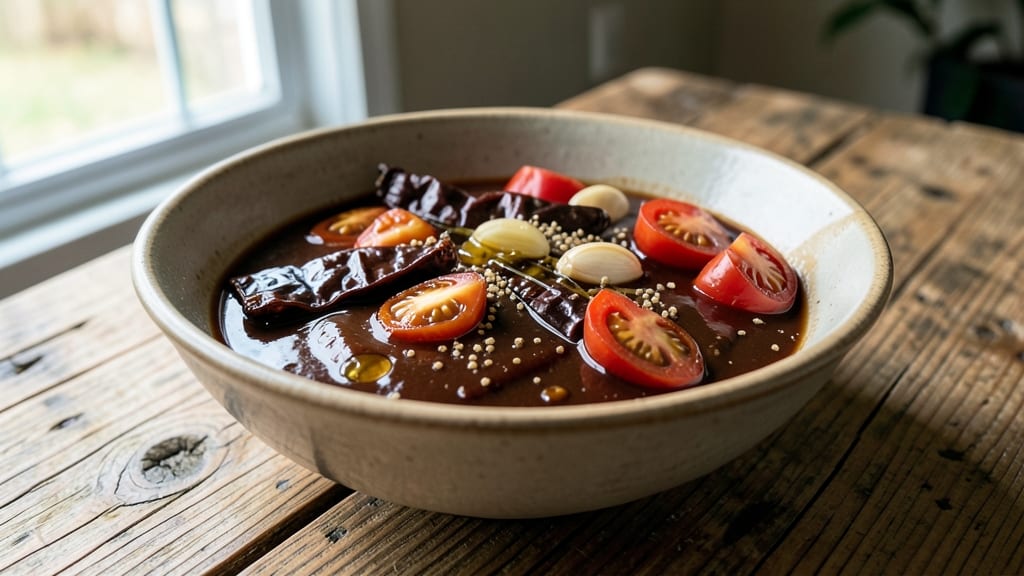
This ancho BBQ sauce recipe transforms smoky roasted peppers into a complex, caramelized condiment that elevates grilled meats and marinades. 🔥 The key lies in simmering dried ancho chiles with tomatoes and vinegar until the flavors meld into a velvety, slightly sweet-savory sauce.
I developed this recipe after years of experimenting with chile blends, seeking that perfect balance between smoky depth and subtle heat. What sets this sauce apart is its versatility—it works as a marinade for ribs, a glaze for grilled vegetables, or even a dipping sauce for tacos.
The ancho chiles provide a deep, earthy flavor without the capsaicin heat of fresher peppers, making it ideal for those who love smoky richness but prefer to control the spice level. Simmering the ingredients reduces the sauce to a thick, glossy consistency perfect for basting or drizzling.
The process is straightforward: toast the dried chiles to enhance their smokiness, then blend them with tomatoes, vinegar, and spices until smooth. The result is a sauce with layers of flavor—caramelized sweetness from the tomatoes, smoky depth from the chiles, and a touch of tang from the vinegar.
It’s the kind of sauce that turns simple grilled chicken into a restaurant-worthy dish. Store it in the refrigerator for up to two weeks or freeze it for longer shelf life.
This sauce is a game-changer for anyone looking to add authentic, smoky depth to their cooking without the fuss of fresh chiles.
Ingredients for ancho bbq sauce
Eight essential ingredients blend into a velvety sauce with smoky depth and caramelized sweetness.
| Ingredient | Amount | Notes |
|---|---|---|
| Dried Ancho Chiles 🌶️ | 4 whole | Stemmed and seeded |
| Ripe Tomatoes 🍅 | 2 lb | Roma or vine-ripened preferred |
| Apple Cider Vinegar 🍏 | ½ cup | For tangy depth |
| Granulated Sugar 🍚 | ¼ cup | Balances acidity |
| Garlic Cloves 🧄 | 4 cloves | Peeled and lightly crushed |
| Ground Cumin 🌿 | 1 tsp | Toasted for warmth |
| Smoked Paprika 🌶️ | 1 tbsp | Enhances smokiness |
| Salt 🧂 | 1 ½ tsp | Diamond Crystal preferred |
| Black Pepper 🌶️ | ½ tsp | Freshly ground |
| Olive Oil 🫒 | 2 tbsp | Extra-virgin for richness |
The ancho chiles are the heart of this sauce. Look for dried chiles with deep red color and minimal wrinkling—they should feel firm but pliable. La Tienda or Mexican markets often carry the best quality, but most grocery stores stock them too. Toasting them in a dry skillet until fragrant (about 30 seconds per side) unlocks their smoky potential. If you can't find ancho chiles, guajillo or pasilla work as substitutes, though they'll shift the flavor profile slightly. The tomatoes should be ripe but firm—Roma tomatoes are ideal for their meaty texture and lower water content, which prevents dilution during simmering.
No fresh tomatoes? Canned San Marzano tomatoes are a game-changer—they're sweeter and more consistent. The vinegar can be swapped for red wine vinegar or balsamic vinegar, though apple cider adds a subtle sweetness that complements the smokiness. For a touch of heat, add a pinch of cayenne or a diced chipotle in adobo. The sugar is crucial—it caramelizes during simmering, creating that rich depth. If you're watching sugar, reduce to 2 tablespoons and compensate with an extra splash of vinegar. The garlic can be roasted (wrap cloves in foil with the chiles) for a sweeter, more mellow flavor.
This sauce thickens as it cools, so don't worry if it looks too thin when you first blend it. Store it in a clean glass jar in the fridge for up to 2 weeks, or freeze in ice cube trays for 6 months. The sauce develops even more complexity over time—let it sit overnight before using for best results. For a smoother texture, strain through a fine-mesh sieve before bottling. If the sauce separates, simply stir before using—it's normal and doesn't affect flavor.
Why You'll Love This Recipe
- Few Ingredients, Big Payoff: I swear by this recipe because it’s that simple—just dried ancho chiles, tomatoes, vinegar, and garlic. No fancy pantry staples or last-minute grocery runs. Honestly, I’ve made it with ingredients I already had sitting in my pantry.
- Smoky-Sweet Magic: The ancho chiles bring that deep, earthy smokiness while the sugar and vinegar cut through with a tangy sweetness. It’s the kind of sauce that makes you slow down and take another bite—especially when it’s slathered on grilled chicken or drizzled over tacos.
- Weeknight & Weekend Star: Between us, this sauce works for everything. Slap it on burgers for a smoky twist, toss it into slow-cooker pulled pork, or use it as a marinade. I’ve even drizzled it over avocado toast when I’m feeling lazy. (Yes, even on a Tuesday night.)
- Makes More Than You Need: Here’s what sold me—the batch I make lasts for weeks. Store it in the fridge, and it just gets better with time. Plus, it’s budget-friendly; a few dried chiles and a handful of tomatoes stretch into enough sauce for multiple meals. No waste, all flavor.
Step-by-step instructions for ancho BBQ sauce
Here's how to craft this smoky, caramelized sauce with deep roasted pepper flavor—every step ensures perfect balance.
🔥 Step 1: Toast the Dried Ancho Chiles
Preheat your oven to 375°F and place the 4 whole dried ancho chiles on a baking sheet. Toast them for 2-3 minutes until they darken slightly and smell intensely aromatic. This step deepens their natural smokiness and removes any bitterness.
Watch closely—they'll darken quickly. Once they're fragrant and slightly charred, remove them from the oven and immediately transfer to a heatproof bowl. Cover with hot water to soften for 15 minutes. The skin should slip off easily when you try to peel it away.
🍳 Step 2: Roast and Peel the Tomatoes
While the chiles soak, preheat your broiler to high. Halve the 2 lb ripe tomatoes lengthwise and place them cut-side down on a baking sheet. Broil for 8-10 minutes until the skins blacken and the flesh softens.
Transfer the tomatoes to a bowl and cover with a clean kitchen towel for 10 minutes. The steam will make the skins peel away effortlessly. Scoop out the flesh, discarding the skins, and transfer it to a food processor along with the soaked chiles (drained and peeled).
👨🍳 Step 3: Blend the Base Ingredients
Add the 2 tbsp olive oil, 4 cloves garlic cloves, 1 tbsp smoked paprika, 1 tsp ground cumin, 1.5 tsp salt, and 0.5 tsp black pepper to the food processor. Pulse until the mixture becomes smooth but still retains some texture.
This blend forms the foundation of your sauce. The olive oil carries the smoky flavors while the spices infuse depth. Pulse in short bursts to avoid overheating the motor—you're looking for a thick paste, not a liquid.
⏰ Step 4: Simmer and Caramelize
Transfer the blended mixture to a heavy-bottomed saucepan and stir in the 0.5 cup apple cider vinegar and 0.25 cup granulated sugar. Bring to a simmer over medium heat and cook uncovered for 20-25 minutes, stirring occasionally.
You'll see the sauce reduce and develop a glossy sheen—that's the sugar caramelizing. Stir frequently during the last 5 minutes to prevent sticking. The sauce should thicken noticeably and develop a rich, molasses-like consistency.
🥘 Step 5: Strain and Finish
Remove from heat and let cool slightly, then strain through a fine-mesh sieve into a clean bowl, pressing gently on the solids to extract maximum flavor. Discard the solids or compost them—they've given everything they've got.
Taste and adjust seasoning if needed. The sauce should balance sweet, smoky, and tangy flavors with just a hint of heat from the ancho chiles. For a smoother texture, you can return it to the pan and simmer for another 5 minutes to reduce further.
Pro Tips For Making Ancho Bbq Sauce
- REMOVE STEMS FIRST: I learned this the hard way—skipping this step means you’ll end up with bitter, fibrous bits in your sauce. Ancho chiles need their stems and veins pulled out before soaking, or you’ll spend the next 20 minutes fishing them out of your pot. Use a small knife or your fingers, just don’t rush it.
- SOAK CHILES LONGER: Thirty minutes isn’t enough. Let those ancho chiles soak for at least 20 minutes in warm water—longer if they’re tough or dried extra hard. This isn’t just about softening; it’s about extracting the deep, smoky flavor without turning your sauce into chile dust. Trust me, your sauce will taste richer.
- CHAR TOMATOES FIRST: Don’t just dump raw tomatoes into the pot. Sear them cut-side down in a dry skillet for 2-3 minutes until they blister and darken. That caramelized edge adds a smoky depth that raw tomatoes can’t match—it’s the thing that makes homemade sauce taste better than store-bought every time.
- STRAIN TWICE, THEN REDUCE: After blending, strain the sauce through a fine-mesh sieve, then press it with a spoon to get every last bit of liquid. Let it simmer uncovered on medium-low heat for 15-20 minutes—this isn’t just about thickening, it’s about concentrating the flavors so the vinegar and sugar don’t overpower the chiles. (Yes, even if you’re impatient like me.)
Perfect pairings for these flavors
Meat Glazes
This sauce transforms into a showstopping glaze when reduced further. Brush it on pork ribs during the last 15 minutes of cooking at 225°F—the smoky depth caramelizes beautifully. I like to add 1 tbsp honey to the sauce before glazing for extra stickiness.
For chicken, use it as a marinade for 4-6 hours before grilling, then baste during the final 10 minutes of cook time. 🔥
Taco Dipping Sauce
Serve this sauce warm as a dipping sauce for tacos or nachos. Thin it with 2 tbsp warm water if needed for easier scooping. Garnish with crumbled cotija cheese and chopped cilantro for a Mexican street-food vibe.
I often drizzle it over grilled shrimp tacos with a squeeze of lime—trust me, it’s a game-changer. 🌶️
Vegetable Marinade
Use this sauce to marinate grilled vegetables like zucchini, bell peppers, and eggplant for 30 minutes before cooking. The ancho’s smoky sweetness pairs perfectly with charred veggies. Toss 1 lb mixed vegetables in ¼ cup sauce and grill over medium-high heat for 6-8 minutes, turning occasionally.
Finish with a sprinkle of feta cheese for brightness. ✨
Burger Sauce Twist
Swap traditional ketchup for this sauce on smash burgers. Mix 2 tbsp mayo with 1 tbsp sauce and a pinch of smoked paprika for a smoky, tangy condiment. The ancho’s depth cuts through the richness of the patty beautifully.
I also love it on pulled pork sliders—just thin it with a splash of beer for extra moisture. 🍔
Drink Pairings
Pair this sauce with Mexican lagers like Modelo Especial or Pacifico—their crisp, clean profiles let the ancho’s smokiness shine. For a non-alcoholic option, try sparkling limeade with a splash of grapefruit juice.
The acidity balances the sauce’s richness perfectly. If you’re drinking wine, a light-bodied Tempranillo complements the smoky, slightly sweet notes. 🍺
Storage Hacks
Store leftovers in a glass jar in the fridge for up to 2 weeks. For longer storage, freeze in ice cube trays—thawed cubes work great for quick marinades or glazes.
To reheat, simmer in a saucepan for 3-5 minutes over low heat, stirring occasionally. If it thickens too much, add 1 tbsp water and stir until smooth. 💫
Nutrition facts
Frequently asked questions
Can I substitute ancho chiles with other dried peppers?
Yes! Guajillo or pasilla chiles work well, though they'll add slightly more heat. For a milder sauce, use mulato chiles. If substituting, reduce the quantity by 25% since these peppers are often hotter. Toast them just like ancho chiles to develop their smoky depth.
Why does my sauce look too thin after blending?
The sauce thickens as it cools and simmers. If it's still too thin after 20-25 minutes of simmering, reduce it uncovered over low heat for another 10 minutes, stirring occasionally. You can also mix 1 tbsp cornstarch with 2 tbsp water and stir it in—simmer for 2 more minutes to thicken.
How do I adjust the spice level?
Since ancho chiles are mild, you control heat by adjusting other ingredients. For more spice, add ½ tsp cayenne or 1 diced chipotle in adobo during blending. For a completely mild sauce, omit the black pepper and reduce smoked paprika to ½ tbsp. Always taste as you go!
Can I make this sauce in a slow cooker?
After blending all ingredients, transfer the mixture to your slow cooker and cook on low for 3-4 hours, stirring occasionally. The slow cooking enhances the caramelization naturally. For a quicker version, use high for 1.5 hours. Just watch the liquid level—add 1 tbsp water if it gets too thick.
What’s the best way to use leftover sauce?
Freeze leftovers in ice cube trays for easy portioning—thawed cubes work perfectly for quick marinades or glazes. Use it as a dipping sauce for grilled meats, a taco topping, or even a pasta sauce with added garlic and olive oil. The flavor improves over time, so don’t rush to use it all at once!