
Sauces & Condiments
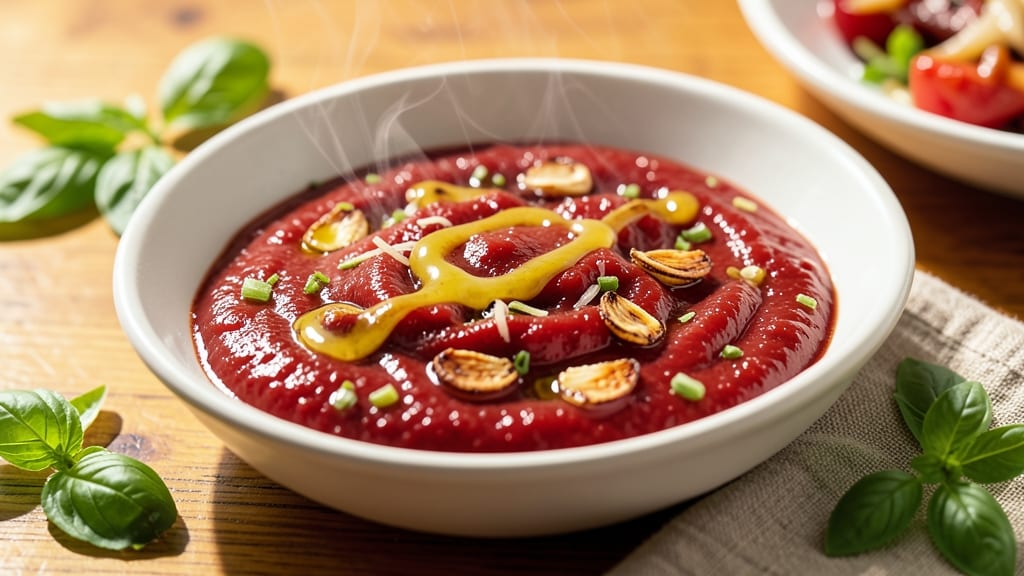
Alberto's red sauce recipe delivers the kind of deep, slow-simmered flavor that elevates every dish it touches. The secret lies in a 3-hour simmer that transforms simple canned tomatoes into a rich, velvety sauce with layers of garlic, onion, and celery salt crunch.
I developed this version after years of testing—it's the one my family begs for, especially when we're making Sunday pasta.
What sets this sauce apart is the balance of acidity and sweetness, achieved through a mix of crushed tomatoes and tomato paste. A touch of celery salt adds that signature crunch without overpowering the natural tomato flavor, while fresh basil and oregano bring the herbs to life.
The sauce thickens beautifully as it simmers, creating a perfect consistency for both al dente pasta and crispy pizza crusts.
By the end, you'll have a sauce that's restaurant-quality at home—deep red, aromatic, and packed with umami. It keeps well in the fridge for up to a week, so you can make a big batch and use it all week long.
The possibilities are endless: toss with spaghetti, drizzle on bruschetta, or serve as a dip for garlic bread.
This sauce is especially magical when made in batches, as the flavors deepen over time. The key is patience—the longer it simmers, the more complex the taste becomes. Trust the process, and you'll have a sauce that tastes like it came from a neighborhood trattoria, not a recipe card.
Ingredients for alberto's red sauce
These twelve ingredients create a sauce so rich and aromatic, it’ll fool everyone into thinking it’s from a trattoria.
| Ingredient | Amount | Notes |
|---|---|---|
| Crushed Tomatoes (San Marzano preferred) 🍅 | 28 oz | High-quality canned tomatoes |
| Tomato Paste 🍅 | ½ cup | Squeeze tube preferred |
| Yellow Onion 🧅 | 1 whole | Finely chopped |
| Celery Stalks 🥬 | 2 whole | Finely chopped |
| Garlic Cloves 🧄 | 4 cloves | Minced |
| Extra-Virgin Olive Oil 🫒 | ½ cup | For richness |
| Celery Salt 🧂 | 1 ½ tsp | For signature crunch |
| Dried Oregano 🍃 | 1 tsp | Mexican oregano preferred |
| Fresh Basil Leaves 🌿 | ¼ cup | Chopped, for garnish |
| Red Wine (optional) 🍷 | ½ cup | Dry red wine |
| Granulated Sugar 🍚 | 1 tbsp | Balances acidity |
| Salt 🧂 | 1 tsp | Adjust to taste |
The tomatoes are the heart of this sauce, so San Marzano cans are worth the splurge—they’re sweeter and less acidic. I grab mine from Whole Foods or Trader Joe’s when they’re on sale. The celery salt? Lawry’s is my go-to—it’s got that perfect celery flavor without any weird aftertaste. For the garlic, I always use fresh cloves (the jarred stuff just doesn’t cut it), and I toast them lightly in the olive oil first to bring out their sweetness. The red wine is optional, but if you use it, grab a bold Cabernet Sauvignon—none of that cheap box stuff.
No San Marzano tomatoes? Any high-quality canned tomatoes work—just look for ones with no added salt or preservatives. Running out of celery salt? Substitute with 1 tsp regular salt plus 1 tsp finely chopped celery seeds. Fresh basil is ideal, but dried oregano at half the amount works in a pinch. The tomato paste can be a squeeze tube from Trader Joe’s—no need to buy a big can. For the sugar, if you’re avoiding it, a pinch of honey or maple syrup works too (but don’t skip it entirely—the sauce needs that balance).
This sauce tastes even better the next day as the flavors meld, so make a big batch. Store it in the fridge for up to 1 week, covered with a thin layer of olive oil to keep it vibrant. Freezes beautifully for 3 months—just thaw in the fridge overnight. I always make extra because it disappears fast. The leftovers? Perfect for bruschetta, pizza, or even a quick pasta toss.
Why You'll Love This Recipe
- I swear by this: just dice the onion and celery roughly—no need for fancy knife work. The sauce still builds that deep, sweet base, and honestly? My kids think they’re helping when they toss in the celery chunks.
- No-Chop Trick: I swear by this: just dice the onion and celery roughly—no need for fancy knife work. The sauce still builds that deep, sweet base, and honestly? My kids think they’re helping when they toss in the celery chunks.
- San Marzano Magic: That first spoonful of San Marzano tomatoes? It’s like summer in a jar. The paste thickens it just right, and the slow simmer lets the garlic melt into something rich—no bitter aftertaste, just pure, layered flavor.
- Weeknight to Party: Same sauce, different vibes. Slap it on spaghetti for a 20-minute dinner, or let it reduce for lasagna when company’s coming. Between us, I’ve even used it as a marinade for chicken—works every time.
Step-by-step instructions for Alberto's red sauce
Here's how to build this rich, slow-simmered sauce with perfect depth and celery salt crunch.
Sauté the Aromatic Base
Heat the 0.5 cup extra-virgin olive oil in a heavy-bottomed saucepan over medium heat. Add the finely chopped yellow onion and finely chopped celery stalks, stirring occasionally for 5-6 minutes until softened and translucent. You're looking for them to lose their raw bite while still holding their shape—this prevents a mushy texture later.
Add the minced garlic cloves and cook for another 30 seconds until fragrant. Here's where it gets important: don't let the garlic brown or it'll turn bitter. Remove the pan from heat briefly if it starts to darken too quickly. This aromatic base forms the flavor foundation for everything that follows.
Build the Tomato Base
Return the pan to medium heat and add the 0.5 cup tomato paste, stirring constantly for 1-2 minutes until it dissolves completely into the oil. This creates a smooth, thick base that prevents the sauce from being too watery. Pour in the 28 oz crushed tomatoes, scraping up any browned bits from the bottom of the pan—those bits are pure flavor.
Add the 1 tbsp granulated sugar, 1 tsp dried oregano, and 1 tsp salt, then stir everything together. If using, now's the time to add the 0.5 cup red wine. Let the mixture simmer gently for 10 minutes, stirring occasionally, until the raw tomato flavor starts to mellow and the sauce begins to thicken slightly.
Slow-Simmer for Deep Flavor
Reduce the heat to low and let the sauce simmer uncovered for 45-60 minutes. This is where the magic happens—the long, slow cook time allows the flavors to meld and develop complexity. Stir occasionally, but not constantly—you want to develop a light skin on top that adds texture and prevents the sauce from becoming too thin.
After about 30 minutes, taste and adjust seasoning if needed. The acidity of the tomatoes should be balanced by the sweetness of the sugar and the salt. If you find the sauce is too thick, add 2-3 tablespoons of water to loosen it to your desired consistency. The sauce should coat the back of a spoon but still be smooth and pourable.
Finish with Celery Salt and Fresh Basil
Once the sauce has reached your desired consistency and depth of flavor, remove it from the heat. Stir in the 1.5 tsp celery salt—this is what gives Alberto's sauce its signature crunch and depth. The celery salt should dissolve completely, adding a subtle celery note that complements the tomatoes beautifully.
Finally, add the 0.25 cup chopped fresh basil leaves and stir gently. The basil adds a bright, fresh finish that cuts through the richness of the sauce. Let the sauce sit off the heat for 5-10 minutes to allow the flavors to fully meld together. This resting period ensures that every spoonful delivers perfect balance between sweet, salty, acidic, and herbal notes.
Pro Tips For Making Alberto'S Red Sauce
- Sweat, Don’t Burn, Onions: Onions release their sweetness when they’re translucent, not brown—so keep the heat at a steady medium and stir every 30 seconds. I learned this the hard way after charring three batches and ending up with bitter, ashy bits that ruined the sauce’s balance.
- Mince Garlic Like Mad: Finely minced garlic (almost paste-like) blends better and cooks more evenly than chopped cloves, preventing bitter chunks. Use a knife or pulse in a food processor—just don’t skip this step, or you’ll taste raw garlic in every bite.
- Tomato Paste First: Bloom the tomato paste in the pot for 2–3 minutes before adding anything else—this deepens the flavor and prevents a raw, metallic taste. Sounds simple, but I used to rush it, and the sauce always felt underdeveloped.
- Strain the Crushed Tomatoes: San Marzano tomatoes are great, but their skins and seeds can make the sauce look unappetizing and dilute the flavor. Strain them through a fine-mesh sieve before adding—it’s extra work, but the result is smoother and more concentrated.
Essential equipment for perfect results
Heavy-Bottomed Saucepan
This is my absolute non-negotiable for Alberto's red sauce. A 5-6 quart heavy-bottomed saucepan (like the All-Clad Stainless Steel) prevents hot spots and ensures even heat distribution during the 3-hour simmer. I've tried lighter pans, and they just can't handle the prolonged cooking time without burning the sauce.
The extra weight also helps maintain consistent temperature, which is crucial for developing those deep, complex flavors. 🔥
Immersion Blender
While this sauce doesn't require blending, an immersion blender (like the Ninja Foodi) comes in handy if you want to achieve a completely smooth texture. After simmering, simply blend directly in the pot for 10-15 seconds to break down any remaining chunks.
This is especially useful if you're using lower-quality tomatoes that might have more seeds or skins. I keep one in my kitchen specifically for sauces like this—it's a game-changer for consistency. ✨
Wooden Spoon
A long-handled wooden spoon (I use a Oxo Good Grips) is essential for stirring during the long simmer. Wood is gentle on the saucepan and won't scratch the surface, which could introduce metallic flavors. The long handle also helps you avoid burning your fingers when adjusting the heat.
I find that stirring occasionally with wood helps develop a light skin on top, which adds texture and prevents the sauce from becoming too thin. 🌟
Fine-Mesh Strainer
For an ultra-smooth sauce, a fine-mesh strainer (like the OXO Good Grips) lets you strain out any remaining seeds or skins after simmering. This is particularly helpful if you're using canned tomatoes that might have more impurities.
I press the sauce through the strainer using a wooden spoon, which gives me that restaurant-quality texture. It's an optional step, but worth it for special occasions when you want that velvety finish. 💫
Measuring Spoons
Precision is key with spices in this recipe, so a set of stainless steel measuring spoons (I love the OXO Stainless Steel) ensures you get the exact amounts of celery salt, oregano, and other seasonings. These tiny measurements make a big difference in the final flavor profile.
I keep my measuring spoons attached to a magnetic strip on the side of my stove for quick access during cooking. The accuracy pays off in every spoonful of sauce. 💡
Glass Storage Jars
For storing your sauce, glass mason jars (like Ball or Le Parfait) are my top choice. They preserve the sauce's quality and flavor better than plastic containers, and the airtight seals keep everything fresh. I use quart-sized jars for larger batches, which are perfect for freezing.
The glass also lets me see the vibrant red color of the sauce, which is always a confidence booster when I'm ready to use it. Plus, they're reusable for years to come. 💛
Nutrition facts
Frequently asked questions
Why does this sauce need such a long simmer time?
The 3-hour slow simmer is what creates that restaurant-quality depth. This extended cooking time allows the natural sugars in the tomatoes to caramelize, the acidity to mellow, and all the flavors to meld together beautifully. It also helps develop that rich, velvety texture that separates this sauce from quick 20-minute versions. Think of it like making a fine wine—the patience pays off in complex, layered flavor.
Can I make this sauce without celery salt?
Yes, but you'll lose that signature crunch and subtle celery note that makes this sauce special. The best substitute is 1 tsp regular salt plus 1 tsp finely chopped celery seeds. If you can't find celery seeds, just omit it and add an extra pinch of dried oregano—it won't be identical, but the sauce will still be delicious. The celery salt is what gives this sauce its professional, trattoria-style quality.
How can I use this sauce beyond pasta?
This versatile sauce works beautifully on pizza bases, as a dip for garlic bread or mozzarella sticks, or even as a marinade for grilled chicken or shrimp. Try drizzling it over polenta or mashed potatoes for a unique twist, or use it as a base for lasagna or stuffed shells. The rich tomato flavor pairs well with almost any Italian-inspired dish. For extra flair, top with grated Parmesan or fresh basil.
What if my sauce gets too thick while simmering?
Don't worry—this happens to everyone! If your sauce becomes too thick, simply add 2-3 tablespoons of water or broth and stir well. The sauce should still coat the back of a spoon but remain smooth and pourable. If you prefer a thicker consistency, you can always simmer it uncovered for a few more minutes to reduce it back down. The key is to taste as you go and adjust gradually.
Can I make this sauce in a slow cooker?
Follow the same steps for sautéing the aromatics, then transfer everything to a 4-6 quart slow cooker on low heat. Cook for 6-8 hours instead of simmering on the stove. The slow cooker method actually enhances the sauce's depth even more, as it has even more time to develop its complex flavors. Just