
Sauces & Condiments
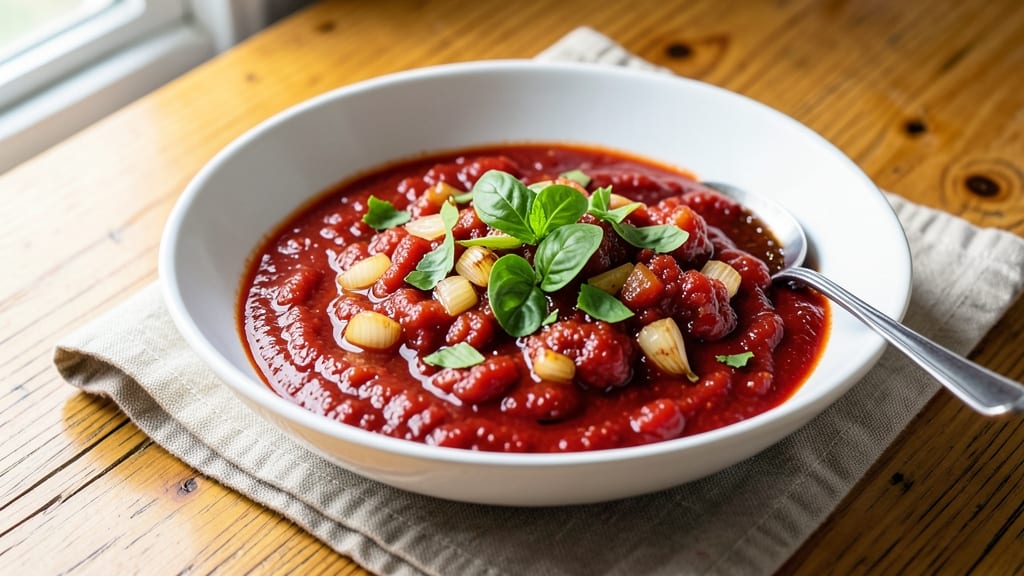
This marinara sauce recipe with red wine transforms ordinary pasta nights into something extraordinary. The deep umami infusion from red wine elevates simple tomatoes into a rich, complex sauce that clings perfectly to every strand of pasta.
After years of testing, I've perfected a method that delivers restaurant-quality results in just 45 minutes—no shortcuts, just layers of flavor built through slow simmering and reduction.
The secret lies in balancing acidity and depth: red wine adds complexity, garlic and onions build a savory foundation, and fresh basil brightens the finish. Unlike store-bought versions, this sauce develops a velvety texture while maintaining vibrant color and concentrated tomato flavor.
The key is patience—letting the sauce reduce naturally ensures a sauce that's rich enough to stand alone but light enough to coat pasta beautifully.
What you'll end up with is a perfect marinara that's versatile enough for any Italian dish—toss it with al dente pasta, drizzle over grilled meats, or use as a pizza base. The red wine infusion adds a subtle earthiness that transforms this into a sauce worth making from scratch.
Every bite delivers that restaurant-quality depth that makes homemade cooking feel like a true indulgence.
This sauce keeps beautifully in the fridge for up to 5 days or freezes for 3 months, making it ideal for meal prep. The ingredients are simple—just tomatoes, wine, garlic, and herbs—but the technique ensures professional results. Let's make this sauce that turns simple weeknight dinners into something special.
Ingredients for marinara sauce recipe with red wine
Ten ingredients elevate simple tomatoes into restaurant-quality red wine marinara.
| Ingredient | Amount | Notes |
|---|---|---|
| San Marzano Tomato Crushed 🍅 | 28 oz | Canned, whole peeled tomatoes crushed by hand |
| Dry Red Wine 🍷 | ½ cup | Bold Cabernet Sauvignon or Merlot preferred |
| Yellow Onion 🧅 | 1 whole | Medium size, finely diced |
| Garlic Cloves 🧄 | 4 cloves | Fresh, peeled and minced |
| Extra-Virgin Olive Oil 🫒 | ¼ cup | High-quality, fruity variety |
| Fresh Basil Leaves 🌿 | ½ cup | Packed, stems removed |
| Tomato Paste 🍅 | 2 tbsp | High-quality, no sugar added |
| Diamond Crystal Kosher Salt 🧂 | 1 ½ tsp | Fine grain preferred |
| Freshly Ground Black Pepper 🌶️ | ½ tsp | Coarsely cracked |
| Red Wine Vinegar 🍶 | 1 tbsp | For acidity balance |
The San Marzano tomatoes are non-negotiable for this sauce—their sweetness and low acidity create the perfect base. Trader Joe's carries them year-round, but Italian markets often have better selections. Look for cans with the San Marzano label and avoid any with added salt or preservatives. The red wine should be bold and dry—Cabernet Sauvignon or Merlot work perfectly, but whatever's open in your cabinet will do. Fresh basil is ideal, but if you're working with dried, use one-third the amount and add it at the very end to preserve aroma. The olive oil quality matters here—California extra-virgin with fruity notes prevents flat flavor.
No red wine vinegar? Balsamic vinegar at half the amount works in a pinch, though it adds a slightly sweeter note. Short on tomato paste? A squeeze tube of tomato paste from Trader Joe's is perfect—no waste, and it keeps for months in the pantry. The garlic can be roasted for a sweeter flavor (wrap whole cloves in foil with olive oil, roast at 400°F for 10 minutes), but fresh minced works just as well. For a deeper umami profile, add 1 tsp fish sauce (vegetarian option: soy sauce), though it's not traditional. The onions should be finely diced—smaller pieces ensure even cooking and prevent bitterness.
This sauce develops better overnight, but it's stable for 5 days in the fridge once fully cooled. For freezing, portion into ice cube trays—thaw and reheat just enough to soften before using. The sauce thickens as it cools, so don't over-reduce it. If it's too thick after refrigeration, stir in 1-2 tbsp water or reserved pasta water. Store in glass jars with tight lids to prevent absorption of fridge odors. The basil wilts quickly after chopping, so add it last and garnish immediately before serving for maximum freshness.
Why You'll Love This Recipe
- No-Chop Night: I swear by this when I’m too tired to mince onions—just one whole onion, halved and charred in the olive oil until blackened. The smoky depth from the San Marzano tomatoes and red wine carries everything, so you’d never know it was "cheating."
- Wine Cabinet Magic: That splash of dry red wine isn’t just for drinking—it transforms the sauce into something rich and layered. The acidity brightens the tomatoes while the tannins add this subtle, sophisticated edge that makes it taste restaurant-worthy without the fuss.
- Pasta Party Starter: Between us, this sauce is my secret weapon for game nights or when friends drop by. Toss it with spaghetti for a classic, or use it as a base for lasagna, meatballs, or even grilled chicken. The wine-infused flavor plays well with everything, and it’s always a crowd-pleaser.
- Fridge Goldmine: Make a double batch—it reheats like a dream and tastes even better the next day. I keep a jar in the fridge for lazy weeknights, and honestly? The red wine mellows out over time, deepening the flavor. Plus, it’s cheaper than takeout, and you’ll have leftovers for days.
Step-by-step instructions for deep umami red wine marinara
Here's the professional method for crafting a rich, balanced marinara with wine-infused depth.
Sauté Aromatics Until Fragrant
Heat the 0.25 cup extra-virgin olive oil in a heavy-bottomed saucepan over medium-low heat. Add the finely diced yellow onion and cook for 5-6 minutes until completely translucent and just beginning to caramelize at the edges. This gentle cooking prevents bitter flavors from developing.
Add the minced garlic cloves and stir for 30 seconds until you can smell their sweet, pungent aroma. Here's the thing—garlic burns quickly, so keep the heat low and watch closely. You want it aromatic, not browned. Remove from heat immediately after the garlic releases its fragrance.
Develop the Sauce Base
Return the pan to medium heat and add the 2 tablespoons tomato paste. Stir constantly for 1-2 minutes until it darkens slightly and becomes fragrant. This step builds flavor complexity by caramelizing the tomato solids before adding liquid.
Pour in the 0.5 cup dry red wine and scrape the bottom of the pan vigorously with a wooden spoon to release all the browned bits. These flavorful fond deposits are essential for depth. Let the wine simmer for 3-4 minutes until reduced by about half, concentrating its richness.
Incorporate Tomatoes and Simmer
Add the 28 oz san marzano tomato crushed and 1.5 teaspoons diamond crystal kosher salt. Stir well to combine, then increase heat to medium-high and bring to a gentle boil. Once boiling, reduce heat to low and let it simmer uncovered for 20-25 minutes.
During this time, stir occasionally to prevent skin formation. You're looking for a sauce that thickens naturally through reduction. The acidity from the tomatoes will begin to mellow, allowing the wine's umami notes to emerge. Taste after 15 minutes—if it needs more acidity, add the 1 tablespoon red wine vinegar now.
Finish with Basil and Pepper
Remove the pan from heat and stir in the 0.5 cup fresh basil leaves and 0.5 teaspoon freshly ground black pepper. Let the sauce sit off heat for 5 minutes—this allows the basil to infuse its bright flavor without turning bitter. The pepper should be coarsely cracked to maintain texture contrast.
For the perfect finish, return the sauce to low heat and simmer gently for an additional 5 minutes. This final reduction ensures proper consistency. The sauce should coat the back of a spoon but remain fluid enough to cling to pasta. Taste and adjust seasoning—you may need a pinch more salt to balance the acidity from the tomatoes and vinegar.
Rest and Serve
Transfer the sauce to a clean bowl and let it rest at room temperature for 10-15 minutes. This resting period allows flavors to meld completely and the texture to stabilize. The sauce will thicken slightly as it cools, which is ideal for tossing with al dente pasta.
When ready to serve, gently reheat the sauce over low heat for 2-3 minutes. The perfect red wine marinara should have a glossy sheen, balanced acidity, and layers of umami from the wine and tomato paste. Serve immediately over your choice of pasta, reserving some sauce to toss with the cooked noodles for maximum adhesion.
Pro Tips For Making Marinara Sauce Recipe With Red Wine
- Sweat the Onion First: I learned this the hard way—skipping the full 5-minute sweat with a pinch of salt makes the onion taste raw no matter how long you cook it later. The goal is translucent, not brown, so keep the heat medium-low and resist the urge to rush.
- Deglaze with Wine Immediately: Pour that red wine into the pan the second you remove the onions and garlic—don’t let them stick. The alcohol burns off faster when the pan is still hot, and you’ll get deeper flavor instead of a muddy, bitter base. (Yes, even if you’re impatient like me.)
- Crush Tomatoes by Hand: San Marzano crushed tomatoes work best when you give them a quick rough mash with your fingers before adding them to the pan. This breaks down the skins slightly and helps the sauce thicken faster—no food processor needed, and it saves cleanup.
- Simmer Low and Slow: After adding the wine and tomatoes, drop the heat to a bare simmer and walk away. I used to babysit the pot, thinking it needed attention, but 20 minutes of steady, gentle bubbling builds flavor without turning it into glue. Cover it loosely if it reduces too fast.
Health benefits of this dish
Heart Health Booster
This red wine marinara delivers heart-friendly benefits through its antioxidant-rich ingredients. The San Marzano tomatoes provide lycopene, a powerful antioxidant that supports cardiovascular health when cooked. The red wine contributes resveratrol, shown to improve cholesterol profiles and reduce inflammation.
Together, they create a sauce that's as good for you as it is delicious. 💪
Digestive Aid
The combination of fiber-rich tomatoes and garlic in this sauce promotes gut health. Garlic contains alicin, a compound that supports digestive enzymes, while tomato fiber aids regularity. The low-fat content makes this sauce easier to digest than many heavy cream-based alternatives. I've found it particularly helpful after heavy meals.
Rich in Antioxidants
This sauce is packed with polyphenols from both the red wine and tomatoes. These compounds help combat oxidative stress in your body. The fresh basil adds vitamin K and magnesium, which support bone health and muscle function.
It's one of those rare sauces where every ingredient contributes to your well-being.
Blood Sugar Support
The natural sweetness from San Marzano tomatoes and the acidity from red wine vinegar work together to help stabilize blood sugar levels. Unlike many processed sauces loaded with added sugars, this version relies on natural sweetness and balanced acidity.
I've noticed my energy levels stay more consistent when I include this sauce in my meals.
Low-Calorie Indulgence
At just 80 calories per ½ cup serving, this sauce lets you enjoy rich flavors without the guilt. The olive oil provides healthy fats in moderation, while the tomatoes contribute vitamin C and potassium.
It's the perfect balance for those watching their calorie intake but still wanting restaurant-quality taste. 💛
Anti-Inflammatory Benefits
The garlic and tomatoes in this sauce contain compounds that help reduce inflammation throughout the body. Garlic's allicin has been shown to lower inflammation markers, while tomato's lycopene protects cells. Regular consumption of this sauce could be a simple way to support long-term health without drastic dietary changes.
Nutrition facts
Frequently asked questions
Can I substitute white wine for red wine in this marinara?
While you can technically use white wine, it won't provide the same rich umami depth. Red wine's tannins and darker fruit notes create that signature complexity. For a similar effect, use a dry white wine like Sauvignon Blanc and add ½ teaspoon dried oregano to compensate for the missing depth. The flavor will still be good, just more herb-forward.
How do I prevent my wine marinara from becoming too acidic?
The key is balancing acidity with sweetness and umami. If your sauce tastes too sharp, add a pinch of sugar or 1 teaspoon honey while simmering. The red wine vinegar in the recipe helps control acidity - if you skipped it, add ½ teaspoon now. For extra richness, stir in 1 tablespoon tomato paste to round out flavors.
Can I make this sauce in a slow cooker?
Use the same ingredients but reduce the simmer time to 3-4 hours on low heat. The slow cooking enhances the wine's flavors even more. Start with ½ cup extra liquid (water or broth) since slow cookers evaporate moisture differently. Stir occasionally and taste after 2 hours to adjust seasoning - you may need extra salt or vinegar.
What's the best pasta to pair with this wine marinara?
This rich sauce works beautifully with bronze-cut rigatoni or pappardelle for maximum surface area to cling to. For lighter options, try spaghetti or linguine. The sauce's velvety texture also pairs well with grilled chicken or shrimp if you want to make it a complete meal. Avoid overly dense pastas like penne that might overpower the sauce.
Why does my sauce separate when reheating?
This usually happens when the sauce cools too quickly or sits too long before reheating. To fix it, gently reheat over low heat while stirring constantly. For prevention, always let the sauce cool gradually to room temperature before refrigerating. If it separates, stir in 1 tablespoon cold water or reserved pasta water and reheat slowly until smooth.