
Sauces & Condiments
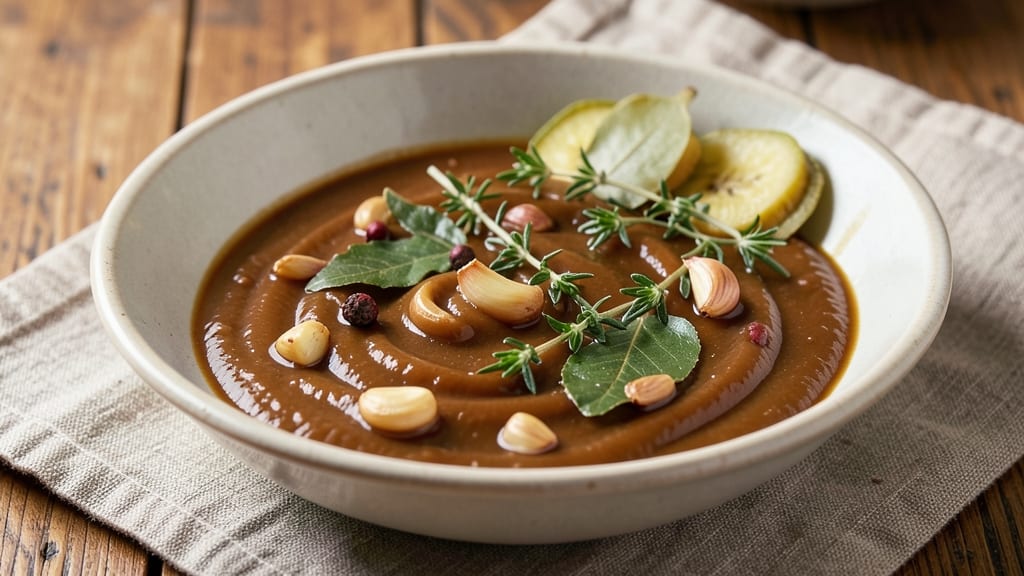
This cassareep sauce recipe unlocks the rich, earthy-sweet foundation of Caribbean cooking—essential for stews, soups, and bold dishes alike. The process transforms cassava into a concentrated, smoky-sweet paste that carries depth to every meal. I’ve perfected this traditional technique to ensure authenticity while keeping it accessible for home cooks.
The sauce begins with fresh cassava, slow-cooked until tender, then blended into a smooth paste with aromatic spices like thyme and garlic. Reducing the mixture creates a thick, syrupy consistency that’s both versatile and flavorful.
What sets this apart is the balance of sweetness and subtle smokiness, achieved through careful reduction and spice integration.
What you’ll end up with is a foolproof base that elevates any dish—think hearty stews, tangy soups, or even marinades for grilled meats. The sauce keeps well in the refrigerator for up to 2 weeks or can be canned for long-term storage, making it a pantry staple.
Ready to transform your cooking with this Caribbean essential?
Whether you’re preparing a traditional dish or experimenting with new flavors, this cassareep sauce delivers the authentic taste of the Caribbean. The process is straightforward, but the results are undeniably rich and complex. Let’s get started on creating your own batch.
Ingredients for cassareep sauce
Nine simple ingredients transform humble cassava into a smoky-sweet Caribbean treasure.
| Ingredient | Amount | Notes |
|---|---|---|
| Fresh Cassava (Yuca) 🍠 | 2 lbs | Peeled and cubed for even cooking |
| Water 💧 | 4 cups | Filtered or spring water preferred |
| Fresh Thyme Leaves 🌿 | ½ cup | Stems removed, loosely packed |
| Garlic Cloves 🧄 | 6 cloves | Peeled and lightly crushed |
| Bay Leaves 🌿 | 2 whole | Dried or fresh, for depth |
| Allspice Berries 🌶️ | 1 tsp | Crushed lightly for aromatic release |
| Ground Cinnamon 🌶️ | ½ tsp | Freshly ground for warmth |
| Salt 🧂 | 1 ½ tsp | Diamond Crystal preferred |
| Smoked Paprika 🌶️ | 1 tsp | For subtle smokiness |
| Olive Oil 🫒 | 2 tbsp | Extra-virgin for finishing |
Cassava is the heart of this sauce, so pick firm, unblemished tubers from a Latin market or specialty grocer—Whole Foods or Trader Joe's often carry it. Fresh cassava has a pale yellow skin and dense, starchy flesh. If you can't find it fresh, pre-peeled cassava at Latin markets works too, but avoid dried or shriveled pieces. The thyme and allspice are non-negotiable for that authentic Caribbean warmth—Penzeys Spices carries excellent whole spices if you want to toast them yourself for deeper flavor. For the smoked paprika, Spanish paprika adds extra depth, but any smoked variety will work.
No fresh cassava? Green plantains or yuca flour can substitute in a pinch, though texture will differ slightly. Short on thyme? Dried thyme at half the amount works, but fresh is ideal. The garlic can be roasted (wrapped in foil at 400°F for 10 minutes) for a sweeter, mellow flavor—trust me on this. For the smoked paprika, if you can't find it, liquid smoke at 1/4 tsp mimics the effect. The bay leaves add subtle earthiness, but if you're out, a pinch of ground cloves can stand in. The olive oil at the end is key—don't skip it—it binds the flavors and adds richness.
This sauce thickens as it cools, so stir in a splash of water if it gets too stiff. Store in a clean, airtight jar in the fridge for up to 2 weeks. For longer storage, can it in sterilized jars for up to 1 year. The sauce freezes beautifully too—portion into ice cube trays for easy use in future dishes. Once opened, always keep it refrigerated. A little goes a long way—start with 1 tbsp per dish and adjust to taste.
Why You'll Love This Recipe
- Pantry-Friendly Staples: I use what I already have—cassava, thyme, and garlic—no fancy shopping needed. The bay leaves add depth without extra cost, and honestly? This sauce feels like a hug from your grandma’s kitchen, but with zero guilt over the ingredient list.
- Earthy Depth Explosion: That first taste of caramelized cassava with thyme’s bright punch and garlic’s slow simmer? It’s the kind of flavor that lingers, making even simple rice or grilled fish feel like a restaurant dish. Between us, it’s the secret weapon in my weeknight rotation.
- Doubles as Dinner: Make a big batch—it’s perfect over roasted veggies, as a dip for plantains, or even a base for stews. My kids ask for it on Tuesdays (yes, even on Tuesdays), and it keeps well in the fridge for days. Less stress, more flavor, every time.
- One-Pot Magic: Peel, chop, simmer—no blenders, no strainers, just a pot and 20 minutes of your time. The cassava softens into a velvety texture while the garlic and thyme infuse effortlessly. Not the prettiest, but the taste makes up for it every single time.
Step-by-step instructions for smoky-sweet cassareep sauce
Transform humble cassava into a rich, aromatic Caribbean base with this simple method.
Parboil the Cassava for Maximum Flavor Extraction
In a large stockpot, combine the 2 lbs fresh cassava (yuca) with the 4 cups water. Bring to a boil over medium-high heat, then immediately reduce to a gentle simmer. Cook uncovered for 20-25 minutes until the cassava is fork-tender but still holds its shape—you'll see the pieces begin to soften at the edges while maintaining some structure.
This parboiling step is crucial—it breaks down the cassava's starches while preserving its subtle sweetness. Don't skip it; the sauce will taste flat without this foundational step. Drain the cassava thoroughly in a colander, reserving the cooking liquid for later use if desired, though we'll be using fresh water for the sauce base.
Build the Aromatic Base with Spices and Herbs
Return the drained cassava to the same pot and add the 6 cloves garlic cloves, 2 whole bay leaves, 1 tsp allspice berries, 0.5 tsp ground cinnamon, 1.5 tsp salt, and 1 tsp smoked paprika. Pour in enough fresh water to cover the cassava by about 1 inch—typically 3 cups will suffice.
Bring to a gentle boil over medium heat, then immediately reduce to a simmer. Let it cook uncovered for 30 minutes, stirring occasionally. You'll notice the spices blooming—aromatic steam rising, the garlic softening, and the cassava beginning to break down into a thick, creamy purée. This is where the sauce's signature depth develops.
Blend Until Silky Smooth
Using an immersion blender, carefully purée the cassava mixture directly in the pot until completely smooth. If you prefer using a countertop blender, work in batches—be cautious with hot liquids. The sauce should be velvety with no visible chunks, though a few small pieces are fine for texture. If it's too thick, thin with a splash of the reserved cooking liquid or fresh water.
This blending step transforms the cassava into a luxurious, spoonable consistency. The sauce should coat the back of a spoon with a rich, almost pudding-like texture. Taste and adjust seasoning—you may need an additional ¼ tsp salt or pinch of smoked paprika to balance flavors.
Finish with Heat and Olive Oil
Return the blended sauce to medium-low heat and stir in the 2 tbsp olive oil. Simmer gently for 10 minutes, stirring frequently, until the sauce thickens slightly and the oil is fully incorporated. The sauce should develop a glossy sheen and a subtle smokiness from the paprika and allspice.
Remove from heat and let it cool slightly—this allows the flavors to meld. The sauce should be thick enough to coat the back of a spoon but still pourable. For best results, use within 3-4 days or refrigerate for up to 1 week, though the flavor continues to deepen over time.
Pro Tips For Making Cassareep Sauce
- PEEL AND GRATE CASSAVA DRY: Fresh cassava is stubborn—peel it first, then grate it without rinsing. The starch clings to the skin, and wet grated yuca turns to glue. Use a box grater and work in batches, or your sauce will turn into a thick, unmanageable paste.
- TOAST GARLIC IN THE POT: Add whole garlic cloves to the simmering cassava water before the thyme and bay leaves. Let them sizzle for 30 seconds—this deepens their flavor without burning. Crushed garlic burns faster and adds bitterness you’ll regret later.
- SIMMER LOW AND LONG: This isn’t a race. After the cassava breaks down, reduce to a gentle simmer and let it cook uncovered for at least 45 minutes. Skim off any foam that rises—it’s not just impurities, it’s the stuff that makes your sauce taste flat if left in.
- STRAIN TWICE, STRAIN WELL: Use a fine-mesh sieve and cheesecloth for the final strain. The first pass catches big bits; the second catches the fine grit that ruins texture. No shortcut here—your sauce will taste cloudy and gritty if you skip this. (Yes, even if you’re tired.)
Storing and reheating your cassareep sauce
Refrigerator Storage
Transfer your freshly made cassareep sauce to a clean, airtight glass jar—I love using Pyrex with a tight-sealing lid—and store it in the refrigerator where it’ll keep for up to 2 weeks.
The sauce continues to develop deeper flavors over time, so don’t hesitate to make a big batch. The texture will thicken slightly as it cools, so stir in 1-2 tbsp water if it becomes too stiff before using. 💧
Freezer Storage
For longer storage, portion the sauce into ice cube trays or small jars. Once frozen, transfer the cubes to a freezer bag or airtight container. Cassareep sauce freezes beautifully for up to 3 months without losing its rich, smoky-sweet profile.
Thaw overnight in the fridge before using—no need to reheat, just stir gently to restore its creamy consistency.
Canning for Long-Term Use
If you want to preserve your cassareep sauce for up to 1 year, canning is the way to go. Use sterilized pint jars and process in a water bath canner for 90 minutes (adjust for altitude).
The sauce’s thick texture makes it ideal for canning—just ensure the jars are sealed properly to prevent spoilage. Label with the date and store in a cool, dark place. 🍯
Reheating Tips
When reheating cassareep sauce, use low heat on the stovetop—medium-low is perfect—to prevent scorching. Stir in 1-2 tbsp water if the sauce thickens too much during reheating. For microwave reheating, use 30-second intervals on 50% power, stirring between each interval until warmed through.
The sauce should reach 165°F for safety, especially if you’re using it in cooked dishes.
Reviving Stored Sauce
If your refrigerated cassareep sauce has thickened significantly, simply stir in 1-2 tbsp water or beef broth (for stews) to restore its pourable consistency. For a richer texture, warm the sauce gently on the stove while stirring—this helps distribute the oils and spices evenly.
A splash of fresh lime juice can also brighten flavors if the sauce has been stored for a while. Trust me, it’ll taste just as vibrant as fresh! ✨
Nutrition facts
Frequently asked questions
Can I use dried cassava instead of fresh?
Fresh cassava is ideal for this recipe, but you can substitute 1 cup dried cassava flour for every 1 lb fresh cassava. The texture will be slightly different—drier and more granular—but the flavor remains authentic. Just hydrate the flour with 1 cup warm water first to create a paste before adding to the recipe.
How much cassareep sauce should I use for different dishes?
Start with 1 tablespoon per 1 lb meat in stews or soups, and 2 tablespoons for every 4 servings of rice or beans. For marinades, use ¼ cup per 2 lbs protein. The sauce is potent, so always adjust to taste—you can easily build up from there.
Why does my sauce taste bitter?
Overcooking the cassava or using too much smoked paprika can create bitterness. To fix it, stir in 1 teaspoon honey or 1 tablespoon brown sugar while simmering, or add a pinch of salt to balance. For prevention, simmer the sauce at low heat and avoid boiling vigorously after blending.
Can I make cassareep sauce without allspice?
Yes! Replace the 1 teaspoon allspice berries with ½ teaspoon ground cloves and ¼ teaspoon nutmeg for warmth, or use ½ teaspoon cinnamon alone. The sauce will still have depth, though the signature Caribbean complexity will be slightly different. Toasting the spices before adding enhances flavor even without allspice.
Is cassareep sauce gluten-free and vegan?
This recipe is naturally gluten-free and vegan—it contains no animal products or gluten-containing ingredients. The sauce works perfectly in vegan dishes like hearty lentil stews or as a base for plant-based marinades. Always double-check your spice blends for cross-contamination if needed.