
Sauces & Condiments
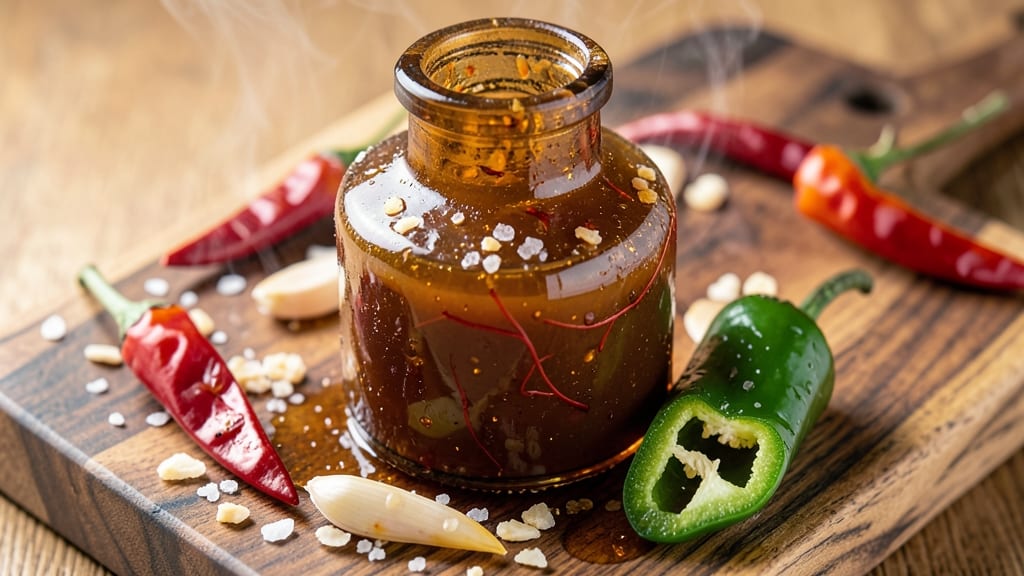
This bourbon hot sauce transforms ordinary dishes into smoky, boozy masterpieces with layers of heat and depth. The perfect blend of aged bourbon, fresh peppers, and aromatic spices creates a sauce that's as versatile as it is complex—ideal for drizzling over wings, mixing into cocktails, or elevating grilled meats.
What sets this recipe apart is the careful balance of sweetness, spice, and caramelized depth from the bourbon, which infuses the sauce with a rich, almost charred flavor profile.
The process begins with fermenting fresh peppers in vinegar and bourbon, allowing the alcohol to mellow while extracting maximum heat and sweetness. This step is crucial—it transforms raw peppers into a smooth, velvety base that still packs a punch.
After blending, the sauce simmers to meld flavors, reducing slightly for concentrated intensity. The result is a sauce that's bold enough to stand alone but subtle enough to enhance any dish without overpowering it.
What you'll end up with is a deep amber sauce with a perfect balance of smoky bourbon warmth, bright pepper heat, and just enough sweetness to round out the flavors.
It stores well in the refrigerator for up to 3 months, making it a pantry staple for anyone who loves adding depth to their cooking. The versatility is its greatest strength—use it as a finishing touch, a marinade, or even a cocktail mixer for a spicy, boozy kick.
This isn't just another hot sauce; it's a flavor multiplier that turns simple meals into something extraordinary. Whether you're a home cook looking to elevate your dishes or a sauce enthusiast craving a unique blend, this recipe delivers professional-quality results with minimal effort. Let's create something unforgettable.
Ingredients for bourbon hot sauce
Nine ingredients, one game-changing sauce—your kitchen's new secret weapon.
| Ingredient | Amount | Notes |
|---|---|---|
| Fresh Jalapeño Peppers 🌶️ | 1 cup | Seeds removed for milder heat |
| Fresh Cayenne Peppers 🌶️ | ½ cup | Seeds removed for balanced heat |
| White Vinegar 💧 | 1 ½ cups | White or apple cider vinegar |
| Bourbon Whiskey 🥃 | 1 cup | Aged 4+ years preferred |
| Granulated Sugar 🍚 | ½ cup | Light brown sugar for depth |
| Garlic Cloves 🧄 | 4 cloves | Roughly chopped for aroma |
| Yellow Onion 🧅 | ½ whole | Chopped, not too fine |
| Ground Cumin 🌿 | 1 tsp | Toasted for deeper flavor |
| Smoked Paprika 🌶️ | 1 tsp | For authentic smoky depth |
| Salt 🧂 | ½ tsp | Kosher or sea salt |
The bourbon is non-negotiable here. Buffalo Trace or Maker's Mark work wonders, but any good aged bourbon (4+ years) will do. Look for bottles that smell rich and caramel-like—avoid the cheap stuff that tastes like rubbing alcohol. The peppers? Fresh jalapeños and cayenne give you that perfect balance of heat and sweetness. I grab mine from the produce section at Whole Foods or Trader Joe's—they keep better than jarred sauces and pack more flavor. If you can't find fresh cayenne, red pepper flakes work in a pinch (use half the amount). The vinegar should be white or apple cider—avoid balsamic or red wine vinegar, which can clash with the bourbon's smoky notes.
No bourbon? Dark rum or even a splash of molasses can mimic some of that caramelized depth, though nothing beats the real thing. Running short on fresh peppers? Dried chipotle peppers in adobo sauce (2-3 peppers) add incredible smokiness—just blend them into the sauce at the end. The sugar might seem odd, but it's key for balancing the heat and helping the bourbon caramelize during simmering. Light brown sugar adds subtle molasses notes that elevate the whole sauce. For extra smokiness, swap the smoked paprika for a pinch of liquid smoke (1/4 tsp), but don't overdo it—you want depth, not a campfire flavor.
This sauce gets better with time, so ferment it for at least 2 weeks before using. Store it in a clean glass jar with a tight seal in the fridge—it'll keep for up to 3 months. For longer storage, freeze in ice cube trays, then transfer to a bag. Shake well before each use, as the peppers and spices settle. The first batch? Use it up quickly—it's at its peak when the bourbon's flavors are still bright. Trust me, you'll want to make extra; this stuff disappears fast once people taste it.
Why You'll Love This Recipe
- Fewer Ingredients, Bigger Bang: I swear by this—just chop peppers, toss in bourbon and vinegar, and let time do the work. No fancy techniques, no hidden pantry staples, and honestly? That’s all you need for something this good.
- Smoky-Sweet Heat: The bourbon caramelizes into the vinegar, turning this into a sauce that’s both fiery and smooth. Jalapeños bring the bright kick, cayenne adds depth, and sugar? It balances everything like a perfect cocktail—just spicier.
- Tailgate or Tapas: Between us, this sauce disappears at parties. Drizzle it on deviled eggs for a crowd, toss it into mac and cheese for a grown-up twist, or keep a bottle chilling for when your friends overrate their "homemade" hot sauces.
- Lasts All Week: I make a big batch on Sundays and it’s still there when I need it—no sad, wilted peppers, no wasted effort. The vinegar and bourbon preserve it beautifully, and honestly? The more it sits, the better it gets. (Yes, even on a Tuesday night.)
Step-by-step instructions for bourbon hot sauce
Here's how to craft a rich, smoky hot sauce with layers of bourbon depth and just the right amount of heat.
Prep and Sterilize Your Equipment
Start by thoroughly cleaning and sterilizing your sauce jar and any utensils you'll use. I like to run them through a hot dishwasher cycle or boil them in water for 5 minutes to ensure everything is completely free of bacteria. This step is crucial because hot sauce is acidic and can spoil quickly if proper sanitation isn't maintained.
While your equipment sterilizes, remove the seeds and membranes from the 1 cup fresh jalapeño peppers and 0.5 cup fresh cayenne peppers. You want to keep the heat but remove the sharp, biting quality that comes from the seeds. Cut the peppers into ¼-inch pieces and set them aside in a bowl. The smaller the pieces, the faster they'll infuse their flavor into the sauce.
Sauté the Aromatics
In a medium saucepan, combine the 0.5 whole yellow onion (chopped), 4 cloves garlic (roughly chopped), 1 teaspoon ground cumin, and 1 teaspoon smoked paprika with 1 tablespoon water. Cook over medium heat for 5-6 minutes until the onion softens and becomes translucent, and the garlic turns golden brown.
This step develops the base flavors and removes any raw taste from the garlic and onion. You'll notice the spices will start to smell deeply aromatic—this is your cue that they're ready. Be careful not to let the spices burn, as that can make the sauce bitter. Once fragrant, remove the pan from heat and let it cool slightly.
Combine All Ingredients
Transfer the sautéed aromatics to a blender or food processor along with the chopped peppers, 1.5 cups white vinegar, 1 cup bourbon whiskey, 0.5 cup granulated sugar, and 0.5 teaspoon salt. Blend until completely smooth, scraping down the sides as needed. The mixture should be well combined with no chunks remaining.
Here's the thing—this is where the magic happens. The bourbon adds a subtle sweetness and depth that pairs beautifully with the heat from the peppers and the acidity from the vinegar. Taste the mixture at this point—you'll notice it's already developing flavor, but it needs time to fully meld.
Simmer for Flavor Development
Pour the blended mixture back into a clean saucepan and bring it to a gentle boil over medium heat. Once boiling, reduce the heat to low and let it simmer uncovered for 20-25 minutes. You want the sauce to reduce slightly, which helps concentrate the flavors and thicken the consistency.
During this time, stir occasionally to prevent sticking and ensure even cooking. You'll see the sauce darken slightly and the aroma become more intense. This simmering step is critical—it allows all the ingredients to marry together and develop that complex, layered flavor profile that makes this hot sauce special.
Bottle and Age
Once the sauce has simmered, remove it from heat and let it cool completely. Transfer the hot sauce to your sterilized jar, leaving about ½ inch of headspace at the top. Seal the jar tightly and let it sit at room temperature for 1 week to allow the flavors to fully meld and develop.
After the initial week, taste the sauce. It should be well-balanced with heat, smokiness, and a touch of sweetness from the bourbon and sugar. If you prefer it hotter, you can add more chopped peppers to a fresh batch and blend them in. If it's too hot, you can thin it with a bit more vinegar. Store the hot sauce in the refrigerator for up to 6 months, where it will continue to improve with time.
Pro Tips For Making Bourbon Hot Sauce
- CHAR THE PEPPERS RIGHT: Toss whole peppers in a 400°F oven for 10 minutes before cutting—this softens them enough to chop without losing juice. I used to just hack them raw, and my sauce always ended up watery. (Yes, even if you’re impatient like me.)
- USE A HIGH-PROOF BOURBON: Grab 100-proof bourbon (or higher) to avoid alcohol burn-off during simmering. I wasted a good bottle of 80-proof once, and the sauce tasted flat. If you’re stuck with lower-proof, add 1-2 extra tablespoons to compensate.
- SIMMER LOW AND SLOW: Reduce heat to a bare simmer after the first 10 minutes—boiling burns off the bourbon’s vanilla notes and makes the sauce bitter. I learned this the hard way when my sauce turned harsh instead of smoky-sweet.
- STRAIN TWICE FOR SMOOTHNESS: First pass through a fine-mesh strainer catches seeds, then a cheesecloth-lined sieve removes lingering fibers. Skipping this step leaves your sauce grainy, and no one wants to deal with that when dipping wings. (Trust me.)
Essential equipment for bourbon hot sauce
Blender or Food Processor
The right blender is non-negotiable for achieving that silky-smooth texture in your bourbon hot sauce. I use a high-speed Vitamix because it handles peppers and spices with ease, but a Ninja Professional or even a Cuisinart will work just fine. Avoid basic blenders—they struggle with fibrous ingredients like jalapeños and cayenne. If you're blending a large batch, a food processor with a powerful motor (like the Cuisinart DLC-2BC) is a great alternative. Just
Sterilized Glass Jars
For fermentation and storage, amber or cobalt glass jars are ideal—they protect your sauce from light degradation. I recommend Ball or Mason jars in pint or quart sizes, which are food-safe and airtight. Before use, sterilize them by boiling in water for 10 minutes or running through a dishwasher sanitize cycle. This prevents mold and bacteria, ensuring your sauce stays fresh for months. Pro tip: Use jars with wide mouths for easier blending and pouring.
High-Quality Saucepan
A stainless steel saucepan with a heavy bottom (like All-Clad or Calphalon) is essential for even heat distribution during simmering. Avoid nonstick pans—they can impart off-flavors to your sauce. I prefer a 3-quart pan for this recipe, as it gives enough room to stir without spills.
If your pan isn’t heavy enough, the sauce can burn or stick, ruining the delicate balance of flavors. A wooden spoon is perfect for stirring without scratching the pan.
Fine-Mesh Strainer
If you prefer a smoother sauce without any pepper seeds or skins, a fine-mesh strainer (like the OXO Good Grips) is a game-changer. After simmering, pour the hot sauce through the strainer into a clean jar. This step removes any unwanted texture while keeping the bold flavors intact.
For an even finer filter, layer a cheesecloth over the strainer. Just be patient—it takes a little longer, but the result is worth it for a velvety finish. 🧂
Digital Thermometer
While not strictly necessary, a digital instant-read thermometer (like the ThermoWorks ThermoPop) helps ensure your sauce reaches the perfect simmering temperature—around 205-210°F. This prevents overcooking or undercooking, which can alter the bourbon’s caramelized depth.
I use mine to check the sauce’s temperature before bottling, ensuring it’s ready for aging. It’s a small investment that adds precision to your process.
Nutrition facts
Frequently asked questions
Can I substitute bourbon with another liquor?
Yes, but the flavor will change. For a similar depth, use aged rum (dark or spiced) or whiskey (rye or Scotch). Avoid light liquors like vodka—they lack the caramelized notes bourbon provides. If you must use a neutral spirit, add 1 teaspoon molasses per cup to mimic bourbon's sweetness.
How do I adjust the heat level?
For milder heat, reduce cayenne peppers to ¼ cup and add ½ cup more jalapeños. For extra spice, increase cayenne to ¾ cup or add 1-2 habanero peppers (seeded). Always taste before bottling—heat builds during fermentation!
Why does my sauce look cloudy?
Cloudiness usually means unfermented pepper particles or bacteria. If it's just pepper bits, strain through a fine-mesh sieve. For cloudiness after aging, the sauce may have spoiled—discard it. To prevent this, always sterilize equipment and use fresh, high-quality vinegar.
Can I make this without fermenting?
Yes, but flavor development will be weaker. Simmer the blended sauce for 45 minutes instead of 20-25 minutes, then bottle immediately. Fermentation (7+ days) creates depth by breaking down sugars—skip it for a quicker, though less complex, sauce.
How should I store leftover bourbon?
Use the bourbon within 3 months for best flavor. Store in an airtight container in the fridge—it'll develop a slight vinegar tang over time. For longer storage, freeze in ice cube trays. Never reuse bourbon that smells off or has mold.