
Sauces & Condiments
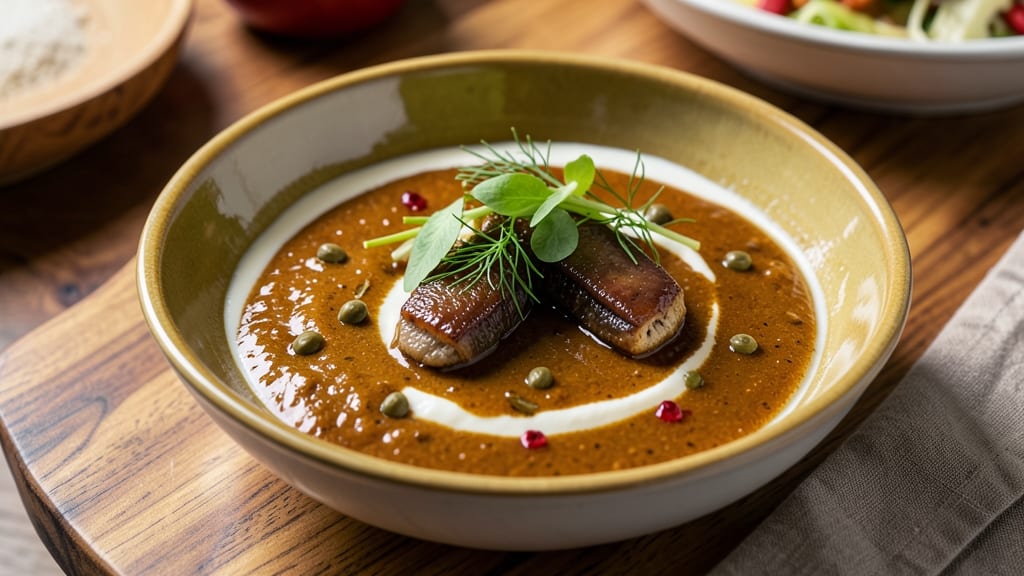
Balmoral sauce transforms simple seafood into an elegant, restaurant-worthy dish with its velvety texture and bright, herby depth. 💛 This classic British sauce balances sweet, salty, and tangy notes through a clever blend of anchovies, capers, and vinegar—ingredients that work together to create a sauce that's both bold and refined.
What makes it special is how the vinegar's acidity lingers just beneath the surface, adding complexity without overpowering.
The foundation of Balmoral sauce lies in its emulsification—anchovies and capers dissolve into a smooth paste while vinegar and cream create that signature silky swirl. Unlike many sauces that rely on heavy cream alone, this recipe achieves its luxurious texture through a combination of traditional techniques and simple ingredients.
The result is a sauce that clings beautifully to fish or poultry, enhancing their natural flavors rather than competing with them.
What you'll end up with is a velvety sauce with a delicate balance of sweetness from the celery, briny depth from the anchovies, and a subtle tang that keeps each bite interesting.
It's the kind of sauce that elevates a weeknight dinner into something special—perfect for drizzling over sole, haddock, or even grilled chicken. The best part? It keeps well in the refrigerator for up to five days, making it ideal for meal prep.
Serve it warm over delicate fish fillets or use it as a finishing sauce for roasted poultry. The secret to its success is patience—letting the sauce sit for at least 30 minutes before serving allows the flavors to meld perfectly. Here's how to make it, step by step.
Ingredients for balmoral sauce
Nine ingredients blend into a velvety sauce with layers of sweet, briny, and tangy depth.
| Ingredient | Amount | Notes |
|---|---|---|
| Anchovy Fillets 🐟 | 4 whole | High-quality, rinsed well |
| Capers 🫒 | 2 tbsp | Rinsed and drained |
| Celery Stalk 🧅 | 1 whole | Finely chopped, leaves included |
| Fresh Dill 🌿 | ¼ cup | Chopped, stems removed |
| White Wine Vinegar 🍷 | ½ cup | High-quality, aged |
| Heavy Cream 🥛 | 1 cup | Full-fat for best texture |
| Unsalted Butter 🧈 | 2 tbsp | Cold, cubed |
| Shallots 🧅 | 2 whole | Minced, finely chopped |
| Salt 🧂 | ½ tsp | Diamond Crystal preferred |
| Black Pepper 🌶️ | ¼ tsp | Freshly ground |
The anchovies and capers are non-negotiable—they deliver that signature briny punch. Grab fresh anchovies from the seafood counter at Whole Foods or Trader Joe's (their canned ones work too), and look for non-pasteurized capers in the gourmet section. The celery should be vibrant and crisp—organic celery from the store's produce section stays fresh longer. For the dill, fresh is a must—dried won't give you that bright herbal note. The white wine vinegar should be aged at least two years for smoother acidity; Bartles & Jaymes or Heinz are reliable brands.
No anchovies? Two teaspoons of fish sauce (like Red Boat) gets you close, though the texture will differ slightly. Swap capers for two teaspoons of caper juice if you can't find them fresh. The celery can be substituted with 1/4 cup finely chopped fennel for a slightly sweeter twist. If you're avoiding dairy, coconut cream replaces the heavy cream, but the sauce will be lighter. For extra richness, add 1 tablespoon of crème fraîche at the end. The shallots can be swapped for regular onions, but they'll add a sharper bite.
This sauce keeps beautifully—5 days in the fridge if stored in an airtight container with a thin layer of olive oil on top to preserve freshness. For longer storage, freeze in ice cube trays and transfer to a bag; it stays good for up to 3 months. Reheat gently over low heat, stirring constantly to prevent curdling. The sauce tastes even better the next day as the flavors meld, so make extra—it's perfect for drizzling over fish, roasted chicken, or even mashed potatoes.
Why You'll Love This Recipe
- Pantry Magic: I swear by this sauce because it’s the kind of thing you can make with what’s already in your cupboard. No last-minute grocery runs—just open those anchovies, crack open the capers, and you’re halfway there. The celery adds this subtle crunch that keeps it from feeling flat, and honestly? It’s the kind of recipe that makes me feel like a chef even when I’m just chopping one stalk.
- Umami Bomb: Between us, anchovies and capers might sound weird together, but they’re chef’s kiss—salty, briny, and packed with that deep, savory punch. The white wine vinegar cuts through it just enough to keep it bright, while the dill adds that fresh herbal note that makes it taste like summer. I’ll be real: this sauce turns even the simplest grilled fish or crusty bread into something you’ll fight over.
- Weeknight Workhorse: This is my go-to for when I’m too tired to overthink dinner. Drizzle it over roasted potatoes, toss it with pasta, or slap it on a charcuterie board—it’s that adaptable. And if I’m feeling fancy, I’ll use it as a marinade for shrimp or chicken. The best part? It’s ready in 15 minutes, so it’s always saved my back when the kids are starving and I’m not.
- Budget Brilliance: I make this sauce all the time because it’s one of those recipes where a little goes a long way. A single jar of capers and a few anchovies stretch across multiple meals—no waste, just flavor. Plus, the ingredients are cheap but taste like you spent hours slaving over a stove. Leftovers? They keep in the fridge for days, so I’m always covered for that “what’s for dinner?” panic.
Step-by-step instructions for Balmoral sauce
This velvety sauce balances rich cream with bright vinegar and herbal depth.
🍳 Step 1: Sauté Shallots and Anchovies Until Fragrant
Heat a medium saucepan over medium-low heat and add the 2 tablespoons unsalted butter. Let it melt completely, then add the 2 minced shallots. Cook for 3-4 minutes until translucent and just beginning to soften—don't let them brown or they'll turn bitter.
Add the 4 rinsed anchovy fillets and 2 tablespoons drained capers to the pan. Stir gently and cook for 1-2 minutes until the anchovies dissolve completely into the butter. This step builds the sauce's umami foundation while keeping the flavors balanced. The anchovies should melt without leaving any fishy bits behind.
🍳 Step 2: Add Celery and Dill for Herbal Depth
Increase heat to medium and add the finely chopped celery stalk (including leaves). Cook for 4-5 minutes until the celery softens and releases its aromatic oils. You'll notice the kitchen filling with that fresh, slightly bitter celery scent—that's exactly what you want.
Stir in the 0.25 cup chopped fresh dill and cook for another 1 minute until the dill brightens the pan with its citrusy aroma. The combination of celery and dill creates that signature Balmoral freshness that cuts through the richness of the cream. Don't overcook the dill or it will turn bitter.
🥘 Step 3: Deglaze with Vinegar for Tangy Balance
Pour in the 0.5 cup white wine vinegar and scrape up any browned bits from the bottom of the pan. Let the mixture simmer gently for 3-4 minutes until the vinegar reduces by about half and the liquid becomes slightly syrupy. This reduction concentrates the flavors and ensures the vinegar's acidity doesn't overpower the finished sauce.
The vinegar might seem like an odd addition, but it's what transforms this into Balmoral sauce. You'll smell that bright, tangy aroma developing—this is the secret to its complex flavor profile. If the mixture looks too thin at this point, you can reduce it further by 1-2 minutes over slightly higher heat.
🍳 Step 4: Finish with Cream for Silky Texture
Reduce heat to low and gradually whisk in the 1 cup heavy cream. The sauce will immediately begin to thicken as the cream comes to temperature. Stir constantly for 5-6 minutes until the sauce reaches your desired consistency—it should coat the back of a spoon but still flow smoothly.
Season with the 0.5 teaspoon salt and 0.25 teaspoon black pepper. Taste and adjust—you might need a touch more salt to balance the acidity from the vinegar. The sauce should be rich but not heavy, with a subtle tang that makes each bite interesting. If it's too thick, whisk in 1-2 tablespoons hot water to loosen it.
⏰ Step 5: Rest and Serve Warm
Remove the sauce from heat and let it rest for 5 minutes. This resting period allows the flavors to meld completely. Give it a final taste and adjust seasoning if needed—the flavors will continue developing as it sits.
Balmoral sauce is best served immediately over grilled fish, roasted vegetables, or crusty bread. The contrast between the warm, velvety sauce and cold fish or room-temperature bread creates the perfect dining experience. For maximum freshness, use the sauce within 2 hours of making it, though it can be gently reheated if needed.
Pro Tips For Making Balmoral Sauce
- SOAK THE ANCHOVIES FIRST: I learned this the hard way—tossing dry anchovies straight into the pan makes the sauce taste bitter and metallic. Rinse them quickly under cold water, then soak in warm white wine vinegar (the same you’ll use later) for 10 minutes. The acid breaks down their intensity, giving you that bright, clean anchovy flavor without the fishy punch.
- SWEEP THE PAN CLEAN: After cooking the celery and anchovies, don’t just dump everything into the pot—scrape every last bit of browned bits from the pan with a wooden spoon. That’s where the flavor lives. Deglaze with a splash of white wine vinegar right away, then reduce it down. Skimp here, and your sauce will taste flat, even if you follow the rest perfectly.
- CHOP THE DILL FINE: Whole dill fronds? Nope. For Balmoral sauce, you want it so finely chopped it almost looks like confetti—no bigger than a pinch of salt. This ensures the herb dissolves into the sauce instead of floating like a garnish. (Yes, even if you’re impatient like me—take the 30 seconds to do it right.)
- USE THE CAPER BRINE: Drain the capers, but don’t waste the brine. Add 1-2 teaspoons of it to the sauce when you’re finishing up—it balances the acidity and adds a subtle saltiness without overpowering. Sounds weird, but it works: the brine’s tang cuts through the richness of the anchovies and butter, making the whole thing taste more cohesive.
Pro cooking tips for this recipe
Emulsify Like a Pro
Balmoral sauce thrives on a perfect emulsion between the vinegar and cream. To achieve that signature velvety texture, I recommend using a handheld immersion blender for 5 seconds after adding the cream—this breaks up any potential lumps and creates a silky finish.
If you don’t have one, whisk vigorously for 2-3 minutes over low heat, but be patient; rushing this step can cause curdling. 💫
Vinegar Reduction Secrets
The key to balancing the vinegar’s acidity is reducing it by at least 50% before adding cream. I like to simmer the vinegar mixture until it coats the back of a spoon—this ensures the tang doesn’t overwhelm the dish.
If your sauce tastes too sharp after adding cream, a pinch of sugar (just ¼ teaspoon) can soften the acidity without losing the sauce’s bright character.
Anchovy Handling Tips
Rinsing the anchovy fillets under cold water removes excess salt, but don’t soak them—they’ll turn mushy. For a smoother texture, I crush them lightly with the flat side of a knife before adding to the pan.
If you’re using canned anchovies, opt for oil-packed over salt-packed to avoid extra sodium. The goal is to dissolve them completely into the butter so they blend seamlessly into the sauce.
Temperature Control Matters
Low and slow is the name of the game here. Maintain medium-low heat when adding cream to prevent curdling—high heat can cause the sauce to split. If it starts to separate, whisk in 1 tablespoon cold butter (a trick I learned from French chefs) to re-emulsify it.
The sauce should thicken gradually, not all at once.
Flavor Layering Trick
For extra depth, add the fresh dill and celery just before the vinegar reduction. This ensures their bright, herbal notes shine through without cooking off.
I also like to finish with a drizzle of lemon juice (just ½ teaspoon) right before serving—it brightens the sauce without altering its texture. 🌿
Equipment Shortcuts
No immersion blender? A food mill works wonders for achieving that ultra-smooth texture. If you’re in a pinch, strain the sauce through a fine-mesh sieve after cooking to remove any fibrous bits.
For storage, I always use glass jars—they preserve the sauce’s freshness better than plastic and won’t absorb flavors. A thin layer of olive oil on top prevents a skin from forming when refrigerated.
Nutrition facts
Frequently asked questions
What makes Balmoral sauce different from other creamy sauces?
The signature combination of anchovies, capers, and white wine vinegar sets it apart. While many creamy sauces rely on just butter or cream, Balmoral sauce gets its depth from these briny, tangy ingredients that create a complex flavor profile. The vinegar reduction also gives it that signature bright, slightly acidic finish that cuts through rich dishes.
Can I make Balmoral sauce without anchovies?
Yes! Replace the 4 anchovy fillets with 2 teaspoons of fish sauce (like Red Boat) or 1 tablespoon of anchovy paste. The sauce will still have that umami depth, though the texture may be slightly different. For a vegetarian version, use 1 tablespoon of soy sauce plus ½ teaspoon of smoked paprika to mimic the savory notes.
How do I fix a curdled Balmoral sauce?
If your sauce separates, remove it from heat immediately and whisk in 1 tablespoon of cold butter or 1 tablespoon of heavy cream to re-emulsify. For a smoother fix, strain the sauce through a fine-mesh sieve to remove any lumps. The key is to work quickly and keep the heat low to prevent further separation.
What's the best way to store leftover Balmoral sauce?
Store in an airtight container in the fridge for up to 5 days. To preserve freshness, add a thin layer of olive oil on top before sealing. For longer storage, freeze in ice cube trays and transfer to a freezer bag—it keeps for 3 months. Thaw overnight in the fridge before reheating gently over low heat.
Can I use Balmoral sauce on non-seafood dishes?
While it's traditionally paired with fish, this sauce works beautifully on roasted chicken, pork chops, or even mashed potatoes. The vinegar and herbs add a bright contrast to richer meats, while the creamy texture complements starchy sides. Try it as a finishing sauce for grilled vegetables too!