
Sauces & Condiments
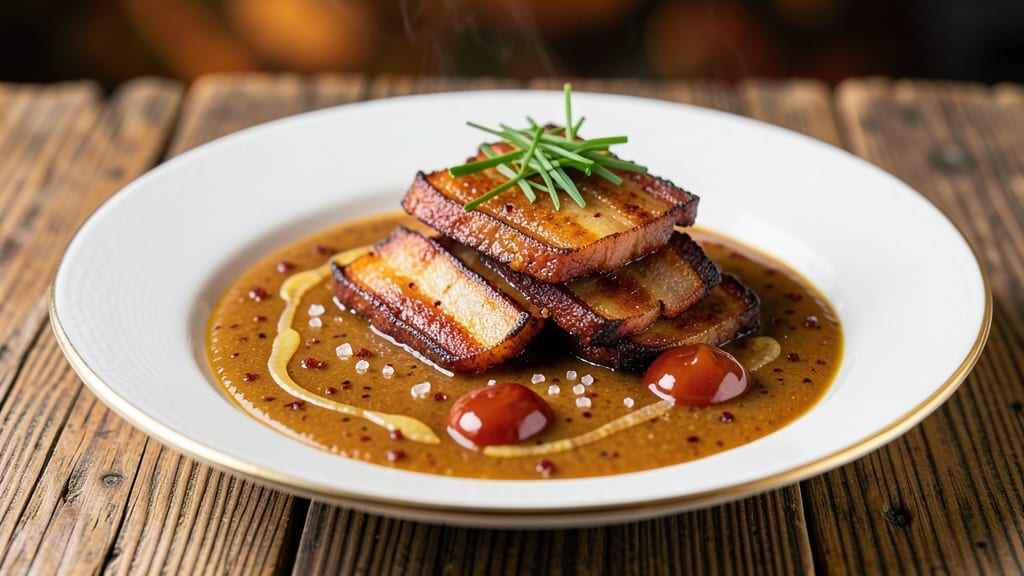
This bacon mustard sauce recipe transforms simple ingredients into a rich, tangy-sweet glaze with crispy bacon bits that add depth and texture. The perfect balance of sharp Dijon mustard and creamy butter creates a sauce that elevates everything from grilled chicken to roasted vegetables.
I developed this recipe after years of experimenting with homemade dipping sauces—it’s become a staple in my kitchen for its versatility and bold flavor profile.
The secret lies in rendering the bacon until it’s perfectly crisp, then blending it with mustard, butter, and a touch of cream for a velvety finish. No fancy techniques are needed—just patience and a few basic pantry staples.
This sauce is foolproof, delivering a harmonious blend of smoky, tangy, and slightly sweet notes that cut through rich meats or complement crisp vegetables.
What makes this sauce truly special is its adaptability—drizzle it over burgers, use it as a dip for fries, or toss it with roasted potatoes for extra flavor.
The texture is smooth yet substantial, with those crispy bacon bits adding a satisfying crunch in every bite. Once you try it, you’ll never reach for store-bought again.
Store leftovers in an airtight container in the refrigerator for up to 5 days, or freeze for longer shelf life. Reheat gently on the stove or in the microwave until warm, stirring occasionally to maintain that perfect consistency.
This sauce is the kind of game-changer that turns ordinary meals into something extraordinary.
Ingredients for bacon mustard sauce
Eight simple ingredients create a sauce that’s tangy, sweet, and packed with crispy bacon crunch.
| Ingredient | Amount | Notes |
|---|---|---|
| Thick-Cut Bacon 🥓 | 6 oz | Thick-cut for crispy edges |
| Dijon Mustard 🌶️ | ¼ cup | Sharp, high-quality preferred |
| Unsalted Butter 🧈 | ½ cup | Cold for blending texture |
| Heavy Cream 🥛 | ¼ cup | Full-fat for richness |
| Granulated Sugar 🍚 | 1 tbsp | Balances tangy mustard |
| Apple Cider Vinegar 🍎 | 1 tbsp | Brightens flavor profile |
| Garlic Cloves 🧄 | 2 cloves | Minced for subtle aroma |
| Salt 🧂 | ½ tsp | Kosher or sea salt |
| Black Pepper 🌶️ | ¼ tsp | Freshly ground preferred |
| Fresh Chives 🌿 | 2 tbsp | Chopped for garnish |
The bacon is non-negotiable—thick-cut gives you those crispy edges that make this sauce sing. Costco or Trader Joe's carry great options, but any thick-cut bacon works. Render it until it’s deep golden and crispy—don’t rush this part. The Dijon mustard? Maille is my go-to, but any sharp Dijon will do. Skip the yellow mustard here—it’s too mild and won’t cut through the richness. For the butter, grab unsalted so you control the seasoning.
No thick-cut bacon? Regular bacon, cooked extra crispy works, but it’ll be less dramatic. Running short on butter? Olive oil or coconut oil can substitute, but the flavor will shift slightly. Heavy cream too expensive? Half-and-half or coconut cream adds richness without breaking the bank. The sugar and vinegar are about balance—adjust to taste, but don’t skip them. They’re what makes this sauce sing. Fresh chives add a bright finish, but dried chives or parsley will work in a pinch.
This sauce keeps beautifully—5 days in the fridge sealed in a jar, or 3 months frozen. Reheat gently on the stove over low heat, stirring often, until smooth. The texture will thicken as it cools, so add a splash of cream if it gets too stiff. I like to make a double batch—one for immediate use, one to freeze for lazy weeknights. The bacon bits stay crispy even after reheating if you store them separately and add them back in at the end.
Why You'll Love This Recipe
- Five-Ingredient Magic: This sauce comes together with just five things—no fancy pantry trips or hunting for obscure spices. Honestly, I keep a jar of Dijon and heavy cream on hand just for this, and it’s never let me down.
- Sweet-Savory Crunch: That crispy bacon fat mixed with Dijon and a touch of sugar? It’s the kind of balance that makes you pause mid-bite. The butter ties it all into something rich but not heavy—like a hug for your taste buds.
- Weeknight Wonder: Slather it on grilled chicken for dinner, toss it with roasted potatoes for lunch, or drizzle it over pancakes when you’re in a rush. I’ve used it for everything from sandwiches to baked fish, and it’s always the star.
- Leftovers That Shine: This sauce actually improves the next day—thickens just enough to coat better, and the flavors meld into something even deeper. Store it in the fridge for up to five days, and trust me, you’ll find reasons to use it all week.
Step-by-step instructions for bacon mustard sauce
Here's how to make this rich, tangy-sweet sauce with perfectly crispy bacon bits.
Cook the Thick-Cut Bacon to Crispy Perfection
Cut the 6 oz thick-cut bacon into ½-inch pieces—this ensures even cooking and maximum crispiness. Place them in a cold, heavy skillet over medium heat (no oil needed). Let the bacon cook undisturbed for 5-6 minutes until the edges turn deep golden brown and the fat starts to render.
Here's the thing—don't rush this step. You want those edges to get crispy and crackly, not just soft. Once the bacon is 80% cooked (about 8-10 minutes total), remove it from the pan with a slotted spoon and set it aside on a paper towel-lined plate. Leave the rendered fat in the skillet—it's pure flavor gold.
Build the Mustard-Sugar Base
Reduce the heat to medium-low and pour in the 0.25 cup Dijon mustard. Stir it into the bacon fat, scraping up any browned bits from the bottom of the pan—this adds depth to the sauce. Let it simmer for 1-2 minutes until the mustard starts to darken slightly and lose its raw taste.
Add the 1 tbsp granulated sugar and 1 tbsp apple cider vinegar, stirring constantly. The sugar will help balance the tanginess of the mustard while the vinegar brightens the whole sauce. Let this mixture cook for another 2 minutes until it thickens slightly and becomes fragrant. You're building the foundation for that perfect tangy-sweet balance.
Add Butter and Cream for Richness
Cut the 0.5 cup unsalted butter into small cubes and add them to the pan one at a time, stirring until each piece melts completely. This step adds luxurious richness to the sauce. Once all the butter is incorporated, pour in the 0.25 cup heavy cream and stir gently to combine.
Let the sauce simmer for 3-4 minutes until it thickens to a smooth, glossy consistency. If it starts to look too thin, reduce the heat slightly and let it cook longer—you want it to coat the back of a spoon. This is where the sauce comes together, so don't walk away. Taste it now and adjust the seasoning with 0.5 tsp salt and 0.25 tsp black pepper as needed.
Finish with Garlic and Chives
While the sauce simmers, mince the 2 cloves garlic into a fine paste using the flat side of your knife. Add it to the pan and stir for 30 seconds until fragrant—don't let it brown or it'll turn bitter. Chop the 2 tbsp fresh chives into small pieces and set them aside for garnish.
Return the crispy bacon to the pan and stir everything together for 1-2 minutes until the bacon is warmed through and coated in the sauce. The chives can wait until serving—they add a fresh pop of color and brightness. Taste again and adjust seasoning if needed. This sauce is best served immediately, so don't let it sit too long or it might thicken further.
Pro Tips For Making Bacon Mustard Sauce
- COOK BACON LOW AND SLOW: Thick-cut bacon needs patience—cook it at 275°F (135°C) until the fat renders slowly and the edges crisp naturally. Rushing it on high heat turns the sauce bitter from burnt fat, and you’ll regret it when the mustard flavor gets overpowered.
- WHISK CREAM AND SUGAR FIRST: Warm the heavy cream and sugar together for 30 seconds before adding the mustard and butter. This dissolves the sugar completely and tempers the cream so it doesn’t curdle when you introduce the cold butter later—trust me, you’ll notice the difference in texture.
- STRAIN THE BACON FAT: After cooking, pour the bacon fat through a fine-mesh sieve into the saucepan. This removes crispy bits that’ll make your sauce grainy, and you’ll end up with a silky finish. (Yes, it’s extra work, but your sauce will thank you.)
- USE WHOLE GRAIN DIJON: Whole-grain Dijon mustard adds depth without overpowering the sauce, while smooth Dijon can taste flat. A 1:1 swap with whole-grain works best—just mash any lumps with a fork first so it blends evenly. (I learned this after making sauce taste "off" for years.)
Dietary considerations for bacon mustard sauce
Gluten-Free Adaptations
This sauce is naturally gluten-free, thanks to its simple ingredients—just double-check your Dijon mustard label. Brands like Maille and Annie's are typically gluten-free, but always verify. The apple cider vinegar and heavy cream are also safe, assuming no cross-contamination in your kitchen.
For extra security, use certified gluten-free mustard like Bragg Liquid Aminos (if substituting for flavor). 🌾
Dairy-Free Options
Skip the butter and heavy cream, then replace them with olive oil or coconut cream for richness. Use 1/4 cup olive oil (plus 1 tbsp coconut cream for thickness) and reduce the sugar slightly to 1/2 tbsp—the oil adds a mellow depth.
For a tangier finish, add 1 tsp Dijon mustard to compensate for the missing cream. Store in an airtight container for up to 5 days in the fridge.
Vegan Substitutions
Swap the butter for vegan butter (like Miyoko’s) and use full-fat coconut cream instead of heavy cream. For bacon, try smoked tempeh or coconut bacon (thinly sliced coconut flakes baked until crispy).
Add 1/2 tsp liquid smoke to mimic the smoky flavor. The sauce will still be rich and tangy—just plant-based! 🌱
Lower-Calorie Tweaks
Reduce the butter to 1/4 cup and use light cream or Greek yogurt (thinned with 1 tbsp water) for creaminess. Cut the sugar to 1 tsp and add 1/2 tsp maple syrup for sweetness.
The result is a lighter sauce with ~150 calories per 2-tbsp serving (vs. ~220 calories in the original). Garnish with extra chives to add freshness without calories.
Allergy-Friendly Notes
For nut allergies, ensure your butter and cream are nut-free (some brands process in shared facilities). If you’re avoiding mustard, replace it with 1 tbsp soy sauce (for umami) + 1 tbsp maple syrup (for balance).
Always check labels—apple cider vinegar and garlic are typically safe, but cross-contamination is possible. Store substitutions separately to avoid mix-ups.
Nutrition facts
Frequently asked questions
Can I make this sauce without bacon?
You can try omitting bacon, but the sauce will lose its signature smoky depth and texture. For a substitute, add 1/2 teaspoon liquid smoke and 1/4 cup crispy fried onions to mimic the bacon's flavor and crunch. If you're avoiding meat entirely, smoked paprika (1/2 teaspoon) can help replicate the smokiness.
How do I fix a sauce that's too thick or too thin?
If your sauce is too thick, thin it with 1 teaspoon warm water or cream at a time, stirring until smooth. For a sauce that's too thin, simmer it uncovered for 2-3 extra minutes to reduce the liquid. As a last resort, whisk in 1/2 teaspoon cornstarch mixed with 1 teaspoon cold water to thicken it gently.
What's the best way to store and reheat leftovers?
Store leftovers in an airtight container in the fridge for up to 5 days. To reheat, warm gently on the stove over low heat, stirring often, until smooth. For microwave reheating, use 30-second intervals on medium power, stirring between each. The texture may thicken slightly after refrigeration—thin with a splash of cream if needed.
Can I use yellow mustard instead of Dijon?
Yellow mustard works, but it lacks the sharp, complex flavor of Dijon. If you must use it, reduce to 2 tablespoons and add 1/2 teaspoon lemon juice to brighten the taste. For best results, stick with Dijon—it's the secret to that perfect tangy-sweet balance in this sauce.
What are the best dishes to serve with this sauce?
This versatile sauce pairs perfectly with grilled chicken or pork, burgers or sliders, roasted potatoes, or as a dip for fries or pretzels. It also works as a glaze for baked salmon or drizzled over mac and cheese. The crispy bacon bits add texture to any dish, making it a crowd-pleaser for both savory and slightly sweet applications.