
Sauces & Condiments
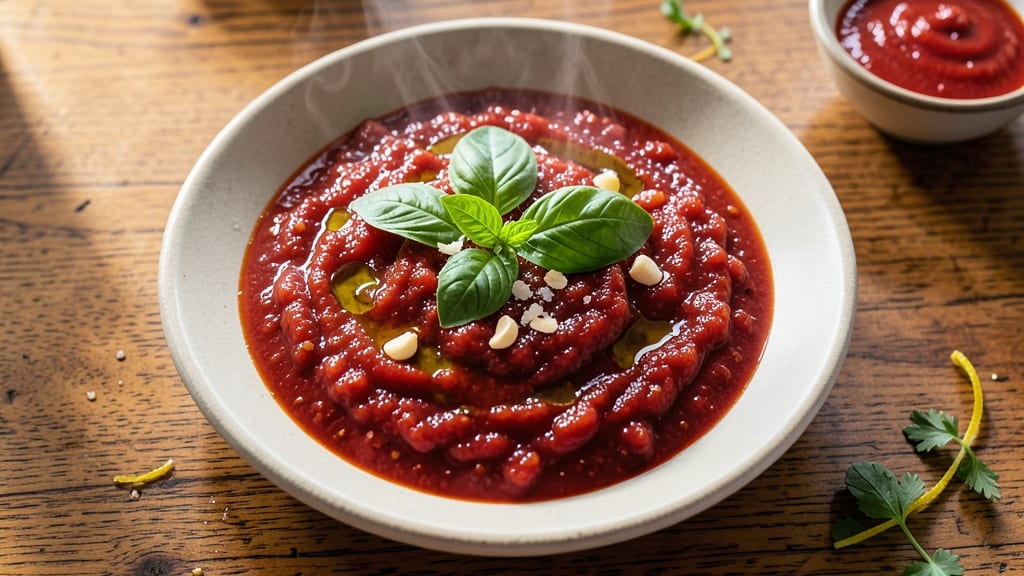
This authentic New York pizza sauce recipe delivers the perfect balance of sweetness, acidity, and umami that makes every slice unforgettable. The secret lies in crushed tomatoes, garlic, and a touch of sugar—no heavy spices or sweetness that overpowers the pizza. I've perfected this over years of testing, and it's the sauce that keeps people coming back for seconds.
What sets this sauce apart is its simplicity and precision. No blenders or fancy techniques—just a pot, a wooden spoon, and a 30-minute simmer to develop deep, rich flavors. The key ingredients are crushed tomatoes (for texture), garlic (for depth), and a pinch of sugar to balance the acidity.
This isn't just sauce; it's the foundation of a perfect slice.
By the time you're done, you'll have a smooth, slightly glossy sauce with just the right amount of body—thick enough to cling to cheese but thin enough to let the flavors shine through.
The aroma alone will transport you to a bustling NYC pizzeria, and the taste? Pure, unadulterated New York pizza magic.
Use it on homemade pizza, as a marinara for pasta, or even as a dip for garlic knots. The possibilities are endless, but the sauce itself is foolproof—once you master this, you'll never go back to store-bought again.
Ingredients for authentic ny pizza sauce
Crushed tomatoes, garlic, and basil—just nine ingredients for sauce that tastes like New York.
| Ingredient | Amount | Notes |
|---|---|---|
| Crushed Tomatoes 🍅 | 28 oz | San Marzano preferred for sweetness |
| Garlic Cloves 🧄 | 4 cloves | Freshly minced for depth |
| Extra-Virgin Olive Oil 🫒 | 2 tbsp | For richness and gloss |
| Fresh Basil Leaves 🌿 | ¼ cup | Packed, stems removed |
| Granulated Sugar 🍚 | 1 tsp | Balances acidity |
| Salt 🧂 | 1 tsp | Diamond Crystal preferred |
| Black Pepper 🌶️ | ¼ tsp | Freshly cracked |
| Dried Oregano 🍃 | ½ tsp | Italian blend preferred |
| Red Wine Vinegar 🍷 | 1 tsp | Brightens flavor |
The tomatoes make or break this sauce. San Marzano cans are worth the splurge—they're sweeter and smoother than regular crushed tomatoes. Grab a few at Whole Foods or any Italian market, but the regular grocery store brand works too if you're pinching pennies. Fresh garlic is non-negotiable here (the pre-minced stuff is sad), but if you're really in a bind, garlic powder at half the amount will do. The basil? I always grab extra—I use half in the sauce and tear the rest over the pizza right before baking. That fresh aroma is what sells it.
No red wine vinegar? White vinegar or lemon juice works in a pinch, but you'll lose that subtle depth. The sugar is key—don't skip it, even if you're not sweet-toothed. It rounds out the acidity from the tomatoes and vinegar. Want more umami? Add a teaspoon of soy sauce or Worcestershire (check for anchovies if vegan). The oregano should be Italian blend—regular Mexican oregano is way too strong. And if you're using a blender, pulse the sauce just until smooth; you want a little texture to cling to the cheese.
This sauce tastes even better the next day as the flavors meld. Keeps in the fridge for 5-7 days sealed in a jar, or freeze portions for up to 3 months. I always double the batch—one for pizza night, one for pasta. The leftovers make killer garlic knots too. Just reheat gently on the stove with a splash of water if it thickens too much. Store-bought sauce can't compete with this freshness.
Why You'll Love This Recipe
- Five-Ingredient Magic: I swear by this combo—crushed tomatoes, garlic, olive oil, basil, and a pinch of sugar. That’s it. No fancy gadgets, no stress, just a simmering pot while you chop veggies or fold laundry.
- Garlic-Basil Bomb: The moment those fresh basil leaves hit the warm sauce? Chef’s kiss. The garlic mellows into something sweet and savory, while the basil brightens it up like a New York summer afternoon. (Yes, even on a Tuesday night.)
- Pizza Night Every Night: This sauce doesn’t just work for pizza—it’s my go-to for bruschetta, pasta, or even a quick marinara. Freeze half for when you’re too tired to cook, and thaw it in seconds.
- Budget-Friendly Staple: A can of crushed tomatoes and a bulb of garlic last me weeks. That sugar pinch balances the acidity without breaking the bank, and the olive oil makes it feel luxurious. My wallet and taste buds win.
Step-by-step instructions for authentic New York pizza sauce
Here's how to craft the perfect sauce that delivers classic NY flavor in every bite.
Sauté the Garlic in Olive Oil
Heat the 2 tablespoons extra-virgin olive oil in a medium saucepan over medium-low heat. Add the 4 cloves minced garlic cloves and cook for 2-3 minutes, stirring constantly. The garlic should become fragrant and just begin to turn golden—this ensures you capture its sweetness without burning it.
Watch the color closely—garlic burns quickly and turns bitter. If it starts to darken too much, remove the pan from heat immediately. This step forms the aromatic base that will carry through your entire sauce. Once the garlic is golden, you're ready to build the sauce.
Add Tomatoes and Simmer
Pour in the 28 ounces crushed tomatoes and stir to combine with the garlic. Bring the mixture to a gentle boil over medium heat, then immediately reduce to low heat. Let it simmer uncovered for 15 minutes, stirring occasionally.
This initial simmer breaks down the tomatoes' texture, creating a smoother consistency. You'll see the sauce thicken slightly and develop a rich, deep color. The low heat prevents the sauce from becoming too acidic or developing a skin on top.
Season with Sugar, Salt, and Vinegar
Add the 1 teaspoon granulated sugar, 1 teaspoon salt, 1 teaspoon red wine vinegar, and 0.5 teaspoon dried oregano to the simmering tomatoes. Stir well to distribute the seasonings evenly. Let the sauce continue simmering for another 10 minutes at low heat.
The sugar balances the natural acidity of the tomatoes, while the vinegar adds brightness that cuts through the richness. The oregano provides that classic Italian depth. Taste the sauce now—it should be well-seasoned but not overly sweet or salty. Adjust with a pinch more salt if needed, but remember you'll be adding more seasoning later.
Incorporate the Basil and Pepper
Remove the saucepan from heat and stir in the 0.25 cup packed fresh basil leaves and 0.25 teaspoon black pepper. Let the mixture sit off the heat for 5 minutes—this allows the basil to infuse its fresh flavor without losing its vibrant color.
Here's the thing—adding basil at the end preserves its bright, fresh quality. If you added it earlier, it would turn mushy and lose its aroma. The pepper adds a subtle heat that balances the sweetness. Let the sauce cool slightly before tasting again—you'll notice the flavors meld even more beautifully.
Blend for Smooth Perfection
Transfer the sauce to a blender or food processor and blend until completely smooth. For an ultra-smooth texture, strain it through a fine-mesh sieve if you prefer. Return the sauce to the saucepan and simmer gently for another 5 minutes to kill any bacteria and develop the flavors further.
This blending step creates that signature NY pizza sauce texture—smooth enough to spread evenly but still with enough body to cling to every slice. The final simmer ensures your sauce is safe to use immediately or store for later. Let it cool to room temperature before using or refrigerating.
Pro Tips For Making Authentic Ny Pizza Sauce
- Simmer Low and Slow: I learned this the hard way—boiling your sauce turns crushed tomatoes into mush. Keep the heat at a gentle simmer (barely bubbles) for 20-25 minutes. You want the flavors to meld, not the texture to break down.
- Use Raw Garlic: Cooked garlic turns bitter, and that’s the last thing you want in NY sauce. Mince 4-5 cloves fresh, toss them in cold, then add them right before the end. Let the residual heat infuse the sauce without browning.
- Skip the Sugar Rush: That "just a pinch" of sugar can turn your sauce cloyingly sweet. Start with 1 teaspoon, taste, then add another only if needed. The crushed tomatoes already have natural sweetness—you’re just balancing acidity, not sweetening.
- Strain for Smoothness: NY sauce should coat the back of a spoon, not look like tomato soup. After simmering, strain through a fine-mesh sieve lined with cheesecloth. It’s extra work, but the result is that silky, restaurant-quality texture you crave.
Make-ahead tips for leftovers
Batch Prep Strategy
I always make double the recipe—it’s worth the extra effort. The sauce tastes even better the next day as flavors meld, so having extra means you’re always ready for pizza night. Store in glass mason jars with airtight lids in the fridge for up to 5-7 days.
For longer storage, freeze portions in quart-sized freezer bags—they thaw quickly and maintain quality for 3 months. 💫
Freezing Like a Pro
Divide the sauce into 1-cup portions before freezing to make reheating easier. Leave ½-inch headspace in each container to prevent expansion cracks. Label with the date—trust me, you’ll forget!
When reheating frozen sauce, thaw overnight in the fridge, then warm gently on the stove with a splash of water to restore consistency. Never microwave directly from frozen—it ruins the texture.
Sauce-Pasta Hack
Use leftover sauce for more than just pizza—it’s perfect for tossing with linguine or spaghetti. I often add a splash of pasta water to thin it slightly if it’s too thick after reheating.
For extra richness, stir in 1 tablespoon butter or grated Parmesan at the end. The same sauce works for dipping garlic knots or topping baked ziti—just adjust seasoning if needed.
Day-Ahead Prep
Make the sauce the night before your pizza party—it gives you one less thing to worry about. Store it in the fridge until ready to use, then bring to room temperature before spreading on dough.
The cold sauce can make your pizza crust soggy, so always let it sit for 30 minutes before baking. I keep a jar in my fridge at all times—you never know when pizza cravings will hit! ✨
Portion Control Tips
A standard 12-inch pizza uses about ½ cup sauce, while a 16-inch needs closer to ¾ cup. For personal-sized pies, ⅓ cup per 10-inch crust works perfectly. I mark my jars with measurement lines so I can eyeball portions quickly.
This prevents over-saucing (a common mistake) and ensures every slice has just the right amount of flavor without being soggy.
Reheating Perfection
If your sauce thickens after refrigeration, thin it with 1-2 tablespoons water or broth while reheating. Warm over low heat for 5-7 minutes, stirring occasionally, until it reaches 165°F.
Avoid high heat—it can make the sauce separate or develop a skin. For microwave reheating, use 50% power for 1-minute intervals until warmed through. Always stir well before using. 🔥
Nutrition facts
Frequently asked questions
Why does authentic NY pizza sauce use crushed tomatoes instead of sauce?
Crushed tomatoes create the signature texture—small chunks that cling beautifully to cheese without overwhelming the pizza. The slightly thicker consistency also helps maintain the sauce's structure during baking. Plus, it gives that classic NY look with visible tomato pieces while still blending smoothly.
Can I substitute red wine vinegar with something else?
Yes! Use white vinegar or lemon juice in a 1:1 ratio if needed, though you'll lose some depth. For extra brightness, try balsamic vinegar (½ teaspoon)—it adds complexity but use sparingly. The key is balancing acidity, so adjust to taste after simmering.
How do I fix sauce that's too thick or too thin?
For thick sauce, thin with 1 tablespoon water or broth while warm. Too thin? Simmer uncovered for 5-10 extra minutes—the water will evaporate naturally. Never add flour or cornstarch—it ruins the authentic flavor. Stir frequently to prevent skin formation.
Why does my sauce taste too acidic or bland?
Acidic? Add ½ teaspoon sugar or ¼ teaspoon baking soda—both neutralize acidity. Bland? Boost with extra garlic powder, a pinch of salt, or 1 teaspoon soy sauce (check for anchovies if vegan). Taste as you go—NY sauce should be bright but balanced, never one-dimensional.
Can I make this sauce in a slow cooker?
Combine all ingredients in the slow cooker and cook on low for 3-4 hours—stir occasionally to prevent sticking. The low-and-slow method enhances flavors beautifully. For faster results, use high for 1.5 hours, but check frequently to avoid overcooking.