
Sauces & Condiments
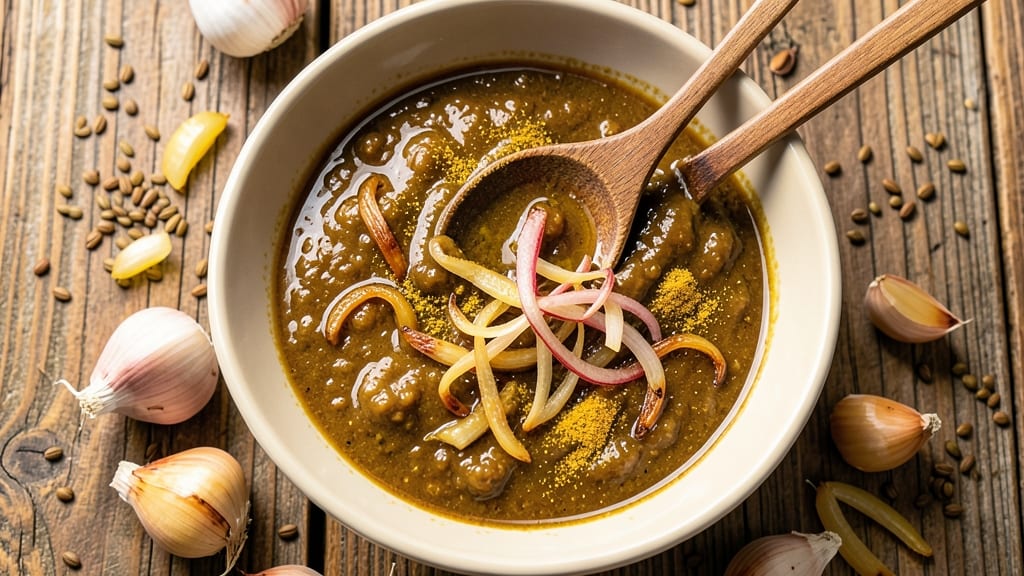
This authentic curry sauce recipe transforms simple ingredients into a fragrant, complex base that elevates any dish. The secret lies in properly blooming whole spices—cumin, coriander, and turmeric—before building layers of flavor with ginger, garlic, and onions.
I've perfected this technique over years of testing, ensuring the sauce delivers that signature balance of heat, sweetness, and umami that defines great curry.
The foundation begins with a dry toast of spices, which releases their essential oils and deepens their flavor. Coconut milk adds richness while tomato purée provides acidity to cut through the fat.
Simmering low and slow allows the spices to meld, creating a sauce that's vibrant, aromatic, and packed with depth. Unlike many shortcut recipes, this method builds flavor authentically, without relying on paste or powdered shortcuts.
What makes this sauce truly special is its versatility—it works equally well with chicken, tofu, or vegetables, adapting to any protein or base you choose. The texture is silky yet balanced, with just enough body to coat ingredients without overwhelming them.
When properly stored, it keeps for up to five days in the refrigerator, making it perfect for meal prep or batch cooking.
The result is a sauce that's restaurant-quality at home, with a complexity that comes from technique, not just ingredients. Whether you're serving it over rice, pairing it with naan, or using it as a marinade, this curry sauce delivers the rich, spiced depth that makes curry dishes unforgettable.
Here's how to make it perfectly every time.
Ingredients for authentic curry sauce
Eleven ingredients, rich technique—this sauce delivers restaurant-quality depth without shortcuts.
| Ingredient | Amount | Notes |
|---|---|---|
| Ground Cumin Seeds 🌿 | 2 tbsp | Toasted for deeper flavor |
| Ground Coriander Seeds 🌿 | 1 ½ tbsp | Toasted for aromatic notes |
| Turmeric Powder 🧂 | 1 tbsp | Bright yellow color indicator |
| Ginger Root 🧅 | ½ cup | Freshly grated, peeled |
| Garlic Cloves 🧄 | 6 cloves | Peeled, minced for even distribution |
| Yellow Onion 🧅 | 1 ½ cups | Finely diced, medium size |
| Tomato Purée 🍅 | 1 cup | San Marzano preferred |
| Coconut Milk 🥥 | 1 can | Full-fat, 13.5 oz can |
| Coconut Oil 🫒 | 2 tbsp | For spice toasting |
| Salt 🧂 | 1 ½ tsp | Diamond Crystal kosher |
| Black Peppercorns 🌶️ | ½ tsp | Freshly cracked |
| Cayenne Pepper 🔥 | ½ tsp | Adjust for heat preference |
The spices are non-negotiable here. Whole cumin and coriander seeds need toasting in coconut oil to release their oils—don't skip this step. Penzeys Spices carries excellent whole seeds, but any bulk bin will work. For turmeric, look for bright yellow powder (no grayish tones). Ginger and garlic should be fresh—frozen works in a pinch, but nothing beats the real thing. The onion? Yellow or white both work, but yellow has slightly sweeter notes. If you're using canned tomato purée, San Marzano is the gold standard—sweeter and less acidic than regular brands.
No whole spices? Ground cumin and coriander at half the amount will work, but you'll lose that toasted depth. Short on coconut milk? Light coconut milk plus 1 tbsp cream mimics the richness. The tomato purée can be substituted with 1 cup crushed tomatoes, but you'll need to simmer longer to reduce. For heat control, reduce cayenne to 1/4 tsp or swap for red pepper flakes. The sauce thickens as it cools, so if it's too thick after simmering, add 1-2 tbsp water or broth. And yes, you can make this without coconut milk—just use 1 cup vegetable stock plus 1 tbsp cornstarch slurry for body.
This sauce keeps beautifully—5 days in the fridge sealed in an airtight container. For longer storage, freeze in ice cube trays for single-use portions (thaw in microwave). The flavor actually improves after a day as the spices meld further. I double the batch and freeze half—perfect for quick weeknight dinners. If you're prepping for a crowd, use a stockpot and scale up. The sauce reheats well, though you may need to add a splash of water or coconut milk if it's too thick after freezing.
Why You'll Love This Recipe
- No-Spoon Measuring Needed: I keep cumin and coriander in my pantry—just crack open the jar and eyeball it. That toasty warmth from the seeds builds as they bloom in the oil, and honestly? No scale required for this to work.
- Layered Heat Magic: The turmeric gives that golden glow first, then the ginger and garlic hit like a warm hug—sharp, bright, and lingering. Between us, that crispy garlic edge at the bottom? Chef’s kiss, and it’s all from five ingredients you’re already using.
- Weeknight to Potluck: This sauce turns chicken into a cozy Tuesday dinner or becomes the star of your neighbor’s holiday spread. Freeze half for when you’re too tired to cook, and thaw it straight into whatever you’re craving.
- Pantry Goldmine: I’ve made this for years, and the spices last forever. A little goes a long way—dollar stretches to feed four, and the leftovers? Even better the next day when the flavors meld. (Yes, even on a Tuesday night.)
Step-by-step instructions for authentic curry sauce
This method delivers restaurant-quality depth and complexity using traditional spice techniques.
Toast the Spices for Maximum Flavor
Heat the 2 tablespoons coconut oil in a heavy-bottomed saucepan over medium-low heat. Add the 2 tablespoons ground cumin seeds and 1.5 tablespoons ground coriander seeds, stirring constantly for 2-3 minutes until they release their aroma and turn slightly darker in color. This toasting step is crucial—it deepens the spice flavors and removes any raw, bitter notes.
Next, add the 1 tablespoon turmeric powder and stir for 30 seconds until evenly distributed. The mixture should smell earthy and rich, with a warm, slightly sweet aroma. Remove the pan from heat immediately after toasting the turmeric—this prevents the delicate spices from burning. Keep the toasted spice mixture in the pan for the next steps.
Sauté Aromatics Until Fragrant
Return the pan to medium heat and add the 1.5 cups finely diced yellow onion. Cook for 5-6 minutes, stirring occasionally, until the onions soften and begin to caramelize at the edges. This process develops natural sweetness that forms the base of the sauce.
Add the ½ cup freshly grated ginger root and 6 cloves minced garlic cloves, cooking for an additional 2-3 minutes until the ginger becomes translucent and the garlic turns golden. You'll notice the kitchen fill with a warm, spicy aroma—this is your signal that the aromatics are ready. Be careful not to let the garlic burn, as it can quickly turn bitter.
Build the Tomato Base
Stir in the 1 cup tomato purée and cook for 5-7 minutes over medium heat, stirring frequently, until the mixture thickens slightly and the raw tomato flavor mellows. The sauce should reduce by about one-third, developing a deeper, more concentrated flavor. This step removes excess acidity and creates a smooth foundation for the coconut milk.
Add the 1.5 teaspoons salt, ½ teaspoon freshly cracked black peppercorns, and ½ teaspoon cayenne pepper, stirring well to combine. Taste the mixture—it should be balanced with warmth from the spices, a touch of heat from the cayenne, and a bright acidity from the tomatoes. Adjust the cayenne if you prefer more or less heat.
Incorporate Coconut Milk for Creaminess
Pour in the 1 can full-fat coconut milk, stirring gently to avoid creating lumps. Return the heat to medium-low and simmer for 10-12 minutes, stirring occasionally, until the sauce thickens to a velvety consistency. You'll see the sauce coat the back of a spoon and hold its shape when drizzled.
Here's the thing—don't rush this step. The coconut milk needs time to fully incorporate and develop its creamy texture. If the sauce becomes too thick, add 1-2 tablespoons water to reach your desired consistency. The final sauce should be rich, aromatic, and perfectly balanced between the spice intensity and the coconut's natural sweetness.
Finish and Adjust for Perfection
Remove the sauce from heat and let it sit for 5 minutes to allow the flavors to meld completely. Taste again and adjust the seasoning if needed—this is your final opportunity to balance the sauce. The authentic curry sauce should have a vibrant yellow color from the turmeric, a deep spice aroma, and a harmonious blend of sweet, spicy, and tangy flavors.
For the best results, use the sauce immediately over rice, grilled meats, or roasted vegetables. If storing, refrigerate in an airtight container for up to 5 days or freeze for 3 months. When reheating, warm gently over low heat to preserve the delicate flavors and prevent curdling. This sauce is the heart of any authentic curry dish—rich, complex, and full of character.
Pro Tips For Making Authentic Curry Sauce
- Bloom the Spices Low: I learned this the hard way—dumping ground cumin and coriander straight into hot oil makes them burn before they sing. Instead, toast them over medium-low heat for 30 seconds until fragrant, then immediately add a splash of water to "bloom" them properly. This releases their full flavor without bitterness.
- Grind Your Own Spices: Pre-ground cumin and coriander lose potency fast, and that dulls your sauce. If you can, toast whole seeds in a dry pan for 2 minutes until aromatic, then grind them fresh in a spice grinder—just before cooking. The difference in depth is night and day, especially in turmeric-heavy curries where you want that bright, earthy punch.
- Don’t Rush the Ginger-Garlic Base: Skipping the 5-minute sweat of minced ginger and garlic in oil is the fastest way to make your sauce taste flat. Cook them until the raw smell disappears and they’re just starting to turn golden—this softens their sharpness and builds a rich foundation. (Yes, even if you’re impatient like me.)
- Save Time with Frozen Prep: Peel and freeze whole ginger root and garlic cloves in a single-layer tray. When you’re ready to cook, toss them directly into the pan—no peeling needed. They’ll thaw and soften as you cook, and you’ll skip the messy prep. (Your future self will thank you for this one.)
Pro cooking tips for authentic curry sauce
Spice Toasting Secrets
Never skip toasting your whole spices—this is where the magic happens! Heat the 2 tablespoons coconut oil over medium-low heat and add the 2 tbsp ground cumin seeds and 1.5 tbsp ground coriander seeds. Stir constantly for 2-3 minutes until they darken slightly and release their aroma.
This step removes bitterness and deepens their flavor. I use a heavy-bottomed saucepan to prevent scorching—Lodge cast iron is my go-to for even heat distribution. 🌿
Low-and-Slow Simmering
After adding the 1 can coconut milk, reduce heat to medium-low and simmer for 10-12 minutes. This slow cook allows the spices to fully infuse without burning. Stir occasionally to prevent skin formation.
If the sauce thickens too much, add 1-2 tbsp water to maintain a velvety consistency. I’ve found that stirring with a silicone spatula helps distribute heat evenly and prevents sticking. 🔥
Tomato Purée Tricks
Use San Marzano tomato purée for its natural sweetness and low acidity—it’s a game-changer. Cook it for 5-7 minutes to reduce excess liquid and mellow the raw tomato flavor.
If using canned tomatoes, strain out seeds for a smoother texture. I like to taste the purée before adding spices to check for balance—this helps adjust seasoning early. 🍅
Flavor Balancing
Taste your sauce after simmering and adjust in layers. Need more depth? Add a pinch of salt or a splash of coconut milk. Too spicy? Stir in 1 tsp honey or 1 tbsp plain yogurt to mellow the heat.
I keep a small bowl of unsalted yogurt nearby for quick adjustments—it’s my secret weapon for balancing heat. 💡
Equipment Must-Haves
A heavy-bottomed saucepan (like All-Clad) prevents scorching, while a fine-mesh strainer helps remove any unwanted bits. For toasting spices, I recommend a small, wide saucepan to maximize surface area. If you don’t have one, a nonstick skillet works in a pinch—just keep an eye on it. 🍳
Storage Hacks
Let the sauce cool completely before storing to prevent condensation. Transfer to an airtight container and refrigerate for up to 5 days. For longer storage, freeze in ice cube trays—thaw individual portions as needed.
I double the batch and freeze half for quick weeknight meals. When reheating, warm over low heat to avoid curdling. ❄️
Nutrition facts
Frequently asked questions
Can I make this curry sauce without coconut milk?
Yes! For a dairy-free alternative, replace the coconut milk with 1 cup vegetable stock and add 1 tablespoon cornstarch slurry to thicken. For a richer texture, use ½ cup Greek yogurt or cashew cream instead. The sauce will have a different mouthfeel but still deliver bold spice flavors.
How do I adjust the heat level in this sauce?
Start with the ½ teaspoon cayenne pepper as written, then adjust to taste. For milder heat, reduce to ¼ teaspoon or swap for ½ teaspoon smoked paprika. If you prefer extra kick, add ½ teaspoon chili flakes or a pinch of freshly chopped chili (like jalapeño or serrano). Always taste before serving!
Why does my sauce look too thin after simmering?
Sauce thickness changes as it cools—it may look thin while hot but thicken as it rests. If it's too thin after simmering, simmer uncovered for 5-10 more minutes to reduce. For immediate thickening, mix 1 tablespoon cornstarch with 2 tablespoons water, stir into the sauce, and simmer for 2 minutes until it reaches your desired consistency.
Can I use this sauce in vegetarian dishes?
This sauce pairs beautifully with tofu, chickpeas, or roasted vegetables. For extra richness, stir in 2 tablespoons peanut butter or 1 tablespoon nutritional yeast at the end. The deep spice flavors complement plant-based proteins perfectly—just ensure your protein is cooked through before adding the sauce.
What’s the best way to reheat leftover sauce?
Gently reheat over low heat on the stovetop, stirring frequently to prevent separation. Avoid microwaving, as it can cause curdling. If the sauce thickens too much, add 1-2 tablespoons water or coconut milk to restore its velvety texture. For frozen portions, thaw overnight in the fridge before reheating.