
Sauces & Condiments
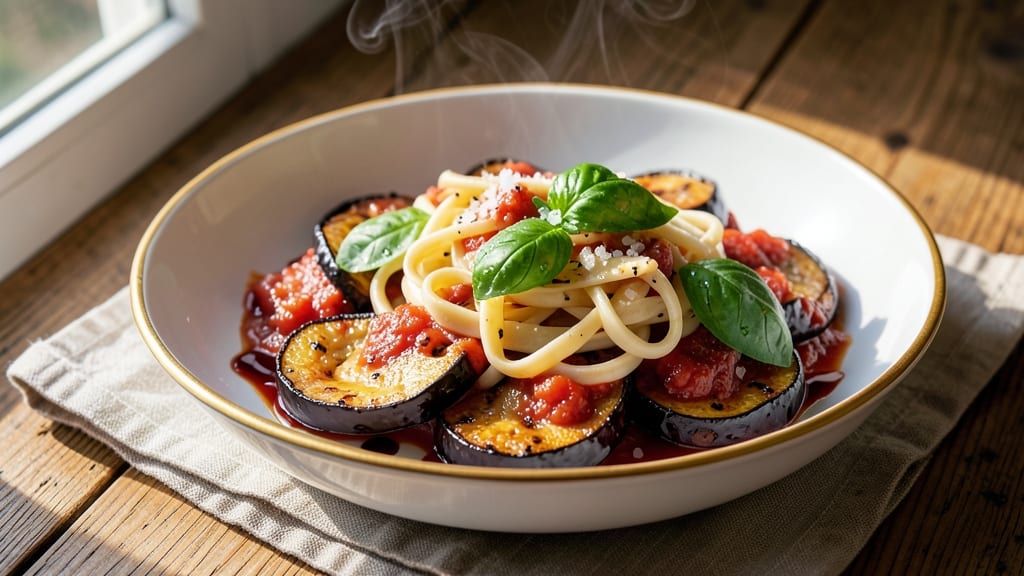
This aubergine pasta sauce transforms humble eggplant into a rich, smoky sauce that clings to pasta like a velvety embrace. The secret lies in roasting the eggplant until caramelized—developing deep, earthy umami that builds into a complex sauce without needing meat.
I’ve perfected this technique to create a sauce that’s vegetarian-friendly yet packed with restaurant-quality depth, perfect for weeknight dinners or meal prep.
The process starts with charring the eggplant under the broiler until blistered and sweet, then blending it with garlic, roasted tomatoes, and a touch of olive oil to create a silky texture. A splash of red wine vinegar brightens the richness, while fresh basil adds a vibrant finish.
What makes this sauce exceptional is its versatility—it elevates pasta, but also works as a marinade, dip, or even a pizza topping.
What you’ll end up with is a sauce that’s smooth yet textured, with layers of smoky, roasted flavor and a subtle crunch from the eggplant’s skin. The sauce thickens beautifully as it simmers, coating every strand of pasta in a glossy, aromatic glaze.
Best of all, it keeps well in the fridge for up to 5 days, making it a go-to for busy weeks.
Whether you’re serving it over spaghetti, tossing it with roasted vegetables, or using it as a base for a hearty stew, this aubergine pasta sauce delivers bold flavor with minimal effort. Let’s dive into the steps to create it—it’s simpler than you think, and the results are undeniably impressive.
Ingredients for aubergine pasta sauce
Eight simple ingredients create this restaurant-worthy eggplant sauce that clings to pasta like magic.
| Ingredient | Amount | Notes |
|---|---|---|
| Medium Eggplant 🍆 | 2 whole | Italian or globe variety preferred |
| Extra-Virgin Olive Oil 🫒 | ½ cup | High quality, fruity flavor |
| Garlic Cloves 🧄 | 6 cloves | Fresh, peeled, slightly crushed |
| Medium Tomatoes 🍅 | 4 whole | Roma or vine-ripened preferred |
| Red Wine Vinegar 🍷 | 1 tbsp | For brightness, or balsamic |
| Fresh Basil Leaves 🌿 | ½ cup | Packed, stems removed |
| Salt 🧂 | 1 ½ tsp | Diamond Crystal preferred |
| Ground Black Pepper 🌶️ | ½ tsp | Freshly cracked preferred |
| Smoked Paprika 🌶️ | 1 tsp | For smoky depth |
| Vegetable Broth 💧 | ½ cup | Low-sodium preferred |
The eggplant is your flavor anchor—look for firm, glossy ones at Whole Foods or your local market. Smaller Italian eggplants have more intense flavor than the big, pale ones. Roast until blistered and caramelized—this is where the umami magic happens. If you can't find Roma tomatoes, San Marzano canned tomatoes work perfectly (just peel and chop). The olive oil should be fruity and peppery—California extra-virgin brands like Corto or Lucini are my go-tos, but any good one works. Skip the pre-chopped garlic if you can—freshly crushing it releases more flavor.
No fresh basil? Dried oregano at half the amount works in a pinch, but trust me, fresh basil makes all the difference. Running low on red wine vinegar? White wine vinegar or lemon juice brightens just as well. The smoked paprika adds depth without overpowering—if you want more smokiness, add ½ tsp chipotle powder. For the tomatoes, roasting them alongside the eggplant intensifies their sweetness, but if you're short on time, blanched and peeled canned tomatoes save the day. The vegetable broth can be swapped for water plus ½ tsp bouillon powder if needed, but don't skip it entirely—the sauce needs that liquid base to thicken properly.
This sauce tastes even better the next day as the flavors meld. Store it in an airtight container in the fridge for up to 5 days, or freeze portions for 3 months. I like to portion it into small jars—perfect for meal prep or last-minute pasta nights. The texture thickens as it cools, so if it seems too thick when first made, just stir in a splash of water or broth. Freezing tip: let it cool completely before transferring to containers to prevent ice crystals. The basil wilts fast, so add it fresh just before serving—it brightens everything up.
Why You'll Love This Recipe
- No Fuss, Big Payoff: I swear by this—roast the eggplant while you prep the rest. By the time it’s golden and tender, the sauce is just simmering. Five minutes of active work, and you’ve got something restaurant-worthy.
- Umami Bomb: That roasted eggplant? It’s the star—deep, smoky, and caramelized from the olive oil. Add the tomatoes and vinegar, and suddenly you’ve got a sauce that’s tangy, rich, and actually complex, not just a basic marinara.
- Leftover Hero: This sauce keeps like a champ. Toss it with pasta the next night, or use it as a quick pizza base—it’s even better the second day. Honestly, I make double portions just so I don’t have to cook again.
- Budget Flex: Eggplant is cheap, tomatoes are cheap, and a little vinegar goes a long way. You’re getting a flavor-packed sauce for pennies, and it’s way more interesting than takeout. My wallet and my taste buds thank me.
Step-by-step instructions for smoky roasted aubergine pasta sauce
Here's how to transform simple ingredients into a rich, smoky sauce that clings perfectly to pasta.
Roast the Eggplant for Deep Flavor
Preheat your oven to 425°F and line a baking sheet with parchment paper. Cut the 2 whole medium eggplant into 1-inch thick slices. Brush both sides generously with the 0.5 cup extra-virgin olive oil, then sprinkle with 1 teaspoon smoked paprika and 0.5 teaspoon salt.
Arrange the slices in a single layer on the baking sheet, leaving space between them. Roast for 20-25 minutes until the edges are deep golden brown and the flesh is tender when pierced with a fork. The eggplant should be caramelized with smoky edges—this is where all that umami depth comes from. Let them cool slightly before handling.
Char the Tomatoes and Garlic
While the eggplant roasts, heat a large skillet over medium-high heat. Add the 4 whole medium tomatoes, cut into wedges, and cook for 8-10 minutes, turning occasionally, until they develop blackened char marks and soften. Remove them to a cutting board and set aside.
In the same skillet, add the 6 cloves garlic cloves and cook for 1-2 minutes until fragrant and just beginning to color. Be careful not to burn them—you want sweetness, not bitterness. Remove the garlic and set it aside with the tomatoes. Wipe out the skillet with a paper towel to remove any excess oil.
Build the Sauce Base
Return the skillet to medium heat and add the roasted eggplant slices. Cook for 3-4 minutes until they begin to soften and release their juices. Add the charred tomatoes and garlic, breaking the tomatoes into smaller pieces with a wooden spoon. Stir in the 1 tablespoon red wine vinegar and 0.5 cup vegetable broth.
Let the mixture simmer for 5-7 minutes until the liquid reduces slightly and the flavors meld together. The sauce should thicken just enough to coat the back of a spoon. Taste and adjust seasoning with the remaining 1 teaspoon salt and 0.5 teaspoon ground black pepper. Here's where the magic happens—the smoky, caramelized flavors blend into a rich, velvety base.
Finish with Fresh Basil
Remove the skillet from heat and stir in the 0.5 cup fresh basil leaves, tearing them by hand. Let the sauce sit for 2-3 minutes to allow the basil to infuse its bright, fresh flavor. The basil will soften slightly, releasing its aroma and brightening the smoky depth of the sauce.
Taste again and make any final adjustments. The sauce should be vibrant, with layers of smoky, sweet, and tangy flavors. For best results, use this sauce immediately over cooked pasta—it's designed to cling beautifully and elevate every bite. If you need to store it, let it cool completely before refrigerating for up to 3 days, or freeze for up to 3 months.
Pro Tips For Making Aubergine Pasta Sauce
- SALT THE EGPLANT FIRST: Skip the soggy mess—slice the eggplant, sprinkle with salt, and let it sit for 20 minutes while you prep the rest. Pat every slice dry with a towel afterward, or your sauce will turn into a watery disaster. (Yes, even if you’re impatient like me.)
- ROAST THE TOMATOES: Dump halved tomatoes on a baking sheet with a drizzle of olive oil, salt, and a pinch of sugar. Roast at 400°F (200°C) for 15 minutes until blistered and caramelized—this adds depth the raw tomatoes can’t match. (Your future self will notice the difference.)
- LOW AND SLOW FOR GARLIC: Don’t rush the garlic—sauté it in olive oil over low heat until golden, not brown. If it smells bitter, you’ve burned it. A splash of red wine vinegar at this stage also cuts the harshness. (This isn’t the prettiest method, but it’s the tastiest.)
- DISCARD THE WATER, KEEP THE OIL: After salting and draining the eggplant, don’t toss that starchy water—save the oil that rises to the top. Stir it into your sauce at the end; it adds richness without extra fat. (I learned this the hard way after making a sauce that tasted flat.)
Essential equipment for this dish
Skillet Essentials
Your 12-inch cast-iron skillet is non-negotiable for this sauce—it distributes heat evenly and develops the perfect char on tomatoes and eggplant. I swear by my Lodge Pre-Seasoned Cast Iron skillet; its heavy construction prevents hot spots that can burn your garlic or tomatoes.
If you don’t own one, a stainless steel skillet (like All-Clad) works too, but preheat it for 5 minutes before adding ingredients to prevent sticking. 🔥
Blender or Food Mill
For a smooth, velvety texture, blend the roasted eggplant, tomatoes, and garlic until completely broken down. My Ninja Professional Blender handles this effortlessly, but a handheld immersion blender (like Osterizer) works if you’re short on counter space.
If you prefer texture, use a food mill to mash the ingredients coarsely—this adds a subtle chunkiness that many people love. Avoid food processors for this recipe; they can overheat and turn the sauce greasy.
Baking Sheet Must-Haves
Use a half-sheet pan (18x13 inches) for roasting the eggplant—it gives you enough space to arrange slices in a single layer without crowding. Line it with parchment paper for easy cleanup, but if you’re roasting at 425°F, skip the parchment and use a lightly oiled rimmed baking sheet instead.
This ensures the eggplant gets that perfect deep golden brown crust. Pro tip: Place the baking sheet on the middle rack of your oven for even heat distribution.
Olive Oil Bottle
Invest in a glass bottle with a pour spout—like Corto Extra Virgin Olive Oil—to easily drizzle the 0.5 cup olive oil over the eggplant slices. Avoid plastic bottles, as they can degrade when exposed to heat.
A small measuring cup (like Pyrex) helps portion the oil precisely, ensuring you don’t over-oil the eggplant, which can make the sauce too greasy. Keep the bottle within arm’s reach while cooking to avoid mid-recipe oil emergencies. 🫒
Wooden Spoon & Tongs
A heat-resistant wooden spoon (like Oxo Good Grips) is your best friend for stirring and breaking down the roasted vegetables in the skillet. Its flexible design prevents scratching your skillet, and the long handle keeps your fingers safe from the heat.
For flipping the eggplant slices on the baking sheet, silicon-coated tongs (like OXO Good Grips) grip firmly without tearing the skin. Avoid metal utensils—they can react with the acidity in the tomatoes and vinegar, altering the sauce’s flavor.
Nutrition facts
Frequently asked questions
Can I use canned eggplant instead of fresh?
Fresh eggplant gives the best texture and flavor, but in a pinch, you can use canned eggplant. Drain and rinse it thoroughly, then pat dry before roasting. For the best results, add 1 extra tablespoon of olive oil to compensate for the lost moisture. The sauce will still develop rich flavor, though with slightly less depth than fresh.
How do I make this sauce thicker or thinner?
For a thicker sauce, simmer uncovered for 5-10 extra minutes to reduce the liquid. If it's too thick after cooking, stir in 1-2 tablespoons of vegetable broth or water to reach your desired consistency. Remember, the sauce thickens further as it cools—so don't over-reduce it right away.
Can I add protein to this vegetarian sauce?
This sauce pairs beautifully with white beans, chickpeas, or crumbled feta for added protein. For a meat option, try adding cooked shrimp or diced chicken breast during the final 5 minutes of simmering. Just be sure to season the protein separately with salt and pepper before adding it to the sauce.
Why does my eggplant sauce taste bitter?
Bitterness usually comes from over-roasting the eggplant or using unripe tomatoes. For the eggplant, aim for deep golden brown edges (not blackened). For tomatoes, choose ripe ones and remove any green stems. The red wine vinegar helps balance bitterness—add an extra ½ teaspoon if needed. If the bitterness persists, stir in 1 teaspoon of sugar to offset it.
How long can I store this sauce in the freezer?
This sauce freezes beautifully for up to 3 months when stored in airtight containers. Let it cool completely before freezing, and leave about 1-inch headspace to prevent ice crystals. Thaw overnight in the fridge—never at room temperature—and give it a quick stir to restore its smooth texture before reheating.