
Sauces & Condiments
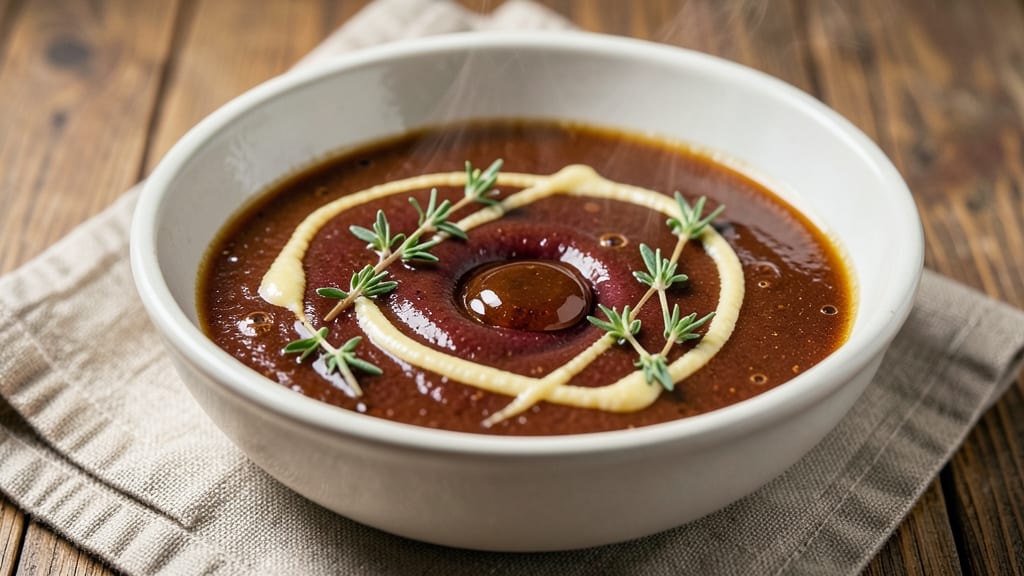
Transforming simple pan drippings into this velvety au jus dipping sauce is the secret weapon for elevating any roasted or grilled meat. The rich, savory sauce captures all the deep flavors from your cooking pan—no extra ingredients needed beyond what you already have.
This recipe turns ordinary leftovers into a luxurious addition that pairs perfectly with roast beef, steak, or even as a dipping sauce for fries or pretzels.
The magic happens in the reduction process, where meat juices simmer down into a concentrated, glossy sauce with just the right balance of saltiness and umami. You'll only need 10 minutes of active time, making it the ideal finishing touch for a weeknight dinner.
The sauce thickens beautifully while retaining that authentic restaurant-quality depth that makes every bite unforgettable.
What you'll end up with is a smooth, glossy sauce that clings to every bite of meat or crispy fry, adding layers of flavor without overpowering. The best part?
It's completely customizable—simply adjust the seasoning to match your protein. Whether you're serving a holiday roast or grilling burgers, this sauce will take your meal from good to extraordinary.
Store any leftovers in the refrigerator for up to 5 days, or freeze for longer storage. Reheat gently on the stovetop, stirring occasionally until warmed through. This versatile sauce deserves a permanent spot in your culinary repertoire—once you try it, you'll never go back to store-bought versions.
Ingredients for au jus dipping sauce
Six simple ingredients transform humble pan drippings into luxurious restaurant-quality au jus.
| Ingredient | Amount | Notes |
|---|---|---|
| Pan Drippings 🥩 | 2 cups | From roasted or grilled meat |
| Beef Broth 💧 | ½ cup | Low-sodium preferred |
| Red Wine Vinegar 🍷 | 1 tbsp | Dry variety for balance |
| Worcestershire Sauce 🥫 | 1 tbsp | Ensure anchovy-free version |
| Dijon Mustard 🌶️ | 1 tsp | For subtle tang |
| Fresh Thyme Leaves 🌿 | ¼ tsp | Or 1/4 tsp dried thyme |
| Garlic Cloves 🧄 | 2 cloves | Minced for depth |
| Unsalted Butter 🧈 | 2 tbsp | Cold for finishing |
| Diamond Crystal Kosher Salt 🧂 | ½ tsp | Adjust to taste |
| Freshly Ground Black Pepper 🌶️ | ¼ tsp | For subtle heat |
The pan drippings are your foundation—look for rich, golden-brown juices from roasted beef, pork, or lamb. Costco or Whole Foods often have pre-made beef broths labeled 'low-sodium,' but homemade is always better. For the Worcestershire, grab the Lea & Perrins original if you can—it's the gold standard. Fresh thyme makes all the difference, so snag a bunch from the grocery store's produce section and strip the leaves yourself. The garlic should be fresh, not jarred—it adds a brightness that dried just can't match. If you're short on time, Trader Joe's sells pre-minced garlic in tubes that work perfectly here.
No beef broth? Chicken broth at half the amount works in a pinch, though it'll be lighter. Skip the Worcestershire? Extra red wine vinegar plus a pinch of sugar mimics the depth. Fresh thyme unavailable? Dried thyme at one-third the amount is fine, but toast it first in a dry pan for 30 seconds to wake up the flavor. The Dijon mustard is non-negotiable for that subtle tang—don't substitute with regular mustard. For a richer finish, swap the butter for brown butter—just cool it completely before adding to the sauce. The salt and pepper are your final adjustments, so taste as you go.
This sauce is best used fresh, but any leftovers keep beautifully in the fridge for 5 days sealed in a jar. For longer storage, freeze in ice cube trays—perfect for single servings later. Reheat gently on the stovetop over medium-low, stirring occasionally until warmed through. Never microwave—it breaks the emulsification and makes the sauce grainy. I like to make a double batch when I roast a big piece of meat, then portion it into small jars for quick access. The sauce actually improves overnight as the flavors meld, so leftovers are often the best part.
Why You'll Love This Recipe
- Pan Magic: I swear, this sauce starts with whatever’s left in your roasting pan—no extra shopping needed. Just scrape up those golden brown bits, add broth and vinegar, and simmer until it’s thick enough to coat a spoon. That’s the secret: flavor without effort.
- Umami Bomb: The combo of Worcestershire and Dijon mustard gives it this deep, savory punch that sticks with you. Honestly, I’ve tried store-bought au jus, but this? It’s got layers—tangy from the vinegar, rich from the drippings, and that little kick that makes you reach for another fry.
- Game-Day Ready: Between us, this is my go-to for game day, potlucks, or when I’m too tired to cook. Pour it into a gravy boat, and suddenly fried chicken, roasted veggies, or even fries feel like a fancy spread. (Yes, even on a Tuesday night.)
- Budget Booster: I make this all the time because it turns scraps into something special—no wasted ingredients, just pure flavor. A splash of vinegar and a spoonful of mustard stretch that beef broth into something luxurious. Plus, it keeps in the fridge for days, so I’m never scrambling for a last-minute sauce.
Step-by-step instructions for transforming pan drippings into au jus
This velvety sauce transforms humble pan drippings into restaurant-worthy richness with minimal effort.
Deglaze the Pan with Vinegar and Broth
Place your 2 cups pan drippings in a saucepan over medium-high heat. Let it bubble gently for 2 minutes to evaporate any excess moisture—this concentrates the flavor. While it warms, add 1 tablespoon red wine vinegar and scrape vigorously with a wooden spoon to release all those caramelized bits from the pan's bottom.
Next, pour in the 0.5 cup beef broth and bring the mixture to a gentle simmer. Here's the thing—you want to keep the heat steady but not boiling, or you'll end up with a thin, watery sauce. Watch for small bubbles forming around the edges of the pan—that's your signal the liquid is heating properly. Let it simmer uncovered for 5-6 minutes until the volume reduces by about 25%.
Build Flavor with Aromatics and Seasonings
Reduce heat to medium-low and add the 2 cloves minced garlic cloves and 0.25 teaspoon fresh thyme leaves. Stir gently and let them infuse for 1-2 minutes until fragrant—you'll smell that aromatic punch of garlic and earthy thyme. This step is where the sauce gets its depth, so don't rush it.
Now add the 1 tablespoon Worcestershire sauce and 1 teaspoon Dijon mustard. Stir well to combine, then season with 0.5 teaspoon Diamond Crystal kosher salt and 0.25 teaspoon freshly ground black pepper. Taste and adjust the salt if needed—remember, the pan drippings may already carry some saltiness from the original meat.
Finish with Butter for Velvety Texture
Remove the sauce from heat and let it cool slightly for 1 minute. This cooling step prevents the butter from separating when added. Cut the 2 tablespoons unsalted butter into small cubes and whisk vigorously as you drizzle it into the sauce. The butter should melt completely and create a silky, glossy finish.
Return the sauce to low heat and let it warm through for 30-45 seconds, stirring constantly. You're looking for a sauce that coats the back of a spoon smoothly—this is your velvety texture checkpoint. If it thickens too much, whisk in 1 tablespoon water at a time until it reaches your desired consistency. Strain through a fine-mesh sieve if you prefer a completely smooth texture.
Rest and Serve Warm
Transfer the au jus to a serving bowl and let it rest for 5 minutes before serving. This resting period allows the flavors to meld completely and the sauce to reach its ideal consistency. The sauce should be rich, slightly tangy from the vinegar, with a subtle depth from the garlic and thyme.
Serve immediately alongside roasted meats, grilled steaks, or as a dipping sauce for bread. For best results, keep the sauce warm in a slow cooker set to warm if serving family-style. The sauce will continue to develop flavor as it sits, so don't be afraid to let it rest a bit longer if time allows.
Pro Tips For Making Au Jus Dipping Sauce
- SKIM THE DRIPPINGS FIRST: Don’t just dump everything straight from the pan—let those first 2-3 minutes of sizzling do the heavy lifting. The richest, most flavorful bits (the ones that actually make au jus taste like more than just broth) cling to the bottom when the pan is hot. Pour off just the clear liquid first, then scrape up the browned bits with a wooden spoon. (Yes, it looks gross, but that’s where the magic hides.)
- STRAIN IT LIKE YOUR DINNER DEPENDS ON IT: I used to skip this, and my au jus always had a faint greasy sheen—no matter how much I skimmed. Fine-mesh straining isn’t optional; it’s the difference between a silky sauce and one that feels like it’s fighting you. Use a sieve or cheesecloth, and press the solids with a spoon. (Pro move: Chill the strained sauce for 10 minutes first—fat rises to the top, and you can skim it off before adding vinegar or mustard.)
- VINEGAR LAST, OR REGRET IT: Add that red wine vinegar too early, and you’ll end up with a sauce that tastes like it got punched in the face. The acid needs to mingle with the warm, reduced drippings and broth—think of it as the finishing salt. Stir it in right after you’ve reduced the mixture to a syrupy consistency, then let it sit for 2 minutes before tasting. (This also lets the Dijon mustard mellow out instead of biting back.)
- UPGRADE WITH A SPLASH OF COLD BROTH: Your pan drippings are gold, but they’re also hot and concentrated. If you’re reducing them too hard, you’ll end up with a gluey mess. Just before adding the beef broth, pour in ¼ cup of cold broth first—it cools the drippings enough to prevent scorching while keeping the reduction smooth. (Trust me, your sauce will thank you when it doesn’t seize up.)
Serving suggestions for leftovers
Meat Pairings
This au jus shines brightest when paired with rich, savory meats where it can enhance natural flavors. For roast beef lovers, drizzle it generously over sliced prime rib or herb-crusted beef tenderloin—the sauce clings beautifully to the meat fibers.
I always make extra when roasting a beef brisket because the deep, caramelized flavors in the drippings create an au jus that's practically a flavor bomb. 🥩
Unexpected Dippers
Don't limit this sauce to just meat—it's a game-changer for crispy, savory foods. Warm golden potato wedges or crispy onion rings become irresistible when dipped in this velvety sauce. I've even used it as a dipping sauce for homemade pretzels or garlic bread—the salty-sweet contrast is pure magic.
For a fun twist, try it with grilled corn on the cob brushed with a little butter first.
Cheese Board Elevator
Transform your cheese board from ordinary to extraordinary by adding this au jus as a dipping sauce. The rich, tangy flavors complement aged cheddar, blue cheese, or smoked gouda perfectly.
I like to serve it warm in a small crock pot on the side of the board—it adds that restaurant-quality touch that makes your guests rave. Pair it with crackers, baguette slices, or even dried fruit for a sophisticated balance of flavors.
Grilled Favorite Upgrade
Take your grilled favorites to the next level by serving them with this au jus on the side. After grilling ribeye steaks or portobello mushrooms, spoon the warm sauce over the top for an instant flavor boost.
It also works wonders with grilled pork chops or bacon-wrapped chicken thighs. The key is to serve the sauce warm—it enhances the smoky, charred flavors of grilled meats beautifully. 🔥
Casserole Topper
Use this au jus as a finishing touch for hearty casseroles like beef pot roast or lasagna. Spoon it over the top just before serving to add moisture and depth. I love using it on shepherd's pie or meatloaf—the sauce keeps everything juicy while adding that restaurant-quality shine.
For an extra touch, sprinkle with fresh parsley right before serving to brighten the flavors.
Leftovers Reinvented
Got leftover roasted chicken or turkey? This au jus turns boring leftovers into a gourmet meal. Pour it over shredded chicken or turkey slices for a quick, flavorful sandwich spread.
I also use it as a base for stuffed potatoes—just mix it with some sour cream and chives for a creamy, savory topping. The sauce's versatility makes it perfect for repurposing leftovers into something special. ✨
Nutrition facts
Frequently asked questions
Can I use chicken or turkey drippings instead of beef?
While beef drippings create the classic flavor, chicken or turkey drippings work beautifully for a lighter version. For chicken, add an extra ½ teaspoon of garlic powder to compensate for the milder base. The reduction process remains the same, but expect a slightly less rich, more delicate sauce that pairs perfectly with poultry dishes.
What if my sauce turns out too thin?
Simmer it uncovered for another 2-3 minutes to reduce further, or whisk in 1 teaspoon cornstarch mixed with 1 tablespoon cold water until thickened. For immediate results, use a small saucepan to reduce the sauce separately. The key is patience—rushing the reduction creates a watery texture that won't coat properly.
Can I make this sauce ahead of time?
Yes! This sauce actually tastes better the next day as flavors meld. Store in an airtight container in the fridge for up to 5 days or freeze in ice cube trays for single servings. Reheat gently on low heat, stirring constantly, and add 1 tablespoon water if it thickens too much. The sauce's depth improves with resting time!
Is red wine vinegar essential, or can I substitute?
Red wine vinegar adds that signature tang, but you can substitute with apple cider vinegar (use 1.5 tablespoons) or balsamic vinegar (use 1 tablespoon). For a non-vinegar option, use 1 teaspoon lemon juice plus ½ teaspoon sugar to balance acidity. The sauce will still be delicious—just slightly less complex in flavor.
Why did my butter separate?
This happens when the sauce is too hot before adding butter or when stirred too vigorously. Always let the sauce cool slightly (1 minute) before adding cold butter cubes, and whisk gently as you drizzle. For a quick fix, whisk in ½ teaspoon cornstarch mixed with 1 teaspoon water to emulsify the sauce back together.