
Sauces & Condiments
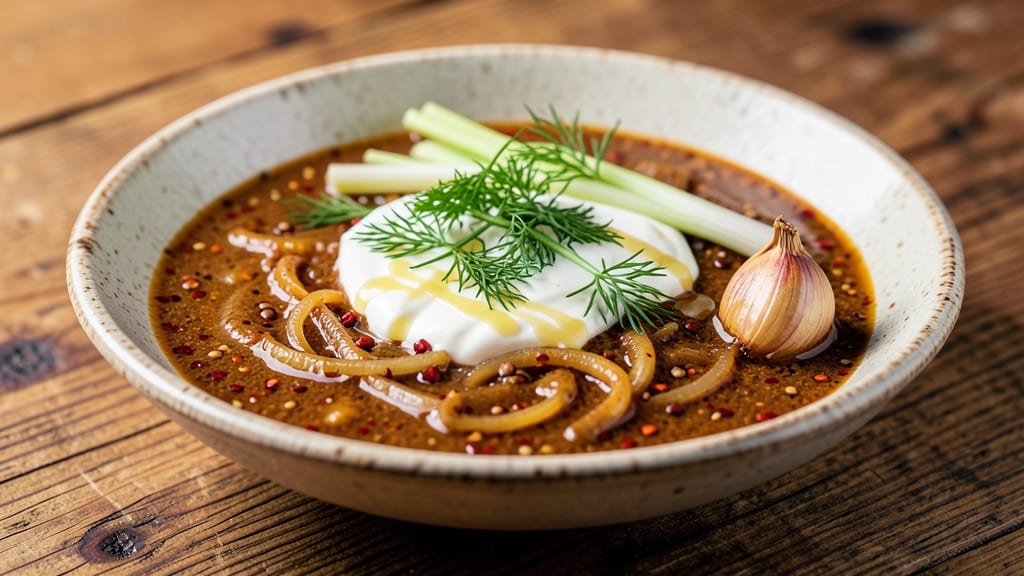
This ashu sauce recipe transforms bold Ethiopian spices into a velvety, celery-dill swirl with a secret vinegar kick that brightens every bite. The key lies in balancing berbere spice—a fiery blend of chili, fenugreek, and coriander—with creamy yogurt and fresh herbs for a sauce that’s complex yet smooth.
I developed this version after years of perfecting wat stews, where the right acidity makes all the difference. The process starts with slow simmering—tomatoes, onions, and garlic build a rich base before blending with tangy yogurt and celery for that signature creamy texture.
A splash of vinegar (don’t skip this!) cuts through the richness, while fresh dill adds a bright, herbal finish. The result? A sauce that works as a marinade for grilled meats, a drizzle over roasted vegetables, or a bold companion to rice.
What sets this apart is the balance: spicy enough to stand up to hearty dishes, creamy enough to coat every bite, and tangy enough to keep flavors vibrant.
It’s the kind of sauce that turns simple meals into something extraordinary—think grilled chicken, lentil stews, or even as a dip for flatbread. For best results, let the flavors meld overnight. The spices deepen, the vinegar mellows, and the celery’s freshness shines through.
Ready in under 30 minutes but worth the wait. Let’s make it.
Ingredients for ashu sauce
Nine ingredients transform Ethiopian spices into a velvety, herb-forward sauce with a hidden vinegar zing.
| Ingredient | Amount | Notes |
|---|---|---|
| Berbere Spice 🌶️ | 2 tbsp | High-quality blend for authentic heat |
| Plain Yogurt 🥛 | 1 cup | Full-fat for creaminess (Greek works too) |
| Fresh Dill 🌿 | ½ cup | Stems removed, loosely packed |
| Celery Stalks 🧅 | 2 whole | Leaves included for extra flavor |
| White Wine Vinegar 🍶 | 2 tbsp | For that signature tangy kick |
| Garlic Cloves 🧄 | 3 cloves | Peeled and lightly crushed |
| Yellow Onion 🧅 | 1 whole | Medium size, finely chopped |
| Canned Tomato Sauce 🍅 | 1 cup | San Marzano preferred for sweetness |
| Extra-Virgin Olive Oil 🫒 | ¼ cup | For richness and balance |
| Salt 🧂 | ½ tsp | Diamond Crystal preferred |
Berbere is the heart of this sauce—Ethiopian markets or specialty stores carry the best blends, but Amazon or Penzeys work too. Look for deep red, not dusty. The yogurt needs to be thick and tangy—Greek yogurt works if you’re in a pinch, but traditional plain yogurt gives that signature Ethiopian creaminess. Fresh dill is non-negotiable here; dried just won’t cut it. For celery, organic stalks with leaves add a bright, herbal note that’s essential to the sauce’s balance. If you can’t find berbere, substitute 1 tbsp smoked paprika + 1 tsp each cumin and coriander, but it won’t be the same.
No white wine vinegar? Apple cider vinegar or lemon juice work in a pinch, but the acidity profile changes slightly. The garlic and onion build the sauce’s depth—don’t skip roasting them first for a sweeter, richer base. For tomato sauce, San Marzano cans are worth the splurge, but any good-quality canned sauce will do. If you’re making this ahead, let the vinegar mellow overnight—it’s the secret to that perfect balance of tang and creaminess. The olive oil should be fruity and peppery, not bland. If your dill is wilting, submerge the stems in water for 10 minutes to revive it before using.
This sauce keeps beautifully—up to 5 days in the fridge if stored in a sealed jar with a thin layer of olive oil on top to preserve freshness. For longer storage, freeze in ice cube trays—thaw overnight in the fridge before using. The flavors actually improve after a day or two, so make extra if you can. It’s perfect for grilled meats, lentil stews, or as a dip for flatbread. If it separates, just whisk vigorously before using—it’ll come back together. The vinegar’s acidity helps balance the richness, so don’t skip it, even if you’re not a fan of tangy flavors.
Why You'll Love This Recipe
- Five-Ingredient Magic: This sauce comes together with just a handful of pantry staples—no fancy shopping required. I swear by my trusty berbere spice blend (the star here) and a dollop of yogurt that’s already in my fridge. Chop the celery and dill while you wait for the sauce to sit—it’s that simple.
- Tangy Heat Bomb: That first bite? Pure flavor explosion. The berbere’s fiery kick meets the bright vinegar and creamy yogurt, while fresh dill keeps it bright. It’s the kind of sauce that makes you reach for the dish again before the plate’s even empty.
- Weeknight Workhorse: Slather it on grilled chicken, toss it with roasted veggies, or drizzle it over flatbread—it’s my go-to for lazy nights. Honestly, I’ve even used it as a marinade for kebabs when I’m in a rush. Works for breakfast, lunch, or dinner without trying too hard.
- Make-Ahead Marvel: This sauce actually improves overnight. I double the batch on Sundays and store it in the fridge—perfect for quick meals all week. The flavors meld into something richer, and it’s cheaper than takeout. Plus, no one can resist a jar of this sitting on the counter.
Step-by-step instructions for celery-creamy dill swirl sauce
Here's the method for crafting this velvety ashu sauce with perfect balance between tang and creaminess.
Sauté Aromatics Until Fragrant
Heat the 0.25 cup extra-virgin olive oil in a medium saucepan over medium heat. Add the 1 whole yellow onion and 3 cloves garlic cloves, cooking for 3-4 minutes until the onion becomes translucent and the garlic releases its aroma. This foundational step builds the sauce's flavor profile.
I press the garlic cloves gently with the back of a spoon to release their oils, but don't let them brown—just until they're fragrant. This prevents bitterness while ensuring maximum flavor extraction. The onions should soften but not color, maintaining their sweetness for the sauce's balance.
Build the Base with Tomato and Vinegar
Add the 1 cup canned tomato sauce and 2 tbsp white wine vinegar to the pan. Stir well to combine and bring to a gentle simmer over medium-low heat. Let it cook for 5-6 minutes until the mixture thickens slightly and the acidity mellows.
Here's where the vinegar's magic happens—it brightens the tomatoes while preventing the sauce from becoming too heavy. You'll notice the mixture reduce slightly and develop a glossy sheen. If it starts to stick, add 1-2 tablespoons of water to maintain even cooking.
Incorporate Celery and Berbere Spice
Add the 2 whole celery stalks (chopped into ¼-inch pieces) and 2 tbsp berbere spice to the pan. Stir well to distribute the spices evenly throughout the mixture. Cook for an additional 4-5 minutes until the celery softens and the spices bloom.
The berbere spice will deepen the sauce's complexity with its signature Ethiopian warmth. I like to taste at this stage to check the balance—you should detect the vinegar's tang, the tomatoes' sweetness, and the celery's subtle bitterness working together. If the spices aren't fully dissolved, stir more vigorously for another 30 seconds.
Create the Creamy Texture with Yogurt
Reduce the heat to low and gradually whisk in the 1 cup plain yogurt one ladle at a time. This slow incorporation prevents curdling and creates the signature creamy texture. Continue cooking for 2-3 minutes until the sauce thickens to a velvety consistency.
I use a whisk to ensure the yogurt blends smoothly without creating lumps. If the sauce becomes too thick, add 1-2 tablespoons of water to reach your desired consistency. The sauce should coat the back of a spoon but still flow easily. This is where the sauce's creamy character develops—patience is key.
Finish with Fresh Dill and Season
Remove the pan from heat and stir in the 0.5 cup fresh dill and 0.5 tsp salt. Let the sauce rest for 5 minutes to allow the flavors to meld completely. The dill adds a bright herbal note that cuts through the richness of the yogurt.
Taste and adjust the seasoning if needed—you might want to add a pinch more salt or a splash of vinegar to enhance the balance. The sauce should be creamy yet tangy, with the celery's subtle bitterness and berbere's warmth shining through. Serve immediately while warm for the best texture and flavor.
Pro Tips For Making Ashu Sauce
- Bloom the Berbere: DESCRIPTION: Toss the spice in a dry pan over medium heat for 30 seconds first—just until you smell that deep, toasty aroma. I learned this the hard way: skipping it makes the sauce taste flat and one-dimensional, like someone forgot to wake up the spices.
- Whisk the Yogurt: DESCRIPTION: Break up any lumps in the yogurt with a fork before adding it to the mix—no blender needed. I used to blend it smooth, but the texture gets weirdly heavy, and the sauce loses that bright, tangy lift.
- Salt the Celery: DESCRIPTION: Toss the chopped celery with a pinch of salt and let it sit for 5 minutes before adding it to the sauce. This draws out moisture and mellows the bitterness, so it blends in instead of standing out like a wallflower.
- Vinegar Last: DESCRIPTION: Stir in the white wine vinegar right before serving—don’t let it sit in the sauce. After 10 minutes, it turns the yogurt grainy and dulls the berbere’s punch. Add it, taste, then adjust.
Troubleshooting this dish
Sauce Too Thick?
If your ashu sauce thickens beyond your desired consistency, don’t panic! The yogurt and tomato base can sometimes cling together too tightly. I’ve found that adding 1-2 tablespoons of warm water or broth while whisking gently brings it back to a smooth, pourable texture.
For a richer alternative, stir in 1 teaspoon of extra-virgin olive oil—it thins the sauce while adding depth. Always reheat gently after thinning to preserve the berbere’s aromatic oils. 💫
Curds Formed in Yogurt?
Yogurt curdling is the most common issue, but it’s easily fixed. If you see lumps after adding the yogurt, immediately remove the pan from heat and whisk vigorously. For stubborn curds, strain the sauce through a fine-mesh sieve lined with cheesecloth or a clean kitchen towel.
The resulting sauce will be silky smooth. To prevent curdling next time, whisk the yogurt into the warm (not boiling) saucepan gradually, one ladle at a time. 🥛
Berbere Spice Too Strong?
The berbere spice can be intense, especially if you prefer milder flavors. If your sauce ends up too spicy, balance it by adding 1-2 teaspoons of honey or maple syrup to mellow the heat. Alternatively, stir in 1 tablespoon of plain yogurt to dilute the spice concentration slightly.
For a tangier profile, add a splash of lemon juice—it brightens the sauce while cutting through the spice. Taste as you go to adjust gradually. 🌶️
Sauce Separated Overnight?
If your ashu sauce separates after refrigeration, it’s still salvageable! Simply whisk the sauce vigorously for 1-2 minutes until it recombines. For extra insurance, place the jar in a bowl of warm water for 5-10 minutes to gently reheat it—this helps the ingredients blend more easily.
If the separation persists, blend the sauce briefly with an immersion blender for a silky finish. The vinegar and yogurt work together to keep the sauce cohesive, so don’t skip these key ingredients. ✨
Dill Too Overpowering?
Fresh dill is essential, but its flavor can dominate if not balanced properly. If your sauce tastes like a dill-heavy salad, reduce the amount to ¼ cup next time. Alternatively, add 1 teaspoon of dried mint or cilantro to complement the dill’s brightness.
For a more rounded flavor, increase the berbere spice slightly—its warmth helps balance the herbal notes. Taste the sauce before adding all the dill to adjust as needed. 🌿
Vinegar Too Pungent?
The white wine vinegar adds a bright tang, but its acidity can sometimes feel harsh. If the vinegar’s sharpness overpowers the other flavors, reduce it to 1 tablespoon next time. For a smoother acidity, substitute with lemon juice or apple cider vinegar, though the flavor profile will shift slightly.
Let the sauce rest for 10-15 minutes after adding the vinegar—this allows the acidity to mellow and integrate with the other ingredients. 🍶
Nutrition facts
Frequently asked questions
What makes this ashu sauce different from traditional Ethiopian berbere?
This recipe transforms berbere from a dry spice blend into a creamy, tangy sauce by incorporating yogurt, vinegar, and fresh herbs. While traditional Ethiopian dishes use berbere as a dry rub or in stews (wat), this version creates a versatile condiment with a celery-dill swirl that's perfect for drizzling, marinating, or pairing with grilled proteins. The vinegar adds a bright contrast to the spice's warmth.
Can I make this sauce without fresh dill?
Fresh dill is ideal for that signature herbal brightness, but you can substitute with 1 tablespoon dried dill or 1 teaspoon dried mint. For best results, reduce the amount by ⅓ since dried herbs are more concentrated. If you're avoiding dill entirely, try 1 tablespoon chopped parsley or cilantro—though the flavor profile will shift slightly toward Mediterranean herbs.
How long can I store this sauce, and does it improve over time?
This sauce keeps for 5 days in the fridge when stored in an airtight container with a thin layer of olive oil on top. The flavors actually deepen overnight, so making it a day ahead enhances the berbere's aroma and lets the vinegar mellow. For longer storage, freeze in ice cube trays—thaw gradually in the fridge before using.
What are the best dishes to pair with this sauce?
This versatile sauce elevates grilled chicken, lamb kebabs, or roasted vegetables. It also works as a bold dip for flatbreads, a marinade for seafood, or a finishing sauce for lentil stews. The creamy texture and tangy kick make it perfect for Ethiopian-inspired dishes like doro wat (chicken stew) or as a condiment for injera (Ethiopian flatbread).
Why does my sauce look separated after refrigeration?
Separation happens when the yogurt and vinegar interact with the spices during cooling. Simply whisk vigorously for 1-2 minutes to recombine. For stubborn separation, strain through a fine-mesh sieve or gently reheat in a bowl of warm water. The vinegar's acidity helps prevent this, so ensure you're using the full 2 tablespoons as called for.