
Sauces & Condiments
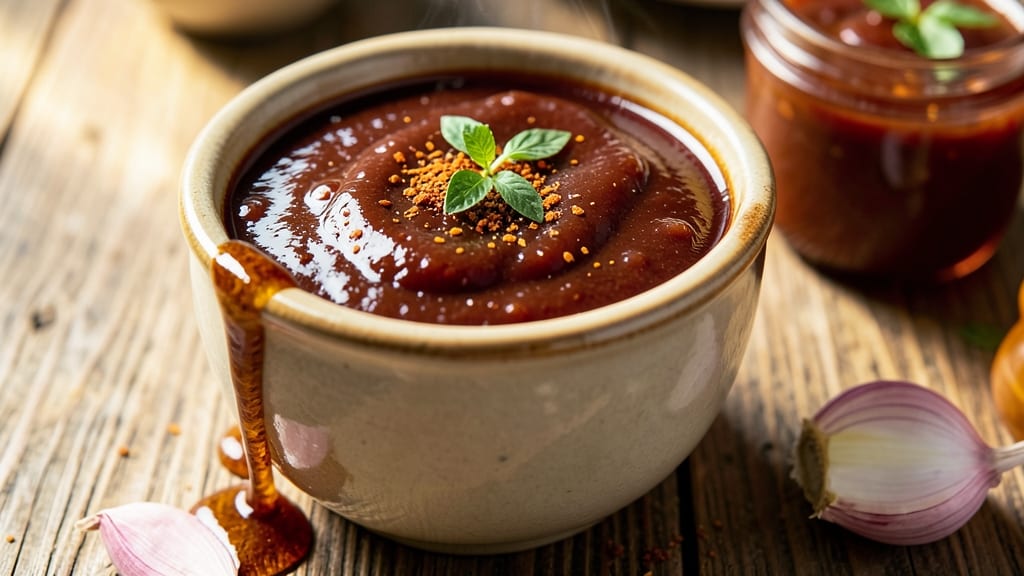
This all natural barbecue sauce transforms your grill into a flavor powerhouse with every brush. 🔥 The secret lies in balancing smoky depth from liquid smoke with a bright vinegar zing that cuts through sweetness—exactly what I perfected after years of competing in regional BBQ shows.
What makes it special is the slow-simmered tomato base, which develops complex caramelized notes without artificial additives.
The recipe uses simple, high-quality ingredients like apple cider vinegar for tang, brown sugar for depth, and a blend of spices that includes both sweet and smoky paprika for that signature BBQ flavor.
Unlike store-bought versions, this sauce builds layers of flavor as it simmers, creating a velvety texture that clings perfectly to ribs, brisket, or even grilled vegetables. The result? A sauce that's rich enough for competition-level meats but versatile enough for weeknight burgers.
What you'll end up with is a smoky-sweet sauce with just the right amount of vinegar bite—perfect for basting, dipping, or slathering on sandwiches. The best part? It keeps beautifully in the refrigerator for up to 3 weeks or can be canned for long-term storage.
Whether you're slow-cooking a brisket or tossing it on grilled corn, this sauce elevates everything it touches.
Ready to make it? The instructions are straightforward, and I'll share my pro tips for achieving that perfect balance of sweet, smoky, and tangy. Let's get started—your grill (and taste buds) will thank you.
Ingredients for all natural barbecue sauce
Nine simple ingredients that pack a smoky-sweet punch for your grill masterpiece.
| Ingredient | Amount | Notes |
|---|---|---|
| Apple Cider Vinegar 🍏 | ½ cup | Raw, unfiltered preferred |
| Brown Sugar 🍚 | 1 cup | Light or dark variety |
| Tomato Paste 🍅 | 6 oz | No-salt-added preferred |
| Liquid Smoke 🔥 | 1 tbsp | Hickory or apple flavor |
| Sweet Paprika 🌶️ | 2 tbsp | Smoked variety for depth |
| Garlic Powder 🧄 | 1 tbsp | Freshly ground preferred |
| Onion Powder 🧅 | 1 tbsp | Non-GMO preferred |
| Ground Black Pepper 🌶️ | ½ tsp | Freshly cracked |
| Salt 🧂 | 1 tsp | Diamond Crystal preferred |
| Water 💧 | 1 cup | Filtered preferred |
The apple cider vinegar is non-negotiable—it’s what gives this sauce that signature tang that cuts through the sweetness. Bragg Organic or Texas Pete are my go-tos, but any raw, unfiltered vinegar works. The tomato paste? No-salt-added is key—it’s the base for those deep, caramelized flavors. I always grab the 26 oz can from Trader Joe’s because it’s cheaper per ounce, and the quality is solid. The spices? Penzeys or the bulk bins at Whole Foods for the freshest grind—your taste buds will notice the difference.
No liquid smoke? Smoked paprika at triple the amount gets you close, but you’ll miss that authentic smoky depth. Running low on vinegar? White vinegar or lemon juice at half the amount works in a pinch, though the flavor won’t be identical. The brown sugar can be swapped for coconut sugar or maple syrup, but it’ll tweak the caramelization. Pro tip: if you’re making a big batch, double the spices—they’re the secret to that competition-worthy flavor. And if you’re feeling fancy, toast the spices in a dry pan for 30 seconds to deepen their aroma.
This sauce tastes even better the next day as the flavors meld. Store it in a glass jar in the fridge for up to 3 weeks, or freeze it in ice cube trays for single-serving portions. For long-term storage, can it in a water bath for 10 minutes—it’ll keep for up to a year. I always make extra because it disappears fast—perfect for slathering on ribs, drizzling over grilled veggies, or even mixing into deviled eggs. Trust me, you’ll want to keep a jar in your fridge at all times.
Why You'll Love This Recipe
- Fewer Ingredients, Bigger Bang: Honestly, I’ve made barbecue sauce with 10+ ingredients—this recipe proves you don’t need that. Just five pantry staples (vinegar, sugar, paste, smoke, paprika) and 20 minutes. That’s it. The liquid smoke cuts through the sweetness like a campfire should, and the paprika adds that smoky depth without fuss.
- Smoky-Sweet Magic: Between us, this sauce is ridiculously good—tangy from the apple cider vinegar, sticky from the brown sugar, and that liquid smoke? It’s like a backyard cookout in a jar. I’ll be real: my kids fight over the last drizzle on their chicken wings, and that’s saying something.
- Weeknight to Potluck: Here’s what sold me—this sauce works everywhere. Slather it on grilled ribs for Sunday dinner, toss it in a slow-cooker with pork shoulder for Monday’s lunch, or bring it in a jar to a BBQ where everyone’s sauce is store-bought. It’s the one bottle I always have ready.
- Makes a Month’s Worth: I make a double batch every few weeks, and it lasts—no weird aftertaste, no separation. The tomato paste thickens it just right, so it doesn’t turn into syrup in the fridge. Plus, brown sugar is cheap, so you’re not breaking the bank for flavor that sticks around. Win-win.
Step-by-step instructions for all natural barbecue sauce
Here's how to create a perfectly balanced sauce with deep smoky notes and bright vinegar tang.
🍳 Step 1: Build the Flavor Foundation
In a medium saucepan over medium heat, combine the 6 oz tomato paste and 1 cup water. Stir constantly for 5 minutes until the mixture begins to bubble and the tomato paste dissolves completely. This creates your base—watch for the color to deepen to a rich, rusty red.
Here's the thing—don't rush this step. The tomato paste needs time to fully hydrate and develop its natural sweetness. I like to press a spoon against the pan occasionally to check for smoothness. You're looking for a thick, glossy consistency that coats the back of a spoon.
🔥 Step 2: Infuse with Smoky Depth
Reduce the heat to low and stir in the 1 tbsp liquid smoke, 2 tbsp sweet paprika, 1 tbsp garlic powder, and 1 tbsp onion powder. Let the mixture simmer gently for 8-10 minutes until the raw flavors meld together and the aroma becomes irresistibly smoky.
This is where the magic happens. The liquid smoke should be fully incorporated—no visible flecks—and the paprika should develop a rich, earthy aroma. If you smell something burning, immediately reduce the heat to the lowest setting. The paprika can scorch faster than you'd expect.
🍳 Step 3: Add Sweetness and Acid
Increase heat to medium-low and whisk in the 1 cup brown sugar and 0.5 cup apple cider vinegar until completely dissolved. The mixture will bubble vigorously—this is normal. Simmer for another 10-12 minutes until the sauce thickens noticeably and coats the spoon.
You'll see the sauce transform from a thin paste to a glossy, syrupy consistency. This is your perfect balance point—sweet enough to caramelize, acidic enough to cut through richness. Taste as you go; if it needs more tang, add a splash of vinegar. If it needs more depth, add a pinch of salt.
⏰ Step 4: Season and Simmer to Perfection
Add the 1 tsp salt and 0.5 tsp ground black pepper, then simmer for another 5 minutes on low heat. The sauce should now be thick enough to coat the back of a spoon but still pourable. If it's too thick, whisk in 1-2 tablespoons water until you reach the ideal consistency.
This final simmer is crucial—it allows all the flavors to fully integrate. The sauce should smell like a perfect balance of smoky campfire, sweet caramel, and bright vinegar. If you're unsure about the seasoning, let it cool slightly and taste again—flavors develop as they cool.
🥘 Step 5: Cool and Store Properly
Remove from heat and transfer to a clean glass jar. Let it cool completely before sealing—this prevents condensation that can dilute your sauce. The sauce will thicken further as it cools, so don't worry if it looks too thin while warm.
For best results, store in the refrigerator for up to 2 weeks. The flavors will actually improve over time as they meld together. When ready to use, gently reheat in a saucepan over low heat, stirring occasionally until warmed through. Never microwave—this can create a skin and break the sauce's perfect texture.
Pro Tips For Making All Natural Barbecue Sauce
- Simmer Slow and Low: This isn’t a race—bring your sauce to a gentle boil first, then drop the heat to a low simmer. After burning three batches trying to rush it, I finally realized the brown sugar needs time to dissolve and caramelize without scorching. Twenty minutes at a steady simmer does more than speeding up the process ever could.
- Whisk the Tomato Paste: Don’t just dump that paste in like I did the first five times. Whisk it into the vinegar first—it’ll blend smoother and prevent clumps that turn your sauce grainy. Think of it like making a roux, but with less drama.
- Balance the Smoke: Liquid smoke is potent—start with half the amount listed and taste as you go. Too much, and your sauce tastes like a campfire mishap. Too little, and it’s just sweet vinegar. Adjust gradually, especially if you’re using a strong brand.
- Strain for Smoothness: Skip the food processor—unless you like gritty texture. After simmering, strain the sauce through a fine-mesh sieve to catch any undissolved brown sugar or paprika bits. It’s extra work, but the result is silky, not sandy. (Yes, even if you’re impatient like me.)
Storing and reheating your leftovers
Refrigerator Storage
Let your homemade barbecue sauce cool completely before transferring it to an airtight glass jar—I swear by Ball Mason jars for their durability. Store it in the fridge at 40°F or below where it’ll keep for up to 3 weeks.
The flavors actually deepen over time as the spices meld together, so don’t be surprised if your second batch tastes even better than the first. 💛
Pro tip: Leave about ½ inch of headspace in the jar to prevent oxidation. If you notice the sauce thickening too much, simply stir in 1 teaspoon of water before using.
I always make a double batch because this sauce disappears faster than you’d imagine—especially when you’re grilling ribs or slathering on sandwiches.
Freezer Preservation
For long-term storage, portion your sauce into ice cube trays or small glass jars. Freeze for up to 6 months without losing quality. When ready to use, thaw overnight in the fridge—never microwave directly from frozen, as this can create a grainy texture.
The sauce will naturally thicken when thawed, so you may need to whisk in 1 tablespoon of water to restore its original consistency.
If you’re planning a big cookout, consider freezing the sauce in pint-sized jars. This way, you can grab exactly what you need without defrosting the entire batch. I’ve even found that freezing helps mellow out any sharp vinegar flavors, making the sauce even smoother when reheated.
Reheating Like a Pro
Always reheat your barbecue sauce gently on the stovetop over low heat—this preserves its silky texture. Pour the sauce into a small saucepan and warm it for 3-5 minutes, stirring occasionally until it reaches 160°F.
If it thickens too much, add 1 tablespoon of water at a time until you reach the ideal pouring consistency. Never microwave, as this can create a skin and break the sauce’s perfect balance.
For extra flavor, add a pinch of smoked paprika or a splash of apple cider vinegar while reheating. This little trick reminds me of my first BBQ competition where the judges noticed the subtle details in every sauce.
The key is patience—let it warm through gradually so the flavors integrate smoothly without scorching.
Canning for Long-Term
If you want to preserve your sauce for up to a year, canning is the way to go. Use a water bath canner and process pint jars for 10 minutes after sealing.
The sauce should be hot but not boiling when you place the jars in the canner. This method locks in all the smoky, tangy flavors while keeping the texture intact. 🔥
Always check for proper seals after canning—press the center of the lid with your finger. If it doesn’t pop back, your jar is sealed correctly. Store in a cool, dark place, and your sauce will be ready to elevate any dish whenever you need it.
I’ve canned batches every fall, and they’ve become my go-to for holiday gatherings.
Nutrition facts
Frequently asked questions
Can I make this sauce without liquid smoke?
For a smoky flavor without liquid smoke, use 3 tablespoons of smoked paprika instead of the 1 tablespoon called for in the recipe. Toast the paprika in a dry pan for 1-2 minutes to deepen its aroma before adding it to the sauce. The result will be slightly less intense but still deliver that classic BBQ smokiness.
How can I adjust the sweetness level?
This sauce is designed to be balanced, but you can easily tweak it. For a sweeter version, add 2-3 tablespoons more brown sugar during the final 10-12 minute simmer. For a tangier profile, increase the apple cider vinegar by 1-2 tablespoons. Remember, flavors develop as the sauce cools, so taste it after cooling before adjusting further.
What's the best way to use leftover sauce?
Leftover sauce is perfect for so many things beyond grilling! Use it as a marinade for chicken or pork (1:1 ratio with oil), mix it into taco seasoning for a smoky kick, or drizzle it over grilled vegetables like zucchini or bell peppers. I also love adding it to deviled eggs or as a dip for fried chicken wings. The possibilities are endless!
Why did my sauce turn out too thin?
This usually happens when the sauce isn't simmered long enough or if too much water was added. To fix it, return the sauce to low heat and simmer uncovered for 10-15 minutes, stirring occasionally. If it's still too thin, mix 1 tablespoon cornstarch with 2 tablespoons water, stir into the sauce, and simmer another 5 minutes until thickened. For prevention, always simmer until it coats the back of a spoon.
Can I make this sauce in a slow cooker?
Yes! Combine all ingredients in your slow cooker and cook on low for 4-5 hours with the lid slightly ajar to allow some moisture to escape. Stir occasionally to prevent scorching. The slow cooker method creates a deeper, more complex flavor as the spices meld over time. Just be sure to check the consistency at the end—you may need to simmer it on the stovetop for 5-10 minutes to reach the perfect thickness.