
Sauces & Condiments
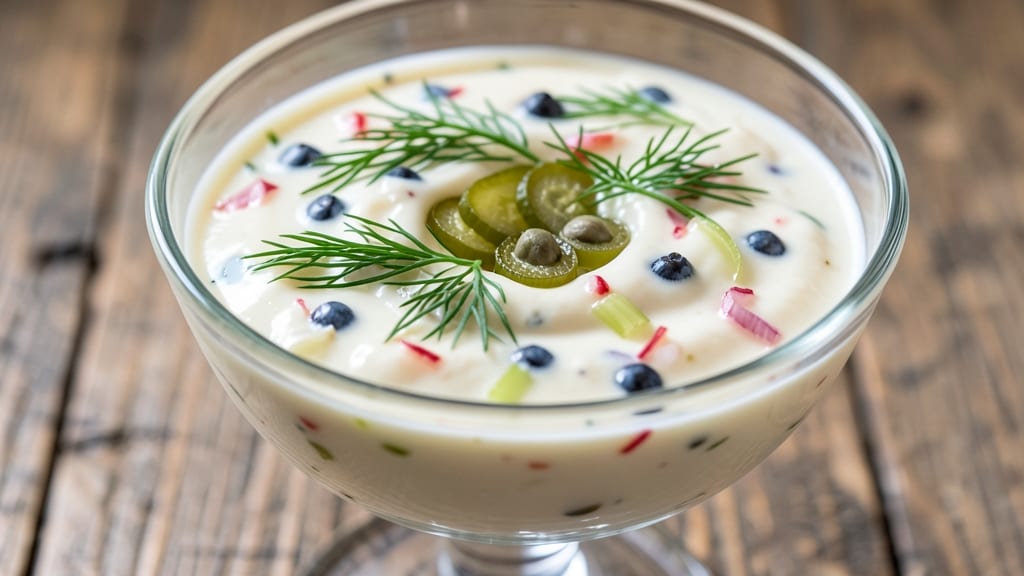
Ina Garten's tartar sauce recipe transforms simple pantry staples into a creamy, herby condiment that elevates seafood dishes to restaurant-quality. The secret lies in balancing bright lemon, briny capers, and fresh dill for that signature tangy-sweet harmony—just like at Barefoot Contessa. This version stays light yet rich, with a subtle celery bite that adds freshness without overpowering the flavors.
What sets this tartar sauce apart is the texture: silky-smooth mayonnaise folded with finely chopped herbs and pickles creates a velvety base, while crisp celery and red onion add just enough crunch.
The recipe comes together in 10 minutes, making it perfect for last-minute preparations, yet the flavors deepen when chilled for 1 hour—a pro tip from Garten herself.
The result is a sauce that's equally at home on golden fried shrimp, flaky fish fillets, or even as a dip for crispy fries. The herby dill swirls through the creamy base, while the pickles and capers add layers of briny complexity.
It's the kind of condiment that makes every bite taste like a coastal bistro dinner.
Store leftovers in an airtight container in the refrigerator for up to 5 days, though it rarely lasts that long. For extra freshness, fold in a tablespoon of chopped dill or a squeeze of lemon before serving.
This is the tartar sauce that belongs on your dinner table—simple yet sophisticated.
Ingredients for ina garten tartar sauce
Pantry staples meet fresh herbs for a velvety, restaurant-worthy tartar sauce with signature briny-sweet balance.
| Ingredient | Amount | Notes |
|---|---|---|
| Mayonnaise 🥫 | 1 cup | High-quality, preferably Duke's or Hellmann's |
| Fresh Dill Weeds 🌿 | ½ cup | Finely chopped, stems removed |
| Capers 🫒 | 2 tbsp | Chopped, drained well |
| Cornichons 🥒 | 2 whole | Finely chopped, French-style preferred |
| Celery Stalks 🧅 | 2 whole | Finely minced, crisp texture |
| Red Onion 🧅 | ¼ cup | Finely minced, sharp bite |
| Lemon Juice 🍋 | 1 ½ tbsp | Freshly squeezed, Meyer lemon preferred |
| Extra-Virgin Olive Oil 🫒 | 1 ½ tbsp | High-quality, fruity variety |
| Diamond Crystal Kosher Salt 🧂 | ½ tsp | Adjust to taste |
| Freshly Ground Black Pepper 🌶️ | ¼ tsp | Freshly cracked for best flavor |
The mayonnaise forms the creamy foundation—Duke's or Hellmann's are ideal for their smooth texture, but any quality brand works. Fresh dill is non-negotiable here; farmers market bundles yield the most vibrant flavor, but supermarket containers suffice if the leaves are bright green. Capers should be briny and plump, not dried out—look for them in the olive bar section of specialty stores like Whole Foods or Trader Joe's. Celery and red onion add the signature crunch; organic celery from the produce section stays crisp longer, while red onions from the same source provide the sharpest bite. For lemon juice, Meyer lemons add subtle sweetness, but regular lemons work in a pinch.
No fresh dill? Dried dill at one-third the amount works, though the flavor won't be as bright. Substitute cornichons with finely chopped pickles, but reduce to 1 tbsp to avoid overpowering. For a lighter texture, blend the celery and onion first, then fold into the mayo. The olive oil should be extra-virgin with fruity notes—avoid the cheap, bitter varieties that can dominate the sauce. If you prefer less heat, omit the black pepper entirely; the capers and cornichons provide enough briny kick. For a tangier sauce, add an extra 0.5 tbsp of lemon juice, but taste as you go—the balance is delicate.
This sauce keeps beautifully in an airtight container in the fridge for 5 days, though the flavors peak after 1 hour of chilling. For extra freshness, fold in a tablespoon of chopped dill or a squeeze of lemon before serving. Portion into small jars for easy use—perfect for lunches or last-minute dinner prep. If the texture separates after refrigeration, simply whisk or fold vigorously to restore its silky consistency. The sauce also freezes well for up to 3 months, though texture may soften slightly upon thawing.
Why You'll Love This Recipe
- Five-Ingredient Magic: I swear by this combo—mayo, dill, capers, cornichons, and celery. That’s it. No fussing with fancy techniques, just chop, mix, and taste. Honestly, the hardest part is deciding how much dill to add.
- Bright Tang Alert: Between us, the capers and cornichons give this sauce a zing that cuts through anything—fried fish, burgers, even a simple sandwich. That fresh dill? It’s the secret weapon that makes it feel gourmet without trying.
- Game for Any Meal: This isn’t just a side—it’s my go-to for picnics, game day, or when I’m too tired to cook. Slather it on fish, toss it with pasta, or just eat it with chips. (Yes, even on a Tuesday night.)
- Lasts All Week: Make a big batch and forget it. The flavors only get better as the dill mellows and the capers mellow out. I’ve had this sauce three days later, and it’s still spot-on. Budget-friendly? Absolutely.
Step-by-step instructions for Ina Garten's tartar sauce
A bright, herby tartar sauce with crisp celery bite and tangy lemon—this is the method that delivers Ina's signature balance every time.
Finely Mince the Vegetables
Start by preparing the vegetables with precision. For the 2 whole celery stalks, remove the strings and leaves, then mince into tiny pieces—aim for a texture that's almost paste-like. The 0.25 cup red onion should be handled similarly, with a sharp knife for even, fine mincing. This texture ensures a smooth sauce without any noticeable chunks.
Next, finely chop the 2 whole cornichons and 2 tbsp capers, removing any large pieces. The cornichons should be so finely diced they're almost indistinguishable in the final sauce. I like to use a chef's knife for this step, but a food processor with a pulse function works well too—just be careful not to over-process, which can turn the vegetables into a watery pulp.
Combine Wet Ingredients
In a medium bowl, whisk together the 1 cup mayonnaise, 1.5 tbsp lemon juice, and 1.5 tbsp extra-virgin olive oil. The mayonnaise should be at room temperature for best texture—if it's cold, the sauce will be too thick. Mix until fully emulsified, then season with 0.5 tsp Diamond Crystal kosher salt and 0.25 tsp freshly ground black pepper.
This is where the sauce's bright character begins to develop. The lemon juice will lighten the mayonnaise's richness, while the olive oil adds a subtle fruity depth. Taste at this stage—you should notice the tangy lemon and pepper, but the mayonnaise should still dominate. If it's too bland, add a pinch more salt or a splash of lemon juice.
Fold in Herbs and Vegetables
Gently fold in the 0.5 cup finely chopped fresh dill weeds using a rubber spatula. The dill should be evenly distributed throughout the mixture. Then, carefully incorporate the minced celery, onion, cornichons, and capers, working in small batches to maintain an even texture. The key here is to fold, not stir vigorously—this prevents the mayonnaise from breaking.
At this point, the sauce should have a vibrant green color from the dill and a slightly grainy texture from the vegetables. The celery should provide a crisp bite that contrasts beautifully with the creamy base. Taste again and adjust seasoning if needed—this is your last chance to balance the flavors before chilling.
Chill for Maximum Freshness
Cover the bowl with plastic wrap and refrigerate for at least 1 hour, or up to 24 hours if you're making it ahead. Chilling allows the flavors to meld and the textures to set properly. The sauce should thicken slightly as it cools, developing a luxurious, spreadable consistency.
When you're ready to serve, give the sauce a final taste. It should be bright with lemon, herby from the dill, and have that satisfying celery crunch. The capers and cornichons add subtle briny notes that cut through the richness. Serve immediately with fish and chips, seafood platters, or as a dip for crispy vegetables.
Pro Tips For Making Ina Garten Tartar Sauce
- Chop Celery Fine: I learned this the hard way—thick celery chunks turn tartar sauce into a textural disaster. Use a sharp knife and cut the stalks into matchsticks, then pulse them briefly in a food processor for even consistency. (Yes, even if you’re impatient like me, this makes a real difference.)
- Drain Capers Well: Briny capers left undrained will throw off the balance of your sauce. Rinse them in a fine-mesh strainer, then pat dry with a paper towel—this keeps the flavor but cuts the excess salt. Skipping this step means your sauce might taste more like a pickle than a tartar.
- Mix in Stages: Dumping all ingredients at once risks overmixing and breaking the mayo’s emulsion. Start with mayo and dill, then fold in capers, cornichons, and celery gradually. This keeps the sauce silky instead of grainy. (Your future self will thank you.)
- Use Fresh Cornichons: Jarred cornichons lose their bright, tangy punch over time. If yours taste dull, pulse them with a splash of vinegar or lemon juice before adding to the sauce. Freshness here isn’t optional—it’s the thing that matters most for that classic Ina Garten brightness.
Pro cooking tips for perfect results
Room-Temp Mayo Magic
Never skip bringing your mayonnaise to room temperature before mixing—cold mayo makes the sauce thick and grainy. I pull my Duke's or Hellmann's out of the fridge 30 minutes before starting. For extra insurance, place the jar in warm water for 5 minutes if your kitchen runs cold.
Room-temp mayo emulsifies beautifully with the lemon and olive oil, creating that signature silky texture. 🌡️
Dill Chopping Technique
The secret to vibrant dill flavor lies in finely chopping the stems—don't discard them! Use a sharp chef's knife and rock-chop the stems against the blade, then fold them into the leaves.
For even distribution, I like to fold the dill into the mayo in two batches, mixing gently with a rubber spatula to avoid breaking the emulsion. Fresh dill should smell bright and grassy—if it's wilted or smells dull, it's past its prime.
Celery Texture Control
Crisp celery is non-negotiable for that signature tartar bite. Use a mandoline slicer set to 0.03-inch thickness for uniform slices, or hand-chop with a serrated knife for better control.
For maximum crunch, soak the minced celery in ice water for 10 minutes before draining and folding into the sauce. This keeps the texture sharp even after chilling. 🧅
Emulsion Rescue
If your sauce breaks during mixing, don't panic—just add 1 tsp of lemon juice and 1 tsp of olive oil, then whisk vigorously. The acid and fat help re-emulsify the mayo.
For extra insurance, I keep a small bowl of ice water nearby to chill the bowl if it gets too warm. The key is working quickly and maintaining a cool bowl throughout the process to prevent separation.
Flavor Layering Order
Always add ingredients in this order:
- wet ingredients (mayo, lemon, oil),
- salt and pepper,
- dill, then
- vegetables. This sequence prevents flavor masking—starting with the mayo base lets you taste and adjust seasoning before adding the dill's strong flavor.
I like to taste after each addition, especially after the celery and onion, to ensure the briny notes balance the creaminess.
Chilling Like a Pro
For maximum flavor development, chill your tartar sauce in a shallow dish (not deep) at the bottom shelf of your fridge—this ensures even cooling. The sauce should thicken slightly and develop deeper flavors after 1 hour.
If you're short on time, place the bowl in the fridge with a tray of ice underneath to speed up the process. The texture should be spreadable but still hold its shape when chilled properly. ✨
Nutrition facts
Frequently asked questions
Can I make this tartar sauce without fresh dill?
Yes, but the flavor won't be as vibrant. Use 1/3 teaspoon dried dill instead of 0.5 cup fresh, but expect a milder taste. For extra brightness, add 0.5 teaspoon dried tarragon or a pinch of dill weed seasoning to compensate. The texture will remain creamy, but the herby aroma will be less pronounced.
How do I prevent the sauce from breaking when mixing?
Work quickly and keep everything cool! Use room-temperature mayonnaise (never cold), and add the lemon juice and olive oil gradually while whisking. Fold in the herbs and vegetables gently with a rubber spatula—don't overmix. If it separates, rescue it by adding 1 teaspoon lemon juice + 1 teaspoon olive oil, then whisk vigorously. A chilled bowl also helps maintain stability.
What's the best way to store leftovers?
Transfer to an airtight container and refrigerate for up to 5 days. For best texture, press plastic wrap directly on the surface to prevent a skin from forming. If the sauce thickens after chilling, let it sit at room temperature for 10 minutes before serving, or whisk in 1 teaspoon water or milk to restore creaminess. Freezing isn't recommended—texture may soften.
Can I adjust the flavor for a milder or tangier taste?
For milder flavor, reduce the lemon juice to 1 tablespoon and omit capers. For extra tang, add 0.5 teaspoon more lemon juice or 1 teaspoon white wine vinegar. To balance richness, increase the olive oil by 0.5 tablespoon. Always taste after chilling—flavors deepen during this time. The key is small adjustments!
What are the best pairings for this tartar sauce?
This sauce shines with fried or grilled seafood like cod, halibut, or shrimp. It's also perfect with fish and chips, crispy calamari, or as a dip for vegetable sticks. For a non-seafood option, try it on grilled chicken or avocado toast. The briny notes complement rich proteins beautifully!