
Sauces & Condiments
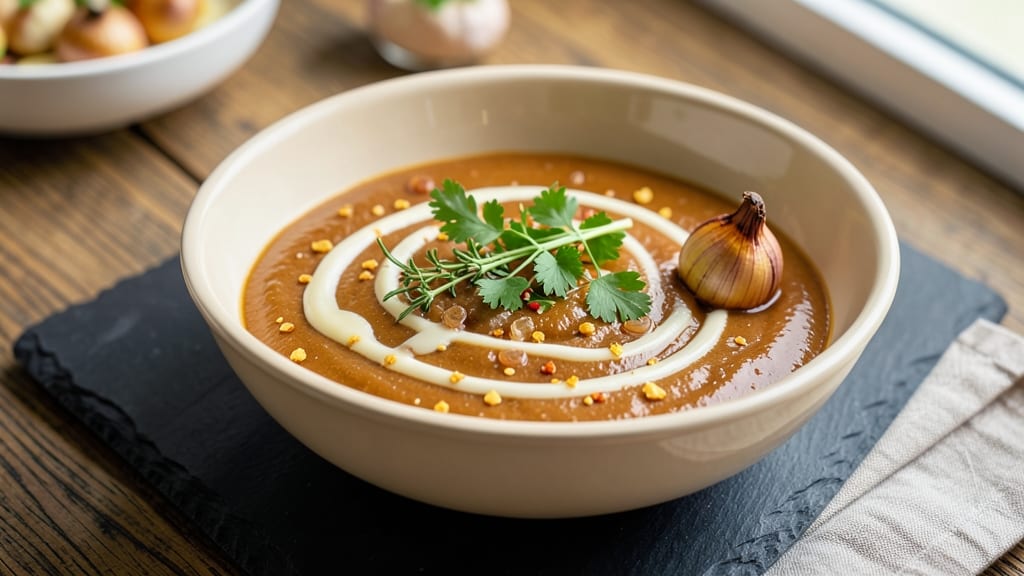
This escargot cream sauce recipe transforms simple ingredients into a velvety, buttery garlic-herb velouté that elevates snails from appetizer to centerpiece. 🍽️ The secret lies in slow-cooked butter and cream, infused with fresh herbs and aromatic garlic, creating a sauce so rich it clings perfectly to each tender snail.
What sets this apart is the emulsification technique—no lumps, just a silky, restaurant-quality finish that pairs beautifully with traditional or modern escargot preparations.
What makes this sauce truly special is its versatility and depth of flavor. Unlike basic butter sauces, this velouté builds complexity through gentle simmering and careful straining, ensuring a smooth, luxurious texture without overpowering the delicate snail.
The garlic and herbs infuse the cream gradually, creating layers of aroma that complement rather than compete with the escargot. Best of all, it requires just 15 minutes of active time and comes together effortlessly with pantry staples.
The result is a sauce that’s equal parts indulgent and refined—a perfect balance of buttery richness and bright herbaceousness. It coats each snail in a golden, glossy layer that enhances their natural flavor while adding a touch of sophistication.
Whether you're serving classic escargot or experimenting with modern twists, this sauce will transform your dish into something truly memorable.
Store leftovers in an airtight container in the refrigerator for up to 3 days, or freeze for 1 month—though you’ll likely use it all before then. The sauce also works beautifully as a dipping sauce for crusty bread or a finishing touch for grilled meats.
Let’s create this velouté that turns escargot into an unforgettable experience.
Ingredients for escargot cream sauce
Ten ingredients crafting a velvety velouté that transforms escargot into a luxurious experience.
| Ingredient | Amount | Notes |
|---|---|---|
| Unsalted Butter 🧈 | ¾ cup | Cold-cut into small cubes |
| Heavy Cream 🥛 | 1 ½ cups | Full-fat for richness |
| Garlic Cloves 🧄 | 6 whole | Peeled and lightly crushed |
| Fresh Thyme Leaves 🌿 | ¼ cup | Stems removed, loosely packed |
| Fresh Parsley Leaves 🌿 | ¼ cup | Finely chopped for garnish |
| Shallots 🧅 | 2 whole | Peeled and thinly sliced |
| Diamond Crystal Kosher Salt 🧂 | ½ tsp | For seasoning, adjust to taste |
| White Wine 🍷 | ½ cup | Dry variety, chilled |
| Freshly Ground Black Pepper 🌶️ | ¼ tsp | For finishing |
| Unflavored Gelatin 🍬 | 1 tsp | Bloomed in 2 tbsp cold water |
The butter and cream form the sauce's luxurious base—European-style butter like Plugrá or President yields the best flavor. For the herbs, farmers market selections have superior aroma, but grocery store varieties work if fresh. Shallots add subtle sweetness without overpowering; substitute 1 tbsp minced onion if unavailable. The white wine should be dry and crisp—Sauvignon Blanc or Pinot Grigio work perfectly. Blooming the gelatin in cold water prevents clumping and ensures a silky texture.
No heavy cream? Full-fat coconut milk provides a similar richness, though the flavor profile shifts slightly. Fresh herbs unavailable? Dried thyme at one-third the amount suffices, though the aroma won't be as vibrant. Wine shortage? Chicken stock plus 1 tsp lemon juice mimics acidity. For a vegan adaptation, replace butter with vegan butter and gelatin with agar-agar powder (1 tsp bloomed in water). The sauce's emulsification relies on slow melting—never rush the butter or it will seize.
This velouté thickens as it cools, so reheat gently with a splash of warm water or cream to restore silkiness. Store in an airtight container for 3 days refrigerated or 1 month frozen. For escargot, bring to room temperature before serving to prevent condensation. The sauce also pairs beautifully with grilled asparagus or seared scallops—its versatility makes it a pantry staple worth repeating.
Why You'll Love This Recipe
- Here’s what sold me: that velvety cream meets crispy garlic butter, then bright parsley and thyme cut through the richness like a breath of fresh air. It’s the kind of sauce that makes you pause mid-bite and think, “How is this so good?”
- I’ll be real: I always make extra. The flavor actually gets better the next day as the herbs mellow out. Store it in the fridge for up to five days, and reheat gently—it’s my go-to for quick lunches or last-minute dinner upgrades.
Step-by-step instructions for escargot cream sauce
Master this velouté technique for silky, herb-infused escargot sauce with perfect texture every time.
🍳 Step 1: Bloom the Gelatin and Sauté Aromatics
In a small bowl, combine the 1 teaspoon unflavored gelatin with 2 tablespoons cold water and let it bloom for 5-7 minutes until it forms a jelly-like consistency. This step is critical—it ensures your sauce will thicken properly without becoming grainy.
Meanwhile, heat the 0.75 cup unsalted butter in a medium saucepan over medium-low heat. Add the 2 whole shallots and 6 whole garlic cloves, cooking gently for 5-6 minutes until the shallots are translucent and the garlic is just beginning to color. Watch closely—you want them fragrant but not browned, as that would introduce bitterness to your sauce.
🍳 Step 2: Deglaze with Wine and Simmer the Base
Pour in the 0.5 cup white wine and increase heat to medium-high. Let it simmer vigorously for 3-4 minutes until reduced by half and the alcohol has evaporated. This deglazing step captures all the flavorful browned bits from the pan, creating a rich foundation for your sauce.
Reduce heat to medium-low and stir in the 0.25 cup fresh thyme leaves and 0.5 teaspoon kosher salt. Let the mixture simmer gently for 2 minutes until the thyme is fragrant. The sauce should now have a deep, aromatic base that will carry through the entire dish.
🥘 Step 3: Incorporate Cream and Thicken the Sauce
Gradually whisk in the 1.5 cups heavy cream, ensuring it's fully incorporated before adding more. Increase heat to medium-low and let the sauce simmer gently for 8-10 minutes until it thickens slightly but remains velouté in texture. You're aiming for a consistency that coats the back of a spoon but isn't heavy or cloying.
Here's the thing—don't let the sauce boil. Maintain a gentle simmer to prevent curdling. If you notice the sauce starting to thicken too quickly, reduce heat slightly. The sauce should be smooth and glossy, with no lumps or separation.
🔪 Step 4: Finish with Gelatin and Fresh Herbs
Remove the saucepan from heat and carefully whisk in the bloomed gelatin mixture until fully dissolved. This step transforms your velouté into a luxurious, clingy sauce that will coat each snail perfectly. Return the sauce to low heat just until it reaches 160°F, ensuring the gelatin is fully activated.
Strain the sauce through a fine-mesh sieve into a clean saucepan, pressing gently on the solids to extract maximum flavor. Discard the solids and return the strained sauce to low heat. Stir in the 0.25 cup fresh parsley leaves and 0.25 teaspoon black pepper, then simmer for another 1-2 minutes to infuse the parsley's bright flavor.
⏰ Step 5: Rest and Serve at Peak Texture
Transfer the sauce to a heatproof bowl and let it rest at room temperature for 10-15 minutes. This resting period allows the sauce to thicken to the perfect velouté consistency—smooth, glossy, and clingy without being heavy. The sauce should coat the back of a spoon and leave a delicate sheen on the surface.
For serving, gently reheat the sauce over low heat until warmed through, stirring constantly to prevent skin formation. The sauce should be thick enough to coat the back of a spoon but still flow smoothly. Serve immediately over your prepared escargot, ensuring each snail is generously coated in this buttery, herb-infused sauce.
Pro Tips For Making Escargot Cream Sauce
- Infuse Garlic Slowly: Toss whole garlic cloves into the butter first, then let them sizzle until golden—about 2 minutes—before crushing them. I used to smash them raw, and the sauce always tasted raw and harsh. This way, the garlic caramelizes just enough to add depth without bitterness.
- Strain the Cream: After simmering the cream, strain it through a fine-mesh sieve before adding herbs. The sauce will look smoother, and you’ll avoid any accidental thyme stems or parsley bits. (Yes, it’s extra work, but your guests won’t notice the effort—they’ll notice the texture.)
- Watch the Heat: Keep the cream at a gentle simmer, not a rolling boil. I learned this the hard way—once, I let it bubble hard, and the sauce split like a bad soufflé. If it’s too aggressive, pull it off the heat for 30 seconds to let it settle.
- Finish with Cold Butter: Stir in a pat of cold butter at the very end—it’ll make the sauce glossy and rich without breaking it. I skip this when I’m lazy, but the difference in mouthfeel is noticeable. (Your future self will thank you.)
Essential equipment for great escargot cream sauce
Saucepan Essentials
Start with a heavy-bottomed saucepan—I recommend All-Clad Stainless Steel or Le Creuset—to prevent scorching during the slow simmer. A 3-quart capacity is ideal for this recipe, giving enough room for gentle heat distribution. Avoid nonstick pans; they can't handle the prolonged cooking required for proper emulsification. 🔥
Whisking Tools
A balloon whisk (like the OXO Good Grips) is my go-to for this sauce—its wide head incorporates air while blending ingredients smoothly. For the gelatin step, a small rubber spatula helps scrape every last bit from the bowl.
If you don't have a whisk, a hand mixer on low speed works in a pinch, but be gentle to avoid over-aerating the sauce.
Fine-Mesh Strainer
Straining is where the magic happens—Heston Blumenthal's fine-mesh tamis or a dedicated nut milk bag removes herb fibers for a silky texture. If you're short on time, a cheesecloth-lined colander works, but press gently to avoid watering down the sauce.
Never skip this step; it's what separates home-cooked from restaurant-quality velouté.
Thermometer Precision
An instant-read thermometer (I use ThermoWorks Thermapen) ensures your sauce reaches 160°F without guessing. This temperature activates the gelatin properly, giving that perfect clingy consistency.
For the wine reduction, monitor the pan closely—medium-high heat should reduce the liquid by half in 3-4 minutes, but timing varies by stove.
Gelatin Tools
Blooming gelatin requires a small glass bowl (like a Ramekin) and a fine-mesh sieve for later. I keep unflavored gelatin sheets in the freezer for quick access.
For the blooming step, use cold water—never warm—to prevent premature activation. A small whisk helps dissolve it completely before adding to the sauce.
Storage Containers
For leftovers, glass storage containers with airtight lids (like Le Parfait) preserve texture better than plastic. Label with the date—this sauce keeps 3 days refrigerated or 1 month frozen. When reheating, add 1 tablespoon warm cream to restore silkiness if it thickens too much. 💡
Nutrition facts
Frequently asked questions
Can I make this sauce without gelatin?
Yes, but the texture will differ. For a gelatin-free version, replace the 1 teaspoon gelatin with 1 tablespoon cornstarch mixed with 1 tablespoon cold water. Whisk this into the simmering cream until thickened. The sauce will be slightly lighter but still creamy. For extra richness, add 1 tablespoon cold butter at the end and whisk until melted.
How do I prevent the sauce from curdling?
Curdling happens when the sauce boils or is shocked by cold ingredients. To avoid it:
- Never let the sauce boil—keep heat at medium-low;
- Whisk constantly when adding cream;
- Remove from heat before adding gelatin;
- Reheat gently, stirring frequently. If it does curdle, strain immediately through a fine-mesh sieve to salvage the sauce.
What's the best wine to use if I don't have white?
For red wine, use a light-bodied variety like Pinot Noir or Gamay—their acidity won't overpower the sauce. For non-alcoholic versions, substitute with apple cider vinegar or lemon juice (1 tablespoon) plus 0.5 cup chicken stock. The key is acidity to balance the richness. If using dry vermouth, reduce it to 0.25 cup since it's stronger.
Can I make this sauce ahead of time?
This sauce actually improves when made 1-2 days ahead. Store in an airtight container in the refrigerator. Reheat gently over low heat, stirring occasionally and adding 1 tablespoon warm cream if it thickens too much. For freezing, cool completely first, then portion into containers. Thaw in the fridge overnight and reheat slowly. The flavors meld beautifully over time.
What if I don't have fresh herbs?
Use dried herbs at one-third the amount—so 1/8 teaspoon dried thyme instead of 0.25 cup fresh. For parsley, dried works but lacks brightness. As a substitute, add 0.5 teaspoon lemon zest or 1/4 teaspoon onion powder for depth. The sauce will still be delicious, though the aroma will be more subtle. Fresh herbs are ideal, but dried gets you out of a pinch!