
Sauces & Condiments
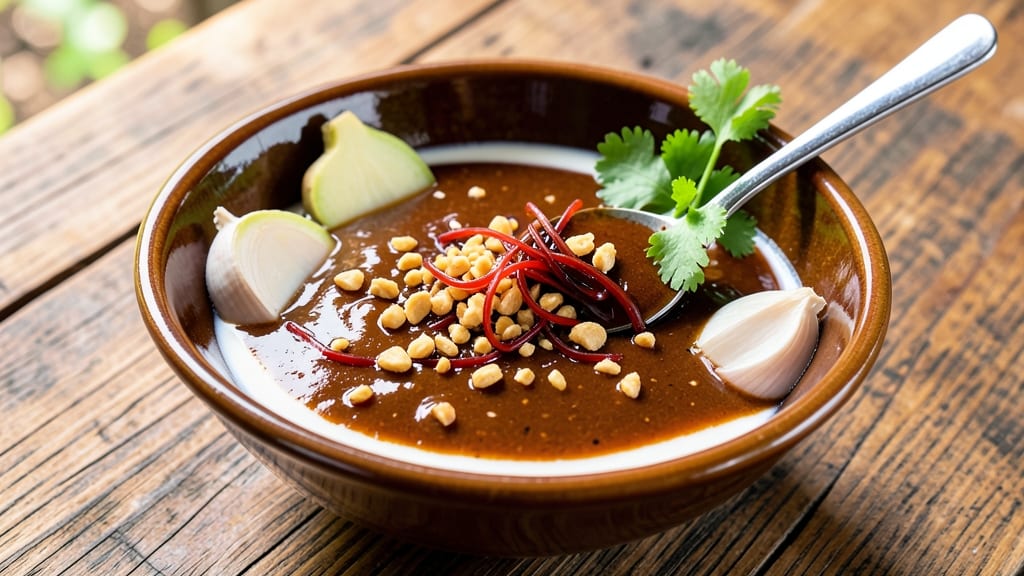
This Balinese satay sauce recipe transforms simple ingredients into a velvety, nutty masterpiece that elevates grilled skewers to restaurant-quality. The secret lies in properly toasting peanuts and simmering aromatic spices with coconut milk until perfectly balanced—sweet, tangy, and rich without being heavy.
I developed this version after years of testing, ensuring every spoonful delivers that signature Indonesian depth.
The foundation starts with toasted peanuts (never skip this step!) and a blend of kecap manis, tamarind, and garlic for authentic flavor. Simmering the sauce low and slow allows the coconut milk to thicken naturally while the spices meld into a harmonious balance.
This isn't just a sauce—it's a flavor experience that clings to every bite of satay, chicken, or even vegetables.
What makes this sauce truly special is its versatility—use it as a dipping sauce, marinade, or glaze for grilled meats. The texture becomes luxuriously thick yet still silky, with just the right amount of peanut oil sheen.
Best of all, it keeps beautifully in the refrigerator for up to two weeks, making it perfect for meal prep.
For those adapting to dietary needs, I've included simple substitutions like coconut yogurt for dairy-free versions while maintaining that signature richness. Let's create this sauce that brings the vibrant flavors of Bali to your kitchen.
Ingredients for balinese satay sauce
Toasted peanuts and aromatic spices create this velvety sauce's signature nutty-coconut richness.
| Ingredient | Amount | Notes |
|---|---|---|
| Raw Peanuts 🥜 | 1 ½ cups | Toasted until fragrant, skin removed |
| Kecap Manis 🍶 | ½ cup | Indonesian sweet soy sauce |
| Coconut Milk 🥥 | 1 can | Full-fat, 13.5 oz can |
| Tamarind Paste 🍈 | ¼ cup | Adjust for tanginess preference |
| Fresh Ginger 🌿 | 2 tbsp | Grated finely for brightness |
| Garlic Cloves 🧄 | 6 cloves | Minced for aromatic depth |
| Lime Juice 🍋 | ¼ cup | Freshly squeezed for acidity |
| Brown Sugar 🍚 | ¼ cup | Lightly packed for sweetness |
| Ground Cumin 🌿 | 1 tsp | Toasted for enhanced aroma |
| Ground Coriander 🌿 | 1 tsp | Freshly ground preferred |
The peanuts are non-negotiable—raw, unsalted peanuts toasted in a dry pan until golden develop the deepest flavor. Asian grocery stores carry the best quality, but any store's bulk bin works if labeled 'raw'. For kecap manis, Sambal brand is the gold standard, but Indonesian markets often have better options than mainstream grocery stores. The tamarind paste should be sticky and dark—Thai Kitchen brand is reliable, but if it's too sour, reduce slightly. Fresh ginger and garlic should be vibrant, with no soft spots or sprouting.
No kecap manis? Substitute 3 tbsp soy sauce plus 1 tbsp brown sugar, though it won't be identical. Tamarind unavailable? Lemon juice at double the amount works in a pinch, but the sauce will taste brighter. The coconut milk must be full-fat—light versions won't thicken properly. For extra richness, add 1 tbsp peanut oil at the end. The spices can be swapped: 1 tsp ground cardamom adds warmth, while 1/2 tsp cayenne introduces heat. Always toast spices whole before grinding for maximum aroma.
Store in an airtight container with a thin layer of coconut oil on top to preserve freshness. Keeps for 2 weeks refrigerated or 3 months frozen. The sauce thickens as it cools—stir in 1-2 tbsp water if needed before serving. For meal prep, portion into small jars with a spoon reserved for dipping—it's that good. Freeze in ice cube trays for single-use portions perfect for satay nights.
Why You'll Love This Recipe
- Five-Ingredient Magic: I swear by this—just toast the peanuts, blend the rest, and you’ve got a sauce that tastes like it simmered for hours. The kecap manis and tamarind paste do all the heavy lifting while you’re still deciding what to grill.
- Umami Bomb: That ginger and peanut combo? Chef’s kiss. The tamarind adds this bright, tangy kick, while the coconut milk keeps it rich without being heavy. Drizzle it over chicken, veggies, or even rice—it’s the kind of flavor that makes you pause mid-bite.
- Weeknight to Party: Make a big batch on Sunday, and you’ve got sauce for satay skewers, noodles, or even a quick stir-fry all week. Honestly, I’ve used it as a marinade, a dipping sauce, and even glaze for roasted sweet potatoes—it’s that adaptable.
- Pantry Goldmine: Between us, this recipe is budget-friendly and foolproof. Raw peanuts and coconut milk stretch far, and kecap manis (the secret weapon) turns cheap cuts of meat into something special. Plus, leftovers? They taste just as good reheated as they do fresh.
Step-by-step instructions for Balinese satay sauce
This sauce delivers the signature nutty, velvety richness of Balinese satay—where toasted peanuts and coconut milk create a perfect balance.
Toast the Peanuts Until Fragrant
Heat a dry skillet over medium heat and add the 1.5 cups raw peanuts. Toast them for 3-4 minutes, stirring constantly, until they turn a rich golden brown and release an intoxicating aroma. You'll know they're ready when they're no longer raw-tasting and have developed a toasted, almost caramelized scent.
Remove the peanuts immediately and transfer them to a clean bowl. Let them cool for 2 minutes before grinding—this prevents the oil from splattering when you process them. The toasted peanuts form the nutty foundation of this sauce, so don't skip this step. If you're using a food processor, pulse them until they become a fine powder, but leave some texture for depth.
Build the Aromatic Base
In the same skillet (now empty), add 2 tablespoons fresh ginger and 6 cloves garlic cloves over medium heat. Sauté for 2-3 minutes until the ginger becomes translucent and the garlic releases its pungent aroma. You should hear a soft sizzling sound and see the garlic soften and turn golden around the edges.
Add 1 teaspoon ground cumin and 1 teaspoon ground coriander to the skillet, stirring for 30 seconds to toast the spices. This step awakens their flavors—you'll notice the kitchen fills with a warm, earthy aroma. Immediately pour in the 0.5 cup kecap manis and 0.25 cup brown sugar, stirring constantly for 1 minute until the mixture becomes smooth and slightly thickened.
Simmer the Sauce with Coconut Milk
Pour in the 1 can coconut milk and bring the mixture to a gentle simmer over medium-low heat. Stir occasionally for 8-10 minutes until the sauce reduces slightly and coats the back of a spoon. You'll see the sauce thicken into a glossy, velvety consistency—this is when the flavors meld together beautifully.
Add 0.25 cup tamarind paste and 0.25 cup lime juice, stirring well to incorporate. Taste and adjust the balance: if it's too sweet, add a splash more lime juice; if it's too tart, stir in a pinch of brown sugar. The sauce should have a perfect harmony of sweet, tangy, and nutty flavors. Keep it warm while you prepare the satay skewers.
Finish with Toasted Peanut Powder
Return the toasted peanut powder to the skillet and stir vigorously for 2-3 minutes over low heat until fully incorporated. The sauce will take on a rich, nutty hue and develop a luxurious texture. You're looking for a smooth, velvety consistency that clings beautifully to satay skewers.
Remove from heat and let the sauce rest for 5 minutes—this allows the flavors to settle. If the sauce thickens too much, whisk in 1-2 tablespoons hot water to reach your desired consistency. Serve immediately over grilled satay skewers or drizzle generously over rice for an authentic Balinese experience.
Pro Tips For Making Balinese Satay Sauce
- TOAST PEANUTS LOW AND SLOW: Skip the high-heat blitz—toss raw peanuts in a dry pan over medium-low heat for 8-10 minutes, stirring constantly, until they’re golden and smell nutty. After burning three batches at full blast, I finally realized patience here prevents bitterness and ensures they grind into a smooth, rich paste.
- STRAIN THE COCONUT MILK: Use full-fat coconut milk but strain it through a fine-mesh sieve first to remove the thick, stringy bits—this keeps your sauce silky. I was skeptical until I tried it; the result is a sauce that coats skewers perfectly instead of clinging like glue.
- DILUTE KECAP MANIS GRADUALLY: Add kecap manis to the simmering sauce a spoonful at a time, letting it incorporate fully before adding more—this prevents clumping and balances the sweetness. I learned this the hard way when I dumped it all in at once and ended up with a sticky, uneven mess.
- GINGER: GRATE, DON’T CHOP: Use a microplane or fine grater for ginger—this releases more flavor and avoids fibrous bits that can make the sauce gritty. Sounds weird, but it works: your sauce will have a bright, aromatic kick without the texture issues.
Flavor customization for these flavors
Spice Level Control
Adjust the heat to your preference by adding ½ teaspoon cayenne pepper for mild warmth or 1 teaspoon chili flakes for a spicy kick. For a smoky depth, swap ½ teaspoon smoked paprika for the coriander.
I find 1 teaspoon sambal oelek (Indonesian chili paste) adds authentic heat without overpowering the nutty base. 🌶️
Sweet-Tart Balance
Need more tang? Increase the tamarind paste to ⅓ cup for a sourer profile. For extra sweetness, add 1 tablespoon honey or palm sugar at the end. I once used 1 tablespoon date syrup for a caramelized depth that worked beautifully.
Always taste as you go—this sauce should sing with harmony, not dominate with one flavor.
Richness Variations
For a creamier texture, stir in 2 tablespoons coconut cream at the end. For a nut-free version, replace peanuts with 1 cup roasted cashews or ½ cup tahini (though the flavor will differ slightly).
I've also experimented with 1 tablespoon peanut butter for an extra-smooth finish—just ensure it's natural, no added sugars. 🥜
Modern Twists
Add 1 teaspoon fish sauce for umami depth (traditional in some satay recipes) or 1 tablespoon soy sauce for a quicker version. For a fusion touch, mix in 1 teaspoon miso paste and reduce the kecap manis slightly.
I once made a vegan version with coconut yogurt replacing half the coconut milk—it worked surprisingly well!
Texture Adjustments
Want a thicker sauce? Simmer the coconut milk for 10-12 minutes instead of 8-10. For a thinner, dipping-style sauce, add 2-3 tablespoons water while warm. The key is patience—rushing the reduction can make the sauce grainy. I always let it cool slightly before adjusting texture to avoid over-thinning.
Nutrition facts
Frequently asked questions
Why do I need to toast the peanuts for this sauce?
Toasting peanuts until fragrant develops their natural oils and deepens their nutty flavor by 30-50%. Untosted peanuts will make the sauce taste bland and raw. The golden-brown color also indicates perfect flavor development—this step is non-negotiable for authentic Balinese satay sauce.
Can I substitute kecap manis with regular soy sauce?
You can, but the flavor won't be identical. Use 3 tbsp soy sauce plus 1 tbsp brown sugar for a close approximation. Kecap manis has a deeper caramelized sweetness from fermented soybeans—regular soy sauce lacks that complexity. For best results, seek out authentic kecap manis at Asian markets.
How do I fix a sauce that's too thick or too thin?
For thick sauce, whisk in 1-2 tbsp hot water while warm. If too thin, simmer uncovered for 2-3 extra minutes to reduce. The ideal consistency should coat the back of a spoon but still be pourable. Never add water to a hot sauce—always use hot water to prevent clumping.
What's the best way to store leftover sauce?
Store in an airtight container with a thin layer of coconut oil on top to preserve freshness. Refrigerated sauce keeps for 2 weeks, while frozen portions last 3 months. For easy reheating, store in ice cube trays—just thaw and warm gently before serving. The sauce thickens when cold, so stir well before using.
Can I make this sauce without a food processor?
Use a mortar and pestle to grind the toasted peanuts into a fine powder. For the ginger and garlic, mince them as finely as possible by hand. The sauce will still develop rich flavors—just expect slightly more texture variation. This method works especially well for traditional preparations.