
Sauces & Condiments
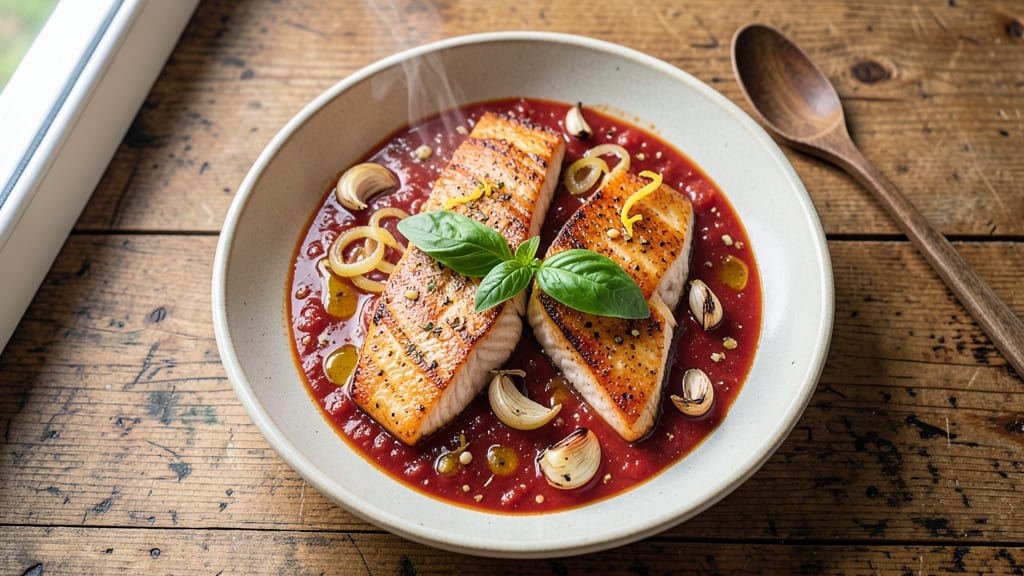
This baked salmon in tomato sauce recipe transforms simple ingredients into a restaurant-quality meal with minimal effort. The secret lies in a rich, simmered tomato sauce that infuses the salmon with deep, savory flavors while creating a crispy herbed crust.
I developed this one-pan method after years of testing—it delivers perfectly tender fish and a sauce so flavorful it tastes homemade, not store-bought.
The beauty of this dish is its simplicity: just fresh salmon, a few pantry staples, and 30 minutes of active time. The sauce starts on the stovetop with garlic, onions, and crushed tomatoes, then finishes baking in the oven alongside the salmon.
This approach ensures the sauce reduces perfectly, coating the fish in a glossy, umami-rich glaze while the edges develop that coveted crispy texture.
What you'll end up with is flaky, golden salmon topped with a vibrant tomato sauce that's tangy, slightly sweet, and packed with herbaceous notes.
The aroma alone will have everyone gathering around the table, and each bite delivers a perfect balance of textures—tender fish, crispy skin, and a sauce that clings to every forkful. This is the kind of weeknight dinner that feels like a special occasion.
Serve with steamed basmati rice or a simple arugula salad to soak up every last bit of that delicious sauce. The recipe scales easily for a crowd, and leftovers reheat beautifully. Let's get cooking!
Ingredients for baked salmon in tomato sauce
Fresh salmon and pantry staples create this restaurant-worthy tomato sauce dish with minimal effort.
| Ingredient | Amount | Notes |
|---|---|---|
| Center-Cut Salmon Fillets 🐟 | 4 whole | Skin-on for crispy texture |
| Garlic Cloves 🧄 | 4 cloves | Minced for sauce base |
| Yellow Onion 🧅 | 1 whole | Diced, medium size preferred |
| Canned Crushed Tomatoes 🍅 | 1 15 oz can | San Marzano preferred |
| Olive Oil 🫒 | ½ cup | Extra-virgin for richness |
| Dry White Wine 🍷 | ½ cup | Sauvignon Blanc works best |
| Fresh Lemon Juice 🍋 | 2 tbsp | Freshly squeezed preferred |
| Fresh Parsley 🌿 | ¼ cup | Chopped, for garnish |
| Fresh Dill 🌿 | ¼ cup | Chopped, for herb crust |
| Fresh Thyme 🌿 | 1 tbsp | Leaves only, chopped |
| Salt 🧂 | 1 ½ tsp | Kosher or sea salt |
| Ground Black Pepper 🌶️ | ½ tsp | Freshly ground preferred |
| Red Pepper Flakes 🔥 | ½ tsp | Optional, for heat |
| Breadcrumbs 🍞 | ¼ cup | Panko for extra crunch |
| Grated Parmesan Cheese 🧀 | ¼ cup | Freshly grated preferred |
The salmon fillets are the star—center-cut, skin-on for that perfect crispy texture. Look for fillets with even thickness at Whole Foods or your local fishmonger—they'll often cut them to size. If buying frozen, thaw overnight in the fridge. The tomatoes make or break the sauce: San Marzano is the gold standard, but any high-quality crushed tomatoes work. I keep a few cans of Muir Glen on hand for quick weeknight meals. For the herbs, fresh is ideal, but if you're in a pinch, dried oregano at half the amount will work in a squeeze.
No white wine? Substitute with extra chicken broth—it won't be identical, but you won't taste the difference. Fresh herbs giving you trouble? Dried thyme at one-third the amount gets you close. The breadcrumbs can be regular or panko—panko gives extra crunch, but regular works fine. Want more depth in the sauce? Add a pinch of sugar or honey to balance the acidity. The red pepper flakes are optional, but if you love heat, add them to the sauce or sprinkle over the top before serving. For a richer sauce, stir in a tablespoon of tomato paste with the tomatoes.
Salmon stays best in the fridge for 2 days if uncooked—use within 24 hours of purchase. The tomato sauce reheats beautifully, so make extra and freeze portions for up to 3 months. I like to portion the sauce into ice cube trays, then transfer to freezer bags. For the herbs, store fresh parsley and dill wrapped in damp paper towels in a sealed container—they'll stay fresh for 5-7 days. The breadcrumbs and Parmesan keep indefinitely in airtight containers, so stock up if you're making this often.
Why You'll Love This Recipe
- One-Pan Magic: I swear by this recipe—just toss everything on a sheet pan, bake, and walk away. The salmon cooks while the tomatoes simmer right alongside, no fussing with separate pots or timers.
- Garlic-Tomato Bliss: That first bite? The crispy salmon skin meets the sweet, tangy tomato sauce kissed with garlic—it’s the kind of flavor combo that makes you reach for seconds without even thinking.
- Weeknight Hero: Between us, this is my go-to when I’m too tired to plan. Throw in some pasta or crusty bread, and suddenly you’ve got a full dinner that doesn’t require a grocery haul.
- Budget-Friendly Luxury: Canned tomatoes and center-cut salmon keep costs down, but the result feels like a restaurant dish. Honestly, my wallet thanks me every time I make this instead of ordering takeout.
Step-by-step instructions for baked salmon in tomato sauce
This one-pan method delivers perfectly crisp salmon with a rich tomato-herb sauce.
Prepare the Salmon and Herb Crust
Preheat your oven to 400°F. Pat the 4 whole center-cut salmon fillets dry with paper towels—this ensures maximum crispiness. Place them skin-side down on a parchment-lined baking sheet.
In a small bowl, combine the 0.25 cup breadcrumbs, 0.25 cup grated Parmesan cheese, 0.25 cup fresh dill, 0.25 cup fresh parsley, 1 tbsp fresh thyme, 0.5 tsp red pepper flakes, 0.5 tsp ground black pepper, and 1 tsp salt. Sprinkle this mixture evenly over each fillet, pressing gently to adhere. The crust should look golden and evenly distributed.
Build the Tomato-Wine Sauce Base
In a medium bowl, whisk together the 1 15 oz can crushed tomatoes, 0.5 cup dry white wine, 2 tbsp fresh lemon juice, 0.5 cup olive oil, 1 tbsp fresh thyme, 1 tsp salt, and 0.25 tsp black pepper. Finely mince the 4 cloves garlic and 1 whole yellow onion, then add to the sauce mixture.
Carefully pour the sauce over the salmon fillets, ensuring each piece is fully coated. The sauce should pool around the edges of the baking sheet. This creates a flavorful bath that infuses the salmon as it bakes.
Bake Until Perfectly Cooked
Transfer the baking sheet to the preheated oven and bake for 12-15 minutes, until the salmon skin is deep golden brown and crispy, and the internal temperature reaches 145°F when measured at the thickest part. The sauce should bubble gently and reduce slightly, intensifying its flavor.
Here's the key: Don't overbake. Salmon continues cooking slightly after removal from the oven, so pull it out when the edges are just beginning to crisp. If the sauce reduces too quickly, you can add a splash of water or wine to maintain moisture.
Rest and Garnish
Remove the salmon from the oven and let it rest for 5 minutes on the baking sheet. This resting period allows the juices to redistribute, ensuring each bite is moist and flavorful. The sauce will thicken slightly as it cools.
Garnish each fillet with additional chopped fresh parsley and dill. Serve immediately with the sauce spooned over the top. The combination of crispy skin, tender flesh, and rich tomato-herb sauce makes this dish truly special.
Pro Tips For Making Baked Salmon In Tomato Sauce
- Sear the Salmon First: I learned this the hard way—skipping the quick sear in olive oil before baking means your salmon will steam instead of develop that crisp golden crust. Hit medium-high heat for 2-3 minutes per side until the edges turn opaque, then transfer to the oven with the tomato sauce. That extra step makes all the difference when cutting into flaky perfection.
- Deglaze with a Splash of Wine: After browning your garlic and onion, resist the urge to jump straight to tomatoes. Pour in ¼ cup dry white wine (or even a splash of fish stock) and let it simmer for 30 seconds—this pulls up all the caramelized bits stuck to the pan. Your sauce will taste deeper and richer without extra effort.
- Don’t Overcrowd the Pan: I used to pile all the salmon fillets in one baking dish, thinking it would cook faster. Wrong. Crowding steams the fish and makes the sauce watery. Instead, bake them in a single layer with just enough sauce to coat the bottom, then spoon extra sauce over the top in the last 5 minutes. The edges will stay tender, not rubbery.
- Finish with Fresh Herbs: The canned tomatoes give the dish acidity, but fresh herbs add brightness. Toss in a handful of chopped parsley or basil right before serving—it cuts through the richness of the salmon and adds a pop of color. (Yes, even if you’re serving it straight from the pan.)
Make-ahead tips for baked salmon in tomato sauce
Sauce Prep Ahead
The tomato sauce can be made up to 2 days in advance and stored in an airtight container in the fridge. I like to prep it the night before—simmer the sauce on the stovetop for 10 minutes until slightly thickened, then let it cool completely.
When ready to bake, simply reheat the sauce in a saucepan over medium heat for 5-7 minutes, then pour it over the salmon just before baking. This saves 15 minutes of active time on the day you cook. 🌟
Salmon Prep Shortcut
Skip the crust assembly ahead of time by prepping the salmon fillets with the herb mixture 1 day in advance. Store them uncovered in the fridge on a wire rack—this keeps them dry for better browning.
When ready to bake, simply place them on the baking sheet and pour the pre-made sauce over them. The crust will still crisp beautifully, and you'll save 10 minutes of prep time. ⏰
Complete Meal Prep
For a fully prepped meal, cook the salmon and sauce as directed, then let everything cool to room temperature. Transfer the salmon and sauce to airtight containers and refrigerate for up to 2 days.
When reheating, bake at 375°F for 8-10 minutes—just enough to warm through without overcooking. I love this for busy weeknights because it reheats like a restaurant-quality dish. 💪
Freezer-Friendly Sauce
The tomato sauce freezes exceptionally well—portion it into ice cube trays, then transfer the cubes to a freezer bag for easy single-use portions. Thaw overnight in the fridge before using.
For the salmon, if you want to freeze it cooked, wrap each fillet tightly in plastic wrap and place in a freezer bag with the sauce. Thaw in the fridge for 24 hours before reheating at 350°F for 10-12 minutes. The texture stays moist and flavorful. ❄️
Herb Storage Hack
Chop all your fresh herbs (parsley, dill, thyme) and store them in small airtight containers with a damp paper towel inside. These containers will last 5-7 days in the fridge, ready to be sprinkled on the salmon or sauce whenever you're prepping.
This saves chopping time and keeps your herbs fresh for multiple uses. 🌿
Make-Ahead Timeline
Here's my foolproof timeline for stress-free prep: Day 1 (Night Before) - Make the sauce and store it in the fridge. Day 2 (Morning) - Prep the salmon crust and store uncovered. Day 2 (30 Minutes Before Dinner) - Assemble everything on the baking sheet and bake.
This method ensures you spend just 10 minutes active time on the day you cook. Perfect for busy schedules! ⏳
Nutrition facts
Frequently asked questions
Can I use frozen salmon for this recipe?
Yes, but thaw it properly first! Place frozen salmon in a sealed bag and submerge it in cold water for 30-45 minutes or thaw overnight in the fridge. Never microwave—it creates uneven cooking. Pat dry thoroughly before adding the herb crust to ensure crispy skin.
What if I don't have white wine?
Use ½ cup chicken broth or ½ cup apple juice as a substitute—the flavor won't be identical, but it'll work in a pinch. For extra depth, add 1 tsp sugar to balance any tartness. The sauce will still taste delicious!
How do I know when the salmon is fully cooked?
Use a meat thermometer to check the thickest part—it should reach 145°F. The edges will be golden brown and crispy, while the flesh flakes easily with a fork. Overcooking by even 2 minutes can make the salmon dry.
Can I make this recipe without breadcrumbs?
Swap breadcrumbs for ½ cup crushed cornflakes or ½ cup almond flour for a gluten-free option. Skip the Parmesan if avoiding dairy, but keep the herb mix for flavor. The texture will be slightly different but still delicious.
Why did my sauce turn out too watery?
This usually happens if you didn't reduce the sauce enough. Simmer it on the stovetop for 5-7 extra minutes before baking, or add 1 tsp cornstarch mixed with water as a slurry. For future batches, bake at 425°F instead of 400°F to help it thicken faster.