
Sauces & Condiments
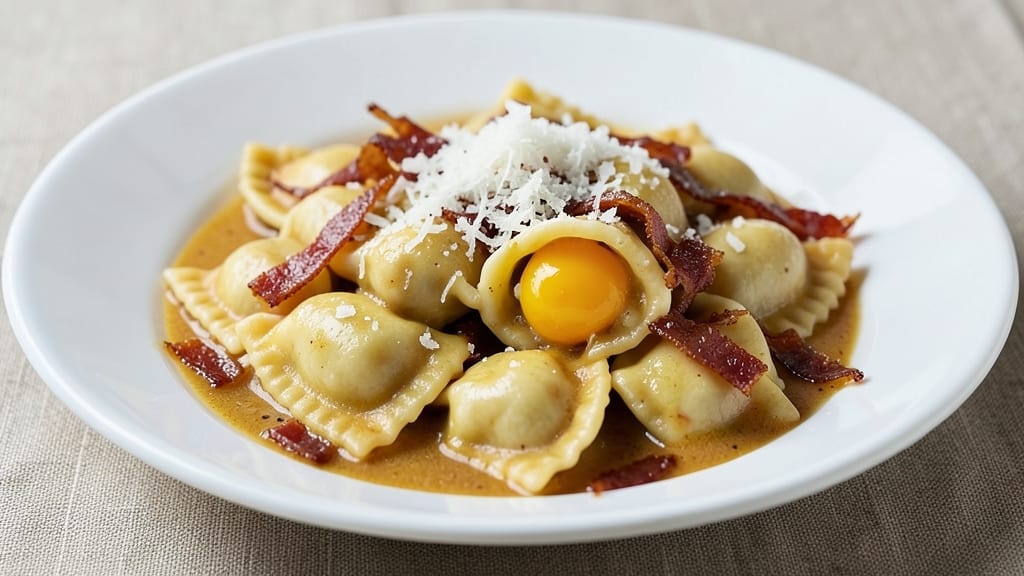
This bacon carbonara ravioli sauce transforms classic Roman flavors into a velvety, egg-rich sauce perfect for pasta lovers. 🔥 The secret lies in pancetta's smoky depth and perfectly tempered eggs, creating a sauce that clings beautifully to ravioli without curdling.
I've refined this recipe over years to balance richness with a light, silky texture—no lumps, no bitterness, just pure, creamy indulgence.
The foundation starts with crispy pancetta, rendered until golden and crisp, then finely chopped for maximum flavor infusion. Egg yolks and cream are tempered gently over low heat, ensuring the sauce remains smooth and luxurious.
A blend of Pecorino Romano and Parmesan adds sharp, salty brightness that cuts through the richness. This sauce isn't just for ravioli—it elevates any pasta, turning simple meals into restaurant-worthy dishes.
What makes this sauce special is its foolproof technique: the eggs are never scrambled, and the heat stays low to prevent separation. The result is a sauce that's rich yet balanced, with just the right amount of creaminess to coat every bite of ravioli.
It's the kind of sauce that makes you want to savor every forkful, knowing you've mastered a technique that's both traditional and adaptable.
Once you try this sauce, you'll never go back to store-bought again. It keeps well in the fridge for up to 3 days, making it perfect for meal prep, and reheats beautifully.
Pair it with homemade or store-bought ravioli for a dish that feels like a luxurious dinner in minutes. Let's get started on creating this creamy, smoky masterpiece.
Ingredients for bacon carbonara ravioli sauce
Nine simple ingredients create this luxurious, smoky-sweet sauce that clings perfectly to ravioli.
| Ingredient | Amount | Notes |
|---|---|---|
| Pancetta 🥓 | 6 oz | Thinly sliced, not thick-cut bacon |
| Large Egg Yolks 🥚 | 4 whole | Fresh, room temperature preferred |
| Heavy Cream 🥛 | ½ cup | Full-fat for best texture |
| Pecorino Romano Cheese 🧀 | ½ cup | Freshly grated, not pre-shredded |
| Parmesan Cheese 🧀 | ¼ cup | Freshly grated, aged variety |
| Garlic Cloves 🧄 | 2 cloves | Minced, not powdered |
| Extra-Virgin Olive Oil 🫒 | 1 tbsp | For finishing, fruity variety |
| Salt 🧂 | ½ tsp | Diamond Crystal preferred |
| Black Pepper 🌶️ | ¼ tsp | Freshly cracked preferred |
| Freshly Ground Nutmeg 🌿 | ⅛ tsp | Pinch for depth of flavor |
Pancetta is the star here—it's leaner than bacon and packs more flavor when rendered crisp. Look for thick-cut pancetta at Italian markets or the deli section of Whole Foods—it should be firm, not greasy. If you can't find pancetta, guanciale works too, but regular bacon in a pinch (though it'll be saltier). Fresh egg yolks are non-negotiable—they're what give this sauce that silky texture. Trader Joe's often has great prices on organic eggs, and room temperature yolks blend smoother, so take them out 10 minutes before using. The Pecorino Romano should be hard and crumbly—none of that powdery pre-shredded stuff—and Parmesan should be aged at least 12 months for that nutty depth.
No pancetta? Guanciale is the authentic swap, but if you're stuck with bacon, use half the amount since it's saltier. Heavy cream can be substituted with half-and-half for a lighter version, but full-fat is worth it for that velvety finish. Fresh nutmeg is ideal, but if you only have ground, use half the amount—it's potent stuff. The garlic should be minced fine, not chopped, for a smooth sauce. For extra richness, add a splash of whole milk when combining the eggs and cream. And if you're feeling fancy, a pinch of smoked paprika adds depth without overpowering.
This sauce is best made fresh, but it reheats beautifully—just warm gently on low heat, stirring constantly. Keeps in the fridge for 3 days covered, though it's best within 24 hours. Freezes for 1 month if you want to make a big batch. I always double the recipe because it disappears fast—perfect for meal prep. Store in a jar with a thin layer of olive oil on top to preserve freshness, and add a splash of water when reheating to keep it silky.
Why You'll Love This Recipe
- No-Fuss Assembly: I swear by this sauce because it’s basically three steps—crisp the pancetta, whisk yolks and cream, then toss in the cheese. No peeling garlic, no chopping herbs, no waiting for sauce to reduce. Just rich, smoky bacon and that velvety egg-cheese magic.
- Umami Bomb: That combo of pancetta and Pecorino? Chef’s kiss. The salty, crispy bacon melts into the sauce, while the sharp, nutty cheese cuts through the creaminess. Honestly, it’s the kind of flavor that makes you forget to breathe until the last bite.
- Weeknight to Weekend: Make a double batch on Sunday—it reheats like a dream for lunches or turns a casual dinner into a fancy one with zero extra effort. (Yes, even on a Tuesday night when you’re too tired for anything fancy.)
- Budget Luxury: Pancetta and good cheese aren’t cheap, but a little goes a long way here. One batch stretches over two meals, and the leftovers? Still ridiculously good cold in pasta salads or on toast the next day. Frugal but feels indulgent.
Step-by-step instructions for bacon carbonara ravioli sauce
Here's how to craft the perfect silky, smoky sauce that clings to every ravioli.
🔥 Step 1: Render the Pancetta Until Crispy
Heat a large skillet over medium-low heat and add the 6 oz pancetta. Cook undisturbed for 8-10 minutes until the fat renders out and the pancetta becomes golden brown and crispy at the edges.
I like to press down gently on the pancetta pieces during the first minute—this prevents them from curling and ensures even contact with the pan. Once the fat starts to bubble, stir occasionally to prevent burning. You'll end up with about ¼ cup of rendered fat in the pan, which is the flavor foundation of your sauce.
Remove the pancetta from the pan using a slotted spoon and set it aside on a paper towel-lined plate. Don't drain the fat—this is where all the flavor lives. If the fat looks too dark, it's time to move to the next step before it burns.
🍳 Step 2: Sauté Garlic Until Fragrant
With the pancetta removed, reduce the heat to low and add the 2 cloves minced garlic to the rendered fat. Cook for 30-45 seconds until the garlic becomes lightly golden and releases its aroma—this should happen before it has a chance to brown.
Here's the thing—garlic burns in seconds, so keep your eye on the pan. If it starts to darken, remove it immediately. The goal is fragrant, not bitter. Once the garlic is just turning golden, remove the pan from heat completely—you'll be working off the heat for the next steps.
Let the garlic-infused fat cool slightly for 1 minute while you prepare the egg mixture. This prevents scrambling when you combine everything.
👨🍳 Step 3: Whisk Eggs and Cheeses Together
In a medium bowl, whisk together the 4 whole large egg yolks, 0.5 cup heavy cream, 0.5 cup freshly grated Pecorino Romano, 0.25 cup freshly grated Parmesan, 0.5 tsp salt, 0.25 tsp black pepper, and 0.125 tsp freshly ground nutmeg until completely smooth and pale yellow.
This mixture is delicate—whisk gently but thoroughly to combine all the ingredients. The nutmeg might seem like too much at first, but trust me, it adds that perfect depth of flavor that makes this sauce special. The cheese should be fully dissolved with no visible lumps.
Keep this bowl off to the side while you finish preparing the pancetta. The egg mixture will be sensitive to heat, so we'll combine everything carefully in the next step.
🥘 Step 4: Combine Off Heat for Silky Perfection
Return the skillet with the garlic-infused fat to the stove over low heat (just enough to keep it warm). Add the crispy pancetta back to the pan and pour in the egg mixture all at once. Using a wooden spoon, stir constantly and vigorously for 1-2 minutes until the sauce thickens noticeably.
Here's the critical part: the pan should never return to a full boil. You're looking for the sauce to coat the back of your spoon and become slightly thickened, but still silky. If it starts to curdle or separate, remove it from heat immediately and stir in 1 tablespoon of the hot pasta water you reserved.
Once the sauce reaches your desired consistency—creamy but still pourable—remove it from heat completely. The residual heat will continue to gently cook the eggs, creating that perfect carbonara texture.
🍽️ Step 5: Finish with Olive Oil and Serve Immediately
Return the sauce to low heat and stir in the 1 tablespoon extra-virgin olive oil. This step adds richness and helps balance the saltiness of the cheese. Taste and adjust seasoning if needed—you might want to add a pinch more salt or pepper to your liking.
Serve the sauce immediately over freshly cooked ravioli, tossing gently to coat each piece. The sauce should cling beautifully to the ravioli with a glossy sheen. Each bite should deliver perfect harmony of creamy egg, smoky pancetta, and sharp cheese.
For the best experience, serve with a sprinkle of freshly cracked black pepper and an extra grating of Pecorino Romano. This sauce doesn't reheat well, so enjoy it fresh while the ravioli are still hot and the sauce remains silky.
Pro Tips For Making Bacon Carbonara Ravioli Sauce
- Crank the Pancetta Heat: Pancetta needs high heat to render fat fast and crisp up—don’t baby it. Toss the diced pieces in a cold, dry skillet first, then crank to medium-high and let them sizzle for 3-4 minutes before lowering to medium. The fat should shimmer like oil before you even think about adding cream, or you’ll end up with greasy, sad ravioli sauce.
- Grate Cheese Fresh: Pre-grated Pecorino or Parmesan is a flavor crime in carbonara. Use a microplane or fine grater for both cheeses—it melts faster and stays creamy, not clumpy. If you’re short on time, grate the Pecorino first (it’s sharper and dissolves quicker), then add Parmesan last for that nutty finish.
- Temper the Yolks Slowly: I learned this the hard way—dumping hot sauce into raw yolks curdles them every time. Warm the cream first, then whisk in just a splash (about 1 tablespoon) into the yolks before slowly combining. The sauce should thicken like silk, not turn into scrambled eggs.
- Skip the Boil for Cream: Heavy cream doesn’t need to simmer—just warm it to 160°F (70°C) or until tiny bubbles form at the edges. Boiling it risks breaking the yolks when you mix them in, and the sauce turns grainy. A quick 2-3 minutes on low heat is all it takes.
Make-ahead tips for leftovers
Prep Ahead Sauce Base
Make the pancetta and garlic foundation 2 days ahead—render the 6 oz pancetta until crispy, then cool completely and store in an airtight container with the rendered fat.
When ready to finish, simply reheat the pancetta and fat over low heat for 2 minutes to restore crispness before adding the egg mixture. This step saves you 15 minutes of active cooking time on busy nights. ✨
Egg Mixture Prep
Whisk the egg yolks, cream, and cheeses together in a bowl and store in the fridge for up to 12 hours (covered tightly). When ready to cook, simply whisk again to recombine any separated cream.
I like to add a splash of cold water to the mixture before reheating to maintain that silky texture. This trick ensures the sauce stays smooth even after refrigeration.
Ravioli Cooking Timeline
Cook your ravioli 1 minute less than package instructions suggest, then drain and toss with 1 tablespoon olive oil to prevent sticking. Keep them warm in a single layer on a baking sheet while you finish the sauce.
This ensures they're al dente when the sauce is ready—no soggy pasta here! The oil also prevents the sauce from clinging too aggressively during the final toss.
Sauce Storage Hacks
Store the finished sauce in a sealed glass jar with a thin layer of olive oil on top—this preserves freshness for 3 days in the fridge. When reheating, add 1 tablespoon water or pasta water per cup of sauce to prevent thickening.
I always double the recipe because it disappears fast—perfect for meal prep. For extra flavor, add a pinch of smoked paprika to the stored sauce before reheating. 💫
Freezer-Friendly Adaptation
For long-term storage, freeze the sauce in ice cube trays for easy portion control. Once frozen, transfer cubes to a freezer bag and thaw overnight in the fridge. To use, simply reheat in a saucepan with 1 tablespoon pasta water per cube until warmed through.
This method preserves texture better than freezing the full sauce at once.
Make-Ahead Meal Plan
Plan your weeknight dinners with this sauce: Prep the pancetta base on Sunday, whisk the egg mixture on Wednesday, and cook the ravioli fresh on Thursday. Store components separately in the fridge, then assemble everything in 10 minutes when ready to eat.
This approach keeps your weeknight cooking stress-free while delivering restaurant-quality results. 💪
Nutrition facts
Frequently asked questions
Why does my carbonara sauce curdle when I add it to hot pasta?
The key is temperature control! Eggs scramble when exposed to high heat, so always combine the sauce with pasta that's been drained and tossed with 1 tablespoon olive oil to create a protective barrier. Keep both pasta and sauce warm (not hot) before tossing, and work quickly over low heat. The sauce should never return to a boil after adding eggs.
Can I make this sauce without eggs for a vegetarian version?
Replace the eggs with ½ cup cashew cream (soaked cashews blended with ¼ cup water) or ¼ cup nutritional yeast for a cheesy flavor. Use 1 tablespoon cornstarch to thicken the sauce instead of eggs. The texture will be slightly different but still rich and creamy. For extra depth, add 1 tablespoon white wine when sautéing the garlic.
How do I prevent the sauce from getting too thick when reheating?
Always reheat gently over low heat and add 1 tablespoon water or pasta water per cup of sauce. Stir constantly to prevent sticking. For extra insurance, whisk in 1 teaspoon heavy cream before reheating. Never microwave—it causes uneven heating and separates the sauce. A splash of cold water can also help restore silky texture if it thickens too much.
What's the difference between pancetta and bacon for this recipe?
Pancetta is leaner, less fatty, and has a more delicate smoky flavor than bacon, making it ideal for carbonara. Regular bacon is saltier and contains more fat, which can make the sauce greasier. If substituting, use half the amount of bacon and drain excess fat. For authentic flavor, seek out guanciale—it's the traditional Italian cured pork cheek used in classic Roman carbonara.
Can I use this sauce for other pasta shapes besides ravioli?
Yes! This sauce works beautifully with spaghetti, tagliatelle, or fettuccine. For long pasta, reserve ½ cup pasta water to thin the sauce as needed. The sauce clings best to ridged or textured pastas like penne or rigatoni. For stuffed pastas (like tortellini), use slightly less sauce—it's already packed with filling. The key is tossing immediately after draining to prevent sticking.