
Sauces & Condiments
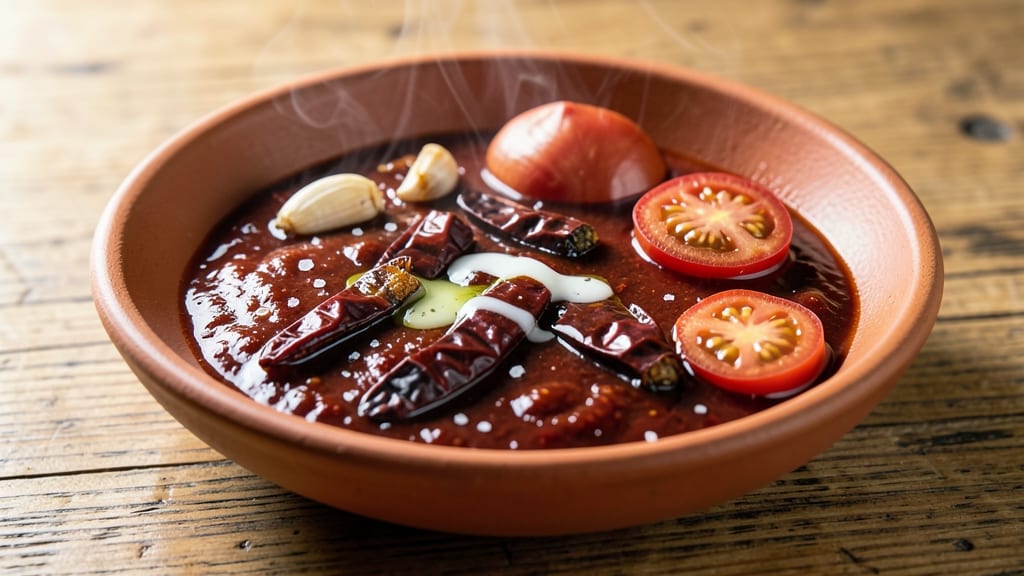
Baca’s red chile sauce delivers the perfect balance of smoky adobo depth and bright tomato freshness that elevates every dish it touches. This traditional New Mexican sauce transforms simple ingredients—roasted chiles, vinegar, and spices—into a versatile condiment that adds rich, complex flavor to tacos, grilled meats, and even eggs.
The secret lies in slow simmering and blending, which creates a smooth yet textured sauce with layers of heat and acidity.
What sets this recipe apart is its authentic technique: roasting chiles until charred and aromatic before blending them with vinegar and spices. The result is a sauce that’s both vibrant and deeply flavorful, with a perfect balance of smokiness and tang.
Unlike store-bought versions, this homemade sauce develops richer depth over time, making it worth the effort for any dish that needs a bold, traditional touch.
The sauce’s versatility makes it a kitchen essential—drizzle it over nachos, use it as a marinade, or serve it alongside grilled meats for an instant flavor boost. It stores well in the refrigerator for up to two weeks, so you can make a batch and enjoy it throughout the week.
Whether you're cooking for a crowd or just craving a taste of New Mexico, this sauce is the foundation of countless delicious meals.
Ready in about 30 minutes, this recipe is simple yet transformative, turning basic ingredients into something extraordinary. The blend of roasted chiles, vinegar, and spices creates a sauce that’s as satisfying to make as it is to eat.
Let’s get started on a batch that will become your new go-to condiment.
Ingredients for baca's red chile sauce
Simple ingredients transform into a sauce with layers of smoky depth and bright tomato freshness.
| Ingredient | Amount | Notes |
|---|---|---|
| Dried New Mexico Red Chile Peppers 🌶️ | ½ lb | Adobo variety preferred |
| White Vinegar 💧 | 1 cup | Distilled preferred for clarity |
| Garlic Cloves 🧄 | 6 cloves | Peeled, lightly toasted |
| Medium Tomatoes 🍅 | 4 whole | Ripe, Roma preferred |
| Extra-Virgin Olive Oil 🫒 | ¼ cup | For richness and balance |
| Salt 🧂 | 1 ½ tsp | Diamond Crystal preferred |
| Ground Cumin 🌿 | 1 tsp | Toasted for depth |
| Ground Black Pepper 🌶️ | ½ tsp | Freshly ground preferred |
| Cumin Seeds 🌿 | ½ tsp | Optional for extra texture |
| Dried Oregano 🍃 | ½ tsp | Mexican preferred |
The chiles are the heart of this sauce. New Mexico red chiles from a reputable brand like Tia Sophia or Baca Foods deliver that authentic adobo flavor. If you can't find them, ancho chiles work too—just remove stems and seeds. Toast them in a dry skillet until fragrant, then soak in hot water for 15 minutes to soften. The tomatoes should be ripe but firm—Roma tomatoes are ideal for their meaty texture. For extra depth, char the garlic cloves in the same skillet you toast the chiles, then peel them before blending.
No white vinegar? Apple cider vinegar works in a pinch, though it adds a slight sweetness. Short on tomatoes? Tomato paste at half the amount concentrates the flavor beautifully. The olive oil might seem excessive, but it balances the acidity and adds richness—don't skip it. For a smoother sauce, strain out seeds after blending. If you prefer texture, leave them in. The spices are flexible: skip the cumin seeds if you dislike their bite, but include them for that authentic New Mexican touch. Toasting the cumin seeds in a dry pan before adding enhances their flavor significantly.
This sauce tastes even better after sitting for a few hours, as flavors meld together. Store it in an airtight container in the fridge for up to 2 weeks. For longer storage, freeze in ice cube trays—perfect for single servings. The sauce thickens as it cools, so thin with a splash of water or vinegar if needed. Double the batch—it disappears fast, especially when drizzled over tacos or grilled meats. The leftovers make an incredible marinade for chicken or pork, adding that signature smoky depth in minutes.
Why You'll Love This Recipe
- No-Fuss Simmer: I swear by this recipe because it’s basically a set-it-and-forget-it affair. Soak those dried chiles overnight, toss them in a pot with vinegar and tomatoes, and let them melt into something rich and deep. Honestly, the hardest part is waiting for the garlic to soften—no chopping, no fuss, just pure satisfaction.
- Smoky-Garlicky Magic: That first taste of the finished sauce? It’s like a hug in your mouth. The New Mexico chiles bring deep, earthy heat, while the garlic—roasted just until it’s sweet and golden—adds this irresistible punch. The vinegar cuts through the richness, leaving you with something that’s both bold and balanced.
- Pantry Staple Power: Between us, this sauce is my secret weapon for lazy Sundays or last-minute dinner saves. Drizzle it over eggs, mix it into beans, or slather it on grilled chicken—it turns ordinary meals into something special. And because it’s just dried chiles, vinegar, and a few basics, you’re not scrambling for obscure ingredients.
- Leftovers That Last: Make a big batch (I always do) because this sauce actually gets better after a few days. The flavors meld and deepen, and it keeps for weeks in the fridge. It’s budget-friendly, too—dried chiles and tomatoes are cheap, and you’ll end up with enough to feed the whole family for days. Win-win.
Step-by-step instructions for Baca's red chile sauce
This method builds smoky depth while preserving fresh tomato brightness—exactly how Baca's version shines.
Toast the Dried Chile Peppers
Preheat your oven to 375°F. Spread the 0.5 lb dried New Mexico red chile peppers on a baking sheet in a single layer. Toast for 5-7 minutes until they darken slightly and release their deep, complex aromas. This step unlocks their natural oils and intensifies the smoky flavor without burning.
Watch closely after 4 minutes—you're looking for a subtle color change to deep red, not charring. The peppers will puff up slightly as they toast. Remove them from the oven and transfer to a heatproof bowl. Immediately pour 1 cup white vinegar over the hot peppers. This creates a brine that helps rehydrate them while preserving their vibrant color and preventing bitterness.
Simmer the Chile-Vinegar Mixture
Let the peppers soak in the vinegar for 30 minutes while you prepare the remaining ingredients. This soaking time is crucial—it softens the peppers and extracts their deep, smoky essence into the liquid. After soaking, transfer the peppers and vinegar to a saucepan and bring to a gentle boil over medium heat.
Once boiling, reduce heat to low and simmer uncovered for 20-25 minutes. You'll notice the peppers soften dramatically and the liquid reduces slightly, concentrating the flavors. Stir occasionally to prevent sticking. The mixture should smell intensely of roasted chile and vinegar—this is your foundation. If the peppers aren't fully tender after 25 minutes, continue simmering for another 5 minutes.
Blend the Chile Base
Using a slotted spoon, transfer the softened chile peppers to a blender or food processor, leaving behind the seeds and membranes if you prefer a smoother sauce. Add 4 whole medium tomatoes (peeled and quartered if you prefer a smoother texture) and 6 cloves garlic cloves to the blender. Pulse until the tomatoes break down, then blend until completely smooth, scraping down the sides as needed.
Return the blended mixture to the saucepan and stir in 0.25 cup extra-virgin olive oil, 1.5 tsp salt, 1 tsp ground cumin, 0.5 tsp ground black pepper, 0.5 tsp cumin seeds, and 0.5 tsp dried oregano. The cumin seeds add subtle texture and depth, while the olive oil provides richness that balances the acidity. Bring the mixture to a gentle simmer over medium-low heat.
Refine and Reduce the Sauce
Simmer the sauce uncovered for 20-25 minutes, stirring occasionally, until it thickens to your desired consistency. You're aiming for a sauce that coats the back of a spoon but remains fluid enough to drizzle. The sauce should smell complex—smoky, slightly sweet from the tomatoes, and earthy from the spices.
Taste and adjust seasoning if needed. If the sauce is too acidic, add a pinch more salt or a small piece of toasted bread to absorb excess acidity. If it needs more brightness, stir in a splash of tomato juice or a pinch of sugar. The final sauce should have a perfect balance of smoky depth, fresh tomato brightness, and subtle spice. Let it cool slightly before serving, as it will continue to thicken as it rests.
Pro Tips For Making Baca'S Red Chile Sauce
- STRIP PEPPERS CLEAN: Dried chiles lose their skins when they hit hot, dry air—so toss them in a 400°F oven for 3-5 minutes first. I used to soak them first, but this method guarantees no gritty bits in your sauce, and it’s faster than you’d think.
- SIMMER LOW AND SLOW: After blending, bring the sauce to a bare simmer—no boiling—and let it cook for at least 45 minutes. I learned this the hard way: rushing it makes the vinegar taste harsh and the tomatoes turn mushy instead of breaking down into silky texture.
- PEEL TOMATOES FIRST: Blanch whole tomatoes in boiling water for 30 seconds, then shock in ice water to loosen skins—peeling them afterward saves you from chewing seeds later. My grandmother swore by this, and she was right: the sauce tastes cleaner and richer when you skip the skins.
- SAVE THE SEEDS: Strain out the chile seeds after blending if you want a smoother sauce, but save the tomato seeds—they add depth. I was skeptical until I tried it: leaving them in gives the sauce a subtle earthiness that store-bought versions lack.
Troubleshooting great baca's red chile sauce
Overly Thin Sauce
If your sauce ends up too thin, don’t panic—simmering longer is the easiest fix. Return the sauce to medium-low heat and cook uncovered, stirring occasionally, for an additional 10-15 minutes. The vinegar and water content will evaporate, thickening the sauce naturally.
For faster results, mash a small piece of toasted bread into the sauce to absorb excess liquid, then strain it out. This trick works especially well if you’re short on time.
Sauce Too Acidic
An overly tangy sauce happens when the vinegar dominates. Balance it by adding a pinch of brown sugar or honey (about ½ tsp) to mellow the acidity. Alternatively, stir in a small piece of toasted bread to absorb some of the vinegar’s sharpness, then strain it out.
If the sauce still tastes too bright, a splash of tomato paste (about 1 tsp) adds depth and sweetness without overpowering the chile flavor.
Uneven Texture
Lumpy sauce usually means the tomatoes or garlic weren’t blended thoroughly enough. Pulse them again in the blender until completely smooth, then return the mixture to the pot. If you prefer a slightly textured sauce, leave the seeds and membranes in the chiles—this adds natural variation.
For a completely silky finish, strain the sauce through a fine-mesh sieve after blending. I’ve found that blending the tomatoes and garlic separately before combining them often prevents clumping.
Sauce Too Spicy
If the heat level is overwhelming, reduce it by adding a splash of tomato juice or water (about 1-2 tbsp) to dilute the chile oils.
For a smoother fix, blend in a small piece of toasted bread or a ½ cup cooked white rice to absorb the capsaicin, then strain it out. If the sauce still packs heat, serve it with cooling sides like avocado slices or sour cream to balance the flavor.
Sauce Separates or Curdles
This happens when the sauce cools too quickly or the olive oil separates. Gently reheat the sauce over low heat while whisking continuously to re-emulsify the oil. If it still separates, blend the sauce again briefly to redistribute the ingredients.
To prevent this in the future, let the sauce cool gradually at room temperature before refrigerating. I’ve also noticed that using extra-virgin olive oil (not refined) helps maintain stability during storage.
Flavor Too Mild
A lackluster sauce usually means the chiles or spices weren’t toasted enough. Next time, toast the dried chiles for an extra 1-2 minutes until they’re deeply fragrant and slightly charred.
For an immediate boost, add a pinch of smoked paprika or a dash of liquid smoke (about ¼ tsp) to enhance the smoky depth. If the sauce tastes flat, simmer it uncovered for another 5-10 minutes to concentrate the flavors further.
Nutrition facts
Frequently asked questions
Can I substitute fresh chiles for dried in this recipe?
Fresh chiles won't work the same way—this sauce relies on the deep, concentrated flavor of dried New Mexico red chiles. For a similar effect, roast 4-5 fresh poblano peppers until charred, peel them, and blend with the other ingredients. However, the texture and smoky depth won't be identical, so dried chiles are ideal for authenticity.
How long does this sauce keep, and can I freeze it?
Store the sauce in an airtight container in the fridge for up to 2 weeks. For longer storage, freeze in ice cube trays—perfect for single servings! Thaw overnight in the fridge before using. The sauce actually improves in flavor after 24 hours of refrigeration as the ingredients meld together.
What’s the best way to use this sauce?
This versatile sauce shines on tacos, enchiladas, grilled meats, and even scrambled eggs! Drizzle it over nachos, use it as a marinade for chicken or pork, or serve it as a dip with tortilla chips. Its balanced smokiness and acidity make it perfect for balancing rich, fatty dishes.
Can I make this sauce without a blender?
Yes! If you don’t have a blender, simmer the soaked chiles, tomatoes, and garlic together until everything breaks down into a rough paste (about 30 minutes). Then, strain through a fine-mesh sieve to remove skins and seeds. The texture won’t be as smooth, but the flavor will still be incredible. Just stir in the spices and oil at the end.
Why does my sauce look separated after refrigerating?
This happens when the sauce cools too quickly or the olive oil separates. Gently reheat the sauce over low heat while whisking continuously to re-emulsify. For a smoother fix, blend briefly or stir in a splash of warm water. To prevent this, let the sauce cool gradually at room temperature before refrigerating.