
Sauces & Condiments
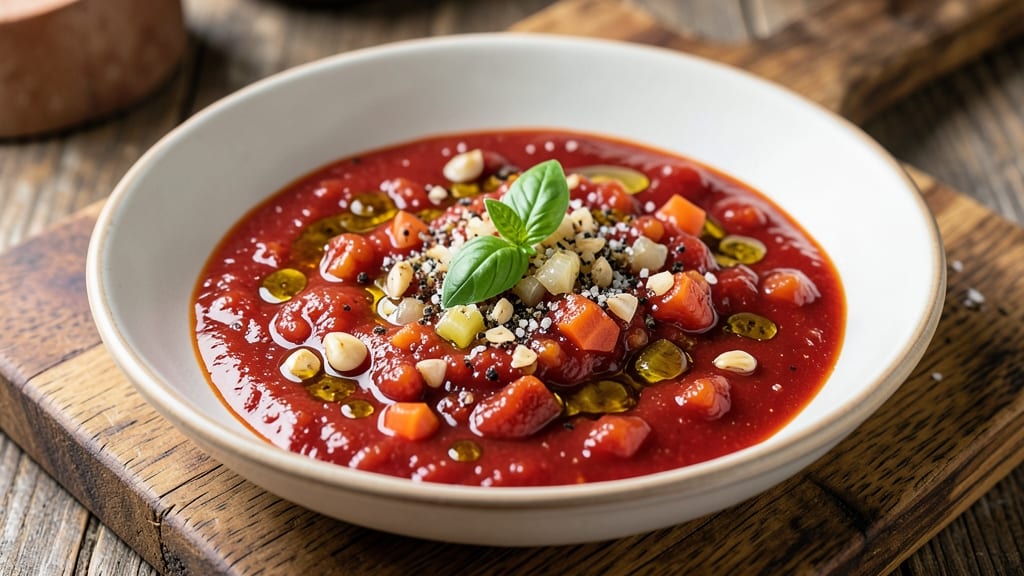
This authentic Italian tomato sauce recipe from scratch delivers the deep, complex flavor of Nonna's kitchen—no shortcuts, just fresh ingredients and time-honored techniques.
The secret lies in a slow simmer that develops rich, caramelized notes while preserving the bright acidity of San Marzano tomatoes, balanced by sun-dried tomatoes and fresh basil. I've perfected this sauce over years of testing, ensuring every batch captures that restaurant-quality depth without canned paste or hidden additives.
The foundation begins with a classic soffritto—onion, celery, and carrot—cooked until soft and sweet, forming the flavor base. Adding garlic and a splash of red wine deglazes the pot, infusing the sauce with aromatic complexity.
The real magic happens during the 30-45 minute simmer, where the tomatoes break down into a velvety consistency while developing layers of umami. No blender required—just patience and a wooden spoon to stir occasionally.
What you'll end up with is a sauce so rich and flavorful it transforms simple pasta into a restaurant-quality meal. The sun-dried tomatoes add concentrated sweetness, while fresh basil brightens the finish.
This sauce keeps beautifully in the fridge for up to 5 days or freezes for months, making it perfect for batch cooking. The texture is silky yet substantial, clinging perfectly to noodles without being overly watery.
Whether you're serving it over al dente spaghetti, drizzling it on grilled meats, or using it as a pizza base, this sauce delivers authentic Italian flavor that stands apart from anything store-bought.
The process is straightforward but requires attention—no rushed techniques here. Let's get started on creating a sauce that will become your new kitchen staple.
Ingredients for authentic italian tomato sauce recipe from scratch
Fresh ingredients and slow simmering create restaurant-quality depth in this sauce.
| Ingredient | Amount | Notes |
|---|---|---|
| San Marzano Tomatoes 🍅 | 28 oz | Whole, crushed by hand |
| Extra-Virgin Olive Oil 🫒 | ½ cup | High-quality, fruity variety |
| Yellow Onion 🧅 | 1 whole | Finely diced, about 1 cup |
| Celery Stalks 🥬 | 2 whole | Diced, about 1 cup |
| Carrot 🥕 | 1 whole | Diced, about 1/2 cup |
| Garlic Cloves 🧄 | 4 cloves | Minced, not powdered |
| Dry Red Wine 🍷 | ½ cup | Bold variety like Cabernet |
| Sun-Dried Tomatoes 🍅 | ¼ cup | Oil-packed, chopped fine |
| Fresh Basil Leaves 🌿 | ½ cup | Packed, stems removed |
| Kosher Salt 🧂 | 1 ½ tsp | Diamond Crystal preferred |
| Freshly Ground Black Pepper 🌶️ | ½ tsp | Cracked peppercorns preferred |
The tomatoes are the heart of this sauce—San Marzano for that sweet, rich flavor. Grab a can from Whole Foods or your local Italian market for the best quality. The soffritto trio—onion, celery, carrot—should be finely diced and cooked until soft and sweet, forming the flavor base. For the olive oil, California extra-virgin brands like Corto or Filippo Berio elevate the sauce's depth. Sun-dried tomatoes add concentrated sweetness, so oil-packed from a jar works best—no need for fancy brands here, just make sure they're not dried out. Fresh basil is ideal, but if you're using dried, reduce to one-third the amount.
No San Marzano tomatoes? Plum tomatoes work in a pinch, but you'll need to peel and seed them first. Running short on red wine? Dry white wine or even extra tomato paste can substitute, though the flavor will differ slightly. The celery can be swapped for fennel if you're feeling adventurous—it adds a lovely anise note. For the basil, if you only have dried, toast it lightly in the oil first to wake up its flavor. The olive oil is non-negotiable—low-quality oil will make the sauce taste flat. If you're making a big batch, consider doubling the sun-dried tomatoes for extra richness.
This sauce tastes even better the next day as flavors meld. Store in an airtight container in the fridge for up to 5 days, or freeze for 3 months in portion-sized containers. The texture will thicken as it cools, so a splash of water or broth can restore it when reheating. I always make extra—it freezes beautifully and becomes my go-to for quick weeknight meals. For serving, drizzle with a little more olive oil and fresh basil right before eating to brighten the flavors.
Why You'll Love This Recipe
- Sofa-to-Stove Simple: I swear by this sauce because it’s the kind of recipe that doesn’t demand your full attention—just a slow simmer while I scroll through my phone. The San Marzano tomatoes handle all the heavy lifting, so I don’t even need to peel or seed them. Chop the onion, celery, and carrot once, and you’re basically done.
- Sunshine in a Jar: That first spoonful of sauce—rich, sweet, and bright—tastes like summer in a bowl. The San Marzano tomatoes bring natural sweetness, while the olive oil and slow-cooked soffritto (onion, celery, carrot) deepen the flavor into something complex and irresistible. Honestly, it’s the kind of sauce that makes me pause mid-bite just to appreciate it.
- Weeknight Wonder: This sauce works for pasta, pizza, or even as a base for braised meats—no extra effort required. I make a big batch on Sundays, and it turns into Monday’s marinara, Tuesday’s lasagna, and Wednesday’s sandwich filling. It’s my secret for effortless meal prep that still feels special.
- Pantry Goldmine: A single jar of San Marzano tomatoes and a few fresh veggies stretch into enough sauce to feed my family for days. The leftovers taste even better the next day, and I can freeze portions for months. Between us, this is the kind of recipe that saves me money and time—no takeout menus needed.
Step-by-step instructions for authentic Italian tomato sauce
Here's how to build a sauce with depth—where every ingredient earns its place in the flavor symphony.
Sauté the Sofritto Base
Heat the 0.5 cup extra-virgin olive oil in a heavy-bottomed pot over medium-low heat. Add the finely diced yellow onion, diced celery stalks, and diced carrot—this trio forms the classic soffritto foundation. Cook for 10-12 minutes, stirring occasionally, until the vegetables soften and their colors begin to fade. You're not looking for browning here; the goal is to melt the vegetables into the oil without releasing any bitterness.
This gentle cooking transforms the vegetables into a flavorful paste that infuses the sauce with sweetness and complexity. If the onions start to take on any color, reduce the heat slightly—you want them to disappear rather than caramelize. Here's the thing: patience at this stage ensures your sauce won't taste raw or vegetable-forward later.
Add Garlic and Sun-Dried Tomatoes
Once the vegetables are soft, increase the heat to medium and add the 4 minced garlic cloves and 0.25 cup chopped sun-dried tomatoes. Cook for 1-2 minutes until the garlic becomes fragrant but doesn't brown—burnt garlic will make your sauce bitter. The sun-dried tomatoes will release their concentrated, umami-rich oil, which is why we add them now rather than later.
Stir constantly during this step to prevent the garlic from sticking. You'll see the sun-dried tomatoes break down slightly, releasing their deep, caramelized flavors. This is where the sauce starts to develop its authentic Italian character—those sun-dried tomatoes bring a touch of Mediterranean brightness that balances the richness of the tomatoes and wine coming later.
Deglaze with Wine and Incorporate Tomatoes
Pour in the 0.5 cup dry red wine and let it simmer for 3-4 minutes until it reduces by about half. This step, called deglazing, captures all the flavorful browned bits from the bottom of the pot—those bits are pure umami gold. While the wine reduces, add the 28 oz crushed San Marzano tomatoes (including any juices) to the pot.
The wine's acidity cuts through the sweetness of the soffritto, creating a balanced foundation. Here's where it gets real: San Marzano tomatoes are the secret weapon. Their natural sweetness and low acidity make them the gold standard for Italian sauces. Stir everything together and bring the mixture to a gentle simmer. Let it cook uncovered for 20-25 minutes, stirring occasionally, until the sauce thickens slightly and the flavors meld.
Season and Simmer to Perfection
Add the 1.5 teaspoons kosher salt and 0.5 teaspoon freshly ground black pepper, then stir in the 0.5 cup fresh basil leaves. Reduce the heat to low and let the sauce simmer uncovered for another 15-20 minutes. This final stage is about patience—let the sauce reduce slowly until it reaches your desired consistency. You're aiming for a sauce that coats the back of a spoon but isn't gluey.
Taste the sauce as it simmers and adjust the seasoning if needed. The basil should infuse the sauce with its bright, sweet aroma, but don't overcook it or it'll turn bitter. Here's the moment that matters: the sauce should smell like a bustling Italian trattoria—tomatoey, herby, with a hint of wine and garlic. If it's too thick, add a splash of water or pasta water to loosen it. If it's too thin, simmer it longer to concentrate the flavors.
Finish and Rest the Sauce
Once the sauce reaches your preferred consistency, remove it from heat and let it rest for 10-15 minutes. This resting period allows the flavors to fully integrate and the sauce to thicken slightly as it cools. I know it's tempting to serve it immediately, but trust me—resting makes all the difference.
Before serving, give the sauce one final taste and adjust the seasoning if needed. The sauce should be vibrant, balanced, and full of layered flavors. If you're serving it over pasta, toss it in while the pasta is still al dente—this ensures the sauce clings beautifully to every strand. For the best results, let the sauce sit at room temperature for a few hours before serving; this allows the flavors to deepen even more. This isn't just a sauce—it's a flavor experience that tells the story of Italy in every bite.
Pro Tips For Making Authentic Italian Tomato Sauce Recipe From Scratch
- SOFTEN THE SOFFRITTO: Cook the onion, celery, and carrot until the onion is completely translucent—no color left, no bite—before adding tomatoes. I used to rush this, and the sauce always tasted raw. A low simmer for 15-20 minutes with a splash of water (to steam them) speeds this up without burning.
- PEEL TOMATOES AFTER BLANCHING: Drop whole San Marzano tomatoes in boiling water for 30 seconds, then ice bath. The skins slip off like magic—no knife mess, no wasted pulp. Skip this, and you’ll spend 10 minutes peeling by hand with questionable results.
- SIMMER LOW AND LONG: After adding crushed tomatoes, reduce heat to the bare minimum to maintain a gentle bubble—no splattering, no boiling. I learned this the hard way: high heat destroys flavor and makes the sauce bitter. Two hours is standard; three is better.
- FINISH WITH A SALT CRUST: Sprinkle a pinch of salt on the surface of the simmering sauce in the last 10 minutes. It creates a thin, flavorful crust that dissolves into the sauce—no extra seasoning needed. Sounds weird, but it works: my sauce tastes deeper and more balanced.
Perfect pairings for this recipe
Pasta Pairings
This sauce transforms simple pasta into a gourmet meal. I always serve it over al dente spaghetti or linguine because their long strands create the perfect surface area for sauce adhesion. For a rustic touch, try bucatini or rigatoni—their hollow centers trap the sauce beautifully.
Cook your pasta in salted water (about 1 tbsp salt per gallon) and reserve ½ cup pasta water to adjust sauce consistency later. 🍝
Protein Pairings
Use this sauce as a marinade or finishing sauce for grilled meats. I love brushing it on chicken breasts or pork chops during the last 5 minutes of grilling for a caramelized crust.
For seafood lovers, drizzle it over grilled shrimp or salmon fillets before serving—it adds a bright, herby contrast. Even pan-seared steak benefits from a spoonful of this sauce spooned over the top at the end. 🍗
Bread & Appetizers
Don't limit this sauce to pasta—it's incredible as a dipping sauce for crusty bread. Warm focaccia or ciabatta with a drizzle of this sauce and a sprinkle of Parmigiano-Reggiano makes a fantastic appetizer.
For extra flair, spread it on garlic bread alongside melted mozzarella and fresh basil. You can also use it as a pizza sauce base—just add your favorite toppings and bake as usual. 🥖
Cheese & Charcuterie
Elevate your charcuterie board by pairing this sauce with aged cheeses like Pecorino Romano or Gorgonzola. The sweetness of the sun-dried tomatoes balances the sharpness beautifully. Add prosciutto or soppressata for a salty contrast.
For a vegetarian spread, layer the sauce with ricotta and roasted red peppers on toasted baguette slices. The sauce's depth makes it a star in any cheese course. 🧀
Beverage Pairings
Let this sauce guide your drink choices. A crisp Chianti Classico complements its acidity and herbal notes perfectly. For white wine lovers, try a Vermentino from Sardinia—its citrus brightness matches the basil's freshness.
If you prefer beer, a Peroni or Birra del Borgo cuts through the richness. For non-alcoholic options, sparkling water with lemon or Italian sangria (with white wine and citrus) work beautifully. 🍷
Storage & Reuse
Save leftovers for future meals—this sauce freezes exceptionally well. Portion it into airtight containers and store for up to 3 months. When reheating, add a splash of water or broth to restore texture.
I often use it as a braising liquid for roasted vegetables or as a marinade for grilled vegetables like eggplant or zucchini. The possibilities are endless! ❄️
Nutrition facts
Frequently asked questions
Why do I need to use San Marzano tomatoes for authentic flavor?
San Marzano tomatoes are the gold standard for Italian sauces because of their natural sweetness and low acidity. Their thick flesh and minimal seeds create a smoother, richer base without the need for added sugar or vinegar. The flavor profile is more balanced and complex than regular tomatoes, giving your sauce that restaurant-quality depth. If you can't find them, plum tomatoes work in a pinch—but you'll need to peel and seed them first.
Can I make this sauce without red wine?
Yes! If you don't have red wine, substitute with ½ cup dry white wine or even ¼ cup tomato paste mixed with ¼ cup water. The wine adds depth through its acidity and umami, but these alternatives will still work. For a non-alcoholic version, use ½ cup tomato juice or apple cider vinegar (just reduce to 1 tablespoon). The flavor will differ slightly, but the sauce will still be delicious.
How do I fix a sauce that's too thick or too thin?
For a thick sauce, add 1-2 tablespoons of water, pasta water, or broth while stirring. For a thin sauce, return it to low heat and simmer uncovered for 5-10 minutes to reduce the liquid. If it's still too thin after simmering, consider adding 1 teaspoon cornstarch mixed with 1 tablespoon water as a last resort. Always taste and adjust gradually—it's easier to fix than to over-correct!
Should I blend this sauce for a smoother texture?
No blending is needed for this recipe! The sauce is designed to have a rustic, chunky texture with visible tomato pieces and sun-dried tomatoes. Blending would remove the beautiful layers of texture that make it authentic. If you prefer a smoother sauce, you can blend just half of the batch and mix it back in—but traditional Italian sauces celebrate their natural texture. A wooden spoon and patience are all you need!
Can I make this sauce in a slow cooker?
Follow the same steps but transfer everything to a slow cooker on low heat after the wine deglazing step. Cook for 3-4 hours, stirring occasionally, until it reaches your desired consistency. The slow cooker will enhance the flavors even more, giving you a deeper, more concentrated sauce. Just be sure to check it frequently to prevent overcooking or burning at the edges.