
Sauces & Condiments
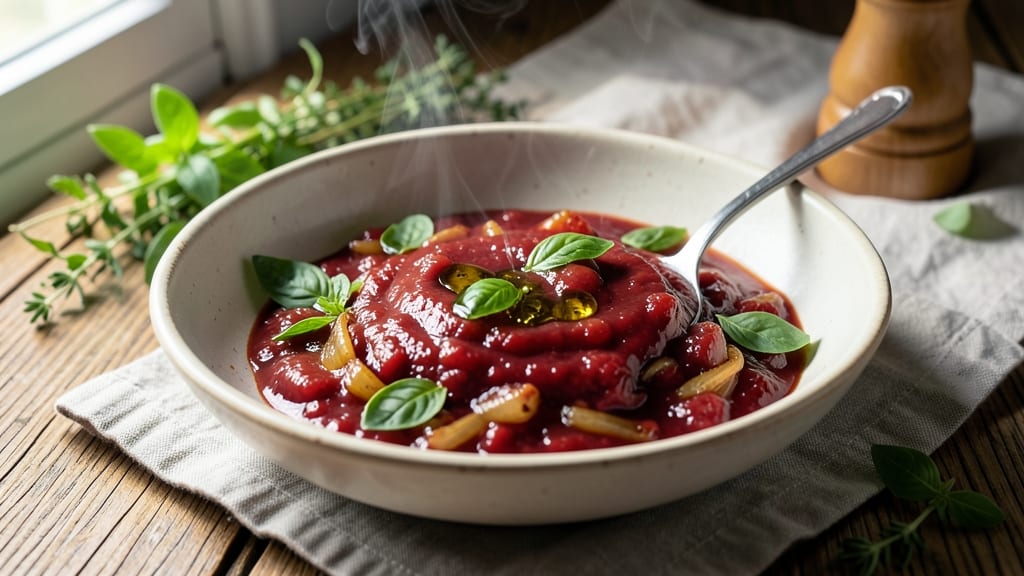
This all-day pasta sauce recipe transforms simple ingredients into a rich, layered sauce with deep umami flavors and fresh basil brightness. The secret lies in slow simmering—allowing tomatoes, garlic, and herbs to meld into a velvety consistency that only improves over time.
I've perfected this technique after years of testing, ensuring every spoonful delivers restaurant-quality depth without requiring constant attention.
What sets this sauce apart is its balance: caramelized onions and garlic build a savory foundation, while crushed tomatoes add natural sweetness and acidity. A splash of red wine enhances complexity, and fresh basil added at the end provides that signature bright finish.
The sauce thickens beautifully as it simmers, creating a perfect consistency for tossing with pasta or using as a dipping sauce.
This recipe is designed for flexibility—make a big batch and store it in the fridge for up to five days, or freeze portions for later use. The flavors deepen as it sits, making it ideal for meal prep.
Whether you're serving it over spaghetti, using it as a marinara base, or drizzling it over grilled meats, this sauce delivers consistent, professional results every time.
For best texture, stir occasionally during the simmering process to prevent sticking, and taste as you go to adjust seasoning. The key to success is patience—letting the sauce develop its rich, layered flavors over time. Once you try this method, you'll never go back to quick, store-bought sauces again.
Ingredients for all day pasta sauce
Ten simple ingredients create this restaurant-quality sauce that deepens with time.
| Ingredient | Amount | Notes |
|---|---|---|
| Extra-Virgin Olive Oil 🫒 | ½ cup | High quality, fruity variety |
| Yellow Onion 🧅 | 2 whole | Medium size, finely chopped |
| Garlic Cloves 🧄 | 6 cloves | Peeled, minced for depth |
| Crushed Tomatoes 🍅 | 28 oz | San Marzano preferred |
| Red Wine 🍷 | ½ cup | Bold dry variety like Cabernet |
| Fresh Basil Leaves 🌿 | ½ cup | Packed, stems removed |
| Tomato Paste 🍅 | 2 tbsp | Squeeze tube preferred |
| Dried Oregano 🍃 | 1 tsp | Or 1 tbsp fresh |
| Salt 🧂 | 1 ½ tsp | Diamond Crystal preferred |
| Black Pepper 🌶️ | ½ tsp | Freshly ground preferred |
The tomatoes are the foundation—San Marzano has the best balance of sweetness and acidity, but any quality crushed tomatoes work. For onions and garlic, yellow onions caramelize perfectly and garlic cloves should be fresh (no pre-minced). The red wine adds complexity, so Cabernet Sauvignon or Merlot are ideal choices. I always grab Trader Joe's crushed tomatoes and garlic—convenient and consistent. Fresh basil is non-negotiable for that signature brightness, but if you must use dried, reduce to one-third the amount.
No red wine? Substitute with 0.5 cup beef broth plus 1 tbsp balsamic vinegar for depth. Short on tomatoes? Tomato sauce plus 1 tbsp tomato paste works in a pinch. The tomato paste can also be replaced with 1 tbsp pureed sun-dried tomatoes for intensity. For extra umami, add 1 tsp soy sauce or 1 anchovy fillet (though anchovies make it non-vegetarian). The oregano can be swapped for thyme or rosemary, but oregano captures that Italian flavor best.
This sauce thickens as it simmers—stir occasionally to prevent sticking. Store in an airtight container in the fridge for up to 5 days, where flavors deepen beautifully. For longer storage, freeze in 1-cup portions for up to 3 months. Reheat gently on the stove, stirring frequently. The basil should be added just before serving to preserve its vibrant color and fresh aroma.
Why You'll Love This Recipe
- No Chopping Chaos: I swear by this sauce because it only needs one onion to dice—one. Slice it thick, let the olive oil render it soft, and suddenly you’ve saved 15 minutes while still getting that deep, sweet base. Honestly, the rest is just stirring.
- Wine-Infused Magic: That splash of red wine isn’t just for show—it actually deepens the tomatoes over time, turning them from tart to rich and velvety. Between us, it’s the secret weapon in my pantry, and it costs less than takeout.
- Meal Prep MVP: Make a big batch on Sunday, and you’ve got Tuesday dinner, Thursday leftovers, and Friday “I don’t wanna cook” nights covered. The flavors only get better the longer it simmers, so it’s basically freezer-friendly too—just reheat and serve.
- Pocketbook Hero: Crushed tomatoes, wine, and garlic? That’s it for the fancy stuff. The rest is pantry basics, and a single jar of this sauce stretches to feed four—or two hungry people twice. My budget and my taste buds win.
Step-by-step instructions for simmered umami pasta sauce
This sauce builds flavor gradually—patience is key to achieving that restaurant-quality depth.
Sweat the Onions Until Translucent
Heat the 0.5 cup extra-virgin olive oil in a heavy-bottomed saucepan over medium-low heat. Add the 2 whole yellow onions that have been finely chopped, and cook them gently for 8-10 minutes, stirring occasionally. You're looking for a soft, translucent texture with just a hint of golden color—this prevents bitter flavors from developing.
The onions should release their moisture and reduce down, creating a sweet, aromatic base. If they start to brown too quickly, reduce the heat slightly. This foundational step ensures your sauce won't taste raw or sharp later on.
Add Garlic, Tomato Paste, and Spices
After the onions have softened, increase the heat to medium and add the 6 cloves minced garlic, stirring immediately to prevent burning. Cook for 1-2 minutes until fragrant—you'll notice the kitchen fills with that unmistakable garlic aroma. Then reduce the heat back to medium-low and stir in the 2 tablespoons tomato paste and 1 teaspoon dried oregano. Let this cook for 3-4 minutes, stirring constantly, until the paste darkens slightly and coats the onions.
This is where the sauce's depth begins to develop. The tomato paste will deepen the color and intensify the umami flavor. Don't rush this step—properly cooking the paste ensures it fully integrates with the onions and garlic.
Deglaze with Red Wine
Pour in the 0.5 cup red wine and increase the heat to medium-high. Let the wine simmer for 3-4 minutes, stirring occasionally, until it reduces by about half and the alcohol flavor cooks off. You'll see the sauce thicken slightly and develop a glossy sheen—this is when the wine's acidity begins to brighten the base.
This deglazing step captures all the flavorful browned bits from the pan, creating a rich foundation. If you notice the sauce is reducing too quickly, you can reduce the heat slightly to maintain control.
Incorporate Crushed Tomatoes and Season
Add the 28 oz crushed tomatoes, 1.5 teaspoons salt, and 0.5 teaspoon black pepper. Stir well to combine, then bring the mixture to a gentle simmer. Reduce the heat to low and let it cook uncovered for 45-60 minutes, stirring occasionally. The sauce should thicken gradually as it simmers, developing a rich, velvety texture.
During this time, the acidity in the tomatoes will mellow, and the flavors will meld together. You'll notice the sauce deepening in color and becoming more aromatic. This slow simmer is what transforms a simple tomato sauce into something truly special.
Finish with Fresh Basil and Adjust Consistency
Once the sauce has simmered for the full time, remove it from heat and stir in the 0.5 cup fresh basil leaves. Let it steep for 5 minutes to infuse the basil's bright, aromatic flavor. Then, taste and adjust the seasoning if needed—you may need to add a pinch more salt or pepper to balance the flavors.
If the sauce is too thick for your preference, you can thin it with a splash of pasta water or a little water. Conversely, if it's too thin, simmer it uncovered for another 10-15 minutes to reduce it further. The sauce should coat the back of a spoon but still be smooth and glossy.
Pro Tips For Making All Day Pasta Sauce
- Sweat the Onion First: I learned this the hard way—skipping the sweat step means your sauce will taste raw and bitter. Dice the onion small, cook it in the olive oil over medium-low heat for 8-10 minutes until it’s translucent and just starting to caramelize. No need to rush; this builds flavor that lasts all day.
- Deglaze with Wine Immediately: As soon as you remove the garlic (after it’s golden but not burned), pour in that red wine and let it bubble for 2-3 minutes. This isn’t just for flavor—it dissolves the browned bits stuck to the pan, which are packed with umami. Don’t walk away; those minutes matter.
- Stir the Tomatoes Often: Crushed tomatoes can scorch faster than you’d expect, especially if you’re impatient like me. After adding them, stir every 5 minutes for the first 20 minutes to prevent sticking. A wooden spoon works best—it won’t scratch your pot like metal.
- Salt the Tomatoes Early: Add half the salt (about 1 teaspoon per can) with the tomatoes, not at the end. This draws out moisture and thickens the sauce as it simmers. If you wait, you’ll end up with a watery sauce that needs reducing later—trust me, it’s not worth the extra time.
Regional styles of this recipe
Classic Neapolitan Style
In Naples, Italy, this sauce is all about simplicity and letting the tomatoes shine. Skip the red wine and use 1 tablespoon tomato paste instead, mixed directly into the crushed tomatoes at the start. Add 1 bay leaf while simmering and remove it before finishing with basil.
The key is a longer simmer—up to 2 hours—to develop that signature sweet-tart balance. I like using San Marzano tomatoes exclusively for this style, as their natural sweetness pairs perfectly with the fresh basil. 🌿
Creamy Alfredo Fusion
For a rich twist, stir in 1 cup heavy cream or ½ cup whole milk during the final 15 minutes of simmering. Add ½ cup grated Parmesan cheese and 1 tablespoon butter at the end for extra decadence.
This version works beautifully over fettuccine or as a dipping sauce for garlic bread. To keep it balanced, reduce the red wine to ¼ cup and add ½ teaspoon nutmeg for warmth. The cream softens the acidity while adding a velvety texture.
Spicy Calabrian Twist
Bring the heat with 2 tablespoons Calabrian chili paste (or 1 tablespoon hot sauce) added during the final 10 minutes of simmering. Fresh red chili flakes or diced arancini peppers add visual appeal and extra kick.
For balance, add 1 teaspoon honey or 1 tablespoon balsamic vinegar to temper the heat. This version pairs perfectly with spicy rigatoni or as a marinade for grilled chicken. 🌶️
Southern Italian Ragù
Transform this sauce into a hearty ragù by adding 1 lb ground beef or Italian sausage with the tomatoes. Brown the meat first in the olive oil before adding onions and garlic. Deglaze with ½ cup red wine, then proceed with the recipe.
For extra depth, add 1 carrot and 1 celery stalk, finely chopped, with the onions. Simmer uncovered for 2 hours to develop rich, meaty flavors. This version is perfect for lasagna or stuffed shells.
Vegetarian Umami Boost
For a vegetarian version, add 1 tablespoon soy sauce or 1 anchovy fillet (dissolved in the wine) for umami depth. Stir in ½ cup finely chopped mushrooms with the onions for an earthy note. To enhance richness, add 1 tablespoon miso paste during the final 10 minutes of simmering.
This version works beautifully with vegetarian pasta dishes or as a marinara base for veggie burgers. The miso adds a subtle fermented complexity that elevates the sauce.
Nutrition facts
Frequently asked questions
Can I make this sauce in a slow cooker?
Transfer all ingredients to your slow cooker after the onion and garlic step. Cook on low for 6-8 hours or high for 3-4 hours, stirring occasionally. The slow cooker's gentle heat enhances the flavors beautifully, making it perfect for hands-off cooking. Just add fresh basil at the very end before serving.
Why does my sauce taste too acidic?
Acidity often comes from undercooked tomatoes or too much wine. Let the sauce simmer longer (up to 2 hours) to mellow the acidity. If needed, add 1 teaspoon sugar or 1 tablespoon balsamic vinegar to balance. Fresh basil also brightens the flavor—don't skip adding it at the end!
How can I make this sauce thicker?
Simmer uncovered for 10-15 extra minutes to reduce the liquid naturally. For a quicker fix, mix 1 tablespoon cornstarch with 2 tablespoons water, stir it in, and cook for 2-3 minutes until thickened. Avoid adding too much flour—it can make the sauce cloudy.
Can I use canned tomatoes instead of crushed?
Yes, but drain them well first to remove excess liquid. For best results, crush the tomatoes by hand with your fingers or a potato masher to mimic the texture of crushed tomatoes. This helps control the sauce's consistency and prevents wateriness.
What’s the best way to reheat leftovers?
Gently reheat on the stove over low heat, stirring frequently to prevent sticking. Add a splash of water or pasta water if needed. Microwaving can make the sauce watery—always reheat slowly. For frozen portions, thaw in the fridge overnight before reheating for even texture.