
Sauces & Condiments
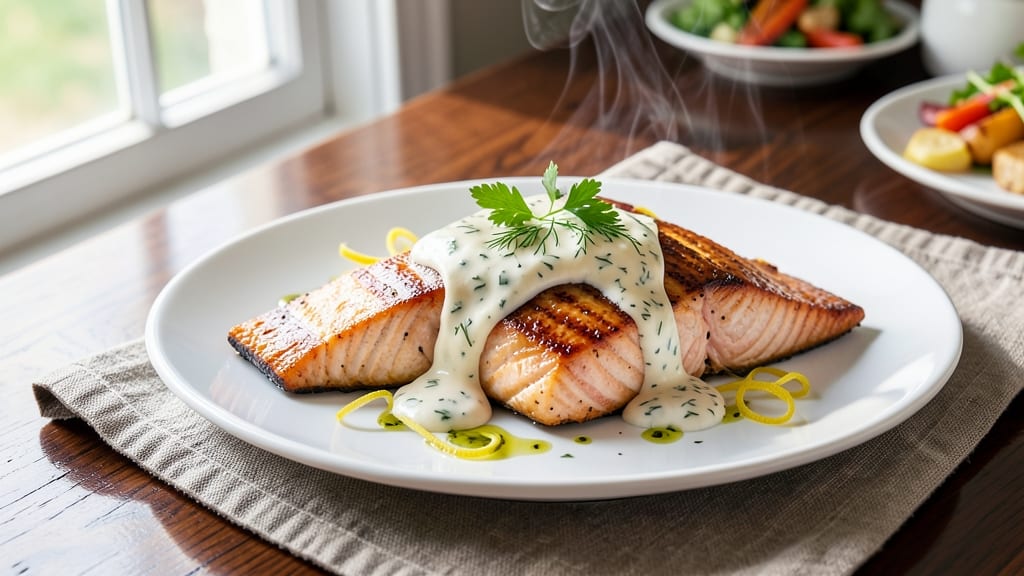
This baked salmon with sour cream dill sauce transforms simple ingredients into a restaurant-worthy meal you'll crave every weeknight. The secret lies in perfectly baked salmon—juicy inside, crispy skin—paired with a velvety herb-infused sauce that melts into every flake.
I've perfected the technique over years of testing, ensuring the salmon stays moist while the sauce delivers bright, tangy freshness in every bite.
The recipe begins with a simple yet critical preparation: seasoning the salmon with salt, pepper, and a touch of lemon before baking at 400°F for just 12-15 minutes.
Meanwhile, the sour cream dill sauce comes together in minutes with fresh dill, lemon zest, and a pinch of garlic powder—no cooking required. The sauce's creamy texture contrasts beautifully with the salmon's tender flakes, creating a harmonious balance of flavors.
What makes this dish truly special is how effortlessly it comes together. You'll achieve restaurant-quality results without special equipment or advanced techniques—just a baking sheet, a mixing bowl, and about 20 minutes of active time.
The sauce can be made ahead and stored in the fridge, making this the perfect weeknight solution for busy professionals or anyone craving a healthy yet indulgent meal.
The finished dish delivers a perfect combination of textures and flavors: crispy salmon skin, tender flesh, and a cool, herby sauce that cuts through the richness. Serve it with steamed asparagus or a fresh salad to round out the meal.
This recipe proves that simple ingredients, when combined thoughtfully, can create something truly extraordinary.
Ingredients for baked salmon with sour cream dill sauce
Restaurant-quality salmon and velvety dill sauce begin with these carefully selected ingredients.
| Ingredient | Amount | Notes |
|---|---|---|
| Center-Cut Salmon Fillets 🐟 | 4 whole | Skin-on, 6-8 oz each, fresh |
| Unsalted Butter 🧈 | 2 tbsp | Cold, for crispy skin |
| Fresh Dill 🌿 | ½ cup | Finely chopped, stems removed |
| Sour Cream 🥛 | ½ cup | Full-fat for creaminess |
| Extra-Virgin Olive Oil 🫒 | 2 tbsp | For salmon and sauce |
| Lemon Zest 🍋 | 1 tbsp | From 1 large lemon |
| Fresh Lemon Juice 🍋 | 2 tbsp | Freshly squeezed |
| Garlic Powder 🧄 | ½ tsp | For subtle garlic depth |
| Diamond Crystal Kosher Salt 🧂 | 1 tsp | Fine grain preferred |
| Freshly Ground Black Pepper 🌶️ | ½ tsp | Cracked peppercorns preferred |
| Heavy Cream 🥛 | ¼ cup | Optional for sauce richness |
| Capers 🫒 | 1 tbsp | Chopped, for briny contrast |
The salmon selection is critical—center-cut fillets with skin ensure crispy edges while maintaining moisture. Look for fillets with a vibrant pink hue and minimal bruising. Whole Foods Market or your local fishmonger often carry the highest quality, but any reputable grocery store's seafood counter should suffice. For the freshest dill, seek out organic bunches at farmers markets—avoid pre-chopped containers, as the herbs lose potency quickly. The sour cream should be full-fat for that luxurious texture; Trader Joe's brand offers excellent quality at an affordable price. When purchasing capers, opt for the non-paste variety in olive oil or brine—they add a sophisticated brininess that elevates the sauce.
No fresh dill? Dried dill at one-third the amount works in a pinch, though fresh is ideal. Substitute the heavy cream with an extra 2 tablespoons of sour cream if needed, though the texture may be slightly lighter. For a dairy-free option, replace the sour cream with vegan sour cream or coconut yogurt. The butter for crisping the skin can be swapped for olive oil or avocado oil, though butter yields the best results. If capers aren't available, a pinch of sea salt and extra lemon juice can mimic their briny profile. The lemon zest and juice should always be fresh—bottled versions lack the vibrant acidity needed to balance the dish.
Salmon fillets should be used within 2 days of purchase for optimal texture. Store them skin-side down on a plate lined with paper towels in the coldest part of your fridge. The sauce components can be prepped 1 day ahead—simply mix everything except the salmon butter and store in an airtight container. When ready to bake, pat the salmon dry with paper towels to ensure maximum crispiness. The finished dish reheats beautifully—simply warm the sauce in a saucepan and gently reheat the salmon in a skillet for 2-3 minutes per side. Portion the sauce into small containers for easy pairing with future meals.
Why You'll Love This Recipe
- Two-Ingredient Sauce: The dill and sour cream combo comes together in three minutes—no cooking, no fuss. Just fold in fresh herbs, let it sit, and boom: that bright, tangy sauce that makes everything taste like a fancy dinner.
- Crispy Without Frying: That golden crust? Pure magic from the butter and olive oil basting. No deep-frying, no flipping—just slide it in the oven, and the salmon develops that perfect texture all on its own.
- Lunchbox Hero: Between us, this is my go-to for meal prep. The sauce stays fresh for days, and the salmon reheats beautifully—no sad, dry fish here. Pack it cold or warm, and it’s still a winner.
- Budget-Friendly Luxury: Salmon can feel fancy, but this cuts costs by using center-cut fillets (cheaper than whole) and stretching the sauce over rice or veggies. Feeds four for under $20, and no one will guess it’s not a restaurant dish.
Step-by-step instructions for baked salmon with sour cream dill sauce
Follow this precise method to achieve perfectly crispy skin and tender fillets with a velvety herb sauce.
Season and Prepare the Salmon Fillets
Preheat your oven to 400°F and line a baking sheet with parchment paper. Pat the 4 whole center-cut salmon fillets completely dry with paper towels—this ensures maximum crispiness. The skin should be dry and taut, not slick.
Rub each fillet generously with the 2 tablespoons unsalted butter, focusing on the skin side. Sprinkle evenly with 1 teaspoon Diamond Crystal kosher salt, ½ teaspoon freshly ground black pepper, and ½ teaspoon garlic powder. Let the seasoned fillets rest at room temperature for 10 minutes while the oven preheats. This brief resting period allows the seasoning to adhere properly and the fillets to cook more evenly.
Bake the Salmon to Perfect Doneness
Place the salmon fillets skin-side down on the prepared baking sheet. Arrange them in a single layer with ½ inch between each fillet to allow for even browning. Bake for 12-15 minutes, depending on thickness, until the skin is deep golden brown and crispy, and the internal temperature reaches 135°F.
Use a fish spatula to carefully flip each fillet halfway through baking (after 7-8 minutes) to ensure both sides develop crispy skin. The salmon is done when it flakes easily with a fork and the skin separates cleanly from the flesh. Don't overcook—salmon continues cooking slightly after removal from the oven.
Prepare the Sour Cream Dill Sauce
While the salmon bakes, combine the ½ cup sour cream, ¼ cup heavy cream, ½ cup finely chopped fresh dill, 1 tablespoon lemon zest, 2 tablespoons fresh lemon juice, 1 tablespoon chopped capers, ½ teaspoon garlic powder, ½ teaspoon kosher salt, and ¼ teaspoon black pepper in a mixing bowl. Whisk until smooth and fully incorporated.
For an extra touch of richness, drizzle 2 tablespoons extra-virgin olive oil into the sauce and whisk again. Taste and adjust seasoning if needed—you may want to add a pinch more salt or lemon juice to balance the flavors. The sauce should be thick but pourable, with bright herbal notes and a subtle briny kick from the capers.
Assemble and Serve Immediately
Remove the salmon from the oven and transfer it to a serving platter. Spoon the prepared sour cream dill sauce generously over each fillet, allowing it to cascade down the sides. The sauce should melt into the flaky texture of the salmon, creating a luxurious coating with every bite.
Serve immediately while the salmon is still warm and the sauce is at its peak consistency. The contrast between the crispy skin, tender flesh, and creamy herb sauce makes this dish truly special. Pair with steamed asparagus, roasted potatoes, or a fresh green salad to complete the meal.
Pro Tips For Making Baked Salmon With Sour Cream Dill Sauce
- Dry the Salmon First: I learned this the hard way—wet salmon steams instead of browning. Pat those fillets thoroughly with paper towels before seasoning, even if they look dry. The butter won’t stick properly otherwise, and you’ll miss that golden crust you’re after.
- Use Room-Temp Sour Cream: Cold sour cream turns your sauce into a clumpy mess. Take it out of the fridge 30 minutes before mixing—just enough time to soften slightly. If you’re in a rush, microwave it for 15 seconds (yes, it works), then stir until smooth.
- Don’t Overbake the Dill: Fresh dill wilts and turns bitter if left too long in the oven. Add it to the sauce just before serving—toss in a handful of chopped leaves at the very end. The flavor stays bright, and you’ll avoid that sad, limp herb texture.
- Salt the Butter Generously: Unsalted butter needs seasoning, and salmon craves it. Mix in about ½ teaspoon of flaky salt per 2 tablespoons of butter before melting it over the salmon. Trust me, your taste buds will notice the difference—this isn’t the time to skimp.
Storing and reheating your baked salmon with sour cream dill sauce
Refrigerator Storage
Store the baked salmon in an airtight container with the sauce in a separate container to prevent sogginess. Place both in the fridge for up to 3 days—the salmon maintains its texture best when kept separate.
The sauce will thicken slightly but remains usable. I always wrap the salmon tightly in plastic wrap before refrigerating to lock in moisture. 🥬
Freezer Storage
For longer storage, freeze the salmon and sauce separately in airtight freezer bags or glass containers. Label with the date—salmon stays safe for 2 months in the freezer. Thaw overnight in the fridge before reheating.
The sauce freezes beautifully but may separate slightly; stir vigorously before using. I recommend freezing the sauce in ice cube trays for portion control. ❄️
Reheating Salmon
Reheat salmon gently in a skillet over medium-low heat for 2-3 minutes per side until warmed through. Avoid microwaving—it makes the skin rubbery. For extra crispiness, broil for 1-2 minutes after reheating.
I like to add a splash of water to the skillet to create steam and keep the flesh tender. 🔥
Reviving the Sauce
Stir the sauce vigorously if it separates after refrigeration or freezing. For a smoother texture, whisk in 1 tablespoon cold water or splash of heavy cream. Warm the sauce gently in a saucepan over low heat for 2-3 minutes—never boil, or it will curdle.
Taste and adjust seasoning; a pinch of lemon juice or salt often helps restore balance. ✨
Make-Ahead Sauce
Prepare the sauce 1 day ahead and store it in the fridge. The flavors deepen overnight, making it even more aromatic. If you're prepping for a meal, mix the sauce ingredients and refrigerate in a glass jar.
When ready to serve, whisk again and drizzle over freshly reheated salmon for that restaurant-quality finish. 💫
Serving Leftovers
Use leftover salmon in salads, wraps, or grain bowls within 2 days for best texture. The sauce pairs perfectly with quinoa, couscous, or roasted vegetables. For a quick lunch, top a bed of mixed greens with flaked salmon, sauce, and sliced cucumbers.
I also love using it as a dip for toasted baguette slices—it’s a game-changer for sandwiches! 🥖
Nutrition facts
Frequently asked questions
Can I use skinless salmon fillets for this recipe?
You can, but the crispy skin is what makes this dish special! If using skinless fillets, simply reduce the baking time by 1-2 minutes to prevent overcooking. For extra texture, add a sprinkle of crushed cornflakes or panko to the top of the fillets before baking to create a crispy crust.
How do I know when the salmon is fully cooked?
The salmon is perfectly done when it reaches an internal temperature of 135°F and flakes easily with a fork. The skin should be deep golden brown and crispy, while the flesh remains tender and moist. For visual confirmation, the edges should pull away cleanly from the skin.
Can I substitute Greek yogurt for the sour cream in the sauce?
Greek yogurt works beautifully and adds a slightly tangier flavor. Use the same amount (½ cup) and whisk in an extra 1 teaspoon of lemon juice to balance the acidity. For extra creaminess, stir in 1 tablespoon of mayonnaise or heavy cream. The texture will be slightly thicker but equally delicious.
What's the best way to reheat leftovers without drying out the salmon?
Reheat gently in a skillet over medium-low heat for 2-3 minutes per side with a splash of water to create steam. Avoid microwaving, as it can make the skin rubbery. For extra crispiness, broil for 1-2 minutes after reheating. The sauce can be warmed separately in a saucepan over low heat for 2-3 minutes.
Can I make this sauce ahead of time?
Yes! The sauce tastes even better when made 1 day ahead. Store it in an airtight container in the fridge, and whisk before serving. The flavors meld beautifully overnight, and it keeps for up to 5 days. For longer storage, freeze in ice cube trays for portion control. Thaw in the fridge before using.