
Sauces & Condiments
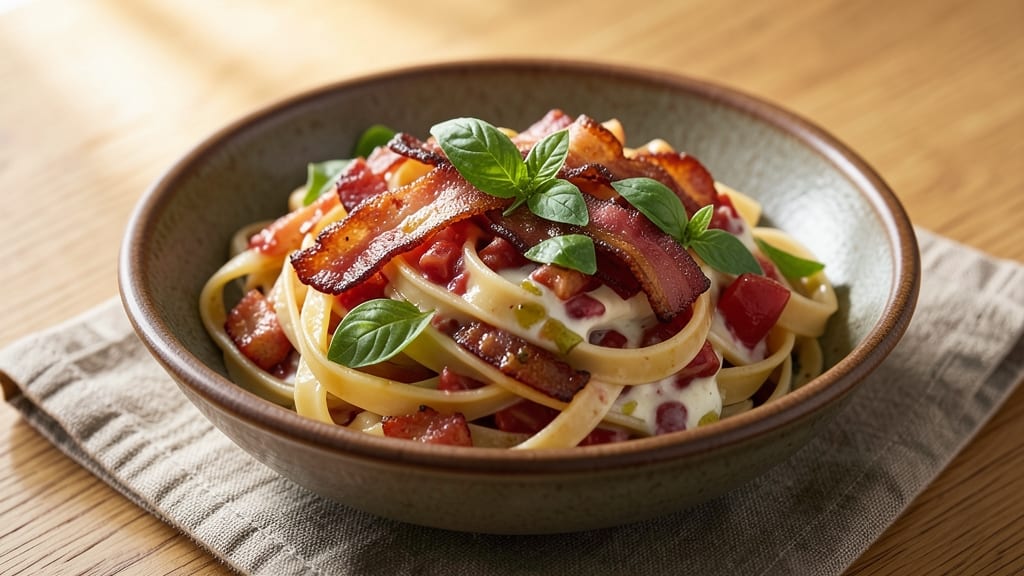
This bacon pasta sauce recipe transforms simple ingredients into a rich, smoky masterpiece that elevates any dish. The secret lies in rendering crispy bacon until the fat pools in the pan—this golden elixir becomes the flavor foundation.
When combined with tomatoes, garlic, and herbs, it creates a sauce so deeply savory, it turns ordinary pasta into a restaurant-worthy meal.
The beauty of this sauce is its versatility and ease. With just a handful of ingredients—bacon, tomatoes, broth, and cream—you’ll build layers of flavor that simmer into perfect harmony. The bacon fat adds a deep, smoky richness, while the tomatoes provide a tangy balance.
No fancy techniques required; just patience as the sauce reduces to a velvety consistency that clings beautifully to pasta.
What makes this sauce exceptional is how it adapts to any meal. Toss it with fettuccine, drizzle it over grilled chicken, or use it as a hearty base for baked potatoes.
The sauce keeps well in the fridge for up to five days or freezes perfectly for future use, making it ideal for meal prep. Every spoonful delivers that perfect blend of smoky, savory, and slightly sweet notes that make it irresistible.
The best part? This sauce is foolproof—no risk of separation or blandness. The key is letting it simmer long enough for the flavors to meld, and adjusting the consistency with a splash of cream or broth as needed.
Once you taste the first bite, you’ll understand why this sauce deserves a permanent spot in your recipe rotation.
Ingredients for bacon pasta sauce
Nine ingredients. One pot. Smoky, creamy perfection that turns pasta into a showstopper.
| Ingredient | Amount | Notes |
|---|---|---|
| Thick-Cut Bacon 🥓 | 8 oz | Thick-cut for maximum fat rendering |
| Crushed Tomatoes 🍅 | 2 cups | San Marzano if available, no sugar added |
| Heavy Cream 🥛 | ½ cup | Full-fat for rich texture |
| Chicken Broth 💧 | 1 cup | Low-sodium preferred |
| Garlic Cloves 🧄 | 4 cloves | Minced for aromatic depth |
| Fresh Basil Leaves 🌿 | ¼ cup | Chopped, stems removed |
| Dried Oregano 🍃 | 1 tsp | Or Italian seasoning blend |
| Olive Oil 🫒 | 1 tbsp | For even cooking |
| Salt 🧂 | 1 tsp | Kosher or sea salt |
| Black Pepper 🌶️ | ½ tsp | Freshly ground preferred |
The bacon is where all the magic happens—thick-cut slices render the most fat, which becomes your flavor gold. Costco or Trader Joe's usually have the best deals on thick-cut. If you're in a hurry, pre-cook it in the microwave for 2 minutes first to speed up rendering. The crushed tomatoes? San Marzano is ideal, but any good-quality canned tomatoes work. Just avoid the ones with added salt or sugar—they'll throw off the balance. That golden bacon fat? Don't drain it—it's the secret weapon here.
No heavy cream? Half-and-half or coconut cream works in a pinch, though the texture will be slightly lighter. Short on basil? Dried oregano at half the amount keeps the Italian vibe. The garlic can be roasted for a sweeter note—just toss whole cloves with olive oil and roast at 400°F for 10 minutes. Want extra depth? Add a pinch of smoked paprika or a splash of red wine (about 2 tbsp) when deglazing the pan. And if you're making this ahead, the sauce actually tastes better the next day as the flavors meld.
This sauce keeps like a dream—5 days in the fridge or 3 months in the freezer. For freezing, portion into ice cube trays first, then transfer to a bag. Thaw in the fridge overnight. The bacon fat solidifies when chilled, so give it a quick stir and add a splash of broth or cream to loosen it up. Double the batch—it disappears fast. And trust me, the first time you drizzle this over buttery fettuccine, you'll never go back to jarred sauce again.
Why You'll Love This Recipe
- One-Pan Magic: I swear by this—just fry the thick-cut bacon until crispy, drain all but the fat, and toss in the rest. No extra pots, no extra mess, and honestly? That smoky bacon grease is where the real flavor lives.
- Creamy-Smoky Obsession: The heavy cream and crushed tomatoes blend into something dangerously rich, but the garlic and chicken broth keep it from being too heavy. That crispy bacon edge with the velvety center? Chef’s kiss.
- Leftovers That Don’t Suck: Between us, most pasta sauces turn into sad, watery sludge the next day. Not this one. The bacon stays crisp, the cream doesn’t separate, and it reheats like it’s fresh—perfect for lunches or freezing.
- Budget Flex for Fancy Nights: I make this for weeknight dinners, but it feels like a restaurant dish. The thick-cut bacon and heavy cream make it feel special without breaking the bank—just add pasta, and boom, you’ve got a meal that feels like a treat.
Step-by-step instructions for smoky bacon pasta sauce
Here's how to create a rich, one-pot sauce where bacon fat meets tomatoes in perfect harmony.
Cook the Thick-Cut Bacon Until Crispy
Place the 8 oz thick-cut bacon in a large, deep skillet over medium heat. Let it cook undisturbed for 5-6 minutes until the edges start to curl and the fat begins rendering. This is where the magic happens—the rendered fat will become the base of our sauce, so don't rush it.
Once the bacon is about 75% cooked and the fat is shimmering in the pan, use tongs to flip the bacon pieces and cook for another 3-4 minutes until golden brown and crispy. Remove the bacon from the skillet with a slotted spoon and set it aside on a paper towel-lined plate to drain excess fat. Keep the rendered bacon fat in the pan—this is liquid gold for your sauce.
Sauté Garlic in Bacon Fat Until Fragrant
Reduce the heat to medium-low and add the 1 tablespoon olive oil to the skillet with the bacon fat. Stir to combine, then add the 4 minced garlic cloves. Sauté for 30-45 seconds until the garlic becomes golden and fragrant—don't let it brown or it'll turn bitter. This step builds the aromatic foundation of your sauce.
Here's the thing—if you smell the garlic burning, immediately remove the pan from heat and let it cool for a minute. Burnt garlic ruins everything. The sauce should smell like a smoky, garlicky heaven at this point.
Build the Tomato Base
Increase the heat to medium and add the 2 cups crushed tomatoes, 1 teaspoon dried oregano, 1 teaspoon salt, and 0.5 teaspoon black pepper to the skillet. Stir well to combine, scraping up any browned bits from the bottom of the pan. These bits are packed with flavor—don't miss them!
Let the mixture simmer uncovered for 8-10 minutes, stirring occasionally, until the tomatoes have thickened slightly and the liquid has reduced by about one-third. You're looking for a rich, concentrated tomato flavor here—the sauce should coat the back of a spoon and smell deeply aromatic.
Add Chicken Broth and Simmer
Pour in the 1 cup chicken broth and stir to combine. Increase the heat to medium-high and bring the mixture to a gentle boil. Then reduce the heat to low and let it simmer uncovered for 10-12 minutes, stirring occasionally. This step develops the sauce's depth and allows all the flavors to meld together beautifully.
If the sauce starts to get too thick before it's fully cooked, add 2-3 tablespoons of water to loosen it. You want a sauce that's rich but still pourable—thick enough to coat pasta but not so thick it becomes gluey.
Finish with Cream and Fresh Basil
Reduce the heat to low and gradually whisk in the 0.5 cup heavy cream. Stir constantly for 2-3 minutes until the sauce is smooth and creamy. The cream will make the sauce velvety and rich—this is where the sauce transforms from good to extraordinary.
Add the 0.25 cup chopped fresh basil leaves and the reserved bacon pieces. Stir gently to combine, then let the sauce simmer for another 1-2 minutes. Taste and adjust seasoning if needed—you might want to add a pinch more salt or black pepper to balance the flavors. The sauce should be rich, smoky, and perfectly seasoned.
Cook Your Pasta and Combine
While the sauce finishes, cook your pasta according to package instructions until al dente. Reserve 1 cup of pasta water before draining. Add the drained pasta to the skillet with the sauce and toss gently to combine. If the sauce seems too thick, add some of the reserved pasta water, 1 tablespoon at a time, until it reaches your desired consistency.
Let the pasta sit in the sauce for 1-2 minutes off the heat, stirring occasionally. This allows the pasta to absorb some of the sauce's rich flavors. Serve immediately with extra bacon on top and a sprinkle of fresh basil for that final touch of freshness.
Pro Tips For Making Bacon Pasta Sauce
- CRISP THE BACON LOW: Thick-cut bacon needs patience—cook it slow and steady at 275°F (135°C) until the fat renders but the meat stays tender. High heat turns it chewy, and nobody wants rubbery bacon in a creamy sauce.
- SAUTE GARLIC FAST: After removing the bacon, dump those crispy bits back into the pan with the garlic and crushed tomatoes. The bacon fat will cook the garlic in seconds without burning—no need for extra oil.
- STIR THE CREAM GENTLY: When adding heavy cream, reduce the heat to low and stir constantly. Cream scalds easily, and once it curdles, you’re starting over. A wooden spoon works best—it won’t scratch your pot.
- SAVOR THE BROTH FIRST: Before mixing in the chicken broth, taste it plain. Season it with salt, pepper, and a pinch of sugar if needed—this balances the sauce before the cream and tomatoes dilute it. Adjusting early saves second-guessing later.
Essential equipment for great bacon pasta sauce
Skillet Essentials
Start with a 12-inch cast iron skillet—it retains heat beautifully and creates the perfect crisp on bacon. I love my Lodge Pre-Seasoned Cast Iron because it develops a natural non-stick patina over time.
If you don’t have cast iron, a heavy stainless steel skillet works too, but monitor the heat closely. Avoid non-stick—it can’t handle the high heat needed for crispy bacon. 🔥
Bacon Tools
Use tongs instead of a fork to flip bacon—it prevents fat splatter and keeps the pieces intact. A slotted spoon is essential for removing bacon without losing precious rendered fat. I keep a paper towel-lined plate nearby to drain excess grease from cooked bacon.
For extra crispiness, try a bacon press (like the OXO Good Grips) to flatten slices before cooking.
Deglazing Kit
A wooden spoon is your best friend for scraping up flavorful browned bits (fond) from the pan. I also keep white vinegar (2 tbsp) on hand—add it after removing bacon to break down stuck-on bits before adding tomatoes.
A microplane helps finely grate garlic for even cooking. For measuring, a liquid measuring cup ensures precise broth additions.
Blending Option
While this sauce is one-pot, you can blend it for ultra-smooth texture using an immersion blender (like the Ninja BN601). For a classic rustic look, skip blending—just stir vigorously.
If you prefer chunky texture, chop tomatoes by hand instead of using crushed. A fine-mesh strainer helps if you want to remove any herb stems after blending.
Storage Containers
Use glass Pyrex containers with airtight lids for fridge storage—they’re microwave-safe and won’t absorb odors. For freezing, quart-sized freezer bags work best, with parchment paper between layers to prevent sticking.
Label containers with dates—this sauce keeps 5 days refrigerated or 3 months frozen. A laser thermometer helps verify fridge temperatures stay below 40°F.
Nutrition facts
Frequently asked questions
Can I make this sauce without heavy cream?
For a lighter version, substitute ½ cup half-and-half or ¼ cup coconut cream—the sauce will still be rich but slightly less velvety. For a dairy-free option, use ¼ cup cashew cream (blend soaked cashews with water) or skip the cream entirely and add 1 tablespoon butter at the end for richness. The sauce will still taste amazing!
How do I prevent the sauce from getting too thick?
Keep a ½ cup of pasta water on hand while cooking—it's your secret weapon! If the sauce thickens too much before the end, add 1-2 tablespoons at a time while stirring. The starch in pasta water helps thin the sauce naturally without watering it down. For extra insurance, add 1 tablespoon broth when you first combine tomatoes and broth.
Can I make this sauce ahead of time?
This sauce actually tastes better the next day! Store it in an airtight container in the fridge for up to 5 days. The flavors meld and deepen over time. For freezing, portion into quart-sized bags (leave ½-inch headspace to prevent ice crystals). Thaw overnight in the fridge and stir in a splash of broth or cream to restore texture.
What's the best pasta shape for this sauce?
Fettuccine or pappardelle are ideal—they have flat surfaces that catch the sauce beautifully. For extra sauce cling, try penne or rigatoni. Avoid delicate shapes like angel hair unless you want a lighter sauce-to-pasta ratio. Pro tip: Toss the sauce with pasta while still hot so it clings perfectly—no soggy noodles here!
Why did my sauce separate when I added cream?
This happens when the sauce cools too quickly or the cream is added too fast. Always warm the cream slightly before adding, and whisk it in gradually while keeping the sauce at a gentle simmer. If it separates, stir in 1 teaspoon cornstarch mixed with 1 tablespoon water to stabilize it. The sauce should come together within 1-2 minutes** of stirring.