
Sauces & Condiments
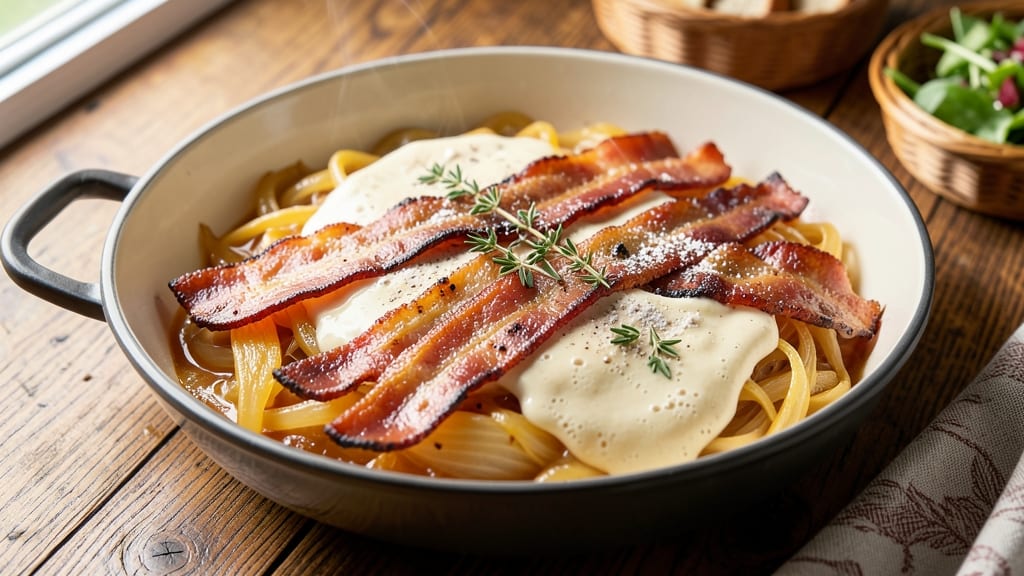
This bacon onion sauce recipe transforms simple ingredients into a rich, umami-packed condiment that adds depth to any dish. 🔥 The secret lies in slow-cooked bacon and perfectly caramelized onions, emulsified into a velvety sauce with just the right amount of crispy crunch.
What starts as a humble mixture of bacon, onions, and broth becomes a luxurious sauce that elevates grilled meats, pasta, or even mashed potatoes.
Crafting this sauce begins with rendering bacon until crispy, then caramelizing onions until deep golden—this step is where the magic happens. A simple roux made from butter and flour thickens the sauce while adding a subtle richness, ensuring it coats every bite perfectly.
The result is a sauce that balances smoky, sweet, and savory notes, making it a versatile addition to your cooking repertoire.
What makes this sauce truly special is its ability to turn ordinary dishes into extraordinary ones. Drizzle it over grilled steaks for an instant flavor boost, stir it into creamy pasta for extra depth, or use it as a dipping sauce for crusty bread.
The texture is velvety yet retains pockets of crispy bacon, delivering a satisfying contrast with every spoonful.
With minimal effort and just a handful of ingredients, you’ll have a sauce that tastes like it belongs in a high-end restaurant. Best of all, it keeps well in the refrigerator for up to a week, making it perfect for meal prep. Let’s get cooking!
Ingredients for bacon onion sauce
Eight essential ingredients transform simple bacon and onions into a restaurant-quality sauce.
| Ingredient | Amount | Notes |
|---|---|---|
| Thick-Cut Bacon 🥓 | 8 oz | Center-cut for best flavor |
| Yellow Onions 🧅 | 2 large | Sliced into 1/4-inch strips |
| Unsalted Butter 🧈 | 4 tbsp | Cold for roux formation |
| All-Purpose Flour 🌾 | 4 tbsp | For roux thickening |
| Beef Broth 💧 | 1 cup | Low-sodium preferred |
| Heavy Cream 🥛 | ½ cup | Full-fat for richness |
| Granulated Sugar 🍚 | 1 tbsp | For caramelization |
| Apple Cider Vinegar 🍎 | 1 tbsp | Brightens flavors |
| Salt 🧂 | ½ tsp | Kosher or sea salt |
| Black Pepper 🌶️ | ¼ tsp | Freshly cracked |
The bacon is the star here—thick-cut center-cut gives you the perfect balance of crispy edges and tender meat. Grab a 16-oz package from Costco or your local butcher for the best quality. Yellow onions should be firm with no soft spots; Vidalias or sweet onions add a touch of sweetness that pairs beautifully. For the roux, use cold butter and all-purpose flour—this ensures smooth thickening without lumps. If you're short on time, pre-sliced onions from the deli section work in a pinch, but fresh is always better for that deep caramel flavor.
No thick-cut bacon? Regular bacon cut into larger pieces works, but it'll crisp faster. Substituting onions? Red or white onions give a slightly sharper flavor, while shallots add a delicate sweetness. Heavy cream can be swapped for half-and-half or coconut milk for a lighter version, though the texture will be slightly thinner. The sugar is key for caramelization—brown sugar adds molasses notes if you prefer. Vinegar can be omitted, but it brightens the sauce beautifully. For a dairy-free version, use coconut cream instead of heavy cream and ensure your butter is vegan.
This sauce keeps beautifully—up to 1 week in the fridge sealed in an airtight container. The texture will thicken further after chilling, so you might want to thin it slightly with a splash of broth when reheating. For longer storage, freeze in ice cube trays—perfect for portion control. The crispy bacon bits will soften slightly but still add that satisfying crunch. If you make extra, drizzle it over grilled steaks or toss it with roasted potatoes—it's that versatile. Always let it come to room temperature before using to avoid clumping.
Why You'll Love This Recipe
- No-Fuss Ingredients: I swear by this recipe because it uses what’s already in my pantry. Thick-cut bacon and yellow onions are the stars, but the butter and flour? That’s all it takes to turn them into something rich and velvety. No specialty items, no fancy techniques—just honest, satisfying flavor.
- Ridiculously Rich Flavor: The moment the bacon fat renders into golden pools and coats those caramelized onions? Chef’s kiss. That deep, smoky-sweet base gets thickened with just a splash of beef broth, and suddenly you’ve got a sauce that clings to pasta, steak, or even mashed potatoes like it was born to.
- Game for Any Meal: Between us, this sauce is my secret weapon for lazy nights and fancy dinners. Dump it over eggs for breakfast, toss it with roasted veggies for lunch, or drizzle it on grilled chicken for dinner. It’s the kind of thing that makes you feel like you’ve put in effort—even when you didn’t.
- Leftovers That Don’t Suck: Honestly, I almost always make too much. The good news? It reheats like a dream—no separating, no weird textures. Store it in the fridge for up to five days, or freeze it in portions. That crispy bacon edge? Still there, waiting to make your next meal taste like you actually cooked.
Step-by-step instructions for bacon onion sauce
Here's how to build rich, caramelized depth with perfectly crisp bacon edges every time.
🔥 Step 1: Cook the Bacon Until Crisp
Place the 8 oz thick-cut bacon in a cold, large skillet over medium heat. Cook undisturbed for 8-10 minutes, letting the fat render slowly. I press down gently on the bacon during the first minute—this prevents it from curling and ensures even contact with the pan.
You'll know it's ready when the edges turn deep golden brown and the fat begins to pool in the pan. Watch carefully—if the bacon starts to smoke, reduce heat slightly. Remove the bacon with tongs and transfer to a paper towel-lined plate, leaving the rendered fat in the skillet. This fat is liquid gold for your sauce.
🍳 Step 2: Caramelize the Onions
In the same skillet (with bacon fat still in it), add the 2 large yellow onions sliced into ¼-inch strips. Cook over medium heat for 10-12 minutes, stirring occasionally, until the onions soften and begin to turn golden brown at the edges.
Here's the thing—don't rush this step. The onions need time to break down and develop that sweet, caramelized flavor. If they're browning too quickly, reduce the heat slightly. You want them to develop a deep amber color, not burn. Sprinkle with 1 tablespoon granulated sugar halfway through cooking to enhance the caramelization.
👨🍳 Step 3: Build the Roux
Remove the skillet from heat and let it cool for 2 minutes—this prevents the butter from burning when you add it. Add 4 tablespoons cold unsalted butter and 4 tablespoons all-purpose flour, whisking constantly until you have a smooth, pale roux.
Return the skillet to medium-low heat and cook the roux for 3-4 minutes, stirring constantly with a wooden spoon. You're looking for it to turn a light golden color—this indicates the raw flour taste is cooking off. If it darkens too quickly, reduce the heat. A properly cooked roux is the backbone of your sauce's thickness.
🥘 Step 4: Deglaze and Simmer
Pour in 1 cup beef broth and 1 tablespoon apple cider vinegar, scraping up any browned bits from the bottom of the pan with a wooden spoon. This deglazing step captures all the concentrated flavor from the bacon and onions. Bring to a gentle simmer and cook for 5-6 minutes until slightly thickened.
Stir in ½ cup heavy cream, ½ teaspoon salt, and ¼ teaspoon black pepper. Let the sauce simmer gently for another 3-4 minutes until it coats the back of a spoon. If it's too thick, whisk in 1-2 tablespoons water to reach your desired consistency. The sauce should be velvety but still pourable.
🔪 Step 5: Finish and Serve
Return the crispy bacon to the skillet and toss gently to coat with the sauce. Let it warm through for 1-2 minutes, allowing the bacon to infuse the sauce with its smoky flavor. Taste and adjust seasoning if needed—you might want to add a pinch more salt or a crack of black pepper.
Serve immediately over pasta, mashed potatoes, or grilled meats. The contrast of crisp bacon edges against the silky sauce creates a textural experience that's hard to beat. For extra richness, drizzle with additional heavy cream or a sprinkle of grated Parmesan cheese.
Pro Tips For Making Bacon Onion Sauce
- CRISP THE BACON LOW: Take your time here—medium-low heat is your friend. Thick-cut bacon needs patience to render fat slowly without burning, and rushed batches turn bitter fast. (Yes, even if you’re impatient like me.)
- SLICE ONIONS THIN: A mandoline or sharp knife makes this easier, but don’t skip it: onions should melt into the sauce, not sit as chunks. If you’re lazy, dice them small, but they won’t caramelize as well.
- WHISK THE ROUX VIGOROUSLY: Stirring the butter and flour on medium heat with a whisk (not a spoon) prevents lumps and gives that silky texture. I used to rush this, and the sauce always tasted grainy—don’t be that cook.
- DEGLAZE WITH BROTH, NOT WATER: The beef broth adds depth, so don’t grab the tap water—it’s flavorless. Scrape up every last bit of browned bits from the pan first; that’s where the rich, savory magic hides. (Your future self will notice.)
Common mistakes when making great bacon onion sauce
Rushing the Bacon
One of the biggest mistakes is cooking the bacon too quickly over high heat. This leads to uneven cooking—soft centers with burnt edges—and prevents the fat from rendering properly.
I always start with medium heat and let the bacon cook slowly for 8-10 minutes, pressing down gently in the first minute to keep it flat. The rendered fat is essential for building flavor in your sauce, so don't rush this step. 🔥
Skipping the Onion Caramelization
Many people sauté the onions too quickly, resulting in a bland, pale sauce. The key is patience—caramelizing the onions for 10-12 minutes until deep golden brown unlocks their natural sweetness.
I add 1 tablespoon sugar halfway through to enhance the process. If your onions burn before caramelizing, reduce the heat slightly and give them more time.
Burning the Roux
A common error is adding the butter and flour to a hot pan, which can cause the roux to burn and develop a bitter flavor. Always let the skillet cool for 2 minutes after removing it from heat before adding the 4 tablespoons cold butter and 4 tablespoons flour.
Cook the roux over medium-low heat for 3-4 minutes, stirring constantly, until it reaches a light golden color.
Overthickening the Sauce
Some cooks add too much flour to the roux, resulting in a gluey, clumpy sauce. Instead, start with the 4 tablespoons flour and adjust consistency by adding 1-2 tablespoons water if needed.
The sauce should coat the back of a spoon but remain pourable. If it's too thick, thin it gradually—adding liquid all at once can break the emulsion and separate the sauce.
Ignoring the Deglaze
Many people skip scraping up the browned bits (fond) from the bottom of the pan during the deglaze step. These bits are packed with flavor! After adding the 1 cup beef broth and 1 tablespoon vinegar, use a wooden spoon to scrape up every last bit of caramelized goodness.
This step ensures your sauce has maximum depth of flavor.
Not Restoring the Bacon
Finally, some cooks forget to return the crispy bacon to the sauce at the end, missing out on its smoky flavor infusion. After simmering the sauce, toss the bacon back in and let it warm through for 1-2 minutes.
This step ensures every bite has that perfect crunch and flavor balance. Trust me, it makes all the difference! ✨
Nutrition facts
Frequently asked questions
Can I make this bacon onion sauce without butter?
Yes! For a dairy-free version, substitute the 4 tablespoons butter with 4 tablespoons olive oil or coconut oil. The roux will still form, though the flavor will be slightly different. Use 1 tablespoon cornstarch mixed with 1 tablespoon water instead of flour for thickening if you're avoiding gluten. The sauce will still be rich and delicious, just with a lighter texture.
How can I make this sauce spicier?
Add ½ teaspoon smoked paprika or cayenne pepper when you stir in the heavy cream. For extra heat, toss in 1-2 chopped chipotle peppers in adobo sauce with the onions during caramelization. If you prefer a slow build, add a pinch of cayenne at the end and adjust to taste. Always taste as you go—spices intensify as the sauce cooks!
What’s the best way to reheat this sauce?
Gently reheat over low heat on the stovetop, stirring constantly to prevent separation. If the sauce thickens too much, whisk in 1-2 tablespoons warm water or broth until smooth. For microwave reheating, use 30-second intervals on medium power, stirring between each interval. Never boil the sauce—this can cause the emulsion to break and create a greasy texture.
Can I use turkey bacon instead of pork bacon?
Turkey bacon works well, though it has a milder flavor. Use 8 oz turkey bacon and consider adding ½ teaspoon liquid smoke or 1 extra tablespoon smoked paprika to compensate for the reduced pork flavor. The texture will be slightly less crispy, but the sauce will still be rich and delicious. For extra depth, add 1 teaspoon soy sauce when deglazing with the broth.
How can I use this sauce in sandwiches or burgers?
Thin the sauce slightly with 1-2 tablespoons water or broth until it's pourable but still coats the back of a spoon. Spread it generously on toasted buns or burger patties, then top with melted cheese and your favorite burger toppings. For extra richness, mix in 1 tablespoon sour cream or Greek yogurt to balance the sauce's depth. The crispy bacon bits will add a satisfying crunch to every bite!