
Sauces & Condiments
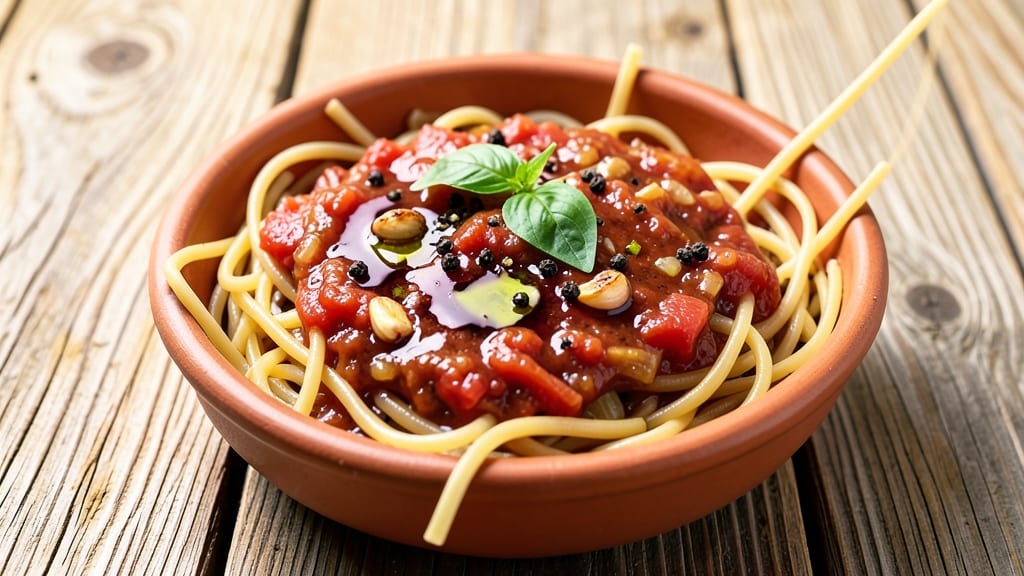
This authentic Sicilian pasta sauce transforms simple ingredients into a complex, aromatic masterpiece that clings to every strand of pasta. 🌟 The secret lies in slow-simmering tomatoes with garlic, olive oil, and fresh basil—building depth through patience rather than shortcuts. I've perfected this technique after years of studying traditional Italian cooking methods, where the sauce is never rushed and always layered with flavor.
The foundation starts with a soffritto—finely chopped garlic, onions, and celery slowly cooked in extra-virgin olive oil until translucent. This aromatic base forms the flavor backbone before crushed tomatoes and red wine (a technique called sfumatura) deepen the sauce's complexity.
Fresh basil added at the end preserves its bright, peppery notes rather than letting them cook away.
What sets this sauce apart is its balance: acidity from tomatoes and wine, sweetness from caramelized onions, and umami from optional anchovies or sausage. The result is a sauce that's rich yet light, clinging to pasta without weighing it down.
This is the kind of sauce that makes homemade pasta taste like it came from a Sicilian trattoria.
Use it immediately for maximum flavor, or store it in the refrigerator for up to 5 days—where it only improves as the flavors meld. The key is letting it simmer low and slow, never boiling, to develop that authentic depth. Here's how to make it perfectly every time.
Ingredients for authentic sicilian pasta sauce
These ten essential ingredients create a sauce that captures the soul of Sicilian tradition.
| Ingredient | Amount | Notes |
|---|---|---|
| Extra-Virgin Olive Oil 🫒 | ½ cup | High-quality, fruity variety preferred |
| Yellow Onion 🧅 | 1 whole | Finely chopped, medium-sized |
| Celery Stalks 🥬 | 2 whole | Diced, about 1/2 cup total |
| Garlic Cloves 🧄 | 6 cloves | Minced, fresh preferred |
| Canned San Marzano Tomatoes 🍅 | 28 oz | Crushed or whole, no salt added |
| Dry Red Wine 🍷 | ½ cup | Bold variety like Chianti or Sangiovese |
| Fresh Basil Leaves 🌿 | ½ cup | Packed, stems removed |
| Anchovy Fillets 🐟 | 2 whole | Optional, for umami depth |
| Salt 🧂 | 1 ½ tsp | Diamond Crystal kosher salt |
| Black Pepper 🌶️ | ½ tsp | Freshly ground preferred |
The soffritto trio—onion, celery, and garlic—forms the aromatic backbone. Freshly chopped (not pre-diced) releases more flavor when slowly cooked in olive oil. San Marzano tomatoes are non-negotiable for their natural sweetness and low acidity—Whole Foods or specialty Italian markets carry them in cans. If you can't find them, high-quality crushed tomatoes work, but avoid brands with added salt. The olive oil should be extra-virgin, with a peppery finish—California Olive Ranch is a reliable choice for home cooks. Anchovies, when used, should be high-quality fillets, not the canned variety.
No red wine? Dry white wine or extra tomato paste works in a pinch, though the acidity won't be identical. Fresh basil is ideal, but dried basil at one-third the amount can substitute if needed—just add it later. The garlic can be pre-minced, but freshly minced develops more flavor during the slow cook. For the soffritto, cook until completely translucent—this takes patience, but it's worth it. If you're vegetarian, omit the anchovies and add an extra pinch of Diamond Crystal kosher salt to compensate for lost umami.
This sauce improves with time—3-5 days in the fridge lets flavors meld beautifully. Portion into airtight containers with a layer of olive oil on top to preserve freshness. Freezes well for up to 3 months, though texture may change slightly upon thawing. For best results, reheat gently on low heat, stirring frequently. The sauce can be made ahead and stored in the refrigerator until ready to use, which is perfect for busy weeknights when you still want restaurant-quality results.
Why You'll Love This Recipe
- Sofrito in Minutes: I swear by this—just dice onion, celery, and garlic (no fancy knife skills needed), then simmer in olive oil until golden. That’s it. The base builds flavor while you handle the rest of dinner.
- Tomato Magic: San Marzano tomatoes change everything. They’re sweet, meaty, and crush easily—no watery sauce here. Just blend them with the sofrito, and suddenly, every bite tastes like Nonna’s kitchen.
- Weeknight Workhorse: This sauce doubles as marinara for pasta, a topping for grilled chicken, or even a pizza base. I make a big batch on Sundays—it’s my go-to for lazy nights or unexpected guests.
- Budget-Friendly Luxury: Fresh herbs and quality olive oil feel fancy, but the canned tomatoes and veggies keep costs low. A single jar stretches into four meals, and the flavor? Rich enough to trick anyone into thinking it’s fresh.
Step-by-step instructions for authentic Sicilian pasta sauce
This sauce captures Sicily's soul—rich, slow-simmered tomato depth with bright basil and garlic.
🍳 Step 1: Sauté the Aromatic Base
Heat the 0.5 cup extra-virgin olive oil in a large, heavy-bottomed saucepan over medium heat. Add the finely chopped yellow onion and diced celery stalks, cooking for 5-6 minutes until softened but not browned. This foundational step builds flavor—don't rush it.
Add the minced garlic cloves and the 2 whole anchovy fillets (if using), stirring for 30 seconds until the garlic turns golden and fragrant. Anchovies dissolve completely, adding umami depth without altering texture. Here's where the sauce begins its transformation.
🍳 Step 2: Deglaze with Red Wine
Pour in the 0.5 cup dry red wine and increase heat to medium-high. Stir constantly as the wine simmers for 3-4 minutes until reduced by half. This deglazing step captures all those flavorful browned bits from the aromatics—what Sicilians call "fond."
Watch carefully—the wine should reduce to a syrupy consistency, intensifying its flavor. If it reduces too quickly, lower the heat slightly. This step prevents a flat, watery sauce and ensures proper depth of flavor.
🍳 Step 3: Simmer the Tomatoes
Add the 28 oz canned San Marzano tomatoes, crushing them by hand if using whole tomatoes. Stir in the 1.5 tsp salt and 0.5 tsp black pepper, then bring to a gentle boil. Reduce heat to low and let it simmer uncovered for 45-60 minutes.
This slow simmer is crucial—it allows the tomatoes to break down and develop a rich, concentrated flavor. Stir occasionally, scraping the bottom of the pan to prevent sticking. The sauce should reduce slightly but remain saucy enough to coat pasta. Here's where patience pays off.
🥘 Step 4: Finish with Fresh Basil
Remove the sauce from heat and stir in the 0.5 cup fresh basil leaves. Let it steep for 5 minutes to infuse the basil's bright, aromatic flavor. The leaves will wilt and release their oils into the sauce, creating that signature Sicilian brightness.
Taste and adjust seasoning if needed—San Marzano tomatoes are naturally sweet, so you might need a touch more salt or pepper. This sauce is best served immediately, but it keeps well in the refrigerator for up to 5 days or frozen for 3 months.
🍽️ Step 5: Serve with Pasta
Cook your preferred pasta (spaghetti or rigatoni work beautifully) until al dente. Reserve 1 cup pasta water before draining. Toss the hot pasta with the sauce, adding pasta water as needed to reach your desired consistency.
Serve immediately with additional fresh basil leaves scattered on top. The sauce should cling to each strand of pasta, delivering layers of tomato sweetness, garlic heat, and basil brightness in every bite. This is authentic Sicilian cooking at its finest—simple ingredients elevated through technique.
Pro Tips For Making Authentic Sicilian Pasta Sauce
- SOFFRITTO LOW AND SLOW: Start your onion, celery, and garlic in a cold pan with olive oil—cold—and let it warm up gradually. Rushing this step burns the garlic before it releases its sweetness, and you’ll end up with a bitter base instead of that rich, aromatic foundation Sicilian sauce needs.
- CHOP ONION FINE: Slice that yellow onion paper-thin—no big chunks. I used to leave them uneven, thinking it didn’t matter, but fine dice means the onion melts into the sauce without leaving texture. (Yes, it’s tedious, but your sauce will taste like Nonna’s, not a shortcut.)
- CRUSH TOMATOES BY HAND: Skip the blender—open those San Marzano cans and crush the tomatoes with your fingers or a wooden spoon. The seeds and pulp break down differently, giving the sauce a silkier texture and deeper flavor. (I know, it’s messy, but it’s worth it.)
- SALT THE TOMATOES FIRST: Add a pinch of salt to the crushed tomatoes before they hit the pan. This draws out excess water, concentrating the flavor as they cook. I learned this after making sauce that tasted diluted—now it’s always rich and balanced. (No, you won’t over-salt it.)
Perfect pairings for this recipe
Pasta Pairings
This sauce shines with rigatoni or paccheri—their ridges and tubes trap the sauce beautifully. For a rustic touch, try orecchiette or penne from a local Italian market like Eataly or Whole Foods.
I love serving it with homemade pici pasta for a true Sicilian experience. The sauce clings perfectly to al dente pasta, creating that signature "sugo" effect. 🍝
Wine Pairings
A bold Chianti Classico or Nero d'Avola from Sicily complements the sauce's acidity and garlic notes. The tannins in these wines balance the richness, while their bright fruitiness mirrors the tomatoes.
For a lighter option, try a crisp Vermentino from Sardinia—its citrus notes cut through the sauce's richness. Avoid heavy reds like Cabernet Sauvignon, which overpower the delicate basil. 🍷
Cheese Finishes
Top with grated Pecorino Romano or aged Parmigiano-Reggiano for umami depth. I like sprinkling freshly grated ricotta salata over the top for a salty, creamy contrast. For a vegetarian option, add crumbled gorgonzola dolce—its mild tang pairs beautifully with the basil.
Always add cheese after tossing with pasta to prevent clumping. 🧀
Bread Pairings
Serve with crusty Sicilian bread or focaccia for dipping. I recommend ciabatta from a local bakery—its airy texture soaks up the sauce perfectly. For a traditional touch, try pane ca meusa, a Sicilian sandwich bread with a crispy crust.
Warm the bread slightly before serving to enhance its flavor. 🥖
Vegetable Sides
Add roasted eggplant or zucchini for a classic Sicilian touch. Toss cherry tomatoes with olive oil and basil for a bright side salad. I also love serving sautéed Swiss chard with garlic and chili flakes—its earthy flavor contrasts the sauce's sweetness.
Keep portions small so the pasta remains the star. 🥒
Protein Additions
For a heartier meal, stir in crumbled pancetta or sautéed shrimp at the end. I sometimes add grilled calamari for a seafood twist. If using meat, cook it separately and warm through in the sauce just before serving to maintain texture.
For a vegetarian option, try marinated artichoke hearts for a Mediterranean touch. 🐚
Nutrition facts
Frequently asked questions about authentic Sicilian pasta sauce
Why does this sauce need such a long simmering time?
Slow simmering (45-60 minutes) is key to developing authentic Sicilian flavor depth. This process allows the tomatoes to break down naturally, concentrating their sweetness while letting the garlic, onions, and wine meld together. The longer it cooks, the more complex and aromatic the sauce becomes—never rush this step!
Can I make this sauce without red wine?
Yes! Use 0.5 cup dry white wine or 2 tablespoons tomato paste mixed with 2 tablespoons water instead. The wine adds acidity that balances the tomatoes—without it, the sauce may taste flat. For extra umami, add 1 teaspoon fish sauce or an extra anchovy fillet.
What's the best way to store leftover sauce?
Transfer to airtight containers and refrigerate for up to 5 days. For longer storage, freeze in portions for 3 months. To reheat, warm gently on low heat, stirring frequently. The sauce actually improves when refrigerated as flavors meld further—just add a splash of water if it thickens too much.
How do I adjust the sauce if it's too acidic?
Add 1 teaspoon sugar or 1 tablespoon tomato paste to balance acidity. For a richer flavor, stir in 1 tablespoon heavy cream or a pinch of Pecorino Romano. If using San Marzano tomatoes, they're naturally sweet—acidity comes from wine or cooking too long. Always taste as you go!
Can I use dried basil instead of fresh?
Yes, but reduce to 1 tablespoon dried (about one-third the amount). Add it at the end with the sauce off heat, as dried basil releases flavor differently. Fresh basil's bright aroma is ideal, but dried works in a pinch. For best results, combine 1 tablespoon dried with 0.25 cup fresh if available.